
Who Builds Türkiye’s Warships? The Shipyards Explained

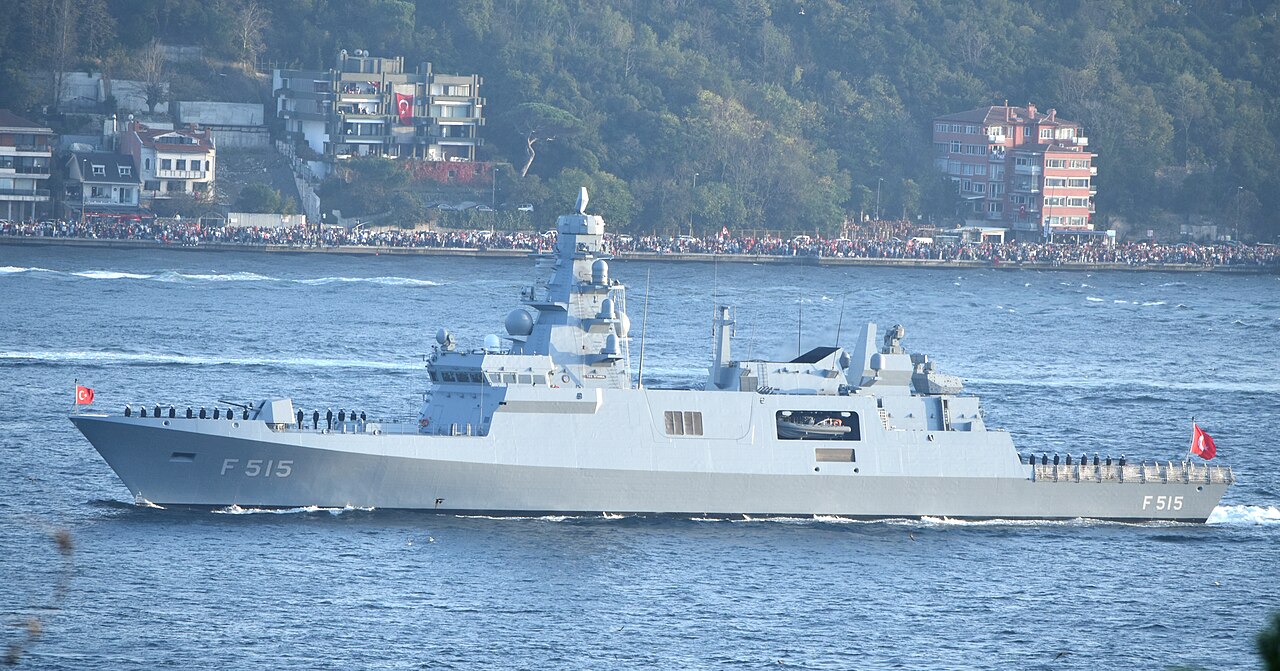
Türkiye’s warships are built by three different kinds of organisation. Two state yards belonging to the Navy — İstanbul Naval Shipyard and Gölcük Naval Shipyard — build the lead ships and all the submarines. Five private yards — Sedef, Sefine, Anadolu (ADİK), Dearsan and Desan, plus RMK Marine and ADA — build the follow-on hulls and most export orders. Above both sit two state-linked prime contractors, ASFAT and STM, which hold the contracts, own the designs and carry the integration risk. No single company builds a Turkish warship end to end.
That division of labour is the reason Türkiye can quote delivery dates that European yards currently cannot. In August 2026 the Turkish Naval Forces Commander, Admiral Ercüment Tatlıoğlu, said the country was building “more than 50 warships, 37 for the Turkish Naval Forces and 24 for foreign countries” at the same time. Understanding which yard does what — and which parts are still foreign — is the first thing any navy evaluating a Turkish design needs to know.
| Sector | Turkish military shipbuilding |
| State prime contractors | ASFAT (Ministry of National Defence); STM |
| Navy-owned yards | İstanbul Naval Shipyard; Gölcük Naval Shipyard |
| Main private yards | Sedef, Sefine, Anadolu (ADİK) — grouped in the TAİS consortium — plus Dearsan, Desan, RMK Marine and ADA |
| Flagship programmes | MİLGEM (Ada, İstif/Istanbul classes), Hisar-class OPV, TF-2000 destroyer, Reis-class submarine, TCG Anadolu |
| Reported workload | “More than 50” warships in build — 37 domestic, 24 export (Naval Forces Commander, 20 August 2026) |
| Export customers with hulls delivered or building | Pakistan, Ukraine, Romania, Portugal, Indonesia, Malaysia, Nigeria, Qatar, Turkmenistan |
| Principal foreign content | Gas turbines (US), main diesels (Germany), submarine design licence (Germany) |
Three tiers, not one national shipbuilder
Countries that buy warships usually deal with one company. Türkiye does not work that way, and the structure confuses first-time buyers.
The prime contractor tier holds the customer relationship. ASFAT — Askeri Fabrika ve Tersane İşletme A.Ş. — is a state company set up under the Ministry of National Defence in 2018 to commercialise the output of military factories and naval shipyards, including selling abroad. It is the contracting party for Pakistan’s Babur-class corvettes, for Romania’s patrol vessel, and for the TF-2000 air defence destroyer. STM is the other prime: a state-linked engineering house that acts as design authority and systems integrator, and which signs its own export contracts, as it did with Portugal. Which of the two a foreign navy ends up contracting with is not a technical choice so much as a procedural one, set out in our guide to the three routes by which governments buy Turkish defence equipment.
The construction tier is where steel is actually cut. The Navy’s own İstanbul Naval Shipyard built the lead İstif-class frigate, TCG İstanbul (F-515), and the Hisar-class offshore patrol vessels. Gölcük Naval Shipyard builds the submarines and nothing else of consequence. Everything beyond the first-of-class tends to go to private yards.
The systems tier supplies what makes the ship a warship rather than a hull. ASELSAN provides the GENESIS combat management system, the radars and the electro-optics; Roketsan supplies ATMACA anti-ship missiles and the interceptors that go into the MİDLAS vertical launch system; HAVELSAN contributes command-and-control software. Türkiye puts the domestic content of the İstif class above 80 per cent, a figure that refers overwhelmingly to this tier rather than to the hull.
| Yard or company | Type | Builds | Export work |
|---|---|---|---|
| ASFAT | State prime | Contracting and export arm for naval shipyard output; TF-2000 destroyer; four Ada-derived OPVs | Pakistan (Babur-class), Romania (Hisar-class) |
| STM | State-linked prime, design authority | İstif-class design authority; new 68 m fast attack craft; submarine modernisation | Portugal (two AOR+ auxiliaries) |
| İstanbul Naval Shipyard | Navy-owned | Lead ship TCG İstanbul (F-515); Hisar-class OPVs | Hull transferred to Romania, 2026 |
| Gölcük Naval Shipyard | Navy-owned | All six Reis-class (Type 214TN) submarines; future MİLDEN | None to date |
| Sedef | Private (TAİS) | TCG Anadolu (LHD); İstif-class TCG İzmit and TCG Karadeniz | — |
| Sefine | Private (TAİS) | İstif-class TCG İçel; auxiliaries | Indonesia (two FACM-70 fast attack craft) |
| Anadolu (ADİK) | Private (TAİS) | İstif-class TCG İzmir and TCG Akdeniz; amphibious craft | Qatar (LCT, LCMs, cadet training ships) |
| Dearsan | Private | Fast patrol boats; unmanned surface vessels | Turkmenistan (40+ vessels), Nigeria (two OPV 76), Azerbaijan (USV co-production) |
| Desan | Private | Mine countermeasures vessel; four coast guard ships | Malaysia (99 m multi-purpose mission ship) |
| RMK Marine | Private | Ada-class export hulls | Ukraine (two Ada-class corvettes) |
| ADA Shipyard | Private | Naval auxiliaries under STM contract | Portugal (NRP Luís de Camões, NRP D. Dinis) |
The parallel-build model is the real innovation
The single most consequential thing Turkish naval shipbuilding has done in the past five years is not a ship. It is a contracting arrangement signed in January 2023 between STM and TAİS, the consortium that groups Sedef, Sefine and Anadolu, which allowed İstif-class frigates to be built at several private yards simultaneously instead of sequentially at one state facility.
The results are visible in the water. TCG İstanbul was commissioned in January 2024. Second-of-class TCG İzmir, from Anadolu Shipyard, began sea acceptance trials in August 2026. TCG İzmit began its own trials on 15 September 2026, built at Sedef. TCG İçel at Sefine and TCG Akdeniz at Anadolu have been launched, and TCG Karadeniz — Sedef’s second hull — was launched in July 2026. Six frigates of one class are in build, trials or service at four yards at once. The full lineage from the original corvette study to today’s class is set out in our MİLGEM İ-class frigate programme page.
For a buyer, parallel building matters more than any specification. It means Turkish yards have surge capacity that most European builders have lost, and it explains how Türkiye was able to do something unusual in 2026: sell a warship it had already built for itself.
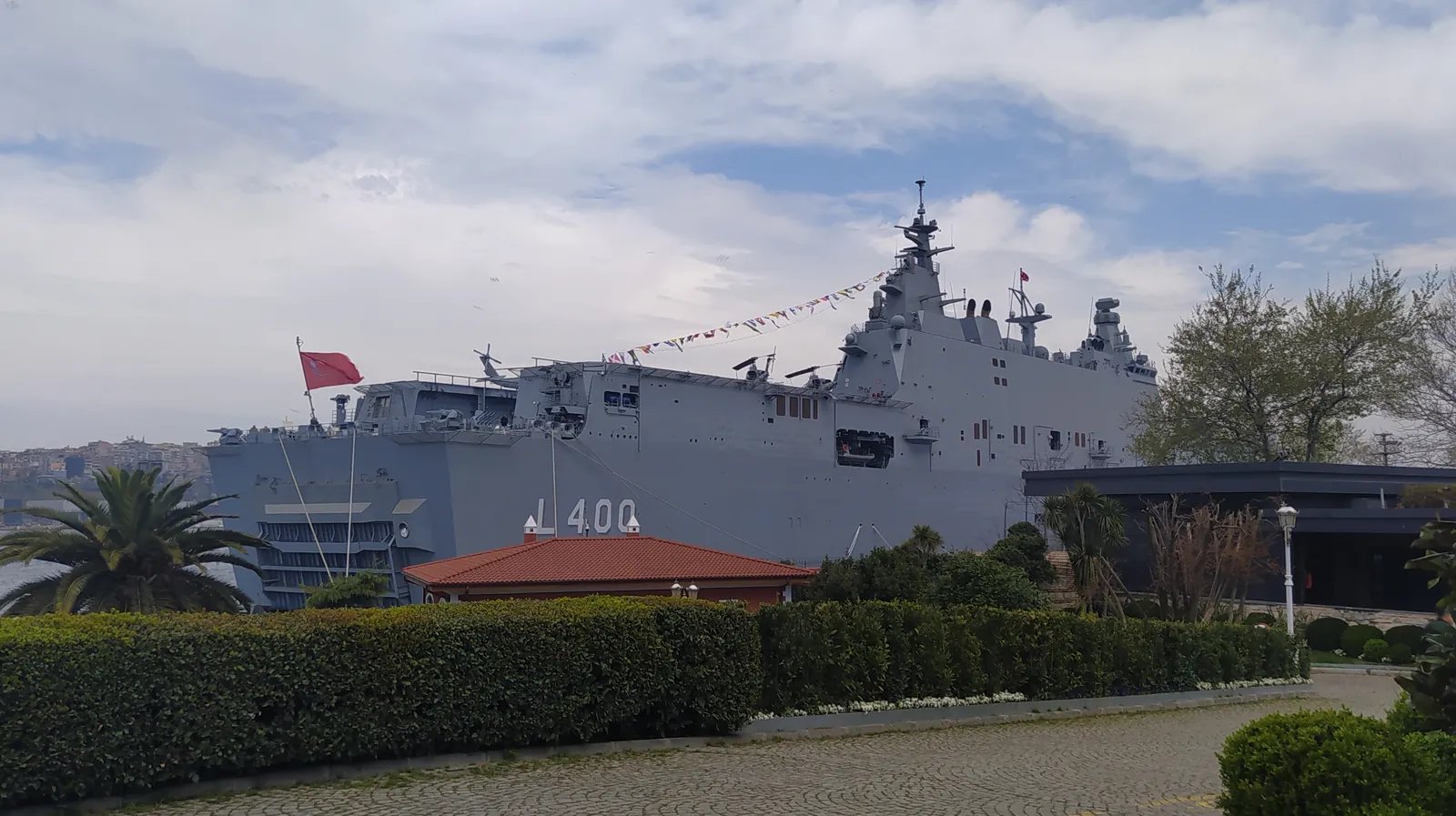
Western naval shipbuilding is capacity-constrained: order books at European and American yards are full, and delivery slots for a mid-sized surface combatant now run well into the 2030s. Türkiye has the opposite problem — yards built for a commercial market, repurposed for naval work, with room to take on hulls. That, more than price or performance, is what put a Turkish frigate design on a reported US Navy shortlist and a Turkish-built patrol vessel into a NATO and EU navy in the same year.
The export order book: 24 hulls, and what is publicly visible
The Naval Forces Commander’s figure of 24 warships under construction for foreign customers is the most useful single number in Turkish naval shipbuilding, because it is the only official quantification of the export book. It is also not itemised. What follows is our own reconciliation of that figure against publicly documented export programmes — and the accounting does not close, which is worth stating plainly rather than papering over.
| Customer | Platform | Builder | Status |
|---|---|---|---|
| Pakistan | 4 × Babur-class (MİLGEM) corvettes | ASFAT / İstanbul Naval Shipyard + Karachi Shipyard | Two delivered; fourth ship PNS Tariq in trials at Karachi, delivery reported for 2027 |
| Ukraine | 2 × Ada-class corvettes | RMK Marine | Lead ship in sea trials since 2024; second hull launched |
| Romania | 1 × Hisar-class OPV | ASFAT / İstanbul Naval Shipyard | Delivered 20 June 2026 (ex-TCG Akhisar, now CAm. Roman) |
| Portugal | 2 × AOR+ logistics ships | STM / ADA Shipyard | Both under construction; launch 2027, delivery 2028 |
| Indonesia | 2 × FACM-70 fast attack craft | Sefine | Keels laid July 2025 |
| Malaysia | 1 × 99 m multi-purpose mission ship | Desan | Steel cut July 2025; delivery scheduled March 2027 |
| Nigeria | 2 × OPV 76 | Dearsan | Contracted 2021; first vessel launched 2023 |
| Qatar | LCT, LCMs, cadet training ships | Anadolu (ADİK) | Deliveries under way since 2021 |
| Turkmenistan | 40+ patrol and support vessels, 15–92 m | Dearsan (local yard) | Long-running; Türkiye’s first naval export relationship |
Add the confirmed hulls still in build from that list and the total sits in the low teens, not at 24. The gap is not evidence that the official figure is wrong — coast guard craft, unmanned surface vessels, auxiliaries and contracts that customers prefer not to announce all plausibly sit inside it. It is a reminder that the Turkish export book is only partly visible from open sources, and that a buyer should ask for a yard-by-yard slot schedule rather than accepting a headline number.
What a foreign buyer actually gets
Turkish naval offers are usually structured as a ladder, and the rung matters more than the brochure.
The first rung is an off-the-shelf hull. Romania took the fastest possible version of this: an intergovernmental contract signed on 3 December 2025 worth roughly €223 million, and a ship in Romanian hands on 20 June 2026. That was possible only because the vessel already existed — it was the Turkish Navy’s TCG Akhisar, transferred and renamed. Six months from contract to commissioning is not a shipbuilding timeline; it is a fleet-transfer timeline, and no buyer should expect to repeat it for a new-build order.
The second rung is a new build in a Turkish yard, which is what Portugal bought. STM signed for two AOR+ auxiliaries in Lisbon in December 2024; steel was cut on the first in November 2025 and on the second in June 2026, with delivery planned for 2028. Roughly three and a half years from signature to delivery for an 11,000-tonne auxiliary is competitive, and it came with the political weight of being the first Turkish military shipbuilding contract with an EU and NATO member.
The third rung is local construction with technology transfer, and Pakistan is the deepest case anywhere in the Turkish portfolio. Of four Babur-class corvettes contracted in 2018, two were built in Istanbul and two at Karachi Shipyard & Engineering Works, with ASFAT supporting the Pakistani yard through the build. The relationship has since moved past kit assembly. The second Istanbul-built ship, PNS Khaibar, was inducted at Karachi on 4 April 2026, and the follow-on Jinnah-class frigate (designated AS3400) was jointly designed by the Pakistan Navy’s Platform Design Wing and ASFAT’s design office with shared intellectual property — the first ship contracted to Karachi Shipyard in November 2025. That is the outcome buyers who want an industry rather than a fleet should be measuring Turkish offers against, and we set out the full record in our analysis of what Türkiye actually transferred to Pakistan.
- Delivery: genuine surge capacity across seven or more yards; parallel building is proven on the İstif class. Slot availability is the strongest part of the Turkish offer.
- Cost data: thin. Romania’s €223 million is one of the very few published Turkish naval contract values, and it was for a transferred hull rather than a new build. Programme prices are generally not disclosed.
- Technology transfer: offered seriously, and demonstrated. Pakistan’s Karachi build and Jinnah-class design support are the benchmark, not an aspiration.
- Weapons ecosystem: integrated and domestic — ATMACA, MİDLAS, GÖKSUR, GENESIS. Integrating a third-party missile is possible but adds cost and schedule.
- Export exposure: propulsion and submarine design remain foreign, which puts US and German licensing in the approval chain for some configurations.
- Support: ASFAT and STM both provide through-life support packages; in-country sustainment is normally negotiated into the industrial offset rather than sold separately.

Where the industry is still dependent
Turkish officials put İstif-class domestic content above 80 per cent. The remaining fraction is concentrated in exactly the places that matter for export approval.
Propulsion. The İstif class is reported to run a combined diesel-and-gas arrangement built around one General Electric LM2500 gas turbine and two MTU diesels. Türkiye does not build a marine gas turbine in this class, and there is no announced programme to do so on a timeline that would affect ships being laid down now. Any export configuration using that plant needs American and German supplier agreements.
Submarines. All six Reis-class boats under construction at Gölcük are Type 214TN — a German TKMS design built under licence. TCG Pirireis was commissioned in August 2024 and TCG Hızırreis in November 2025. Türkiye is assembling and progressively Turkifying the systems fit, but it has not yet designed a submarine; that is what the MİLDEN national submarine programme is for, and MİLDEN has not produced a boat. Anyone describing Türkiye as self-sufficient in undersea warfare is describing an intention.
Large amphibious design. TCG Anadolu, the country’s largest warship, is built on a licensed Navantia Juan Carlos I design. The construction was Turkish and the drone-carrier adaptation is genuinely Turkish innovation, which our TCG Anadolu programme page covers in detail — but the parent design was bought, not drawn in Türkiye.
These are ordinary dependencies. France, Italy and South Korea all buy foreign naval subsystems. They matter here because Türkiye markets itself partly on freedom from third-party restrictions, and in the naval domain that claim is weaker than it is for drones or artillery. Our broader assessment of that question is in Is Türkiye fully independent in defence production?, and the export-control mechanics are set out in our explainer on ITAR and Turkish defence exports.
Update, 13 October 2026: the state yard tier now carries the destroyer
The naval shipyard tier described above has taken on the largest surface combatant Türkiye has attempted. The lead ship of the TF-2000 air-defence destroyer programme, named TCG Kocatepe, is being built at the Istanbul Naval Shipyard, whose commander, Rear Adm. Recep Erdinç Yetkin, stated in March 2026 that the ship should be launched by the end of 2027. The build agreement covering the lead ship alone was signed with ASFAT at IDEF in July 2025; the remaining ships of the class are an aspiration rather than a contract.
The propulsion dependency set out in the section above is now examined in full in our page on who builds Türkiye’s warship engines, which tracks the GE and MTU supply positions across every class in the fleet and what they mean for an export customer.
What comes next
Three programmes will decide whether the current momentum is a cycle or a step change.
TF-2000. Construction of the first air defence destroyer began at IDEF 2025 with ASFAT as builder — a 149-metre, roughly 8,300-tonne ship intended to carry the naval layer of Türkiye’s Steel Dome architecture. It is the first Turkish warship designed around area air defence, and it is the technical jump the industry has not yet made. Progress is tracked on our TF-2000 programme page.
MİLDEN. A nationally designed submarine would remove the single largest foreign dependency in the fleet. Nothing has been launched; the lead boat Atılay has been in construction at Gölcük since December 2025. The programme, the Reis-class licence and Türkiye’s submarine export record are set out in full on our page asking whether Türkiye builds its own submarines.
The US Navy question. Reporting in September 2026 placed the Istanbul-class among three foreign frigate designs the US Navy is said to be examining after the Constellation-class collapse, alongside South Korean and Japanese candidates. No design has been selected and Turkish officials have not commented. We set out what is and is not established in our report on the US Navy evaluation. Even reaching a shortlist is a marker of how far the sector has come from the yard that built the first Ada-class corvette.
UPDATE, 5 NOVEMBER 2026
Three developments since this page was last revised change the export and capacity picture above, none of them altering the three-tier structure it describes.
Jordan becomes an ASFAT customer, at the small-craft end. Jordan’s Royal Naval Force and Royal Boats Command will receive five ASFAT-built ASBOT-class boats in 2027 — four KN-43 patrol craft and one search-and-rescue variant — under a contract signed at İstanbul Naval Shipyard in February 2026 whose schedule only became public in late October. ASFAT is stretching its standard 10.2-metre twin-step composite planing hull to 13 metres for the Jordanian mission set. The value has not been disclosed by either side. This is coast-guard tonnage rather than a warship, so it does not belong in the 24-hull count above, but it widens ASFAT’s export base beyond frigates and corvettes. See our report on the ASBOT order for Jordan.
Syria: a roadmap, not a contract. A Turkish Naval Forces and ASFAT delegation sailed into Latakia aboard TCG Bora on 23 October 2026 and agreed a cooperation roadmap covering maintenance and modernisation of existing Syrian vessels, new construction, training and port infrastructure, according to the Ministry of National Defence. Neither government has published any text, and officials described the outcome as a roadmap rather than a signed deal — so it should not yet be counted as an order. The detail is in our account of the Latakia naval roadmap.
The yard base is now marketing itself collectively abroad. At Euronaval 2026 in Paris (3–6 November), Türkiye fielded 16 participants in the show catalogue against eight in 2024. Five shipyards appeared in their own right — DEARSAN, DESAN, Sanmar, TAİS and ARES — alongside ASFAT, ASELSAN, HAVELSAN, STM, MKE and TEI. That roster is a reasonable proxy for which yards now consider themselves export-capable, and it matches the tier structure set out above. See Türkiye’s Euronaval 2026 delegation. For the class that carries most of the export argument, see our programme file on İstif-class serial production across several yards.
FAQ
Which company builds Turkish warships?
There is no single builder. ASFAT and STM act as prime contractors; the Navy’s İstanbul and Gölcük shipyards build lead ships and submarines; and private yards — Sedef, Sefine, Anadolu (ADİK), Dearsan, Desan, RMK Marine and ADA — build follow-on hulls and most export orders. ASELSAN, Roketsan and HAVELSAN supply the combat systems.
What is ASFAT?
ASFAT is a state-owned company under the Turkish Ministry of National Defence, established in 2018 to operate and commercialise military factories and naval shipyards, including through exports. It is the contracting party on Pakistan’s Babur-class corvettes, Romania’s Hisar-class vessel and the TF-2000 destroyer. Our full ASFAT company profile covers its ownership, leadership, export record and aircraft maintenance business.
What is TAİS?
TAİS is a consortium formed in 2017 that groups three private Turkish yards — Anadolu (ADİK), Sedef and Sefine — so they can bid for and share naval work as a single entity. The January 2023 STM–TAİS agreement is what allows İstif-class frigates to be built at several yards in parallel. Envanter Medya maintains a Turkish-language reference page on the TAİS consortium and its shareholding structure.
How many warships is Türkiye building right now?
The Turkish Naval Forces Commander said on 20 August 2026 that more than 50 warships were under construction simultaneously — 37 for the Turkish Navy and 24 for foreign customers. The figure has not been itemised publicly, and open sources account for fewer than 24 export hulls.
Has Türkiye exported a warship to a NATO or EU country?
Yes, twice over. STM signed with Portugal in December 2024 for two AOR+ logistics ships, the first Turkish military shipbuilding contract with an EU and NATO member. Romania then received the Hisar-class vessel CAm. Roman on 20 June 2026 — the first Turkish-built naval combatant delivered to a state that belongs to both organisations.
Does Türkiye build its own submarines?
It builds them, but it did not design them. The six Reis-class boats at Gölcük Naval Shipyard are Type 214TN variants built under a German TKMS licence, with an increasing share of Turkish sensors, combat systems and weapons. An indigenous design is the objective of the MİLDEN programme, which has not yet produced a boat. Our dedicated explainer covers the MİLDEN programme, the Reis class and Türkiye’s submarine export record in detail.
How many MİLGEM ships have been built, and who operates them?
The MİLGEM family now spans the four Ada-class corvettes and the İstif/Istanbul-class frigates, with export variants in Pakistani and Ukrainian service. Envanter Medya keeps a ship-by-ship MİLGEM delivery and inventory file that tracks each hull and its operator.
Sources
- Naval News, ASFAT delivers TCG Koçhisar and CAm. Roman, June 2026
- Naval News, Türkiye finalises export of Hisar-class vessel to Romania, December 2025
- Türkiye Today, Naval Forces Commander on simultaneous warship construction, August 2026
- European Security & Defence, Turkish yards show new vessels at IDEF 2025
- Breaking Defense, ASFAT to construct TF-2000 and four OPVs, July 2025
- ASFAT corporate site
- Sedef Shipyard and Dearsan company history
- Naval News, RMK Marine launches Ukraine’s first Ada-class corvette, October 2022; Janes, second Mazepa-class launch
- Naval News, Dearsan to build two OPVs for Nigeria; Anadolu Shipyard LCT for Qatar
Related DefenceTürkiye coverage: Who builds Türkiye’s radars? · ASELSAN company profile · ROKETSAN company profile · Which NATO members operate Turkish defence systems? · Azerbaijan co-produces Dearsan naval drones



[…] under different names, and the detail should be treated as unresolved. Follow-on hulls are built by the TAIS consortium of three private yards, Anadolu Shipyard and Sedef Shipyard at Tuzla in Istanbul and Sefine Shipyard at Yalova, which […]
[…] and built by one company — a concentration that does not hold on the naval side, where warship construction is spread across nine yards and two prime contractors. ASELSAN produces the ground-based air defence radars, the naval search and fire-control radars, […]
[…] not publicly commented on the reports. But the mere fact that an Istanbul-class design — built by Turkish shipyards under the MILGEM national warship program — is on a U.S. Navy shortlist marks a striking moment […]
[…] distinction is the whole story. Türkiye has built a credible surface-warship export business — corvettes and frigates from Turkish yards are in service or under construction for Pakistan, Ukraine… — but submarines are a separate industrial category, with a separate supplier base and a much […]