
TF-2000: Türkiye’s Steel Dome Destroyer Takes Shape

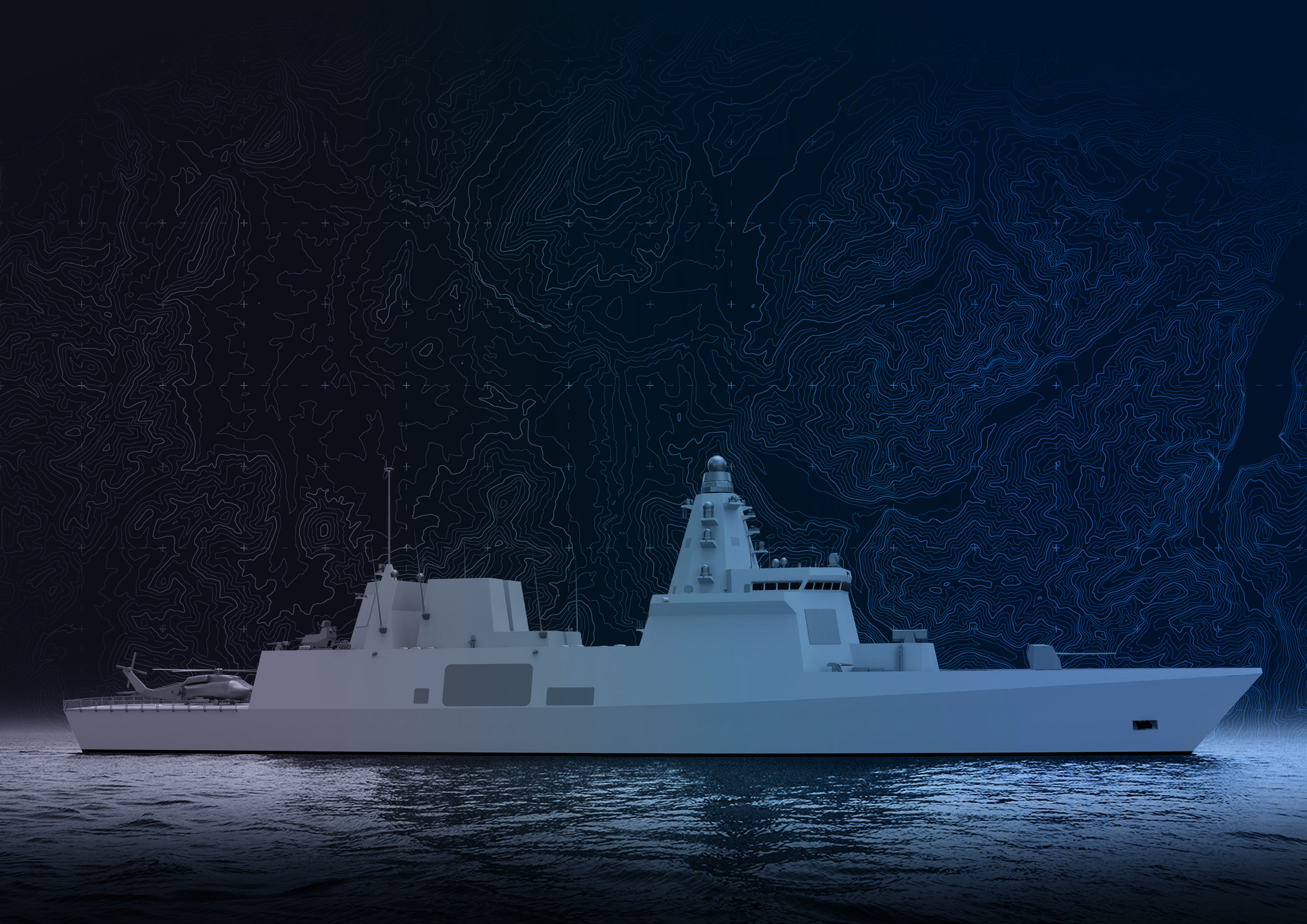
The first steel block of Türkiye’s future TF-2000 air-defense destroyer went onto the building slip at Istanbul Naval Shipyard in March 2026, the moment the ship stopped being a set of drawings and started becoming a hull. Eighteen months earlier it had existed only as a design study and a name. State shipbuilder ASFAT now expects to launch the vessel by the end of 2027, with delivery to the Turkish Navy to follow after fitting-out and sea trials.
TF-2000 is the most ambitious surface combatant Türkiye has ever attempted to build on its own, and the one meant to close a real gap in the fleet: nothing in Turkish service today can provide area air defense for a task group the way an Aegis destroyer or a Type 45 does for the US and British navies. If it delivers on its design, TF-2000 will.
The final piece of the MİLGEM programme
TF-2000 is the top tier of Türkiye’s MİLGEM national warship programme, which has already produced the Ada-class corvettes and the larger İstif-class frigates — the latter now in service with the Turkish Navy and, as TCG İstanbul, already exported to Pakistan. Where those ships are general-purpose escorts, TF-2000 is being built for one job above all others: shooting down aircraft, cruise missiles and ballistic missiles at range, for itself and for the ships around it.
Construction formally began with a steel-cutting ceremony at Istanbul Naval Shipyard on 2 January 2025, held alongside the ceremonial start of two other long-delayed national programmes, the MUGEM aircraft carrier and the MİLDEN submarine. A construction contract with ASFAT followed in July 2025, covering one TF-2000 hull and four new offshore patrol vessels; fabrication of production blocks began that November, and the first of roughly sixty structural blocks was set on the slipway in March 2026. Istanbul Naval Shipyard commander Rear Admiral Recep Erdinç Yetkin told Haber Global at the time that the target was to launch the ship “by late 2027” — a date ASFAT’s own naval programmes director, Kerem Orçun Yükseldağ, has also cited publicly.
Those are the most recent official dates. Earlier reporting around the July 2025 construction contract had pointed to a 2030 delivery to the fleet; officials have not published a revised in-service date to match the newer 2027 launch target, and none should be assumed until the Navy states one.
What the ship is built to do
According to specifications ASFAT and Turkish officials have released, TF-2000 will displace around 8,300 tonnes on a 149-metre hull — roughly the size of a Japanese Maya-class or South Korean Sejong the Great-class destroyer, and noticeably larger than the roughly 6,000-tonne İstif-class frigates it will operate alongside. Reported performance figures are a maximum speed above 26 knots and a cruising speed around 17-18 knots, from a combined diesel-or-gas (CODOG) plant of two diesel engines and two gas turbines driving controllable-pitch propellers.
The air-defense role is built around two systems developed largely in-house. ASELSAN’s CAFRAD is a fixed-face, dual-band AESA radar suite mounted on the ship’s reinforced mast, reported to track more than 2,000 contacts out to roughly 450 kilometres. It feeds targeting data to a 96-cell vertical launch system — expanded during design refinement from an original 32-cell concept — firing the domestically developed MİDLAS family of surface-to-air missiles, which sits under the same “Steel Dome” (Çelik Kubbe) umbrella as the SİPER and Hisar batteries defending Turkish airspace from land. HAVELSAN’s ADVENT combat management system ties the sensors and weapons together.
For everything short of a missile raid, the ship carries a 127mm main gun, sixteen ROKETSAN ATMACA anti-ship missiles, a Gökdeniz 35mm close-in weapon system, a 25mm remote weapon station, torpedo tubes and decoy launchers, plus bow-mounted and towed sonar for anti-submarine work. A flight deck and hangar are sized for a 15-tonne naval helicopter — the Sikorsky S-70B Seahawks the Turkish Navy already flies — with space allocated for unmanned aircraft as well.
TF-2000 AT A GLANCE
| Builder | ASFAT, at Istanbul Naval Shipyard |
| Length / displacement | 149 m / approx. 8,300 tonnes |
| Propulsion | CODOG — 2 diesel engines, 2 gas turbines |
| Air defense radar | ASELSAN CAFRAD AESA (dual-band) |
| VLS / SAMs | 96 cells; domestic MİDLAS family |
| Anti-ship missiles | 16x ROKETSAN ATMACA |
| Combat management | HAVELSAN ADVENT |
| Steel cutting → first block | Jan. 2025 → March 2026 |
| Launch target | End of 2027 (per ASFAT/Navy officials, March 2026) |
Guarding a carrier that doesn’t exist yet
TF-2000’s timeline is tied to another Turkish first: the MUGEM aircraft carrier, a STOBAR design intended to operate navalized drones, a future carrier-capable HÜRJET variant and Kızılelma-derived unmanned fighters. A carrier strike group needs a dedicated air-defense escort to be survivable against modern anti-ship and ballistic missiles, and that is explicitly the mission ASFAT has built into TF-2000’s radar and missile fit. Officials have described the ship as the naval extension of the Steel Dome concept — moving Türkiye’s layered air-defense architecture from fixed land batteries onto a mobile, sea-based platform that can escort a task group anywhere in the Eastern Mediterranean or beyond.
Only a handful of navies build indigenous air-defense destroyers of this size and sophistication: the United States, Japan, South Korea, China, and a small group of European yards producing the Horizon and Type 45 classes. If TF-2000 enters service on anything close to its current schedule, Türkiye — a NATO member already exporting MİLGEM-derived frigates to Pakistan — would join that list, with obvious implications for its standing inside the alliance and its pitch to future export customers who have so far only been offered the smaller İstif-class hull.
What to watch
Public schedules for Turkish naval programmes have moved before — MUGEM, TF-2000 and MİLDEN all began cutting steel years after they were first announced — and ASFAT has not yet published a revised delivery date to go with the newer 2027 launch target. Nor has a per-ship contract value been disclosed; the only public figure attached to the naval buildout is a broad, unofficial industry estimate of roughly $3 billion for the programme’s early phases, covering a planned class that officials have suggested could eventually run to four or more ships depending on budget. Readers should treat the 2027 launch date as ASFAT’s current public target rather than a guarantee, and watch for the next visible milestone: superstructure erection and the fitting of the CAFRAD radar mast, which will be the first external sign the ship is nearing launch condition.
Sources
- Naval News — Turkish Navy starts construction of three major projects (Jan. 2025)
- Breaking Defense — ASFAT to construct first Turkish air-defense destroyer TF2000 (July 2025)
- Türkiye Today — TF-2000 to launch by end of 2027 (March 2026)
- Army Recognition — TF-2000 specifications and MUGEM integration (March 2026)
- ASFAT — official TF-2000 programme brochure

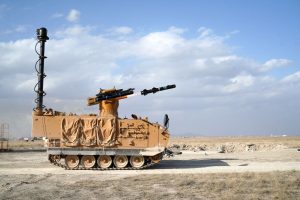


[…] from the indigenous MİDLAS vertical launcher in September 2025, and the system is planned for the TF-2000 air defence destroyer. A navy buying Turkish frigates has a coherent reason to look at the land system […]
[…] of the contract’s scope, and for whether SSB references it when it next updates the public on Çelik Kubbe’s integration timeline, which also includes the TF-2000 air-defence destroyer programme’s radar and […]