Which Countries Buy the Most Turkish Weapons? Three Answers


There is no single answer, and anyone who gives you one has picked a measuring system without telling you. Türkiye does not publish its arms exports country by country. Three sets of evidence exist, and they produce three different lists of top customers. By money, the United States, the United Kingdom and Slovakia led in 2025, with Europe taking $4.3 billion of a $10.054 billion total. By military weight, SIPRI puts Pakistan first on 16 per cent of Turkish deliveries, then the United Arab Emirates on 12 and Ukraine on 8.4. By signed future obligation, the largest customers are Indonesia, Spain and Portugal — none of which has taken delivery of anything yet.
Those three lists share almost no members. That is not a statistical quirk. It is the most useful thing a procurement analyst can know about where Turkish defence exports actually go, because it means Türkiye’s past customers and its future customers are largely different countries, and the shift is running away from the Gulf and towards Europe and South East Asia.
DEFENCETÜRKIYE DATA BOX
Subject: Destination of Turkish defence and aerospace exports
2025 total: $10.054bn — $9.87bn goods, $184m services (SSB)
Rolling 12 months to October 2026: $11.357bn, up 37 per cent
Top destinations by revenue, 2025: United States, United Kingdom, Slovakia (named by SSB, no values published)
Top recipients by SIPRI volume, 2021–25: Pakistan 16%, UAE 12%, Ukraine 8.4%
Largest unfulfilled contracts: Indonesia (48 KAAN), Spain (HÜRJET), Portugal (2 AOR+ ships)
Share to EU, NATO and the US, 2025: about 56 per cent, roughly $5.6bn
Country-level export values published by Türkiye: none
Why there is no official league table
Ankara publishes a monthly customs-based figure for defence and aerospace exports and an annual total. It does not publish a breakdown by destination. What reaches the public is selective: the head of the Presidency of Defence Industries (SSB), Haluk Görgün, names regions, occasionally names a handful of leading countries, and lets the rest stay inside the aggregate.
Two further things make the headline number slipperier than it looks. First, the category is “defence and aerospace”, which captures civil aviation work — airframe sections, engine parts, subcontract manufacturing — alongside weapons. Second, the figure counts customs-cleared shipments, not contract signatures, so a billion-dollar deal signed this month may not appear in the export line for years. We have gone through the four competing measures of Türkiye’s export performance in detail in our analysis of whether Türkiye is a top 10 arms exporter; this page is about the other half of the question, which is who is at the receiving end.
Answer one: the money, and why NATO members lead it
On revenue, the customer list looks nothing like the one most readers expect. Görgün has said that of the ten countries Türkiye exported most to in 2025, four were European and one was the United States, and he named the United States, the United Kingdom and Slovakia as leading destinations. Europe accounted for $4.3 billion and the Middle East $1.6 billion. The EU, NATO members and the United States together took around $5.6 billion, or 56 per cent of the total.
The previous year tells the same story more bluntly. SSB’s 2024 top-ten destination list, reported by Defense News, included the United States, Czechia, Romania, Poland, Slovakia and Bulgaria — every one of them a NATO member, and most of them countries with no publicly known Turkish weapon system in service.
The explanation sits in the company-level export table rather than the country one. Of the ten largest Turkish defence exporters by direct foreign sales in 2024, four were primarily makers of ammunition, explosives or small arms.
Swipe the table sideways on a narrow screen.
| Company | 2024 direct exports | Principal output |
|---|---|---|
| Baykar | $1.80bn | Armed UAVs |
| Turkish Aerospace (TUSAŞ) | $750m | Aircraft, aerostructures |
| ASFAT | $644m | Warships, state-to-state projects |
| MKE | $610m | Ammunition, guns, propellant |
| ARCA Defense | $600m | Artillery and tank ammunition |
| TEI | $390m | Engines and engine parts |
| ASELSAN | $217m | Electronics (direct sales only) |
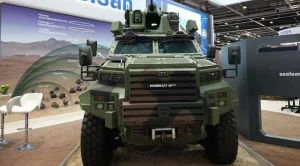
| RAM Foreign Trade / Otokar | $193m | Armoured vehicles |
| ROKETSAN | $179m | Missiles and rockets |
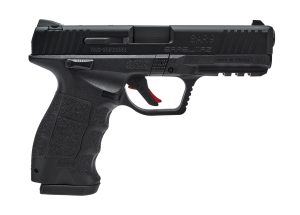
| Samsun Yurt Savunma (CANiK) | $166m | Pistols and small arms |
Read the table and the country list together and the puzzle resolves. The United States is a very large buyer of Turkish sporting and commercial firearms and ammunition, a trade we examined in our piece on how Turkish gunmakers sell far more abroad than most buyers realise, and it is also the destination for a steady flow of aerostructures and engine components. Czechia, Slovakia and Bulgaria are long-established nodes in the European ammunition trade. ARCA Defense alone reported $3 billion of revenue for 2025 and says all of it is export; our profile of ARCA sets out what can and cannot be verified about that figure.

None of this means Slovakia operates Turkish weapon systems. It means the revenue ranking measures trade flows, much of it in consumables and components, and that platform sales are a minority of the money. For context on the wider European pull, Defense News reported in 2024 that Türkiye was among the non-EU states supplying artillery rounds through the Czech-led ammunition initiative for Ukraine — reporting that remains an inference rather than an official breakdown, and no Turkish volume has ever been published. We looked at the regulatory side of that market separately in can Türkiye supply Europe’s ammunition.
Answer two: the military-weight ranking, and how it moved
SIPRI measures something different. Its trend-indicator value is built from unit production costs and is meant to represent the transfer of military capability, not the price paid. SIPRI states plainly that TIV figures do not represent sales values. For ranking customers by the military substance they received, it is the only consistent annual series that exists.
Setting the March 2026 fact sheet beside the March 2025 one shows a customer base that has turned over at the top in a single reporting step. We read both tables directly from the source PDFs.
Swipe the table sideways on a narrow screen.
| Rank | 2020–24 edition | 2021–25 edition | Movement |
|---|---|---|---|
| 1 | UAE — 18% | Pakistan — 16% | Pakistan up from second |
| 2 | Pakistan — 10% | UAE — 12% | UAE down to second, share falling |
| 3 | Qatar — 9.9% | Ukraine — 8.4% | Qatar out, Ukraine in |
| Türkiye’s world share | 1.7% (11th) | 1.8% (11th) | Volume up 122% on 2016–20 |
Two readings matter here. The Gulf is receding as a share of Turkish deliveries even while absolute volumes rise: the UAE went from nearly a fifth of Turkish exports to just under an eighth, and Qatar dropped out of the top three altogether. Pakistan, meanwhile, is consolidating. In the 2020–24 edition Türkiye supplied 3.8 per cent of Pakistani arms imports; in the 2021–25 edition that is 7.0 per cent, making Türkiye Pakistan’s second-largest supplier behind China. What that relationship contains in platform terms is set out in our file on Türkiye–Pakistan defence cooperation.
The third place is the one to watch. Ukraine’s appearance reflects deliveries made during a war, and war-driven demand is not a stable base for a customer ranking.
Answer three: the customers who have not received anything yet
The third list is the order book, and it is the one that will determine the export geography of the 2030s. It is also the hardest to quantify, because Turkish exporters frequently disclose a contract value without naming the buyer — Otokar filed a $1.47 billion wheeled armoured vehicle contract with Türkiye’s Public Disclosure Platform in October 2026 and has never identified the customer.
Swipe the table sideways on a narrow screen.
| Customer | What was bought | Status | Value |
|---|---|---|---|
| Indonesia | 48 KAAN fighters | Framework June 2025; purchase contract signed at IDEF, July 2025 | ~$10bn reported, not itemised |
| Spain | HÜRJET advanced jet trainers | Awarded late December 2025; signed at Getafe, April 2026 | €2.4–2.6bn reported; no official figure |
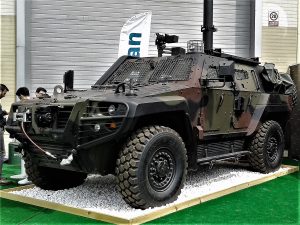
| Romania | 1,059 Otokar COBRA II vehicles | Signed 27 November 2024; mostly built in Romania | ~€857m excluding VAT |
| Portugal | 2 AOR+ replenishment ships (STM) | Signed 17 December 2024; both hulls under construction | Not disclosed |
| Undisclosed | Wheeled armoured vehicles (Otokar) | Filed October 2026; conditional, deliveries from 2027 | $1.472bn |

Indonesia is the single largest commitment any customer has made to Turkish industry. Our page on how many KAAN fighters Türkiye will build notes that the firm order book stands at 68 aircraft, 48 of them Indonesian — more than twice the Turkish Air Force’s own first batch. Spain’s HÜRJET award, examined in our file on Türkiye–Spain defence relations, is the first Turkish combat-capable aircraft sale to a Western European state. Neither has delivered a single airframe.
Signing is running well ahead of shipping across the sector, which is its own problem for a new customer; we quantified the queue in the Turkish defence order book.
Where Türkiye is genuinely a major supplier
National totals flatter and regional shares clarify. SIPRI’s 2021–25 fact sheet states that Türkiye supplied 11 per cent of sub-Saharan Africa’s major-arms imports, behind China on 22 per cent and Russia on 12. In that subregion Türkiye is a top-three arms supplier outright, which is not true of any other region.
Elsewhere the footprint is narrower than the publicity suggests. In the 2021–25 data, only two countries list Türkiye among their three largest arms suppliers: Pakistan, at 7.0 per cent, and Bahrain, at 0.6 per cent. In the 2020–24 edition there were four — Pakistan, the UAE at 11 per cent, Bahrain and Kazakhstan. A supplier selling into 180-plus countries is, in most of them, selling small quantities.
WHY IT MATTERS
For a foreign buyer, the three rankings answer three different questions: whether Türkiye has sold to someone like you, whether it has delivered serious military capability to anyone, and whether its production lines are already spoken for. A country that appears in none of the three lists is not being told that Türkiye will not sell to it — it is being told there is no precedent to reason from, and that the terms will be negotiated rather than inherited.
What the numbers do not show
Four gaps deserve stating plainly.
No country-level values exist. Every per-country claim circulating in English, including the ones on this page, rests either on SIPRI’s capability-weighted estimates or on individual contract disclosures. Türkiye has never published an export table by destination, and neither SSB nor the Ministry of Trade has indicated it intends to.
The headline total is disputed. SSB’s 2025 figure of $10.054 billion is the one Ankara uses. A separate sectoral list circulates at $10.54–10.56 billion. The gap is a basket definition rather than a dispute about reality, but it means two defensible figures exist for the same year.
Indirect exports vanish. SSB’s company ranking counts direct foreign sales only. An ASELSAN sensor inside a Baykar UAV is recorded against Baykar. ASELSAN’s $217 million direct-export line in 2024 is therefore not a measure of how much ASELSAN hardware left the country.
Some customers are contested. SIPRI’s 2021–25 fact sheet names Türkiye as one of five known suppliers of major arms — armed UAVs, armoured vehicles and transport aircraft — to the Sudanese armed forces during the civil war, alongside Belarus, Iran, Kyrgyzstan and the UAE. Buyers evaluating Turkish systems on reputational grounds, and journalists writing about the customer base, should have that on the record. SIPRI also notes that transfers into African conflicts are unusually hard to track.
BUYER VIEW
Ask which list your intended purchase sits on. Ammunition, small arms and components move through established commercial channels with short lead times and many precedents. Platforms — aircraft, ships, air defence — have few completed export precedents outside the Gulf, Pakistan and a handful of African and Central Asian states, and the European contracts that do exist are localisation deals, not straightforward sales.
Ask, too, what position in the queue you are buying. The order book is growing faster than deliveries, and a 2026 signature on a platform contract is realistically a 2030s capability. This is open-source editorial analysis, not procurement advice.
What comes next
Three things would change the picture. The first Indonesian KAAN delivery would put a South East Asian state at the top of the volume ranking for the first time. Completion of the Spanish HÜRJET and Portuguese AOR+ programmes would give Türkiye delivered platform exports inside Western Europe, which it has never had. And the March 2027 SIPRI edition will show whether Ukraine’s third place was a wartime artefact or the start of a European reorientation.
The direction of travel is already visible in the European file, where Poland, Romania and Spain have turned the continent into a working market for Turkish industry; we track that in Turkish defence exports to Europe. The mirror image — what Türkiye buys, and from whom — is in Türkiye’s arms imports. For Turkish-language readers, Envanter Medya maintains a detailed file on the global export reach of Turkish armed drones and a longer dossier tracing 41 years of Turkish defence industrialisation, from off-the-shelf purchasing to technology export.
FAQ
Which country buys the most Turkish weapons?
It depends on the measure. By the military value of arms delivered in 2021–25, SIPRI puts Pakistan first on 16 per cent of Turkish exports. By revenue, SSB named the United States, the United Kingdom and Slovakia as leading 2025 destinations, though much of that trade is ammunition, small arms and aerospace components rather than weapon systems. By contract value awaiting delivery, Indonesia leads with 48 KAAN fighters.
How many countries buy Turkish weapons?
Turkish officials put the figure at 180 or more countries and regions for 2025, with one SSB-linked account citing 185. The number counts any defence or aerospace export, including components and small consignments, so it says more about commercial reach than about operational fleets.
Does Türkiye publish arms exports by country?
No. Türkiye publishes monthly and annual totals for defence and aerospace exports and occasional regional splits. There is no official destination-by-destination table, which is why independent rankings rely on SIPRI estimates and individual contract disclosures.
How much did Türkiye export in 2025?
$10.054 billion according to SSB — $9.87 billion of goods and $184 million of services — the first year above $10 billion and about 48 per cent up on 2024’s $7.15 billion. A separate sectoral count of $10.54–10.56 billion also circulates. The rolling twelve-month figure reached $11.357 billion in October 2026.
Is Europe now Türkiye’s biggest defence export market?
By revenue, yes. Europe accounted for $4.3 billion of 2025 exports against $1.6 billion for the Middle East, and the EU, NATO and the United States together took about 56 per cent. By delivered military capability, Europe is not yet the largest market — SIPRI’s top Turkish recipients remain Pakistan and the UAE, with Ukraine third.
Which countries operate Turkish weapons as their main supplier?
None. In SIPRI’s 2021–25 data no country draws the largest share of its arms imports from Türkiye. Pakistan comes closest, taking 7.0 per cent of its imports from Türkiye, a distant second to China’s 80 per cent.
Is Türkiye a major arms supplier to Africa?
To sub-Saharan Africa, yes. SIPRI records Türkiye as the third-largest supplier to the subregion in 2021–25 on 11 per cent of its imports, behind China on 22 per cent and Russia on 12.
Sources
- SIPRI, Trends in International Arms Transfers, 2025 — Table 1 (row 11), Table 2 (rows 5 and 27), sub-Saharan Africa and Sudan sections
- SIPRI, Trends in International Arms Transfers, 2024 — Table 1 (row 11), Table 2 (rows 5, 11, 23, 26)
- Defence Turkey — SSB and TİM 2025 totals, regional breakdown, Görgün’s top-ten remarks
- Defense News — 2024 total, SSB top-ten destination countries, company export ranking
- Daily Sabah — 2025 threshold figures
- Presidency of Defence Industries (SSB), Haluk Görgün, monthly export statements, 3 November 2026, via Anadolu Agency — October and rolling twelve-month figures
- Public Disclosure Platform (KAP) filing, Otokar, 1 October 2026 — $1,472,080,360 armoured vehicle contract