
Are Turkish Weapons ITAR-Free? US Export Rules Explained

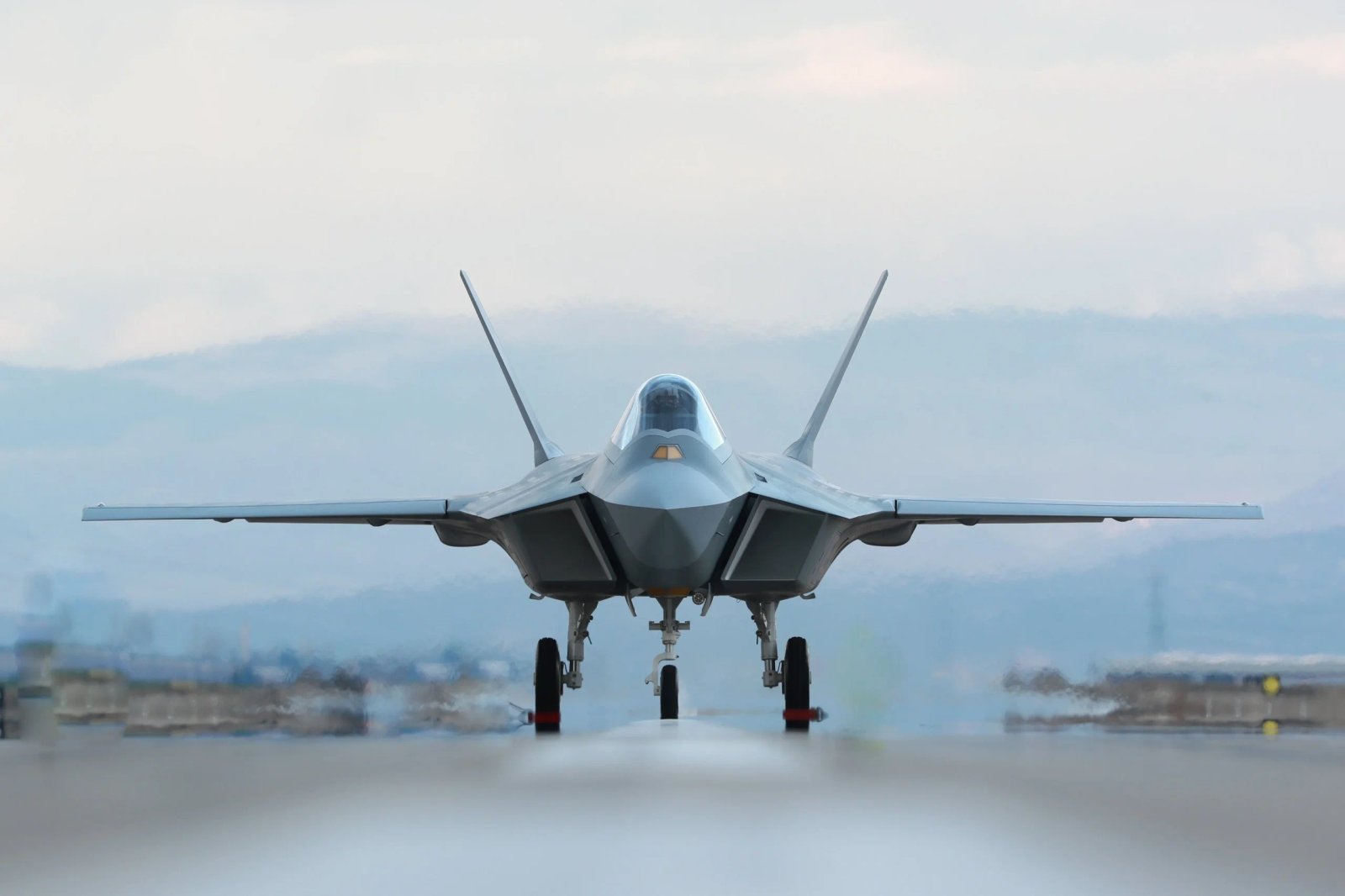
No, Turkish defence equipment is not automatically ITAR-free. The International Traffic in Arms Regulations are a United States rule set, and they follow US-origin parts into whatever is built around them. If a Turkish drone, helicopter or fighter contains an American-made engine, sensor or seeker on the US Munitions List, Washington holds a veto over where that finished system can go — no matter how much of the rest of it is Turkish. There is no minimum-content threshold that releases a product from that grip. Türkiye has spent a decade engineering around this, with real success in some places and none at all in others.
For a foreign procurement office, this is not a legal footnote. It is the single most common reason a signed Turkish contract fails to turn into delivered aircraft, and it explains why Indonesia, Pakistan and Canada all ended up in the same conversation from very different directions.
DEFENCETÜRKIYE DATA BOX
| Regulation | International Traffic in Arms Regulations (ITAR), 22 CFR Parts 120–130 |
| Legal basis | US Arms Export Control Act |
| Administered by | Directorate of Defense Trade Controls (DDTC), US Department of State |
| Scope | Items, software and technical data on the US Munitions List (USML) |
| Rule that matters | Re-export and retransfer of US-origin defence articles require State Department authorisation; no de minimis content threshold applies |
| Turkish programmes affected | KAAN (F110 engine), T129 ATAK (T800 engine), F-35 participation, Bayraktar TB2 sensor supply (indirectly) |
| Current live case | KAAN serial-production engines, licence cleared July 2026 |
| Separate US measure | CAATSA Section 231 sanctions on SSB, imposed December 2020, still on the books |
What ITAR actually controls
ITAR governs the export of anything the United States has designated a defence article and placed on the US Munitions List. That list is broad. It covers complete weapons, but also engines, fire-control systems, targeting sensors, night-vision tubes, seekers, certain composites and — critically — the technical data and manufacturing know-how attached to them. The Department of State’s Directorate of Defense Trade Controls decides who may receive those items and where they may subsequently go.
Two features make ITAR unusually far-reaching, and both are routinely misunderstood outside the United States.
The first is that authorisation is required not only for the original export but for every onward movement. A US company selling an engine to a Turkish manufacturer is one transaction. The Turkish manufacturer installing that engine in an aircraft and selling the aircraft to a third country is a separate transaction, and it needs its own US approval. Washington’s consent to step one implies nothing about step two.
The second is the absence of a content threshold. Under the Export Administration Regulations, which cover dual-use goods, a foreign product containing less than a set percentage of US-controlled content can fall outside US jurisdiction. ITAR has no equivalent release for defence articles. The regulation looks through the foreign end item to the American part inside it and keeps controlling that part regardless of how small a share of the whole it represents. A single controlled component is enough to give the State Department a say in the sale of a complete platform.
The see-through rule, drawn
Five cases that show how it works in practice
Türkiye’s experience with US export licensing is well documented, and the outcomes are not uniform. Two cases killed a sale outright. One removed Türkiye from a programme it had helped build. One was not an ITAR case at all, though it is constantly described as one. And the most recent went Ankara’s way.
| Case | Year | Controlled item | Decision | Outcome for the export |
|---|---|---|---|---|
| F-35 participation | 2019 | Whole programme; TUSAŞ built centre fuselages | Türkiye removed from the programme after the S-400 purchase | Aircraft never delivered; Turkish work packages wound down |
| T129 ATAK to Pakistan | 2018–2022 | LHTEC T800-4A turboshaft engine | US re-export licence not granted | 30-aircraft contract lapsed; Pakistan bought elsewhere |
| TB2 sensor supply | 2020–2024 | L3Harris WESCAM MX-15D targeting turret | Canadian permits suspended, then cancelled under Canadian law | Supply cut; Türkiye substituted domestic turrets; case-by-case Canadian review resumed 2024 |
| CAATSA sanctions on SSB | 2020–present | All US export licences and authorisations to SSB | Sanctions imposed under CAATSA Section 231; still in force | Procurement routed around the sanctioned entity; lifting discussed in 2026, not enacted |
| KAAN serial engines | 2026 | General Electric F110 turbofan, 80 units | Export licence cleared congressional review on 9 July 2026 | Serial production unblocked; third-country export still needs its own approval |
DefenceTürkiye table, compiled from US Department of State, Global Affairs Canada, Defense News and Breaking Defense reporting.
Pakistan: the clearest single loss
Türkiye signed a roughly US$1.5 billion contract in 2018 to supply Pakistan with 30 T129 ATAK attack helicopters. The T129 is a Turkish-built derivative of the AgustaWestland A129, and it flies on the LHTEC T800-4A, a turboshaft produced by a Honeywell and Rolls-Royce joint venture. Because the engine is a US-controlled defence article, exporting the finished helicopter to Pakistan required American authorisation. It never came. Delivery deadlines were extended more than once, and by early 2022 the order had effectively lapsed. Defense News reported that Türkiye was nonetheless able to complete a smaller T129 sale to the Philippines, which is a useful detail: these are case-by-case decisions about a specific destination, not a blanket ban on the aircraft.
Canada and the TB2: the case everyone mislabels
The best-known interruption to a Turkish export line was not an ITAR action. Canada suspended export permits for L3Harris WESCAM targeting turrets in October and November 2020 and cancelled them in April 2021. The official Global Affairs Canada review was conducted under Canada’s own Export and Import Permits Act and its Arms Trade Treaty obligations, and concluded that there was “credible evidence that certain Canadian military goods and technology exported to Türkiye, namely sensors equipped on Turkish UAVs, have been used in the conflicts in Nagorno-Karabakh, Libya and Syria.” Ottawa moved back to case-by-case consideration in 2024.
The distinction matters commercially, not just pedantically. It means a Turkish platform can be perfectly clean of US content and still be stopped — by Canadian, British, German or Italian controls on a component the buyer never thought about. “ITAR-free” and “free of foreign export-control exposure” are not the same claim. The Canadian episode also produced the clearest evidence that substitution works: Türkiye replaced the imported turret with domestic electro-optics, and Envanter Medya has published a detailed Turkish-language comparison of the ASELFLIR-600 against the WESCAM MX-15D for readers who want the sensor-level engineering behind that switch.

KAAN: the case that went the other way
KAAN flies on two General Electric F110 turbofans, an arrangement that has always carried US licensing risk. At the Farnborough airshow in July 2026, Turkish Aerospace chief executive Mehmet Demiroğlu told Breaking Defense that the company holds 10 F110s for prototypes and is buying 80 more for serial production, and that the export licence “was approved or went through the Congress on July 9.” That clears the path for Turkish production. It does not, on its own, clear the path for exporting KAAN to anyone else — a separate authorisation governs that step, which is exactly the two-licence structure described above.
WHY IT MATTERS
For a country shortlisting Turkish equipment, US export control is the variable most likely to move a delivery date, and it sits outside the seller’s control. Ankara cannot promise a timeline that depends on a Washington licence. What it can do — and has done, repeatedly — is remove the American part. Every substitution takes years and usually costs performance in the interim, which is why buyers should ask what is in the system today rather than what is planned.
What in the Turkish portfolio is genuinely free of US content
A great deal of it, and considerably more than five years ago. Turkish artillery, small arms, ammunition, armoured vehicles, naval guns, most electronic warfare equipment, the domestic electro-optics line and the bulk of ROKETSAN’s guided-munition family are built without US-controlled items and are exported without reference to Washington. The 2025 export record of US$10.054 billion — goods of US$9.87 billion plus US$184 million of services, announced by the SSB in January 2026 — was overwhelmingly earned in those categories.
The exposure is concentrated in propulsion and in a narrowing set of high-end sensors. Turkish aero-engine dependence is the honest weak point: Türkiye’s engine industry can build turboshafts and small turbofans, but the fighter-class engine is not yet in service. TEI’s TF35000 is intended to replace the F110 on KAAN, with service entry currently discussed around 2032. Until that engine is qualified and installed, KAAN carries US licensing exposure no matter who buys it. The same logic runs through the broader independence question: high local-content percentages are real, and they still do not equal zero foreign veto.
Indonesia: the live test
Indonesia signed for 48 KAAN aircraft in June 2026, the type’s first export order. Reporting since then — originating with the Brazilian outlet Cavok and repeated across the trade press — says Jakarta wants aircraft free of ITAR-controlled components, on the view that US licensing exposure is a strategic vulnerability. That condition has not been confirmed by a named Indonesian official, and it should be treated as a reported negotiating position rather than a contractual term. If it were applied strictly, it would tie deliveries to the indigenous engine rather than to airframe production, pushing them well into the 2030s. The KAAN programme page tracks the order and engine milestones as they move.
BUYER VIEW
Questions worth putting to a Turkish supplier in writing, before signature:
- Which items in the configuration offered to us are US-origin or US-controlled, at component level?
- Does a third-country transfer authorisation already exist for our country, or must one be applied for?
- Which non-US foreign components carry their own national export controls — Canadian, British, German, Italian?
- If a licence is refused mid-contract, what is the substitution path, what does it cost, and who bears the delay?
- Does local assembly or technology transfer change the licensing position, or simply relocate it?
This is open-source editorial analysis. DefenceTürkiye does not advise governments or companies on procurement.
What comes next
Two things would materially change the picture. The first is the TF35000 reaching qualification, which would make an ITAR-free KAAN a configuration rather than an aspiration. The second is the CAATSA question. President Trump said in July 2026 that the United States would lift the Section 231 sanctions imposed on the SSB in December 2020, but the sanctions remained on the books through the northern summer, and CAATSA’s congressional-review provisions mean a presidential statement is the start of a process rather than the end of one. Neither development would abolish ITAR’s reach; both would widen the room Turkish exporters have to work in. Readers tracking the money side will find a data-led Turkish analysis of how the export series has moved over the past decade in Envanter Medya’s study of Türkiye’s defence export growth.
FAQ
Is the Bayraktar TB2 ITAR-free?
In its current configuration the TB2 is built without US-controlled items, and it is exported without US authorisation. That was not always true of every subsystem, and the aircraft has been affected by Canadian — not American — export controls. See the TB2 programme page for the operator and export picture.
Does ITAR apply if only a small part of the system is American?
Yes. ITAR has no de minimis threshold for defence articles. A single US-origin item on the Munitions List keeps the finished platform within reach of a US authorisation requirement, regardless of what proportion of the whole it represents.
Why could Türkiye sell the T129 to the Philippines but not to Pakistan?
Because these are destination-specific decisions. The US engine made both sales licence-dependent; the licence was granted for one buyer and not the other. Nothing about the aircraft changed.
Do CAATSA sanctions and ITAR do the same thing?
No. ITAR is a standing licensing regime covering defence articles. CAATSA Section 231 is a sanctions measure aimed at a specific entity — the SSB — over the S-400 purchase, and it blocks US export licences and authorisations to that entity. A company can face one without the other.
Can a buyer get a written US guarantee before signing with a Turkish supplier?
Not in the sense buyers usually want. Authorisations are issued to exporters for defined transactions and can be revoked. What a buyer can obtain is clarity on whether an authorisation is already in place for their country, and a contractual remedy if one is refused.
Which Turkish companies are least exposed to US export control?
Broadly, those whose products contain no US-origin Munitions List content: the ammunition, small-arms, artillery and armoured-vehicle manufacturers, and much of ASELSAN’s and Baykar’s current catalogue. Exposure rises sharply with anything requiring a fighter-class engine, which is why Turkish Aerospace carries more of it than most. Several NATO members already operating Turkish systems buy chiefly from the unexposed categories.
Sources
- US Department of State, International Traffic in Arms Regulations, 22 CFR Parts 120–130
- Directorate of Defense Trade Controls (DDTC), US Department of State
- US Department of State, The United States Sanctions Turkey Under CAATSA 231, 14 December 2020
- Global Affairs Canada, Final report: Review of export permits to Türkiye
- Breaking Defense, Turkish Aerospace CEO: US cleared KAAN fighter engines for export, 22 July 2026
- Defense News, Turkey to export T129 helos to Philippines despite block on Pakistani order, 25 May 2021
- Anadolu Agency, Türkiye’s defense, aviation exports exceed $10B threshold in 2025, 4 January 2026
- SIPRI, Trends in International Arms Transfers, 2025, March 2026


