
US Navy Weighs Turkish Istanbul-Class Frigate for New Warship Program

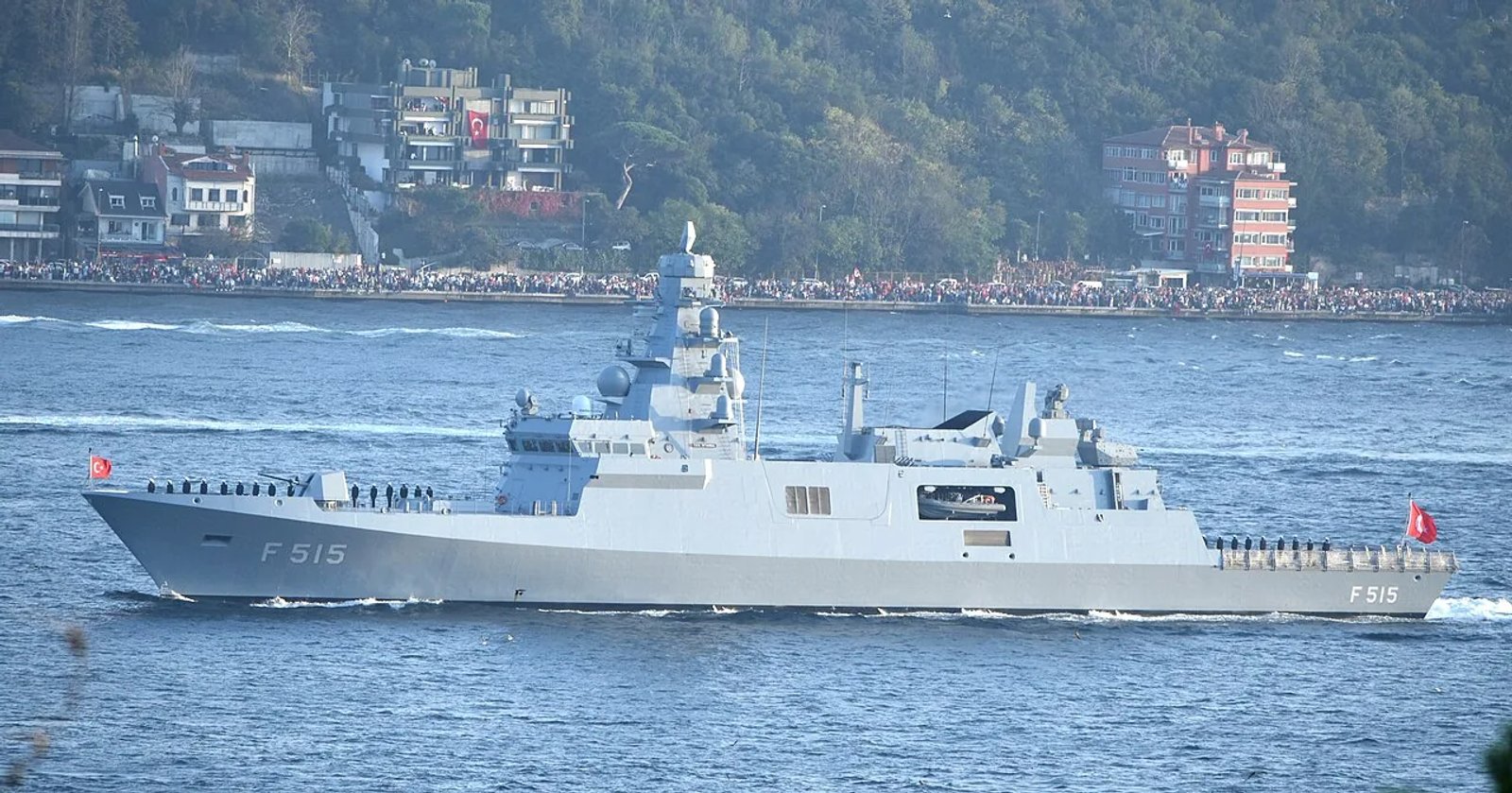
The U.S. Navy is examining Turkiye’s Istanbul-class frigate as one of three foreign warship designs that could help it recover from the collapsed Constellation-class program, according to reports published this week by USNI News, Navy Lookout and Korea Times. Alongside the Turkish design, the Navy is looking at South Korea’s Chungnam-class frigate and the export version of Japan’s Mitsubishi Heavy Industries FFM Mogami-class — a shortlist that would have been unthinkable a year ago for a service bound by law to build its warships at home.
Nothing has been decided. No contract has been signed, no design selected, and Turkish officials have not publicly commented on the reports. But the mere fact that an Istanbul-class design — built by Turkish shipyards under the MILGEM national warship program — is on a U.S. Navy shortlist marks a striking moment for Turkiye’s naval industry, and one worth taking seriously even at this early, pre-decision stage.
What is reportedly being considered
According to the reports, the White House and the Navy are weighing a competition that could see up to two frigates built in a foreign shipyard before construction shifts to a U.S. yard — a break with more than a century of domestic-only naval construction. The move follows an August White House memo that opened the door to foreign warship designs by invoking a national-security waiver against the U.S. law that normally bars foreign-built vessels from Navy service.
The trigger is the failure of the Constellation-class frigate program, which the Navy scuttled after years of cost overruns and schedule slips at Fincantieri’s Marinette Marine yard in Wisconsin. Rather than start a new domestic design from scratch, the Pentagon appears to be looking at mature, already-serving foreign designs it could adapt — with construction potentially split between an overseas partner yard and an American one to preserve some domestic shipbuilding content.
The Istanbul-class in brief
The Istanbul-class, also known as the MILGEM I-Class, is the newest and most capable iteration of Turkiye’s two-decade-old MILGEM (Milli Gemi, “National Ship”) program. The lead ship, TCG Istanbul (F-515), entered Turkish Naval Forces service in 2023. The class displaces around 3,100 tonnes, runs 113.2 meters long, and is built around an Aselsan-heavy sensor and weapons suite: a Cenk-400N 2D AESA search radar, Alper-200N surface-search radar, Akrep-300N fire-control radar, a Fersah hull-mounted sonar, a 76mm main gun, a Gokdeniz close-in weapon system, and a 16-cell vertical launch arrangement for Roketsan Atmaca anti-ship missiles. Turkiye plans eight for its own navy, with construction split across state and private yards including Istanbul Naval Shipyard and Sedef Shipyard.
Crucially for this story, the class already has an export record. Indonesia has ordered two Istanbul-class frigates as part of its wider naval cooperation with Turkiye. Earlier MILGEM derivatives are in service or under construction abroad as well: Pakistan’s Navy operates Babur-class corvettes built under the program with Aselsan supplying the combat systems package, and Ukraine has two Ada-class corvettes on order from Turkish yards. A U.S. Navy evaluation would be a different order of magnitude from any of those deals, but it does not come out of nowhere — it follows a decade of Turkiye positioning MILGEM-derived ships as an export product for navies that want a modern, sensor-dense frigate without the price tag or lead times of a U.S. or Western European design.
Why this matters beyond the shipyard
For NATO-watchers, the interesting part is not just the ship — it is what an American look at a Turkish design says about where Ankara sits in the alliance’s industrial base right now. Turkiye’s defense exports have been rising sharply, exceeding $10 billion in 2025, and its shipbuilders, drone makers and missile houses have spent the last few years chasing customers well outside their traditional Middle Eastern and Central Asian markets. A serious U.S. Navy look — even one that ends in “no” — is a different kind of validation than another export contract with a partner nation; it puts a Turkish warship design in the same conversation as South Korea’s Hanwha Ocean and Japan’s Mitsubishi Heavy Industries, two of the most established naval exporters in the world.
It also lands at an awkward moment in the U.S.-Turkiye defense relationship, which has spent years working through the fallout of Turkiye’s S-400 purchase and its removal from the F-35 program. A frigate deal, however preliminary, would sit alongside recent signs of a slow normalization, including renewed U.S. willingness to discuss F-16 sales and upgrades. None of that means a Turkish design wins; Seoul and Tokyo bring their own considerable shipbuilding capacity and their own alliance relationships with Washington, and the Pentagon’s overseas-build option carries obvious political sensitivity in a Congress that has historically protected domestic shipyards.
What to watch next
The reports so far are attributed to sources familiar with the deliberations rather than an official Navy announcement, so the standard cautions apply: this is a design under evaluation, not a program of record, and there is no confirmed timeline for a decision. SSB and the Turkish shipyards involved in MILGEM construction have not issued statements. Any of the following would mark the next real milestone: an official U.S. Navy solicitation naming the shortlisted designs, a congressional hearing addressing the foreign-build waiver, or a Turkish government or industry statement confirming discussions are underway.
Sources: USNI News, Navy Lookout, Korea Times.
Related reading on DefenseTurkiye:


[…] United States is the most instructive gap. The US Navy has been assessing the Istanbul-class frigate design as one reference point for a future warship programme, which is an evaluation and nothing more. And […]
[…] selected and Turkish officials have not commented. We set out what is and is not established in our report on the US Navy evaluation. Even reaching a shortlist is a marker of how far the sector has come from the yard that built the […]