Türkiye’s TF-2000 Destroyer: Status, Schedule and Market

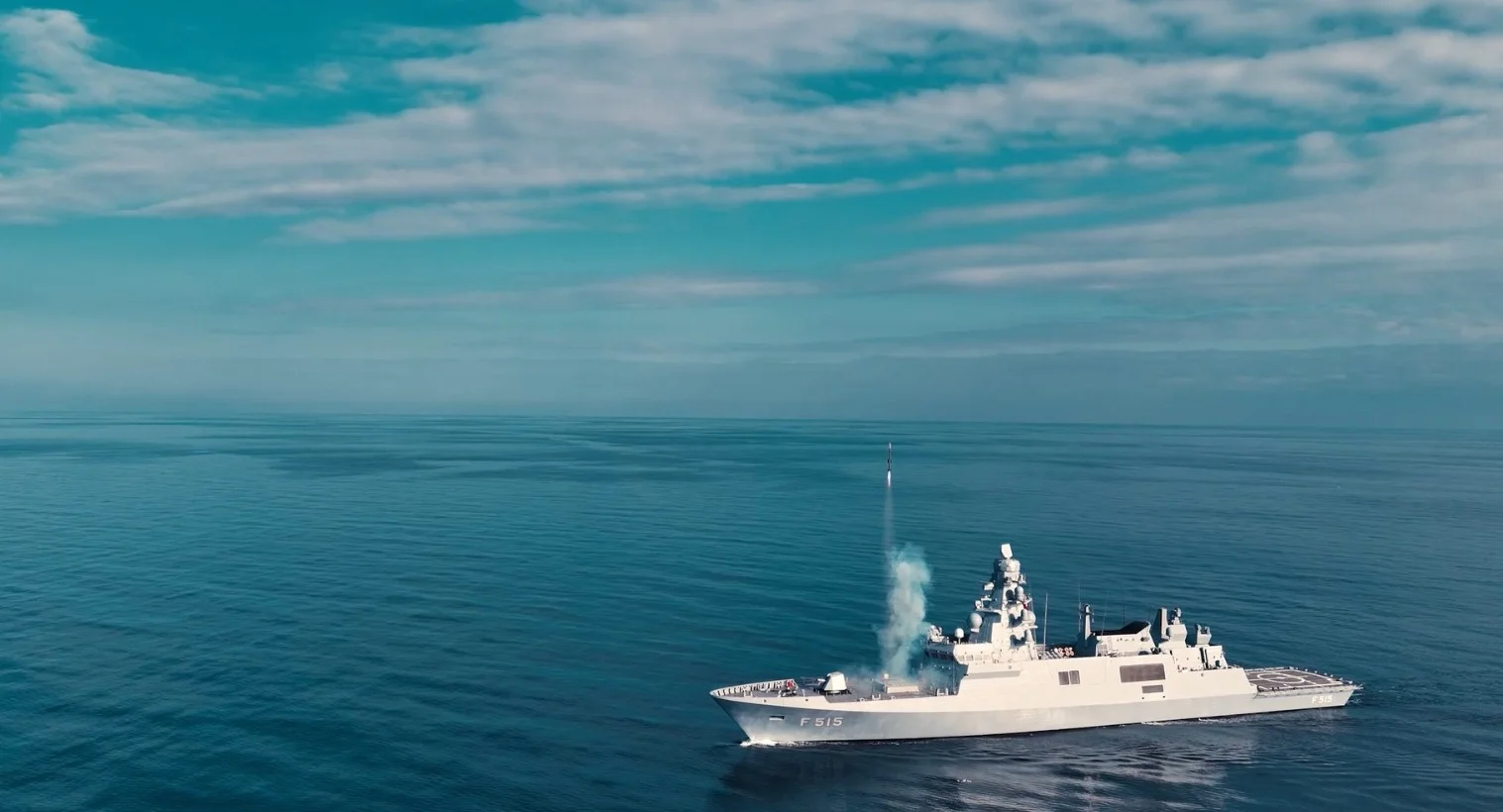
TF-2000 is Türkiye’s first purpose-built air-defence destroyer, and the lead ship is under construction right now at the Istanbul Shipyard Command. The class is named Tepe; the first hull is TCG Kocatepe. It displaces roughly 8,300 tonnes, runs 149 metres, and carries 96 vertical launch cells — a cell count in the same band as an American Arleigh Burke and roughly double what most European air-defence destroyers carry. One ship is under contract. Eight are envisaged. The launch target is the end of 2027, and the delivery date most recently put in public by the builder was 2030.
That is the short version. The longer version matters more to anyone outside Türkiye, because TF-2000 is the first Turkish warship designed to do the one naval job Türkiye has never been able to do for itself: shoot down ballistic and cruise missiles at fleet range, with Turkish sensors and Turkish interceptors. Whether it does that on schedule is a separate question from whether it is being built, and the public record on the first is considerably messier than the public record on the second.
DEFENCETÜRKIYE DATA BOX
- Programme — TF-2000 Air Defence Warfare Destroyer; third phase of the MİLGEM national warship project
- Class / lead ship — Tepe class; TCG Kocatepe
- Prime contractor — ASFAT, the Ministry of National Defence’s own contracting company
- Builder — Istanbul Shipyard Command (İTK), a Turkish Navy yard
- Size — approximately 8,300 tonnes; 149 m length; 21.5 m beam; 5.75 m draft
- Armament — 96 MİDLAS vertical launch cells (32 + 64); 127 mm main gun; GÖKDENİZ CIWS; ATMACA anti-ship missiles
- Main sensor — ASELSAN ÇAFRAD dual-band GaN AESA radar suite
- Contracted — one ship, signed at IDEF 2025; value not disclosed
- Launch target — end of 2027 (Istanbul Naval Shipyard, March 2026)
- Delivery target — 2030 (ASFAT, July 2025; not restated since)
- Export status — not offered for export; no foreign customer, no marketing campaign
- Status checked — 11 October 2026
What TF-2000 actually is
TF-2000 is the top of the MİLGEM ladder. The project that produced the 2,300-tonne Ada-class corvettes and then the 3,000-tonne İstif-class frigates was always planned in three steps, and the third step was a dedicated anti-air warfare ship. Turkish sources date the formal start of the TF-2000 project to July 2017, which means the design has been in work for nine years before a block reached a slipway.
The word “destroyer” is doing real work here, and it is not marketing. At roughly 8,300 tonnes the ship sits above every warship Türkiye has designed before by a factor of nearly three, and the jump is not about size for its own sake. An air-defence ship needs hull volume for a large fixed-face radar high on the superstructure, electrical generation to feed it, magazine depth for interceptors that are substantially larger than point-defence missiles, and enough displacement to carry all of that without losing seakeeping. Those requirements, not a naming convention, are what push the design past frigate dimensions. Readers who want the categorical distinction in detail will find Envanter Medya’s Turkish-language explainer on where a frigate ends and a destroyer begins useful.
The sensor is the point of the ship. ASELSAN’s ÇAFRAD is a dual-band active electronically scanned array suite with fixed faces, built on gallium nitride transmit-receive modules — the same materials route that produced Türkiye’s land-based long-range radars and the domestic AESA radar line that ASELSAN has been building from the chip level up. Naval News has reported a capability figure of more than 2,000 simultaneous tracks at 450 km. That number originates in manufacturer material rather than from a demonstrated at-sea trial, and it should be read as a design claim, not a measured result.
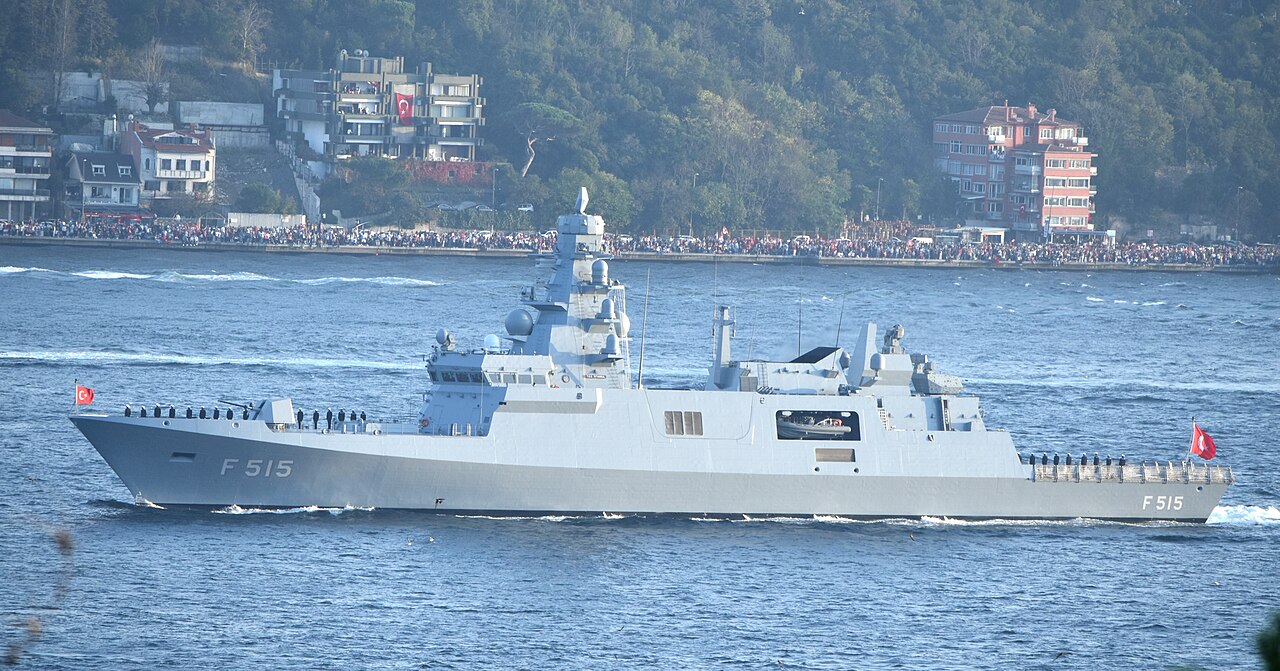
Four different “construction has started” dates, and what each one means
Anyone reading English-language coverage of TF-2000 runs into a problem: the programme appears to have started construction at least four times. It did not. Each announcement marked a genuinely different event, and Turkish practice is to publicise all of them. Laying them side by side is the fastest way to see where the programme actually stands.
| Milestone and who announced it | What it actually marked |
|---|---|
| July 2017 Programme start |
The TF-2000 project formally begins. Design and requirement work only — no metal, no build contract. |
| 2 January 2025 Ministry of National Defence weekly briefing |
First steel cut at Istanbul Naval Shipyard, on the same day as the MUGEM carrier and the MİLDEN submarine. A ceremonial cut; the build contract was still six months away. |
| 23 July 2025 ASFAT CEO Mustafa İlbaş and Navy Commander Adm. Ercüment Tatlıoğlu, at IDEF 2025 |
The construction agreement that actually funds the lead ship. One hull. Value not announced. ASFAT then put launch at 2028 and delivery at 2030. |
| 27 November 2025 MoD spokesman Rear Adm. Zeki Aktürk |
Fabrication of the first hull block starts in the shop at Istanbul Shipyard Command, framed as part of the Çelik Kubbe effort. |
| 16 March 2026 Istanbul Naval Shipyard Commander Rear Adm. Recep Erdinç Yetkin |
Steel cutting complete; first block heading to the slipway. Launch target stated as end of 2027 — a year earlier than ASFAT’s own figure eight months before. |
| April 2026 Adm. Ercüment Tatlıoğlu, during the Mavi Vatan 2026 exercise (via Anadolu Agency) |
First block laid down on the berth. The ship is named TCG Kocatepe and the class becomes Tepe. This is the real keel-equivalent milestone. |
Two things fall out of that sequence. First, physical construction of the lead ship is genuinely under way and has been since late 2025 — this is not a model on a stand. Second, the schedule has an unresolved contradiction sitting in it. In July 2025 ASFAT told Breaking Defense, which reported the IDEF signing, that the ship would launch in 2028 and be delivered by 2030. Eight months later the yard commander said end of 2027. Nobody has since restated the delivery date. A launch pulled a year to the left with the delivery date left untouched is not impossible — fitting out is where warship schedules usually slip, not hull assembly — but it is the kind of gap a buyer should notice rather than average out.
WHY IT MATTERS
Türkiye currently has no warship that can intercept a ballistic missile, and no Turkish ship carries a long-range area-defence interceptor. Every Turkish naval export to date — the corvettes in Pakistan and Ukraine, the frigate for Indonesia — has been sold out of a product line whose top end did not exist. TF-2000 is the first attempt to build that top end domestically rather than buy it, and it is the ship that determines whether Turkish naval exports stay in the patrol-and-escort tier or eventually reach the air-defence tier where margins and political weight are higher.
Where it sits among the world’s air-defence ships
The comparison most often drawn is with the US Navy’s Arleigh Burke, and on one number it holds. TF-2000’s 96 MİDLAS cells, arranged as a 32-cell forward group and a 64-cell group amidships, match the Flight III Burke’s 96 Mk 41 cells. Against the European air-defence destroyers the Turkish ship carries roughly twice the magazine: the British Type 45, the French-Italian Horizon class and Australia’s Hobart class each field around 40 to 48 cells. South Korea’s Sejong the Great class carries about 128 and China’s Type 055 about 112. These foreign figures are approximate open-source numbers — navies publish them inconsistently and some count differently — but the ordering is not in dispute.
On hull size the picture changes. At about 8,300 tonnes TF-2000 is lighter than a Flight III Burke at roughly 9,700 tonnes full load, and substantially lighter than the Korean and Chinese ships, which run past 11,000 tonnes. Türkiye is therefore putting a large-destroyer magazine into a hull closer in displacement to Japan’s Maya class or the Type 45. That is an efficient design on paper and a tight one in practice: growth margin, generating capacity and berthing all get harder as the cell count climbs relative to tonnage, and the later ships of a class are where those constraints usually show up.
The more useful point is that cell count is the easiest specification in naval air defence to match and the least informative on its own. What separates an air-defence destroyer from a frigate with a lot of cells is the interceptor, the fire-control chain and the ability to engage on someone else’s sensor data. The US fleet’s advantage is not 96 holes in the deck; it is SM-6, SM-3 and a cooperative engagement network with thirty years of integration behind it. Europe’s is the Aster family and PAAMS. Türkiye’s equivalent is the part of TF-2000 that is still being built.
The missile is the open question
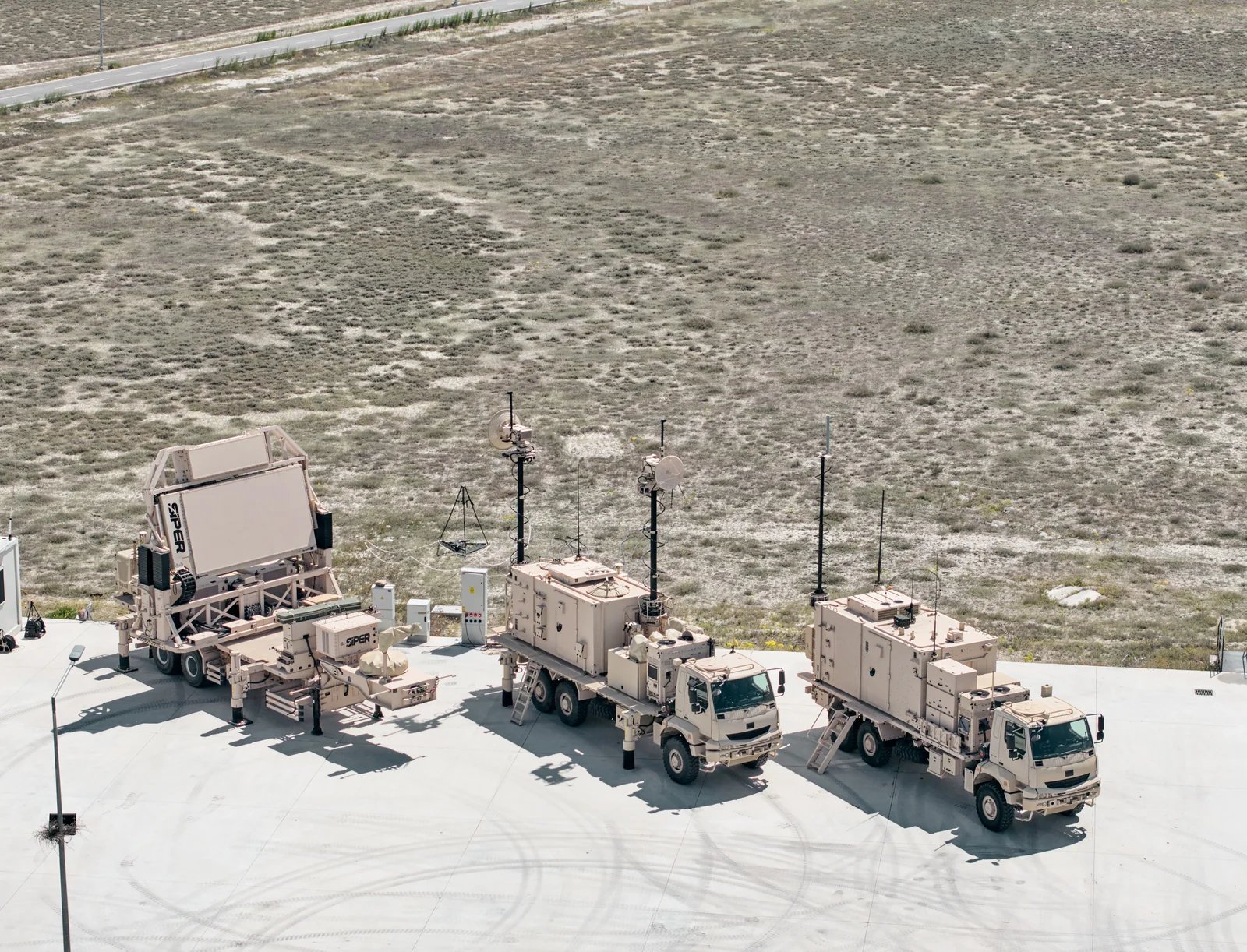
TF-2000’s 96 cells are planned to hold a mix: HİSAR-D for medium range, a naval derivative of SİPER for long range, the SAPAN family, ATMACA for anti-ship work and the GEZGİN land-attack cruise missile. Of that list, only ATMACA and HİSAR-D are in service in any form, and HİSAR-D has been fired from MİDLAS aboard TCG İstanbul — which is why the launcher itself is one of the lower-risk items on the ship.
The long-range naval interceptor is not. SİPER exists as a land system and is being delivered to the Turkish Air Force, but a vertically launched naval variant is a different weapon: different canister, different boost profile, different fire-control integration, different qualification campaign. No Turkish official has announced a naval SİPER firing at sea. ASELSAN did disclose a $195 million contract with the Secretariat of Defence Industries on 7 October 2026 covering next-generation radars including multi-function fire-control sets for the HİSAR and SİPER systems, which indicates the fire-control half of the problem is funded and moving. The interceptor half has no public date.
This is the programme’s central risk, and it is worth stating plainly rather than burying: TF-2000 could be launched, fitted out and handed to the Navy on schedule and still not be able to perform area air defence, if the missile is not qualified. Türkiye’s record on exactly this pattern is mixed — the documented history of Turkish programme schedules shows hulls and airframes arriving broadly on time while the hard subsystems, engines and seekers above all, arrive late.
What it means for buyers of Turkish warships
TF-2000 is not for sale. No export variant has been offered, no foreign customer has been named, and with one ship under contract against a requirement of eight, Türkiye has no spare capacity to sell. Any procurement officer reading this as a near-term option should stop there.
It matters to foreign buyers for a different reason. Türkiye now sells warships — Pakistan took four Babur-class corvettes, Ukraine ordered Ada-class hulls, Indonesia signed for an İstif-derived frigate. Those customers are not buying a hull; they are buying into an ecosystem: ADVENT as the combat management system, ASELSAN radars and electro-optics, MİDLAS as the launcher, ATMACA as the anti-ship weapon, and the yards and support chain behind them. TF-2000 is where that ecosystem’s upper limit gets established. If ÇAFRAD and a naval long-range interceptor work, every Turkish export design below TF-2000 gains a credible growth path and Türkiye can start competing for air-defence frigate tenders. If they do not, Turkish naval exports stay capped at the corvette-and-light-frigate tier where they are today.
There is also a supply-chain signal. The lead ship is being built in a Navy yard under a Ministry of National Defence contracting company rather than at one of the private yards that handle most Turkish export work — ASFAT holds the contract and the Istanbul Shipyard Command cuts the metal. The division of labour across Türkiye’s naval shipbuilding base means a TF-2000 derivative would most likely be offered through ASFAT on a government-to-government basis rather than through a commercial yard, which changes who a buyer negotiates with and what the approval path looks like.
BUYER VIEW
- Availability — none. One hull under contract for the Turkish Navy, launch targeted end of 2027, delivery last stated as 2030.
- Cost data — no contract value has been published. Early programme phases have been put at around $3 billion in open reporting, which is an estimate, not a disclosure.
- Technology transfer — untested. Türkiye has transferred corvette and frigate technology, but has no precedent for transferring a dual-band AESA air-defence combat system.
- Foreign content — lower than on earlier Turkish hulls, but the propulsion package is where imported content has historically sat on Turkish warships, and the gas turbines have not been domestically sourced.
- Combat record — none, and none possible before the 2030s.
- What to watch — a naval SİPER firing at sea. That single event, more than any launch ceremony, determines whether this is an air-defence destroyer or a very large frigate.
What comes next
The near-term milestones are concrete. Block assembly continues at Istanbul Shipyard Command across roughly 60 structural blocks. A launch is targeted for the end of 2027, which would put TF-2000 in the water around the same time as the MUGEM carrier — not a coincidence, since the destroyer’s stated role includes escorting it. Fitting out, ÇAFRAD installation and combat system integration then run through to a delivery date that currently rests on a figure last given in July 2025.
Beyond the lead ship, the eight-vessel figure is an aspiration rather than a programme of record: it appears consistently in Turkish reporting and in official framing of the fleet plan, but only one ship has a contract. The pattern Türkiye followed with Ada and İstif — build one, prove it, then order in batches — suggests the follow-on decision will not come before TF-2000 is in the water. For the wider Çelik Kubbe architecture, the ship is the seaward layer; Turkish officials have framed it that way since the November 2025 construction announcement. A detailed Turkish-language walkthrough of the programme from requirement to inventory is available in Envanter Medya’s TF-2000 project file.
FAQ
What is the TF-2000?
TF-2000 is Türkiye’s air defence warfare destroyer programme, the third and largest phase of the MİLGEM national warship project. The class is called Tepe and the lead ship is TCG Kocatepe, under construction at the Istanbul Shipyard Command.
Is TF-2000 really a destroyer?
By displacement and role, yes. At roughly 8,300 tonnes with 96 vertical launch cells and a dedicated area air-defence mission, it falls within the internationally recognised destroyer category — larger than the Dutch De Zeven Provinciën class and comparable in armament to an Arleigh Burke, though lighter.
When will TF-2000 enter service?
The most recent public launch target is the end of 2027, given by the Istanbul Naval Shipyard commander in March 2026. The last stated delivery date is 2030, given by ASFAT in July 2025 and not updated since. The two figures have not been reconciled publicly.
How many TF-2000 destroyers will Türkiye build?
One is under contract. Turkish reporting and official framing consistently reference a requirement for eight ships, but no contract exists beyond the lead vessel.
What missiles will TF-2000 carry?
The planned loadout includes HİSAR-D medium-range and SİPER-derived long-range surface-to-air missiles, the SAPAN family, ATMACA anti-ship missiles and the GEZGİN land-attack cruise missile. Of these, ATMACA is in service and HİSAR-D has been fired from the MİDLAS launcher at sea. A naval long-range interceptor has not been publicly fired from a ship.
Can Türkiye export the TF-2000?
Not currently. No export variant has been offered and no foreign customer has been approached publicly. With a single hull contracted against a requirement of eight, there is no production capacity available for export.
Who builds the TF-2000?
ASFAT, the Ministry of National Defence’s contracting company, holds the build agreement signed at IDEF 2025. Physical construction is carried out at the Istanbul Shipyard Command, a Turkish Navy yard. ASELSAN supplies the ÇAFRAD radar and combat system elements, ROKETSAN the MİDLAS launcher.
Sources
- Breaking Defense — ASFAT to construct first Turkish air defense destroyer TF2000 (23 July 2025)
- Naval News — Turkish Navy starts construction of MUGEM, TF-2000 and MİLDEN (2 January 2025)
- Army Recognition — TF-2000 schedule and characteristics (March 2026)
- Turkish Ministry of National Defence weekly press briefings, 2 January 2025 and 27 November 2025 (statements by Rear Admiral Zeki Aktürk)
- Admiral Ercüment Tatlıoğlu, Commander of the Turkish Naval Forces, on the laying down of TCG Kocatepe during Mavi Vatan 2026, as reported by Anadolu Agency
- ASELSAN Public Disclosure Platform (KAP) filing, 7 October 2026, on next-generation radar procurement