
Does Türkiye Build Its Own Submarines? MİLDEN and Reis

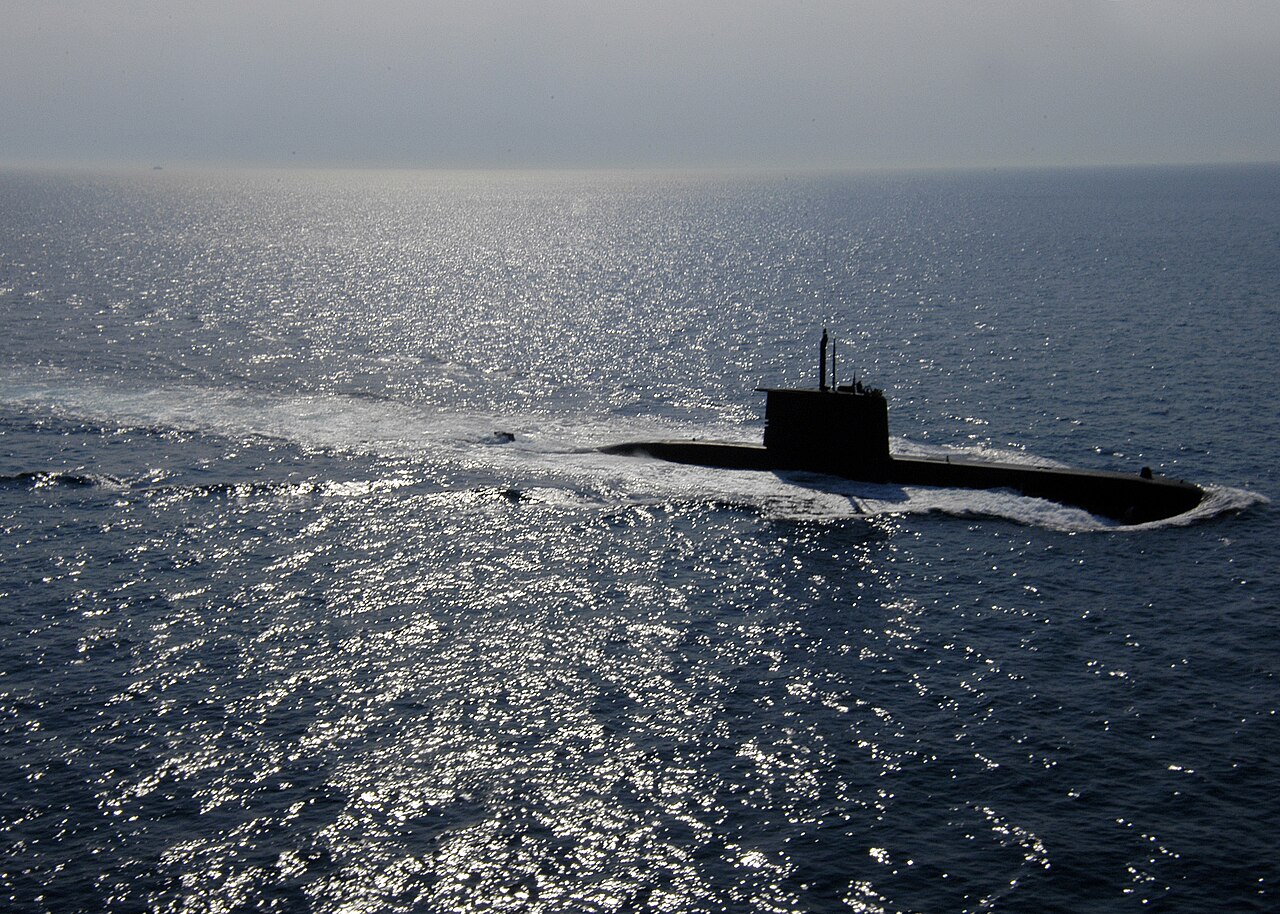
Not yet — and the honest answer matters more than the slogan. Every submarine in Turkish service was designed in Germany and assembled under licence at Gölcük Naval Shipyard: eight Type 209 boats in the Preveze and Gür classes, plus two Type 214TN boats of the Reis class. Türkiye builds submarines. It has not yet designed one, and it has never exported one. That is what the MİLDEN programme is meant to change: the lead boat, Atılay, has been in construction at Gölcük since December 2025, with state shipbuilder ASFAT targeting delivery before 2030. What is already Turkish is the inside of the boat — the sonar, the combat system, the heavyweight torpedo and the missiles.
For a foreign navy weighing Turkish naval offers, that distinction is the whole story. Türkiye has built a credible surface-warship export business — corvettes and frigates from Turkish yards are in service or under construction for Pakistan, Ukraine, Romania and Portugal — but submarines are a separate industrial category, with a separate supplier base and a much smaller club of countries that can design one. Türkiye is applying to join that club. It has not been admitted yet.
DEFENCETÜRKIYE DATA BOX
Builder: Gölcük Naval Shipyard (Turkish Naval Forces), with STM as design-engineering partner and ASFAT as the state marketing and export arm
Systems in service: Preveze class (4 × Type 209/1400), Gür class (4 × Type 209/1400 Mod), Reis class (Type 214TN, 2 of 6 delivered)
Category: Conventional diesel-electric attack submarines; AIP-equipped from the Reis class onward
Indigenous programme: MİLDEN (Milli Denizaltı), six boats planned, lead boat Atılay
MİLDEN status: Detailed design complete; first test block 2024; keel-laying and naming December 2025; specifications released by ASFAT August 2026
Target delivery: Before 2030 (ASFAT), service entry in the early 2030s
Known export customers: None. No Turkish-built submarine has been sold abroad
Export record that does exist: Submarine modernisation — three Pakistan Navy Agosta 90B boats under a 2016 STM contract
Three different questions hide inside “does Türkiye build submarines?”
Search traffic treats this as one question. Procurement offices treat it as three, and they have very different answers.
Can Türkiye construct a submarine? Yes, and it has done so since the 1970s. Gölcük has assembled Type 209 boats for five decades and is currently running six Type 214TN hulls in parallel. Construction competence — pressure-hull welding, sectional assembly, outfitting, harbour and sea trials — is not in question.
Can Türkiye design a submarine? Unproven. MİLDEN is the first attempt. No Turkish-designed submarine has been launched, dived or accepted into service, and design risk on a first-of-class boat is the single largest risk in naval shipbuilding.
Can Türkiye sell a submarine? Not so far. ASFAT has taken MİLDEN models to Asian exhibitions and Turkish industry is marketing the smaller STM 500, but there is no signed submarine export contract anywhere in the public record.
The Reis class: a German design that taught the Turkish supply chain
The New Type Submarine Project was contracted in 2009 with the HDW/MarineForce International consortium — now part of TKMS — at a reported value of €2.06 billion, covering six Type 214TN boats built at Gölcük. TKMS’s role is design authority, material supply and supervision of construction and testing. That is a licence build with German engineering ownership, not a Turkish design.
The schedule has slipped substantially, and buyers should price that in. The programme’s published plan had all six boats delivered between 2022 and 2027. In practice, TCG Piri Reis (S-330) was commissioned on 24 August 2024, roughly two years late, and TCG Hızırreis (S-331) was handed over at Gölcük on 27 November 2025, with TKMS confirming the transfer to the procurement authority SSB and onward to the Navy. TCG Murat Reis (S-332) was launched in May 2025 and is in outfitting. Three more hulls are in build.
What the programme did deliver is a supplier base. Turkish industry describes local content on the Reis class at around 80 per cent — a claimed figure covering systems rather than the design, and one worth treating as an industrial-participation number, not a measure of independence. ASELSAN, HAVELSAN, STM, MilSOFT, AYESAŞ and TÜBİTAK institutes supplied sensors, combat systems, data distribution and integration work. Roketsan, ASPİLSAN and TÜBİTAK MAM ran development on torpedoes, batteries and fuel cells specifically so that the next class would not need to buy them.
What is already Turkish below the waterline
The weapons and sensors are where the localisation argument is strongest, and these are verifiable against delivery announcements rather than brochures.
- AKYA heavyweight torpedo. Roketsan signed a mass-production agreement with SSB on 18 January 2024; the Ministry of National Defence announced first deliveries to the Naval Forces in May 2024, with footage of the weapon being loaded aboard TCG Preveze. Turkish sources reported the first AKYA firing controlled through the indigenous MÜREN combat management system in June 2026, and a further live firing during the Denizkurdu-II exercise in July 2026.
- ATMACA anti-ship missile, with an encapsulated submarine-launched variant, and the longer-ranged GEZGİN land-attack cruise missile named for future integration.
- Sonar and optronics. ASELSAN supplies the bow, flank and towed-array sonar suite and a non-penetrating optronic mast for MİLDEN.
- Combat management. HAVELSAN and MilSOFT work descended from the MÜREN and GENESIS families, already fitted through the Preveze mid-life upgrade.
This is why the Reis class matters strategically even though it is German. A submarine whose weapons, sonar and combat system are domestic is far less exposed to an export-licence dispute than one whose torpedoes come from abroad — a point we set out in more detail in our assessment of how independent Turkish defence production really is.
MİLDEN: what Türkiye is actually attempting
ASFAT released MİLDEN’s specifications publicly at TEKNOFEST Mavi Vatan, held at Gölcük in late August 2026, and they describe a boat noticeably larger than the Type 214TN. Length is given as more than 80 metres against the Reis class’s 68.35 metres, beam more than 7 metres, draught 6.8 metres, surfaced displacement around 2,700 tonnes, crew 40, and mission endurance above 50 days. Armament is eight 533 mm tubes for AKYA and ATMACA, plus a MİDLAS vertical launcher supporting hot and cold launch. Diving depth, submerged displacement, range and the MİDLAS cell count were not disclosed — and no responsible reading should estimate them.
Two technical choices carry the programme. The first is air-independent propulsion: six proton-exchange membrane fuel-cell modules rated at 60 kW or more, fed by a methanol reformer, paired with lithium-ion batteries. The Reis class uses Siemens fuel cells; a domestically produced fuel-cell AIP would remove one of the last high-end German dependencies. Envanter Medya’s Turkish-language explainer of how air-independent propulsion lets a conventional boat stay submerged for weeks is a useful primer on why that subsystem decides a modern diesel boat’s value. The second is the pressure hull: HY-100-class steel, with the first block reported at about 30 tonnes. Neither the AIP plant nor the hull has been proven at depth in a Turkish-designed boat yet.
WHY IT MATTERS
Conventional submarines are one of the most concentrated export markets in defence. Germany, France, Sweden, South Korea, Japan, Russia and China supply almost all of them, and political conditions travel with the design. A seventh supplier that sells without end-use restrictions, with technology transfer built into the offer, would change the options available to mid-sized navies in Southeast Asia, the Gulf and Latin America. Türkiye is positioning for exactly that slot — but it is doing so with an unproven design and a first hull that is still in blocks.
The fleet and the programmes, September 2026
| Class | Origin of design | Built at | Number | Status | Export dimension |
|---|---|---|---|---|---|
| Preveze (Type 209/1400) | Germany (HDW) | Gölcük | 4 | In service; mid-life upgrade with Turkish systems | None |
| Gür (Type 209/1400 Mod) | Germany (HDW) | Gölcük | 4 | In service; national systems being fitted | None |
| Reis (Type 214TN) | Germany (TKMS, design authority) | Gölcük, under licence | 6 contracted | 2 delivered (2024, 2025); 1 launched; 3 building | Not exportable — German design rights |
| MİLDEN / Atılay | Türkiye (Gölcük with STM) | Gölcük | 6 planned | Lead boat in construction since December 2025 | Marketed by ASFAT; no contract |
| STM 500 | Türkiye (STM) | Turkish yard, export-oriented | — | In build; published figures vary by configuration | Shown at DSA and Indo Defence; no customer named |
Compiled by DefenceTürkiye from manufacturer, ministry and programme announcements, September 2026.
The export question: modernisation, not platforms
Türkiye’s only submarine export record is engineering, not steel — and it is a genuine record, not a brochure claim. Under a contract awarded in 2016 and later expanded from one boat to three, STM modernised Pakistan Navy Agosta 90B submarines, delivering PNS/M Hamza on 29 April 2021 and PNS/M Khalid on 25 January 2023, with the third boat continuing. The work replaced sonar, periscopes, command and control, data distribution and steering systems, and exported ASELSAN and HAVELSAN products in the process. STM calls it Türkiye’s first submarine modernisation engineering export.
That matters commercially for a reason buyers grasp immediately: operators of ageing French, German and Russian conventional boats have a real problem finding an integrator who will fit modern systems without demanding a new-build order. It is also the route through which Turkish industry has earned its submarine references — the same pattern visible across the naval sector, where the Pakistan relationship has run through ASFAT and state-to-state contracting for nearly a decade. Envanter Medya’s Turkish-language file on the STM 500 small submarine and its published specifications is the most detailed public description of the smaller platform Türkiye is offering alongside MİLDEN.
The marketing effort is real but early. ASFAT displayed MİLDEN at DSA 2026 in Malaysia — a country operating two Scorpène-class boats and periodically studying a third — and the STM 500 has appeared at Indonesian and Malaysian exhibitions. Pakistani outlets have reported interest in a VLS-equipped MİLDEN. None of that is a contract, a selection or a request for proposals, and it should not be read as one.
Where the Turkish submarine story sits on the independence ladder
Original DefenceTürkiye diagram, built from programme milestones announced by the Ministry of National Defence, SSB, ASFAT, STM and TKMS.
BUYER VIEW
Delivery: Gölcük is running six hulls in parallel, but the Reis class is roughly two years behind its published plan. Any MİLDEN offer before the lead boat completes sea trials is an offer on paper.
Cost data: No unit price has been published for MİLDEN or the STM 500. The 2009 Reis-class contract is the only public figure, at a reported €2.06 billion for six boats.
Technology transfer: The Pakistan modernisation shows Turkish industry will work inside a customer’s own yard and hand over systems. That is the strongest evidence available of how a submarine package would be structured.
Export limitations: The Reis class cannot be re-exported — TKMS holds the design. Only MİLDEN and the STM 500 are Türkiye’s to sell.
Weapons ecosystem: AKYA, ATMACA and the ASELSAN sonar suite are domestic, which shortens the political approval chain on a sale. This is open-source editorial analysis, not procurement advice.
What is honestly still missing
Four gaps deserve to be stated plainly rather than argued away.
No first-of-class proof. MİLDEN has not been launched. Pressure-hull qualification, AIP endurance and acoustic signature — the three things that separate a working submarine from a large steel tube — are all ahead of the programme, not behind it.
Schedule credibility. The Reis class, built to a proven German design with German supervision, still slipped about two years. A first indigenous design targeted for delivery “before 2030” is a demanding date on that record.
The design-knowledge question. Türkiye’s submarine design capability was built inside a fifty-year licence relationship with HDW and TKMS. How much of that transfers cleanly to an independent design is genuinely unknown until Atılay dives.
No export baseline. Countries buying a first-of-class submarine from a first-time designer are rare. The likelier route is what Türkiye already does well — modernisation, weapons, sensors and co-production — which is the same industrial pattern visible in where Turkish defence companies have set up production abroad.
What comes next
Three checkpoints will settle the question over the next four years. The first is TCG Murat Reis entering service, which would put three Reis-class boats in the fleet and show whether Gölcük has recovered the programme’s pace. The second is the launch of Atılay, the point at which MİLDEN stops being a specification sheet. The third is any submarine tender in Southeast Asia or the Gulf in which ASFAT is formally shortlisted rather than simply exhibiting.
The wider naval picture is moving in the same direction: the TF-2000 air-defence destroyer and the İstif-class frigate family are both Turkish designs already in build or in service. Submarines are the last major surface-and-subsurface category where Türkiye still builds somebody else’s drawings.
FAQ
Does Türkiye build its own submarines?
Türkiye builds submarines at Gölcük Naval Shipyard, but to German designs under licence. Its first indigenous design, MİLDEN, has been in construction since December 2025 and has not yet been launched.
What is MİLDEN?
MİLDEN — Milli Denizaltı, or National Submarine — is Türkiye’s indigenous submarine programme. Six boats are planned, the first named Atılay. ASFAT gives it a length above 80 metres, roughly 2,700 tonnes surfaced, a crew of 40, eight 533 mm torpedo tubes, a MİDLAS vertical launcher and fuel-cell air-independent propulsion.
How many submarines does the Turkish Navy have?
Ten boats are in service as of September 2026: four Preveze-class and four Gür-class Type 209/1400s, plus two Reis-class Type 214TN boats. Four more Reis-class hulls are in build.
Has Türkiye ever exported a submarine?
No. It has exported submarine modernisation: STM modernised Pakistan Navy Agosta 90B boats under a 2016 contract, delivering PNS/M Hamza in April 2021 and PNS/M Khalid in January 2023, with a third boat in progress.
Can Türkiye sell the Reis-class submarine to other countries?
No. The Type 214TN is a TKMS design built under licence, and the design rights sit in Germany. Only MİLDEN and the smaller STM 500 are Turkish-owned designs available for export.
Is MİLDEN nuclear-powered?
No. MİLDEN is a conventional diesel-electric boat with fuel-cell air-independent propulsion and lithium-ion batteries. No Turkish nuclear submarine programme has been officially announced.
When will the first Turkish-designed submarine enter service?
ASFAT has stated a delivery target before 2030, with service entry expected in the early 2030s. No official acceptance date has been published.
Sources
- TKMS, press statement on the handover of the second HDW Class NTSP boat, TCG Hızırreis, to SSB and the Turkish Naval Forces, 27 November 2025 (tkmsgroup.com; the page was unreachable from our systems at the time of writing and is cited from the published text)
- Naval Today, Turkish Navy welcomes second Reis-class submarine, 27 November 2025
- Defence Turkey, milestones in the Reis-class Type 214TN submarine project, including the €2.06 billion contract value, the published 2022–2027 delivery plan and Type 214TN dimensions
- European Security & Defence, Turkish Ministry of National Defence announces steel cutting on MUGEM, TF-2000 and MİLDEN, January 2025
- Militarnyi, Türkiye begins construction of the first MİLDEN submarine
- Quwa, ASFAT’s published MİLDEN specifications, released at TEKNOFEST Mavi Vatan, Gölcük, August 2026
- Army Recognition, MİLDEN Atılay at DSA 2026 and Turkish submarine export marketing in Asia
- Defence Turkey, STM delivers the second submarine in the Pakistan Navy Agosta 90B modernisation project, with delivery dates for PNS/M Hamza and PNS/M Khalid
- Janes, Türkiye starts mass production of new naval torpedo and missile systems
- Turkish Ministry of National Defence announcements on AKYA heavyweight torpedo deliveries (May 2024) and the Denizkurdu-II firing (July 2026)
- Envanter Medya (Turkish): the STM 500 small submarine platform file and an explainer on air-independent propulsion



[…] MİLDEN. A nationally designed submarine would remove the single largest foreign dependency in the fleet. Nothing has been launched; the lead boat Atılay has been in construction at Gölcük since December 2025. The programme, the Reis-class licence and Türkiye’s submarine export record are set out in full on our page asking whether Türkiye builds its own submarines. […]