Turkish Drones, Corvettes and Engines Face Their Hardest Customer in Ukraine

Few customers have tested Turkish defence products as hard as Ukraine. Since the full-scale invasion in February 2022, the relationship has stopped being a simple buyer and seller arrangement. It now runs through drones, warships, engines and a factory outside Kyiv that has been bombed more than once. Turkey Ukraine defence cooperation is the one case where Turkish hardware, Turkish shipyards and Turkish industrial plans all sit inside an active war zone.
This piece traces how the partnership grew, what each side actually delivered, and where it has stalled.
How Did Turkish-Ukrainian Defence Ties Take Shape?
The groundwork came before the war. In 2019, Baykar won a contract reported at about $69 million for six Bayraktar TB2 systems for Ukraine, according to Defense News. In the same period, Avia Ventures, a Baykar subsidiary, received permission to produce drones in Ukraine, with work expected to start in 2025.
The relationship moved onto a wider footing in 2020, when Ankara and Kyiv signed a military cooperation agreement. Ukraine used it to order two Ada-class corvettes from Turkey. On 3 February 2022, three weeks before the invasion, President Erdoğan travelled to Kyiv. The two governments signed a free trade agreement and a package of defence deals that included plans to expand drone production in Ukraine.
The logic was complementary. Ukraine had a Soviet-era aerospace base, above all engine design and manufacture. Türkiye had a fast-growing defence industry that needed turbine engines it could not yet build itself.
| Date | Development |
|---|---|
| 2019 | TB2 contract for six systems (reported value about $69 million); Avia Ventures licence to produce drones in Ukraine |
| 2020 | Military cooperation agreement; order for two Ada-class corvettes |
| 3 February 2022 | Erdoğan in Kyiv; free trade agreement and defence deals signed |
| 2 October 2022 | First Ukrainian corvette launched at Tuzla, Istanbul |
| April 2023 | Ukraine signs three undisclosed contracts with Baykar (reported) |
| July 2023 | Construction begins on the Baykar plant in Kyiv Oblast (reported) |
| 1 August 2024 | Second Ukrainian corvette launched |
| 22 October 2024 | New Baykar cooperation agreement signed at SAHA Expo; details not disclosed |
What Did the Bayraktar TB2 Do for Ukraine?
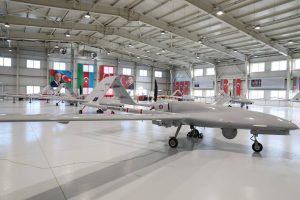
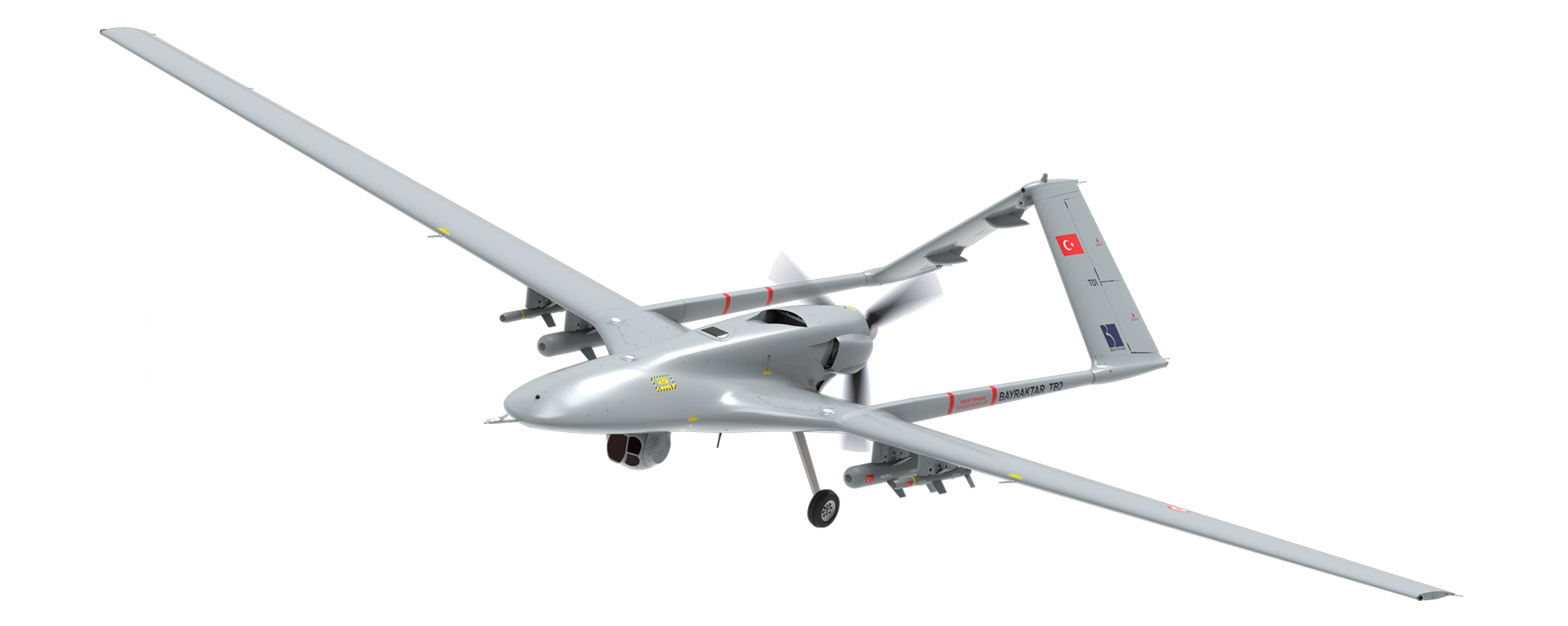
The TB2 is the face of the partnership. Ukraine received its first systems before 2022 and the drone became one of the best known symbols of the early phase of the war. Our Bayraktar TB2 programme guide covers operators and export history in detail, and the Baykar company profile explains who builds it.
Baykar’s own roadmap has since moved toward heavier aircraft such as the AKINCI and the Kızılelma, and that shift is where the Ukrainian engine industry comes in.
Why Do Turkish Drones Depend on Ukrainian Engines?
This is the least visible and probably the most important thread. Ukrainian companies supply engines for several Turkish aircraft.
According to Defense News, Motor Sich provides AI-450 engines for Baykar’s AKINCI and AI-25TLT engines for the Anka-3 and for the Kızılelma unmanned combat aircraft. The same report says Motor Sich engines also power Turkish Aerospace’s Atak II helicopter. Ivchenko-Progress and Baykar Makina signed a cooperation agreement covering supply of Ukrainian-made engines for Turkish unmanned aircraft. Later reports say the two sides agreed to develop a turbofan jointly.
The dependence runs both ways. Baykar gets proven powerplants without waiting for a domestic equivalent. Ukrainian engine makers get a customer that keeps production lines busy while Ukraine’s own aviation market is largely closed.
It also made the supply chain a target. Russia struck Motor Sich facilities in Zaporizhzhia on 6 August 2023. Some analysts quoted by Defense News read the attack as a political message aimed at Ankara as much as at Kyiv. That is analysis, not an established fact, but the timing underlined how exposed the arrangement is.
Turkish companies are also working to reduce the exposure. Reports in 2024 said Baykar planned to invest around $300 million over five years in a turboprop engine for the AKINCI. Treat that figure as reported rather than confirmed by an official release.
What Happened to the Baykar Factory Near Kyiv?
Baykar announced the Ukrainian plant in early 2024, and construction was reported to have started in July 2023. The planned output was about 120 drones a year with roughly 500 employees, according to Ukrainian media. Haluk Bayraktar told Reuters in 2024 that the building was about 80 percent complete and that the facility would be ready by August 2025. He added that the start of production would depend on how the war developed. The plant was expected to build the TB2 or the heavier TB3.
Ukraine’s ambassador to Türkiye has said the plant would fully operate once the war ends.
The Ukrainian case matters for the wider question of where Turkish defence companies build abroad. Most overseas projects involve peaceful host countries. Ukraine is the exception, and it shows what a factory costs when the host is under attack.
Why Are Ukraine’s Corvettes Still in Turkey?
The naval side is the other major programme. Ukraine ordered two corvettes of the Ada class, the anti-submarine variant of the MİLGEM family, under a 2020 contract that Radio Free Europe described as worth roughly $256 million. They are being built at the RMK Marine yard in Tuzla, Istanbul, with STM, whose own record is covered in the STM company profile, named as the engineering lead.
Hetman Ivan Mazepa was launched on 2 October 2022 with Olena Zelenska as sponsor. Hetman Ivan Vyhovskyi followed on 1 August 2024. Reported specifications for the lead ship include a 76 mm gun, Harpoon anti-ship missiles, VL MICA air defence missiles and MU90 torpedoes. The hull is roughly 100 metres long.
Neither ship has reached Ukraine. The reason is the 1936 Montreux Convention, which obliges Türkiye to close the straits to the warships of belligerent states, with an exception for ships returning to a home port. Ukrainian officials have discussed workarounds, and Kyiv’s argument is that departing from a Turkish shipyard is not the same as transiting. Naval analysts quoted by Radio Free Europe warned that the ships would be hunted the moment they entered the Black Sea during active hostilities.
The ships have therefore stayed in the Sea of Marmara. The first has been in sea trials, and the Ukrainian Navy commander was reported in 2026 saying it had passed another round of technical inspections. Reports put the second ship’s maiden voyage in 2026 and its formal handover in the first quarter of 2027.
The corvettes also point to a deeper issue. Ukraine’s own shipbuilding has been suspended since the invasion, and the light frigate Volodymyr the Great sits incomplete at Mykolaiv. Turkish yards are holding a capability Ukraine cannot build at home right now.
Which Other Turkish Systems Have Seen Ukrainian Service?
Armoured vehicles are the third strand. BMC’s Kirpi mine-protected vehicle has been used in Ukraine, and our report on the Kirpi MRAP and its combat record looks at what that experience means for export sales.
Turkish officials have kept a careful public line. Ankara sells to Kyiv, hosts talks and enforces the Montreux regime. That balancing act explains why many deals are announced in general terms and why details are often withheld, as with the October 2024 Baykar agreement, which Ukraine’s foreign ministry hinted could involve Kızılelma production.
What Has Turkey Gained From the Ukrainian Test Bed?
Turkish industry has taken three concrete lessons. First, operational feedback from a conflict that few other customers can offer. Second, engines and supply security: the Ukrainian relationship exposed how much Turkish unmanned aircraft rely on a foreign turbine industry operating within missile range. Third, factory abroad risk: the Kyiv plant showed that production outside Türkiye is only as safe as the host country’s skies.
For Ukraine, the benefits are clearer than the delivery record. The country gained drones early, kept a defence-industrial partner that stayed engaged through the war, and secured warships that will exist when the war ends, even if they cannot sail now.
The open questions are practical. Will Baykar complete its Kyiv-area plant before a ceasefire, or wait? Will the Ivchenko-Progress turbofan reach flight testing? And when the second corvette is handed over in 2027, will the straits be open to it? Each answer will tell more about the partnership than another contract announcement.