HİSAR and NASAMS Take Different Routes to the Same Air Defence Job

Two medium-range air defence systems, one Turkish and one Norwegian-American, are built to stop the same targets: cruise missiles, aircraft, helicopters and, increasingly, drones. They get there by very different routes. HİSAR starts from a purpose-built surface-to-air missile. NASAMS starts from an air-to-air missile that was already in production and turns it into a ground weapon.
That difference explains most of what separates them in range, cost, export politics and combat record. It is also why the comparison is less clear-cut than a spec sheet suggests.
What are HİSAR and NASAMS, exactly?
HİSAR is a family of air defence missiles developed jointly by ASELSAN, which supplies radars, fire control and integration, and ROKETSAN, which designs and builds the missiles. The family covers a low-altitude version, HİSAR-A+, and a medium-altitude version, HİSAR-O+. We cover the family in more detail in our HİSAR guide.
NASAMS, the National Advanced Surface to Air Missile System, was developed by Kongsberg Defence & Aerospace of Norway together with Raytheon, now part of RTX. Kongsberg describes it as a network-centric system built around a Fire Distribution Centre, a Raytheon AN/MPQ-64F1 Sentinel 3D radar, a passive electro-optical and infrared sensor, and multi-missile launchers.
| Feature | HİSAR-A+ / HİSAR-O+ | NASAMS |
|---|---|---|
| Developers | ASELSAN (sensors, fire control) and ROKETSAN (missiles) | Kongsberg Defence & Aerospace and Raytheon (RTX) |
| Missile | Dedicated HİSAR missile, imaging infrared seeker; RF-seeker version tested | AIM-120 AMRAAM, AMRAAM-ER, AIM-9X Block II |
| Interception range (maker figures) | 15+ km (A), 25+ km (O) | Varies by missile; AMRAAM-ER publicly cited at roughly 40 km and above |
| Radar | ASELSAN KALKAN family | AN/MPQ-64F1 Sentinel |
| Architecture | Vehicle-mounted launchers with integrated radar, tied into HAKİM command network | Dispersed launchers, sensors and command post on a data network |
| In service | HİSAR-A+ 2021, HİSAR-O+ from early 2022 | Operational since the mid-1990s, now in its third generation (reported) |
How far and how high can each one reach?
ROKETSAN lists an interception range of more than 15 km for HİSAR-A and more than 25 km for HİSAR-O. Reported test firings of the RF-seeker variant point to 40 km or more, but that version has been described as a test achievement rather than a fielded standard, so treat the figure with care. HİSAR-O+ is commonly credited with an engagement ceiling around 15 km.
NASAMS does not have one range figure, because it depends on the missile loaded. The AIM-9X is a short-range, heat-seeking option. The standard AMRAAM gives the system its core medium-range reach. AMRAAM-ER, the extended-range version, pushes further. Published numbers for the ER differ from source to source, from around 40 km in some reporting to considerably more in reference works, and Kongsberg does not put a single figure on its overview page.
On paper, then, a loaded NASAMS can reach farther than HİSAR-O+, and it can mix missile types in the same battery. HİSAR-O+ wins on simplicity: one missile family, one integrated chain.
Why does the missile choice matter so much?
An AMRAAM is an air-to-air missile with an active radar seeker. Reusing it saves development time and gives NASAMS customers access to a large, well-supported production line shared with fighter aircraft. That is why Western governments could send NASAMS to Ukraine quickly: the missile supply chain already existed. The trade-off is that each interceptor is a fairly expensive missile, and its availability is tied to a US-controlled production base that also serves fighter fleets.
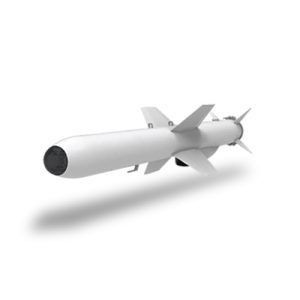
HİSAR missiles are built for the surface-to-air job. They use inertial navigation with a data-link update in the middle of the flight and an imaging infrared seeker for the final phase, according to published descriptions. A dual-pulse motor with thrust vector control is reported to support tight turns against manoeuvring targets. The price is that Türkiye had to develop and qualify the whole missile itself. That took from the first development contracts in 2011 to service entry a decade later.
The infrared seeker has a known limit: weather and obscurants matter more than they do for radar guidance. That is part of the reason ROKETSAN has pursued the RF-seeker version. NASAMS, with radar homing, does not face the same constraint, though it depends more on its sensors staying alive and connected.
How do the two architectures differ on the ground?
NASAMS is built around dispersion. Kongsberg says the launcher elements can sit more than 20 km from the Fire Distribution Centre, which lets a commander spread out the equipment and make a battery harder to target in one strike. Sensors, launchers and command nodes share data over a network, so any radar can cue any launcher.
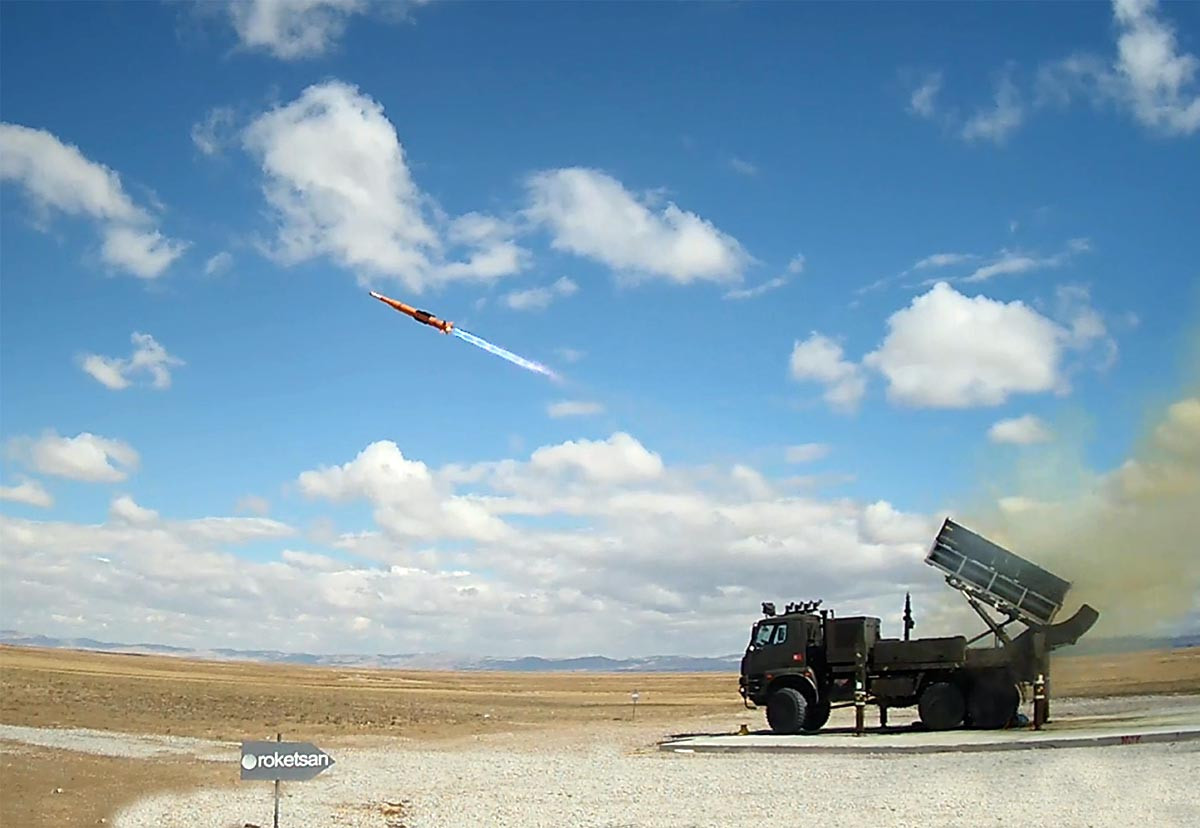
HİSAR-O+ launchers are mounted on 6×6 trucks and carry their own radar for autonomous operation, with batteries reportedly made up of three launchers and 18 missiles. HİSAR-A+ sits on a tracked FNSS chassis, which suits it to accompany manoeuvre units. Both plug into ASELSAN’s HAKİM command network, which feeds Türkiye’s layered Steel Dome concept.
That placement is the biggest strategic difference. NASAMS is usually one layer in a European or American air defence mix, alongside Patriot-class systems above it and short-range guns and missiles below. HİSAR is designed from the start as the middle tier between SUNGUR and KORKUT below and the long-range SİPER above.
Which one has actually been used in combat?
NASAMS has the stronger public record. Kongsberg says the system has protected Washington DC around the clock since 2005, and it has been fielded in Ukraine since 2022. Reference-work reporting from early 2025 cites roughly 900 missiles and drones engaged over Ukraine with a hit rate around 94 per cent. That figure is a reported one, and engagement statistics from a war zone are rarely independently audited, but even discounted it represents a depth of operational feedback that no HİSAR user can match.
HİSAR has live-fire acceptance tests and Turkish Armed Forces service. Reporting on the final HİSAR-O+ acceptance firing in December 2021 says the system destroyed a high-speed target at altitude. We have no verified public data on HİSAR combat engagements, and this article does not claim any.
Who buys them, and who can sell to whom?
Kongsberg counts 13 nations operating NASAMS, and customers keep returning. Hungary ordered the system under a deal reported at about €410 million, and Lithuania signed a further contract worth around €234 million in October 2024, according to Janes and other reporting. Norway, Finland, Spain, the Netherlands and Australia are also among the users cited in reference sources.
HİSAR’s export record is thinner. Indonesia signed for HİSAR-based systems, which it calls Trisula-O and Trisula-U, as part of a larger ROKETSAN package that also included the KHAN ballistic missile. Beyond that, publicly documented contracts are scarce, as we noted in our overview of Turkish air defence exports.
The political dimension runs both ways. NASAMS carries US components, so exports need US approval. HİSAR is marketed on being free of that dependency, which matters to buyers who have faced delays or refusals elsewhere. That claim, though, still needs more customers to prove itself.
Is HİSAR a NASAMS alternative or a different product?
For Türkiye the question is mostly academic: it is buying HİSAR in volume. Serial production contracts signed in late 2023 are reported to run through 2029, and deliveries of complete HİSAR-O systems were reported in 2025. The government’s aim is an air defence chain built on domestic parts, not the best single-system spec.
For a foreign buyer, the choice looks different. NASAMS offers proven performance, a mature support network and access to a heavily produced missile. HİSAR offers lower political exposure to Washington, a purpose-built interceptor and a manufacturer eager for references. Few militaries will pick purely on range.
The two are best read as answers to the same threat from different industrial starting points. One reuses what existed; the other builds what was missing.