STM Builds Its Name on Frigates, Submarines and Kamikaze Drones

Ask most people to name a Turkish defence firm and they will reach for Baykar, ASELSAN or TAI. STM rarely comes up first. Yet the Ankara-based engineering house has its fingerprints on almost every warship the Turkish Navy has commissioned in the past two decades, on the submarine fleets of two navies, and on a family of loitering munitions that has been exported across three continents. The STM defence company operates with a lower profile than its bigger siblings, and that is partly by design. It began life as a consultancy, not a factory.
STM Savunma Teknolojileri Mühendislik ve Ticaret A.Ş. was established in 1991 by a decree of Türkiye’s Defence Industry Executive Committee, with a narrow brief. It would provide project management, systems engineering, technology transfer and consultancy services to what is today the Presidency of Defence Industries (SSB) and to the Turkish Armed Forces. For its first fifteen years the company worked mostly behind the scenes, reviewing other people’s programmes rather than running its own.
That changed with MİLGEM. Türkiye’s national warship programme handed STM an engineering role that grew, contract by contract, into something much larger. Today the company describes its work across three broad areas, namely engineering, technology and consultancy, and its portfolio stretches from frigate design and submarine modernization to tactical drones, cyber security and big data analytics. It has appeared in the Defense News Top 100 ranking of global defence companies, a list few pure engineering houses ever reach. Since 2020 the company has been led by General Manager Özgür Güleryüz, an engineer who joined STM in 2007 after working on communications and information security at ASELSAN.
The business model is worth pausing on, because it explains almost everything the company has done since. STM rarely owns the shipyard, the production line or the steel. What it owns is design authority, the integration know-how and the programme management that turn a navy’s requirement into a working platform. That makes the company unusually light on fixed assets for a firm of its influence, and unusually easy to plug into foreign partnerships where the customer wants local construction and technology transfer rather than a finished hull delivered from abroad.
STM at a Glance
| Headquarters | Ankara, Türkiye |
|---|---|
| Founded | 1991, by decree of the Defence Industry Executive Committee |
| Ownership | Turkish state-linked; works in direct coordination with the Presidency of Defence Industries (SSB) and the Turkish Armed Forces |
| General Manager | Özgür Güleryüz (since 2020) |
| Sector | Naval platform design and engineering, tactical UAVs and loitering munitions, cyber security, big data and AI |
| Key products and programmes | MİLGEM Ada-class corvettes and İstif-class frigates (design and engineering), AGOSTA 90B submarine modernization, PNS Moawin fleet tanker, KARGU, ALPAGU, TOGAN, BOYGA and TUNGA tactical UAV family |
| Website | stm.com.tr |
How STM Became the Turkish Navy’s Design Office
MİLGEM set out to prove that Türkiye could design and build its own surface combatants. The Ada-class corvettes were the first fruit of that effort, and STM was embedded in the programme from its early phases, working alongside the naval shipyards on design, engineering and procurement. When the programme evolved into the larger İstif-class frigate, STM’s role grew with it.
For TCG İstanbul, the lead ship of the İstif class, STM served as prime contractor responsible for the frigate’s design, weapons fit, electronics and main propulsion under a contract signed with the SSB in 2019, with construction carried out jointly with Istanbul Naval Shipyard. The design stretched the proven Ada-class hull by roughly 14 metres to make room for a vertical launching system and extra fuel. When the ship was commissioned in January 2024, Turkish officials reported that local content exceeded 80 percent, above the 75 percent target STM had set itself.
The company sits inside a crowded naval ecosystem that includes military shipyards, private yards and dozens of systems houses. Where STM differs from the yards that build Türkiye’s warships is that its core asset is the design itself. It sells engineering, and increasingly it sells that engineering abroad.
Pakistan Turned STM Into a Naval Exporter
No customer has shaped STM’s export identity more than the Pakistan Navy. The relationship spans three separate programmes, each of them substantial on its own.
The largest is the Babur-class, Pakistan’s version of the MİLGEM corvette. In 2018 Islamabad signed for four customized ships in a deal reported at around 1.5 billion US dollars, with construction split between Istanbul and Karachi Shipyard and Engineering Works so that Pakistani engineers could absorb the technology. The first of class, PNS Babur, was commissioned in 2023.
Then there are the submarines. Under a contract concluded in 2016, reported at roughly 350 million dollars, STM took on the mid-life modernization of Pakistan’s three French-built AGOSTA 90B boats, replacing sonar suites, fire control, electronic warfare systems, periscopes and command systems. PNS Hamza was upgraded and delivered in 2021, and PNS Khalid followed in December 2022. It was a striking piece of industrial symbolism, a Turkish company winning the right to gut and rebuild the combat systems of submarines originally designed in France.
The underwater work did not start in Karachi. STM has long been engaged on Türkiye’s own Reis-class programme, the Type 214TN boats under construction at Gölcük, providing engineering and procurement support to the national effort. That accumulated submarine know-how feeds directly into Türkiye’s wider underwater ambitions, which we cover in our guide to Turkish submarine programmes.
The third leg is logistics. STM designed the 17,000-tonne fleet tanker PNS Moawin, built at Karachi Shipyard and delivered in October 2018. At roughly 158 metres, it remains the largest naval vessel ever constructed in Pakistan, and at the time it was described as the Turkish defence industry’s largest single naval export project. Beyond refuelling ships at sea, Moawin carries deck space for two helicopters and onboard medical facilities, which lets the Pakistan Navy use it for disaster relief as well as fleet support.
Two Corvettes for Ukraine, Built Under Wartime Pressure
In December 2020 Ukraine’s Ministry of Defence and the SSB agreed on an initial batch of two Ada-class corvettes for the Ukrainian Navy, with STM holding overall responsibility for the programme and construction placed at the RMK Marine shipyard in Tuzla. Russia’s full-scale invasion fourteen months later turned a routine export contract into something far more delicate.
Work continued anyway. The ships follow the standard Ada-class pattern, just under 100 metres long, displacing around 2,300 tonnes and good for 29 knots, with a crew of roughly 93. The first of the pair, Hetman Ivan Mazepa, was launched in October 2022 and has been running sea trials off Türkiye since May 2024. The second, Hetman Ivan Vyhovskyi, went into the water in August 2024. When the ships will actually transit to Ukraine remains an open question while the war continues, and neither Ankara nor Kyiv has committed to a public timetable.
The Portugal Contract Broke New Ground
On 17 December 2024, in Lisbon, STM signed a contract to build two auxiliary oiler replenishment and logistics ships, known as AOR+ or NRE+ in Portuguese service, for the Portuguese Navy. STM beat established European competitors in an open tender, and the ships will be designed by STM and built at a private Turkish shipyard, with construction getting under way in 2025.
The deal matters beyond its tonnage. It is the first time a Turkish company has exported military ships to a European Union member state, and Portugal is a founding NATO member with a long shipbuilding tradition of its own. The programme’s progress, including its showing at international exhibitions, is tracked in our report on STM’s Portuguese Navy ships.
KARGU Made STM a Household Name in the Drone World
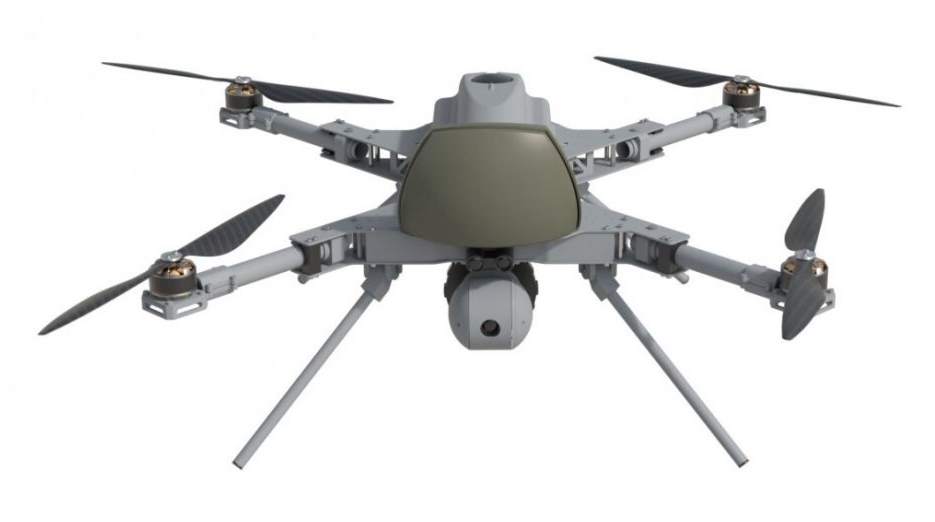
For all its naval pedigree, the product that put STM in international headlines fits in a soldier’s backpack. KARGU is a rotary-wing loitering munition, a quadcopter that carries a warhead and an electro-optical seeker, designed to give small ground units their own precision strike capability. According to STM, KARGU has been exported to more than ten countries across three continents, making it one of the most widely sold Turkish unmanned systems outside the Bayraktar family.
KARGU anchors a broader portfolio that STM has deliberately built as a modular family rather than a set of one-off products.
- ALPAGU is a fixed-wing loitering munition light enough for a single soldier to carry and launch from a tube. STM announced its first export contract in November 2023.
- TOGAN is a reconnaissance and surveillance quadcopter that, according to the company, has been exported to two African countries.
- BOYGA is a multirotor that drops 81 mm mortar munitions. Trade press reporting puts the baseline version at around 17 kg take-off weight, and Janes reported a first export order from an African customer.
- TUNGA, unveiled at IDEF 2025, is a 3.45 kg smart munition with image-based or satellite-based guidance that can be carried by the larger BOYGA-B hexacopter. Early field trials of TUNGA and TOGAN suggest STM intends to iterate on the design quickly.
The common thread is autonomy. STM has invested heavily in onboard image processing and swarm behaviour, and KARGU became the subject of intense international debate after a 2021 UN panel report on Libya raised the possibility that such a system had engaged targets autonomously. STM has said its systems keep a human operator in the loop. Either way, the episode put the small Ankara firm at the centre of the global conversation on lethal autonomous weapons, a place few consultancies-turned-manufacturers ever find themselves.
Cyber Security, Big Data and a Think Tank in Ankara
The least visible part of STM’s business may be the one Turkish institutions lean on most. The company runs cyber security operations for military and public customers, works on threat intelligence and hosts recurring capture-the-flag events that have become a recruiting pipeline for Türkiye’s white-hat community. Its engineering heritage shows here too. Cyber defence at STM grew out of the same systems-analysis culture that underpins its naval work.
In 2017 the company launched STM ThinkTech, described at its founding as Türkiye’s first technology-focused think tank. ThinkTech publishes analyses on defence technology trends, artificial intelligence and security policy, and gives STM a public voice in debates its engineers would otherwise influence only indirectly. Pairing a classified engineering business with an open-publication research arm is unusual in the Turkish sector, and it has helped the company shape how emerging technologies are discussed in Ankara.
Where the Order Book Points Next
STM’s trajectory over three decades runs from reviewing other people’s projects to designing warships for four navies. The next phase is already visible in outline. Company leadership has told Turkish media that a national submarine design is the logical next step after the AGOSTA experience and Türkiye’s Reis-class construction programme. On the unmanned side, STM has shown an extra-large unmanned underwater vehicle concept and, at IDEF 2025, a new fixed-wing VTOL UAV aimed at longer endurance and heavier payloads.
The company that started as a decree on paper in 1991 now competes against European primes in European tenders and wins. Whether the follow-on Portuguese ships, further Babur-class batches or a first national submarine come next, STM has positioned itself where Turkish defence exports are heading, selling design authority rather than just hardware.