Türkiye Has Signed for 68 KAAN Jets So Far, and TUSAŞ Talks of 250 to 300

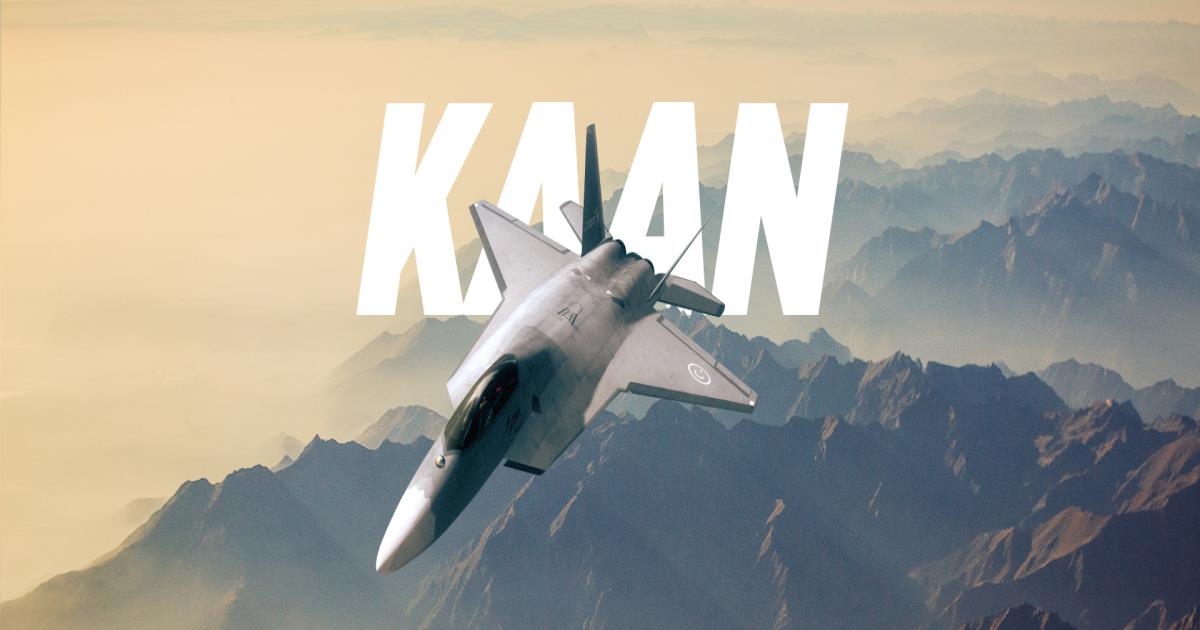
Ask how many KAAN fighters Türkiye will build and you get three different answers, depending on who is talking. The contract on paper covers 20 aircraft. Turkish Aerospace (TUSAŞ) talks about 250 to 300 over the life of the programme. Somewhere between those numbers sits a stack of requirements, export hopes and one stubborn dependency on American engines.
This article separates what has been signed from what has only been said.
How Many KAAN Jets Are Actually on Order?
Two contracts exist. The first is domestic. On 6 May 2026, at the SAHA 2026 exhibition, the Presidency of Defence Industries (SSB) and TUSAŞ signed for the initial serial production of 20 Block-10 aircraft. SSB President Haluk Görgün said deliveries to the Turkish Air Force would run from 2028 to the end of 2030, as reported by trade outlets covering the ceremony.
TUSAŞ CEO Mehmet Demiroğlu was careful with his wording. According to The Defense Post, he called it the first order and said numbers were expected to rise over time.
The second contract is foreign. Indonesia agreed to buy 48 KAAN fighters in 2025. FlightGlobal reported a June framework with all 48 aircraft arriving within 120 months, and the purchase contract was signed at the IDEF fair in Istanbul in late July. Reported value is around US$10 billion, a figure that has not been itemised publicly.
Add them up and the firm commitment is 68 aircraft: 20 for Türkiye, 48 for Indonesia.
| Item | Quantity | Status |
|---|---|---|
| Turkish Air Force, Block-10 first batch | 20 | Contract signed May 2026; deliveries 2028 to end of 2030 |
| Indonesia | 48 | Contract signed 2025; delivery over about 10 years |
| Turkish Air Force requirement (reported) | 100 to 148 | Stated by TUSAŞ and trade press, not contracted |
| TUSAŞ overall expectation (reported) | 250 to 300 | CEO projection from 2024, not contracted |
What Is the Turkish Air Force’s Real Requirement?
Here the public record gets loose. In July 2024, soon after taking over, Demiroğlu said TUSAŞ expected orders for 250 to 300 KAAN jets in total, with more than 100 going to the Turkish Air Force and roughly 150 to friendly countries. Another trade report puts the air force requirement at 148 aircraft, though it was unclear whether that figure includes Indonesia’s jets.
None of these numbers is a government contract. They are planning figures, and they have moved before. Treat 100 to 150 for the domestic fleet as the working range until SSB publishes something firmer.
The jet is meant to replace the ageing F-16 and, over time, the F-4E Phantom. Meanwhile Türkiye is also buying Eurofighter Typhoons and modernising its F-16s, so the KAAN is not the air force’s only fighter answer in the 2030s.
Why Is Block-10 Only 20 Aircraft?
Block-10 is the initial production standard. Reporting on the SAHA signing describes it as a low-observable design with internal weapons bays, an AESA radar, integrated electronic warfare, electro-optical sensors and a helmet-mounted display. It is not the finished article.
The reason for the small batch is the engine. Block-10 jets will fly with two General Electric F110 engines, since the domestic TF35000 turbofan from TEI is not ready. Reporting around the SAHA signing indicated the indigenous engine is projected for around 2032, which is why the first batch is described as limited-capacity. Our report on the 2032 engine timeline covers the schedule in more detail, and the overview of Türkiye’s new turbofans explains where the TF35000 sits among them.
Breaking Defense reported in July 2026 that the US export licence for the F110 had cleared Congress on 9 July. It quoted Demiroğlu saying 10 engines are in hand for prototypes and an order for 80 is placed for series production, with the first batch due by 2027. That clearance matters directly for the second customer too: an export jet needs an export-approved engine.
How Fast Can TUSAŞ Build Them?
Capacity is the second limit. According to Defense Blog, the Ankara facility can currently produce up to eight aircraft per year, and the company is looking at ways to scale up. In 2024 Demiroğlu spoke of reaching two aircraft a month by 2029, a rate that would deliver 24 a year.
Do the arithmetic. Eight a year covers 20 Block-10 jets in about two and a half years, so the 2028 to 2030 window is workable on its own. Adding Indonesia’s 48 over a decade, plus any further domestic orders, is what forces capacity to grow. Series production, Demiroğlu told Breaking Defense, was still at least two and a half years away as of mid-2026.
Prototype work continues in parallel. The first prototype flew in February 2024, and reports in 2026 put the number of test aircraft under construction at around six.
Could the Numbers Grow Beyond 68?
Possibly, but nothing beyond Indonesia is signed. Wikipedia’s programme summary lists Egypt as a co-production partner announced in July 2025 and Azerbaijan as a participant, while Pakistan, Saudi Arabia, Spain and Ukraine have been named as parties showing interest. The Saudi figure of 100 aircraft is reported only, and Egypt’s role has so far been described as industrial rather than a purchase order. Read those as signals, not backlog.
The Indonesian deal also carries localisation: reporting says new facilities in Indonesia are planned, with TUSAŞ assisting industrial cooperation. For background on how that fits Jakarta’s wider Turkish purchases, see our piece on Indonesia’s role in Turkish defence exports across Southeast Asia.
So What Is a Fair Number to Use?
For anyone writing or planning around the programme, a layered answer holds up best:
- Contracted today: 68 aircraft (20 domestic, 48 for Indonesia).
- Reasonable domestic requirement: roughly 100 to 150, unconfirmed by contract.
- Company ambition: 250 to 300 including exports.
The gap between the first and last line closes only if two things happen: the TF35000 arrives on schedule, and additional customers turn memoranda into contracts. Our KAAN fighter programme guide tracks orders and engine milestones as they change, and the TUSAŞ company profile covers the manufacturer behind the jet.