Why ASELSAN’s SARP Turret Keeps Turning Up on Turkish Armoured Vehicles

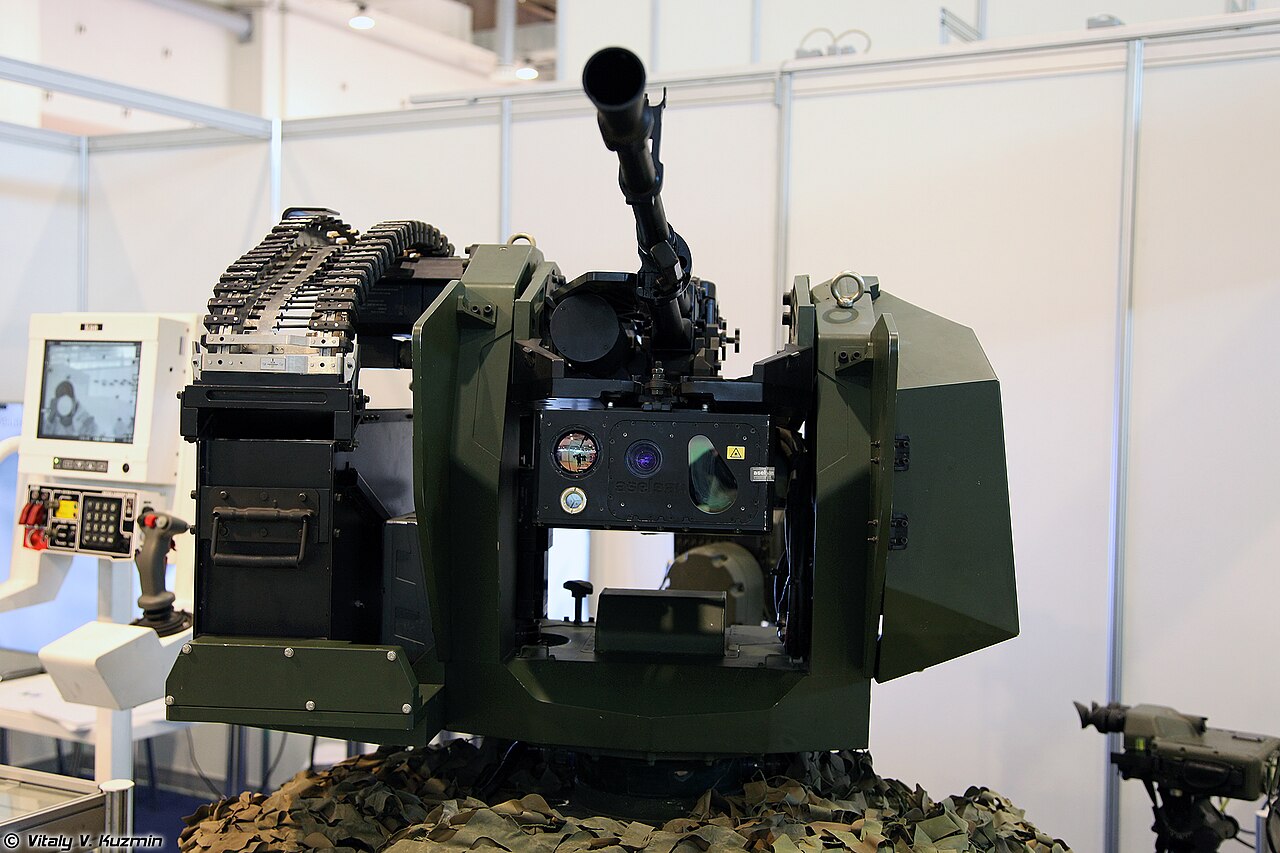
Look closely at a Turkish MRAP on parade or in an export brochure and the same low, boxy turret keeps showing up on the roof. It is usually a SARP, ASELSAN’s stabilised remote weapon station. No official document calls it the standard turret of Turkish vehicles, and it would be wrong to claim that. But across the Kirpi, the Vuran and the Ejder Yalçın families, SARP is the station that reference sources name most often, which makes it the closest thing Turkish armour has to a house mount.
This piece looks at what SARP actually is, which weapons and variants ASELSAN publishes, where it has been fitted and why vehicle builders keep choosing it.
What does SARP stand for and what does it do?
SARP stands for Stabilized Advanced Remote Weapon Platform. It is a remote-controlled weapon station, often shortened to RCWS or RWS: a gun mount on the vehicle roof that the crew fires from inside, through a screen and a controller, without exposing the gunner’s head and shoulders.
ASELSAN’s datasheets describe the same core package across the family. Day and night imaging, automatic target tracking, gyro-aided stabilisation, a laser rangefinder for ballistics and computer-based fire control. The stabilisation is what allows shoot-on-the-move engagement of stationary or moving targets, a capability ASELSAN highlights on every SARP sheet. Optional extras on several variants include an IR laser pointer and an integrated gunshot detection system.
The sales pitch is as much about protection as firepower. The company’s wording is that the gunner’s situational awareness improves while vulnerability to attack decreases drastically, which is the whole argument for moving from open pintle mounts to remote stations.
Which SARP variants does ASELSAN publish?
“SARP” is a family, not a single turret. The datasheets ASELSAN publishes show a clear spread by weapon class.
| Variant | Weapon options (per ASELSAN) | Weight above deck | Protection |
|---|---|---|---|
| SARP-L | 7.62 mm FN MAG58 or M240, 5.56 mm FN M249, optional 40 mm UAG-40 grenade launcher | under 100 kg without gun, ammunition and armour | STANAG 4569 Level I |
| SARP 120 | Main: 7.62 mm FN MAG58, 12.7 mm M2HB or 40 mm MK19 Mod3; secondary: 7.62 mm FN MAG58 (coaxial) | under 250 kg without gun, ammunition and armour | STANAG 4569 Level II |
| SARP-ZAFER NSV | 12.7 mm NSV or 7.62 mm PKM | under 330 kg without gun and ammunition | STANAG 4569 Level I |
| SARP KPVT | 14.5 mm KPVT | under 340 kg with armour, without gun and ammunition | STANAG 4569 Level II |
Two things stand out. First, the weapon choices include Western guns and mounts, such as the FN MAG, M2 and MK19, alongside Soviet-pattern weapons like the NSV, PKM and KPVT. That matters for export: many customers operate a mix of both lineages and want one station that accepts what they already stock. Second, the datasheets list under-armour ammunition reloading on the family, so the crew does not have to climb out to feed the gun.
ASELSAN states that its figures are subject to change and carry a ten percent tolerance.
What is SARP Next Gen?
ASELSAN unveiled SARP Next Generation at the DSEI exhibition in London in September 2023 and described it as the upper version of its most popular land weapon station. The company’s pitch is a lower silhouette and lower weight, a hybrid ammunition box with under-armour reloading, a redesigned user interface, and provisions for smoke grenades and gunshot detection.
The weapon options reported at launch are a 12.7 mm machine gun, a 40 mm automatic grenade launcher or a 7.62 mm machine gun as the main gun, with a coaxial 7.62 mm gun. ASELSAN says the station suits tactical vehicles, fixed surveillance posts and towers. EDR Magazine’s DSEI coverage reported that the dual-gun version was expected to become available in late 2024; this article could not confirm whether that happened.
Which Turkish vehicles carry SARP?
Open sources tie SARP to several of the best-known Turkish wheeled vehicles. The evidence is uneven, so it helps to separate what is documented from what is only possible.
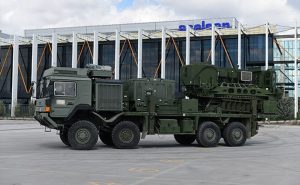
- BMC Kirpi. Reference sources report that some Kirpi-I and Kirpi-II MRAPs serving with the Land Forces and the Gendarmerie are fitted with ASELSAN’s SARP 12.7 mm or the Dual SARP. Djibouti’s army is also listed as operating the Kirpi I with the SARP Dual. For the platform’s wider story, see our piece on the Kirpi MRAP’s combat record and exports.
- BMC Vuran. The Vuran, which entered service around 2019 for the Turkish Land Forces, is documented with the ASELSAN SARP dual remote weapon system as the armament on one of its variants, taking 7.62 mm or 12.7 mm machine guns.
- Nurol Makina Ejder Yalçın. Sources say Nurol can integrate Cirit missiles, anti-tank guided missiles and SARP stations onto the vehicle according to customer requirement. That is an integration option rather than a single fixed fit. The vehicle’s export run is covered in our report on its customers from Qatar to Hungary.
The pattern is clear enough. The vehicle makers, BMC, Nurol and others, build the hull and the mobility, and ASELSAN supplies the weapon station and the sensors. The roof gun is one product line inside a much larger defence electronics business, described in our ASELSAN company profile.
Why do vehicle makers keep choosing it?
Nobody has published a procurement rule that says Turkish vehicles must use SARP, so the reasons below are analysis, not documented policy.
One domestic supply chain. A buyer who wants a vehicle with a stabilised, sensor-equipped weapon station gets the hull from one Turkish company and the turret from another. For deals like those in the Turkish armoured vehicle export market, that shortens integration time and keeps the offer clear of foreign licensing questions.
A range of weights. The lightest station on ASELSAN’s sheets sits under 100 kg above deck, the heaviest around 340 kg. That lets the same family go onto a light 4×4 and onto a heavier MRAP without redesigning the roof.
Calibre flexibility. Because the family accepts both NATO-pattern and Soviet-pattern guns, a customer can specify the weapon it already has ammunition for. Trade press reporting on a 2017 SARP demonstration in Bangkok said the company stated the design was in use by 13 countries. That figure is old and unverified here, and the sources reviewed did not give a current count.
Service history. A station that already rides on Turkish Army and Gendarmerie vehicles is easier to sell abroad than a new prototype. In land systems, use by the home army is the first reference a buyer asks for.
Is SARP only for vehicles?
No. ASELSAN’s own materials say the station fits fixed surveillance posts, towers and stations as well as vehicles, and the company positions it for protecting critical infrastructure. One variant also appears on an unmanned ground vehicle: ASELSAN’s ASLAN UGV carries the SARP-L with a 7.62 mm FN MAG58, can be driven remotely or run autonomously on border patrol routes, and weighs about 750 kg with payload, according to the company datasheet.
The remote-weapon concept has also gone to sea. ASELSAN’s naval gun work, including the SMASH 300, rests on the same logic of an operator firing from a protected position; we covered its first firing tests in our SMASH 300 report. The naval gun is a separate product, though, and SARP itself is a land line.
What to watch next
Two things will show whether SARP stays the default. One is whether the Next Gen dual-gun version appears on new Turkish production vehicles, which would be visible on BMC and Nurol hulls in coming deliveries. The other is competition on the roof itself: with drone-defence turrets and heavier cannon stations now in development across the Turkish industry, a vehicle’s roof may soon carry different products depending on the role. BMC’s wider vehicle line is outlined in our BMC company piece.