Arms Embargoes on Türkiye: What Each One Actually Blocked


Türkiye has faced one real arms embargo and a long series of things that get called one. The embargo was the United States congressional ban of 1975–78, imposed over Cyprus and fully repealed by Congress in 1978. Everything since has been narrower: national decisions by individual European governments and Canada to stop issuing export licences, a corporate supply cut-off by a Canadian engine maker, removal from the F-35 programme, and the December 2020 CAATSA sanctions, which targeted one Turkish procurement agency rather than the country. Telling them apart matters, because each one blocked a different thing and produced a different Turkish answer.
DEFENCETÜRKIYE DATA BOX
Subject: Arms embargoes and export restrictions affecting Türkiye
Full arms embargoes: One — United States, imposed 1975, fully repealed by Congress in 1978
National licence halts: Several EU member states and Canada, from October 2019
EU-wide embargo: None. The Council recorded national decisions by “some Member States”
Targeted sanctions in force: CAATSA Section 231 measures on the Presidency of Defence Industries (SSB), imposed 14 December 2020
Programme exclusion: F-35, Türkiye removed from the programme in July 2019
Status checked: 10 October 2026. A US lifting of the CAATSA measures was announced on 7 July 2026 but no completed legal action had been published at the time of writing
Four different instruments, routinely called one thing
English-language coverage tends to compress all of this into “the embargo”. That compression is the main reason foreign analysts get Turkish political risk wrong, in both directions — overstating how exposed Turkish products are, and understating how specific the real chokepoints have been.
There are four distinct instruments in the record, and they do not behave alike.
A legislative arms embargo. Congress froze aid and imposed an arms embargo on Türkiye in 1975 over its 1974 intervention in Cyprus, according to the Congressional Research Service timeline of Turkey–US relations. Türkiye responded by abrogating the status of forces agreement and taking control of US installations. After lobbying by successive administrations and several partial-lifting votes, Congress fully repealed the embargo in 1978. This is the only instrument in the list that stopped the flow of weapons to Türkiye as a matter of law.
National export-licence decisions. These are not embargoes and are not EU acts. After Türkiye’s October 2019 operation in north-east Syria, the Council of the European Union adopted conclusions whose paragraph 5 “recalls the decision taken by some Member States to immediately halt arms exports licensing to Turkey” and records that member states “commit to strong national positions” under Common Position 2008/944/CFSP, including strict application of criterion 4 on regional stability. The European Parliament later regretted that the Foreign Affairs Council had been unable to agree an EU-wide embargo. The practical effect was a patchwork: new licences stopped in several capitals, already-licensed transfers largely did not.
A corporate decision. In October 2020 the Canadian group Bombardier Recreational Products suspended deliveries of engines built by its Austrian subsidiary Rotax that had been used in Bayraktar TB2 airframes. Austria’s foreign ministry noted that the engine was not listed on the EU dual-use control list, so no Austrian government permit was required in the first place. This was a company withdrawing from a customer, not a state blocking a sale — a distinction that is almost always lost when the episode is described as “the Austrian embargo”.
Targeted sanctions. The CAATSA Section 231 measures of 14 December 2020 are the instrument most often misread as an arms embargo. They are not one, and the next section explains why.
What CAATSA actually prohibits
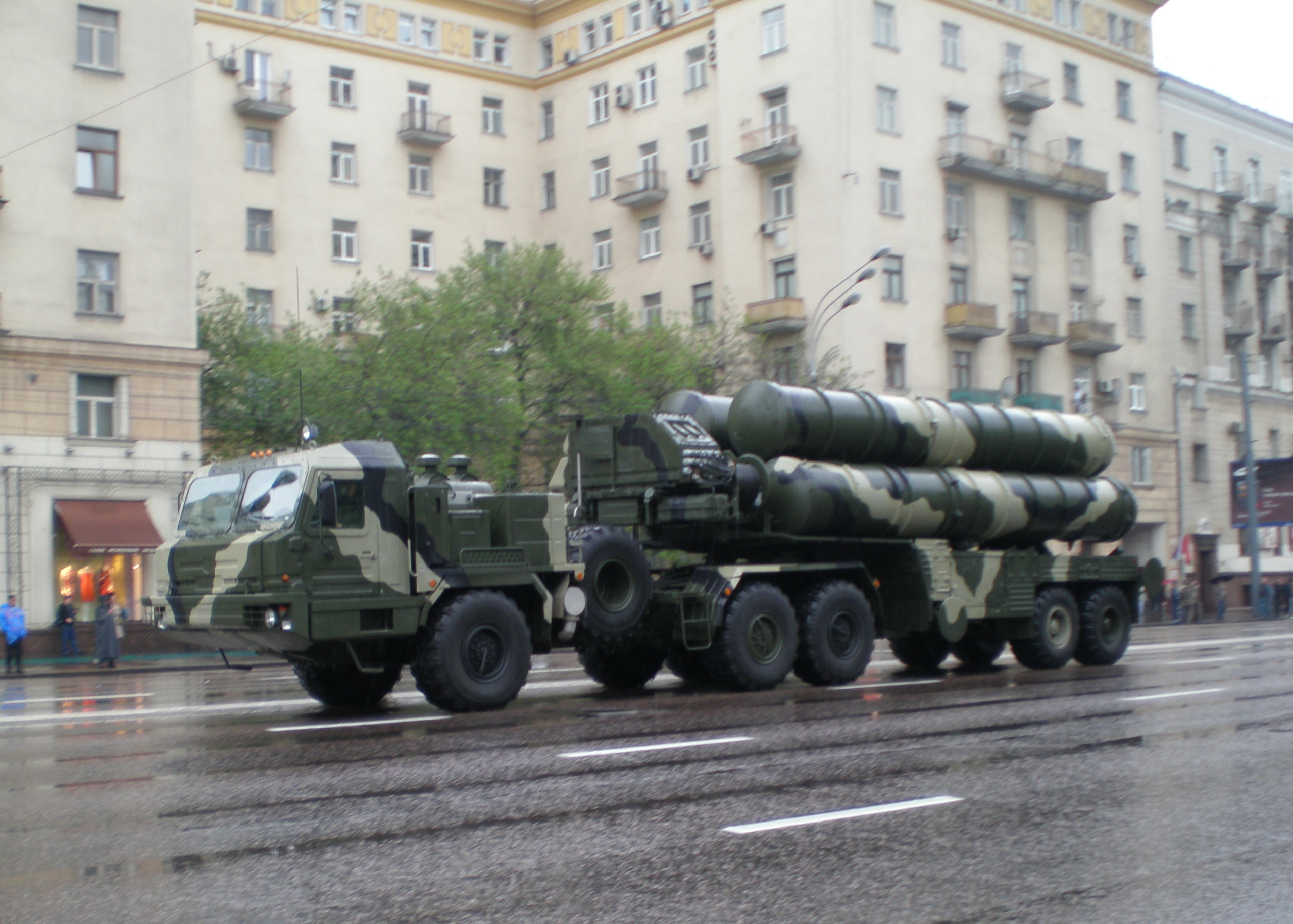
On 14 December 2020 the United States imposed sanctions under Section 231 of the Countering America’s Adversaries Through Sanctions Act on the Presidency of Defence Industries — the SSB, Türkiye’s procurement agency — over its purchase of the Russian S-400 system. It was the first use of CAATSA against a NATO ally.
The Congressional Research Service lists five selected measures: a prohibition on granting specific US export licences and authorisations for any goods or technology; a bar on loans or credits from US financial institutions totalling more than $10 million in any 12-month period; a ban on US Export-Import Bank assistance; a requirement that the United States oppose loans benefiting SSB at international financial institutions; and full blocking sanctions plus visa restrictions on four SSB officials.
Three things follow that are regularly missed. The State Department said at the time that the sanctions “are not intended to undermine the military capabilities or combat readiness of Turkey or any other U.S. ally or partner”. State Department guidance indicates the measures do not apply to SSB subsidiaries or affiliates. And SSB itself was not placed on the Specially Designated Nationals list — only the four named officials were.
So CAATSA does not prohibit Turkish companies from exporting, does not prohibit foreign governments from buying Turkish equipment, and does not block US components from reaching Turkish industry generally. What it does is put a licensing and financing wall around one agency, which is a real constraint on government-to-government business and on anything routed through SSB, and a reputational one well beyond that. Our news desk has tracked the live question of whether those measures survive the S-400 itself in a report on how Saudi Arabia’s F-35 approval reopened Türkiye’s stalled fighter question.
The F-35 removal is a third category again
Türkiye was a programme partner, not merely a customer, with industrial work packages and an order for F-35As. On 17 July 2019 the White House said the S-400 purchase made continued participation impossible. Defense News reported that Türkiye would lose its production work on the aircraft by March 2020 in what the Pentagon described as an orderly wind-down.
Ankara’s own position is on the record. Foreign ministry press release No. 210 of 17 July 2019 called the step “unilateral”, said it “contradicts with the spirit of alliance and does not rely on any legitimate justification”, argued that “it is not fair to remove Turkey, a main partner, from the F-35 Program”, and called the claim that the S-400 would jeopardise the F-35 “baseless”.
This is neither an embargo nor a sanction. It is exclusion from a multinational programme, and it runs on its own statutory track: Section 1245 of the FY2020 National Defense Authorization Act conditions any F-35 transfer on Türkiye no longer possessing the S-400. That is why lifting CAATSA, on its own, would not return Türkiye to the F-35 — a point several US legal analyses made after the July 2026 announcement.
What each restriction actually forced Türkiye to build
This is the part that matters industrially, and it is more specific than the usual story. The table below pairs each restriction with the subsystem it blocked and the Turkish programme that replaced it.
| Measure | What it blocked | Response and status |
|---|---|---|
| US arms embargo, 1975 | Arms and aid from the main supplier | Domestic electronics base built; ASELSAN founded 1975. Repealed by Congress in 1978 |
| German licences for the ALTAY powerpack, from 2019 | MTU engine and RENK transmission | Interim South Korean powerpack; BMC Power BATU engine in parallel. Solved by substitution, not by licence |
| F-35 programme removal, July 2019 | The aircraft and Turkish work packages | KAAN pursued; F-16 upgrade and Eurofighter as interim. Still in force, tied to the S-400 by US statute |
| EU states halt new licences, Oct 2019 | New European subsystems, unevenly by country | European items substituted, including the SOM missile turbojet. National positions, never an EU embargo |
| Rotax supply suspended by BRP, Oct 2020 | Piston engines used in the TB2 | Turkish small-engine work at TEI, Kale and Baykar. A corporate decision, never a state control |
| Canadian permits cut, Oct 2020 and Apr 2021 | Wescam targeting turrets inside an exported Turkish product | ASELSAN CATS and the wider optics line. Canada reopened in Jan 2024, case by case |
| CAATSA sanctions on SSB, Dec 2020 | US licences, credit and lending to one agency | Indigenous turbofan work; routes around the agency. Lifting announced July 2026, not completed |
Table: DefenceTürkiye, compiled from the sources listed at the foot of this article. The response column records the programme that filled the gap; it does not imply the restriction was the only reason that programme exists.
Chart: DefenceTürkiye. Compiled from the Congressional Research Service, the Council of the European Union, Global Affairs Canada, the Turkish Ministry of Foreign Affairs and contemporaneous reporting.
What the record shows, and what it does not
The common claim is that embargoes built the Turkish defence industry. The record supports a narrower and more useful version of that.
Start with the aggregate number. President Erdoğan put the domestic production rate at above 80 per cent in an October 2024 speech, measured against roughly 20 per cent earlier, and dated the turning point to a 2004 meeting of the Defence Industry Executive Committee. SSB figures reported in September 2026 put the rate at 83 per cent. That curve begins in 2004 and is the product of procurement policy — a decision to buy domestically designed systems and to write local-content requirements into contracts. It does not line up with 1975, and it does not line up with 2019 or 2020 either. We examine what sits underneath that figure in a separate analysis of whether Türkiye is fully independent in defence production, and Envanter Medya has a Turkish-language explainer on how the localisation rate is calculated.
What the restrictions did do is decide the running order. Each one moved a specific subsystem to the front of a queue that would otherwise have been worked through more slowly and in a different sequence:
- Electro-optics moved first. The Canadian permit action of October 2020 concerned targeting turrets fitted to an exported Turkish product. Turkish electro-optical payload work was already under way; the permit action made it urgent and made it a condition of continued exports. The sequence is traced in our account of how Turkish drones swapped Canadian cameras for ASELSAN optics.
- The tank powerpack moved next. German export licences for the MTU engine and RENK transmission did not come through after 2019; Türkiye bought an interim South Korean powerpack and funded a domestic engine in parallel, as set out in our piece on the Korean diesel powering the ALTAY while the Turkish BATU waits.
- Missile propulsion followed. The SOM cruise missile was re-engined away from its French turbojet, a change we cover in the SOM programme file.
- Fighter propulsion is the one still open. The KAAN flies on a US-supplied engine while a domestic turbofan is developed, with the indigenous engine now scheduled for 2032. The dependency and the schedule are both documented in our KAAN programme page.
Read that way, the restrictions were not the cause of Turkish localisation. They were a prioritisation mechanism, and an expensive one. Each substitution cost time and money that would otherwise have gone elsewhere, and in the fighter-engine case the substitution is not finished.
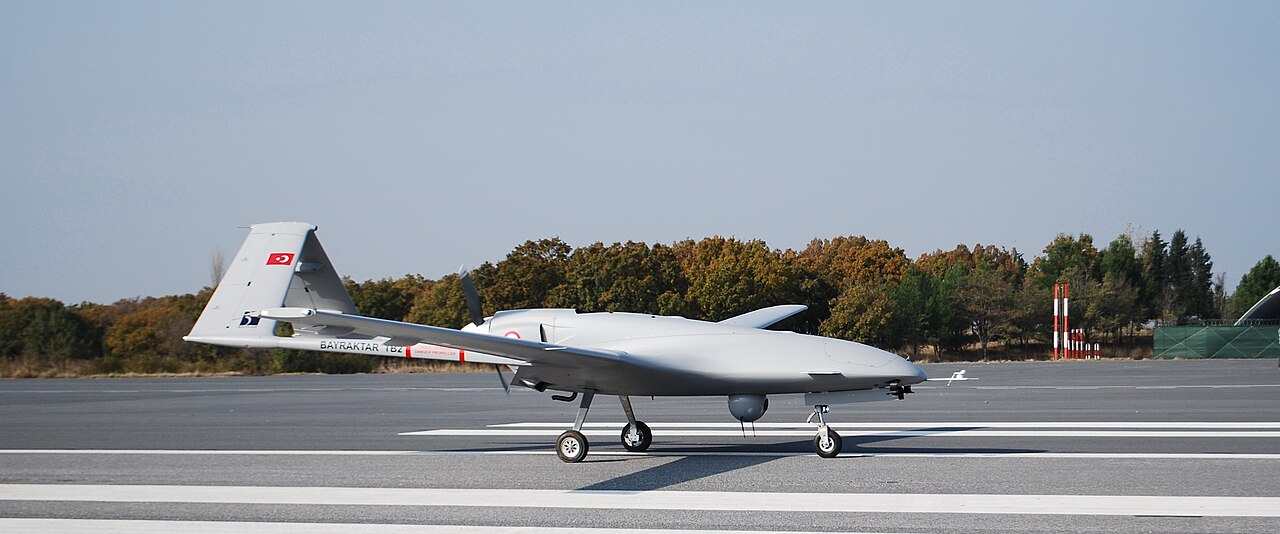
There is a second pattern worth naming, because it is the one most relevant to a buyer. The restriction that caused the most commercial damage was not aimed at Türkiye’s exports at all. Canada acted on what a Canadian component did inside a Turkish product sold to a third country. Global Affairs Canada’s own review found “credible evidence that Bayraktar TB2 UAVs – equipped with Canadian sensors” had been used in the Nagorno-Karabakh conflict, and said Türkiye did not provide information when Canada asked for help reviewing the allegations. The exposure ran through the supply chain, not through Ankara’s own export policy. Envanter Medya has looked at the same dynamic from the shipbuilding side in a Turkish-language account of how embargoes and supply restrictions reshaped Turkish naval construction.
BUYER VIEW
For a procurement office assessing a Turkish offer, the useful question is not whether Türkiye is under an embargo. It is not. The question is which foreign-origin items sit inside the specific configuration being offered, and whose licence governs them.
Three practical points follow from the record. First, the veto that has actually been exercised came from a component supplier’s government, not from Türkiye — so a bill of materials matters more than a political risk rating. Second, where a subsystem has been localised since 2020, that specific exposure is genuinely reduced; where it has not, as with large turbofans, it is not. Third, Turkish transfers do not remove the original exporter’s control over its own content, a point we set out at length in our analysis of what a buyer actually gets from Turkish defence offsets.
This is open-source editorial analysis for readers following the market. It is not procurement advice, and DefenceTürkiye does not advise governments.
WHY IT MATTERS
Türkiye is now a top-tier arms exporter selling into NATO, the Gulf, Africa and South-East Asia, and the political-risk question follows every offer it makes. Getting the history right changes the answer: there is one historical embargo, a set of national licence decisions that have mostly been reversed, and one targeted sanctions measure on one agency whose removal has been announced but not completed. The residual risk is concentrated in a short list of foreign subsystems, and that list is shorter than it was in 2020.
What comes next
One file is live and three are closed. Canada reopened military export permits to Türkiye in January 2024, reviewing applications case by case with end-use assurances required; the German position on Eurofighter supply shifted in 2025; and the EU member-state licence halts of October 2019 were national positions rather than a standing embargo, applied unevenly and loosened over time.
The open file is CAATSA. President Trump said at the Ankara NATO summit on 7 July 2026 that the United States would lift the sanctions, and Turkish Foreign Minister Hakan Fidan has described the decision as effectively made. As of 10 October 2026 no completed legal action had been published. The mechanism requires a report to the relevant congressional committees followed by a review period, and US legal analysts have been consistent that removing the SSB sanctions would not by itself clear an F-35 transfer, which turns on the separate statutory condition about the S-400.
A buyer or an analyst tracking this should watch for three things rather than for headlines: a congressional notification, a Federal Register or Treasury action removing the designations, and any separate determination about the S-400. Until those appear, the December 2020 measures remain the legal position of record.
Separately, European procurement rules are now the live constraint on Turkish industry in Europe — a different mechanism again, and one we examine in our analysis of what EU rules allow when Türkiye supplies Europe’s ammunition.
FAQ
Is there an arms embargo on Türkiye?
No. No arms embargo is in force on Türkiye as of October 2026. The only full arms embargo in the record was the United States congressional embargo of 1975, repealed in 1978. The CAATSA sanctions of December 2020, which remain the legal position of record, target one procurement agency rather than the country.
What are the CAATSA sanctions on Türkiye?
Measures imposed on 14 December 2020 under Section 231 of CAATSA on the Presidency of Defence Industries (SSB), over its purchase of the Russian S-400. They bar specific US export licences to SSB, loans above $10 million in any 12-month period from US financial institutions, Export-Import Bank assistance and US support for multilateral lending to SSB, and they impose blocking sanctions and visa restrictions on four named officials. SSB itself was not added to the Specially Designated Nationals list.
Have the CAATSA sanctions on Türkiye been lifted?
A lifting was announced by President Trump on 7 July 2026, but no completed legal action had been published as of 10 October 2026. Relief requires notification to Congress and a review period.
Did the European Union impose an arms embargo on Türkiye?
No. The Council conclusions of 14 October 2019 recorded that “some Member States” had decided to halt arms export licensing to Türkiye and committed member states to strong national positions under Common Position 2008/944/CFSP. The European Parliament subsequently regretted that the Foreign Affairs Council had been unable to agree an EU-wide embargo.
Why was Türkiye removed from the F-35 programme?
Over its purchase of the Russian S-400. The White House said on 17 July 2019 that continued participation was impossible, and the Pentagon set a wind-down of Turkish production work by March 2020. Section 1245 of the FY2020 National Defense Authorization Act conditions any future transfer on Türkiye no longer possessing the S-400.
Did Austria ban drone engine exports to Türkiye?
No. In October 2020 the Canadian group Bombardier Recreational Products suspended deliveries of engines built by its Austrian subsidiary Rotax. Austria’s foreign ministry noted that the engine was not on the EU dual-use control list and that no Austrian permit was required. It was a corporate decision, not a government control.
Can Canada export military goods to Türkiye now?
Yes. Canada suspended permits in October 2020 and cancelled the suspended permits in April 2021, then reopened the file in January 2024 with applications reviewed case by case and end-use assurances required from Turkish importers.
Did embargoes create Türkiye’s defence industry?
Partly, and less directly than usually claimed. The 1975 embargo prompted the creation of domestic institutions, ASELSAN among them. But the jump in the domestic production rate dates from procurement policy adopted after 2004, not from any embargo. What the later restrictions did was decide which subsystems were localised first, and how quickly.
Sources
- Congressional Research Service, Turkey (Türkiye)-U.S. Relations: Timeline and Brief Historical Context (IF10487)
- Congressional Research Service, Turkey: U.S. Sanctions Under the Countering America’s Adversaries Through Sanctions Act (IN11557)
- US Department of State, The United States Sanctions Turkey Under CAATSA 231, 14 December 2020
- Republic of Türkiye Ministry of Foreign Affairs, Press Release No. 210, 17 July 2019
- Council of the European Union, Council conclusions on north east Syria, document 13090/19, 14 October 2019
- Global Affairs Canada, Final report: Review of export permits to Türkiye
- Defense News, Turkey officially kicked out of F-35 program, 17 July 2019
- Al-Monitor, Trump says US will lift CAATSA sanctions on Turkey, consider F-35 sale, July 2026
- Al Jazeera, Trump says will lift sanctions on Türkiye, ‘consider’ selling F-35s, 7 July 2026
- European Parliament resolution of 24 October 2019 on the Turkish military operation in north-east Syria (TA-9-2019-0049)
- Statements by President Recep Tayyip Erdoğan (October 2024) and the Presidency of Defence Industries on domestic production rates, as reported by Turkish media