How BMC Became the Company Türkiye Trusts With Its Tanks

Most people outside the industry know BMC, if at all, as a truck brand. Inside Türkiye’s defence sector it is something larger: the company that holds the serial-production contract for the ALTAY main battle tank, builds the Kirpi and Vuran mine-protected vehicles, and runs a separate engine business meant to free the tank from imported power packs.
That is a lot of national ambition resting on one İzmir-born manufacturer with an unusual ownership history. This profile explains who BMC is, what it builds for armed forces, and where the pressure points are.
| Item | Detail |
|---|---|
| Company | BMC Otomotiv Sanayi ve Ticaret A.Ş. |
| Founded | 1964, İzmir, in partnership with the British Motor Corporation |
| Headquarters | Pınarbaşı, Bornova, İzmir |
| Ownership | Tosyalı Holding (51.1 percent, since 2021) and the Qatar Armed Forces Industry Committee (49.9 percent, since 2014) |
| Defence products | ALTAY main battle tank (serial production), Kirpi and Kirpi II MRAP, Vuran, Amazon 4×4 |
| Engine subsidiary | BMC Power (BATU tank engine, TUNA engine family) |
| Tank plant | Kahramankazan, Ankara |
| Civil lines | Trucks, buses and commercial vehicles |
How Did a Truck Maker Become a Tank Builder?
BMC was established in 1964 by Ergün Özakat in partnership with the British Motor Corporation, which is where the letters come from, according to the company’s Wikipedia entry. Austin trucks had been exported from Britain to Türkiye since 1947, so the brand was familiar long before local production started.
The ownership chain after that is messy. Çukurova Holding bought the firm in 1989, and the state’s Savings Deposit Insurance Fund (TMSF) took control in 2013. By 2014 the company was back in private hands, shared between Turkish businessmen and the Qatari state. The Qatar Armed Forces Industry Committee took 49.9 percent, while Ethem Sancak and Talip Öztürk held the Turkish majority.
The Qatari stake matters more than it looks. It ties BMC’s defence business to a customer and financier in the Gulf, and it helps explain why Qatar appears in BMC’s early export orders.
Who Owns BMC Today?
In June 2021 Sancak and Öztürk sold their 51.1 percent to the steelmaker Tosyalı Holding for a reported $480 million, as Janes reported citing the Turkish Trade Registry Gazette. Qatar kept its 49.9 percent. The deal put a large industrial Turkish group behind a company whose defence ambitions were growing faster than its balance sheet. Defense News had covered liquidity challenges at the venture in October 2021.
BMC describes itself as employing more than 3,500 people, about 500 of them engineers, and says it has produced over 400,000 vehicles. Those are company-supplied figures and should be read as such.
Why Is the ALTAY Tank Tied to BMC?
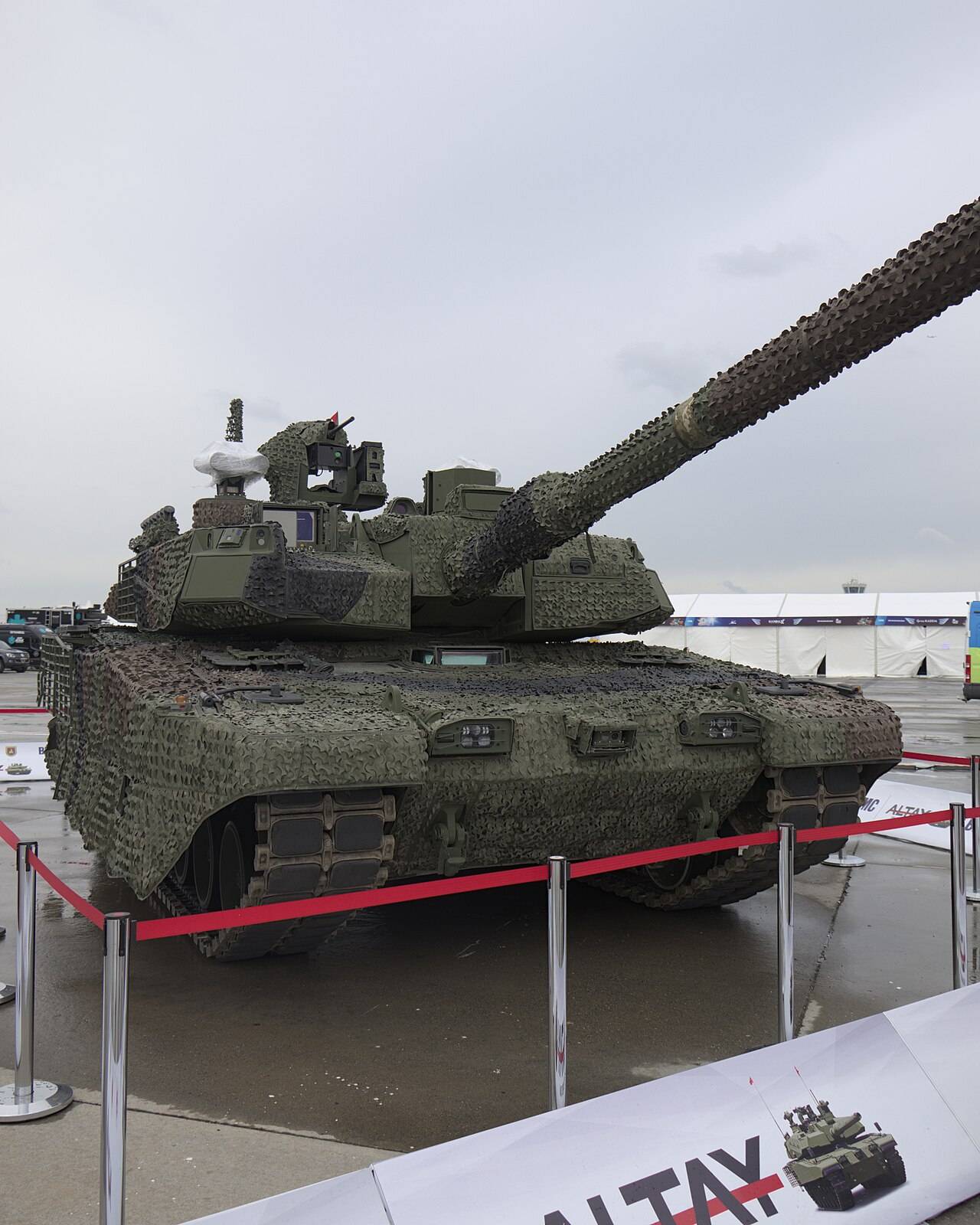
The ALTAY was designed and qualified by Otokar between 2008 and 2017. Serial production, however, went to BMC. On 9 November 2018 the Presidency of Defence Industries (SSB) signed the mass-production agreement for 250 tanks with BMC, which says it works with close to 200 mostly Turkish subcontractors. Our ALTAY programme guide covers the full history of that hand-over.
The tank then ran into a problem no production line can fix: its power pack. The Otokar prototypes used a German MTU engine and a RENK transmission, and Germany’s export restrictions removed that option. BMC turned to South Korea for the 1,500 hp DV27K diesel from Doosan Infracore and later the EST15K transmission from S&T Dynamics.
The first serial tanks were handed to the Land Forces on 28 October 2025 at BMC’s new Tank and Next-Generation Armored Vehicle Production Facility in Kahramankazan. The announced schedule runs 3 tanks in 2025, 11 in 2026, 41 in 2027 and 30 in 2028, which adds up to the 85 tanks in the T1 configuration. The remaining 165 are planned as T2 tanks with a Turkish power pack.
Numbers that small explain why the ALTAY is best described as a line still filling up. For how the tank measures up against its German peer, see the Leopard 2A7 comparison.
What Is BMC Power Trying to Build?
BMC Power is the engine and powertrain arm, and it is the part of BMC the ALTAY programme depends on most. Its BATU is a 1,500 hp V12 water-cooled turbocharged diesel. On 31 December 2025 SSB President Haluk Görgün announced that BATU had completed factory acceptance testing, and integration into serial tanks is planned from 2028, according to Turkish and defence press reporting.
The engine is only half the power pack. The automatic transmission, reported as six forward and two reverse gears with steering and braking functions, is still in qualification. The Korean transmission contract, with an option that reaches 2030, suggests the state is hedging against delay, though nobody has said so officially.
BMC Power also works on smaller engines. The TUNA family is reported to equip the Vuran and to be a planned replacement for the Cummins engine in the Kirpi. The same dependency problem shows up in aviation, as our report on the KAAN engine delay explains.
What Are the Kirpi and Vuran?
Well before ALTAY, BMC made its defence reputation with wheeled armour. The Kirpi, meaning hedgehog, is a 4×4 MRAP with a V-shaped hull and protection reported at STANAG 4569 Level 3. Design began in 2008 and the first prototype appeared in 2009. Reported figures put the first Turkish order at 468 vehicles, with about 293 delivered before the government ended that contract in 2013.
The improved Kirpi II followed in 2018 with independent suspension and upgraded armour. In August 2017 the government had signed a contract for 529 armoured vehicles with BMC that covered Kirpi variants, according to Army Technology.
The Vuran is a lighter infantry mobility vehicle in service from 2019. Wikipedia lists a range of about 1,000 km at 60 km/h and armament options of 7.62 or 12.7 mm machine guns. Reported operators include the Turkish Land Forces, Georgia, Kosovo and Libya, though public order figures vary by source and BMC rarely publishes them.
Where Has BMC Sold Armoured Vehicles?
Tunisia was the first reported export customer for the Kirpi, with an order in 2014. In March 2018 Qatar ordered 50 Kirpi and 35 Amazon 4×4 multipurpose vehicles, according to Army Recognition. The Kirpi II was presented to Gulf buyers at DIMDEX 2026 in Doha on the Barzan Holdings stand, which fits the Qatari link.
Ukraine is the most visible user. Wikipedia reports a claim of around 700 Kirpi delivered and roughly 133 lost by December 2025, but those figures are secondhand and no single official source confirms them, so they should be treated with caution.
BMC says its military vehicles reach about 17 countries. Even so, the export story for Turkish wheeled armour is told more often through Otokar and FNSS. Our pieces on the Otokar COBRA II MRAP and why countries buy Turkish armoured vehicles show what BMC competes against.
What Could Go Wrong for BMC?
Three risks stand out.
First, the ALTAY schedule has no slack. The T1 batch ends in 2028, exactly when T2 production is meant to begin with BATU. Any slip in the transmission or engine pushes the line toward more imported power packs or a gap in work.
Second, the customer base is narrow. The Turkish state is the main buyer of both the tank and the armoured fleet, and Qatar is both shareholder and customer. A tank with no confirmed export contract leaves BMC exposed to one budget.
Third, financing. Tank production lines are expensive, and a civil truck business does not automatically cover them. Tosyalı’s entry in 2021 was meant to address that, but the defence side’s finances are not reported in any detail.
None of this means the programme is failing. Tanks are now reaching the Land Forces, which was not true a few years ago. It does mean that for now BMC’s story is about execution, not announcements.
How Does BMC Fit Among Türkiye’s Armour Makers?
Türkiye’s armour sector includes BMC, Otokar, FNSS and, in the lighter 4×4 class, firms such as Katmerciler and Nurol Makina. BMC is the one holding the main battle tank serial contract, which gives it a different role. Otokar designed the ALTAY but does not build it, while FNSS has concentrated on tracked vehicles and exports, covered in our FNSS profile.
The next milestones to watch are the 2026 delivery count, the BATU transmission qualification, and whether any export buyer signs for the ALTAY. Until then BMC remains the company carrying the weight of the tank programme, with the Kirpi and Vuran fleets helping to pay for it.