Altınay Carries Its Factory Robotics Roots Into Defence and Now Britain

Most defence suppliers start in defence. Altınay did not. The Istanbul firm traces its roots to industrial robots built for appliance and ceramics factories, and only later moved into tank turret drives, aircraft subsystems and naval handling gear. In late September 2026 it added a new chapter: a wholly owned company in the United Kingdom, set up to chase export business and foreign partners.
The move is small in headcount terms but telling. A supplier that earns its living inside other companies’ programmes is trying to build a direct line to Western primes.
| Company | Altınay Savunma Teknolojileri A.Ş. |
|---|---|
| Founded | 2014, within the Altınay Technology Group |
| Headquarters | Teknopark Istanbul, Pendik / Istanbul |
| Group CEO | Z. Burak Mercan |
| Main fields | Motion control, unmanned systems, naval systems, weapon systems, ammunition disposal and production systems |
| Subsidiaries | DASAL Aviation Technologies (UAVs), TAAC Aviation Technologies (flight control and landing gear, joint venture with Turkish Aerospace), Altınay Aerospace Technologies International Ltd. (UK) |
| Listing | Borsa Istanbul, IPO in May 2024 (ticker ALTNY) |
| Website | altinaysavunma.com |
What exactly did Altınay set up in Britain?
On 22 September 2026 the company announced that it had completed the founding of Altınay Aerospace Technologies International Ltd., a UK-based entity whose capital is entirely held by the parent. According to the company statement, its job is to widen the reach of Altınay’s engineering solutions abroad, develop new strategic partnerships and support exports.
Group CEO Z. Burak Mercan described the unit as an export and cooperation bridge. The company says it should bring closer contact with advanced technology ecosystems and with international prime contractors, and help it assess opportunities in different markets.
The announcement came with a personnel change. Stephen Darnell started as Group Chief Growth and Strategy Officer, with responsibility for international growth strategy and for strengthening the group’s partnership network.
No contract, customer or order for the UK entity has been announced. Treat it for now as a commercial foothold, not a sales result. The company says domestic R&D, engineering and manufacturing investment in Türkiye continues alongside it.
Where does a robotics company fit into defence?
Altınay’s origin story is unusual. Business press reports, citing the company, say founder Hakan Altınay built what was described as Türkiye’s first industrial robot in 1993 and established Altınay Robot Technologies the following year, serving light manufacturing such as white goods and ceramics.
The defence door opened around 2006. Reported accounts say the firm worked with Roketsan on a NATO-backed project to dismantle ammunition without human handling, and Mercan has said Altınay developed about 80 percent of the unmanned dismantling systems involved. Ammunition disposal and critical production lines remain a listed business area today.
The logic is straightforward. A robot arm that safely handles a shell, a servo drive that holds a gun barrel steady, a gimbal that keeps a sensor on target: these are all motion-control problems. Industrial automation and weapon stabilisation share more engineering than outsiders might expect.
What does Altınay actually build?
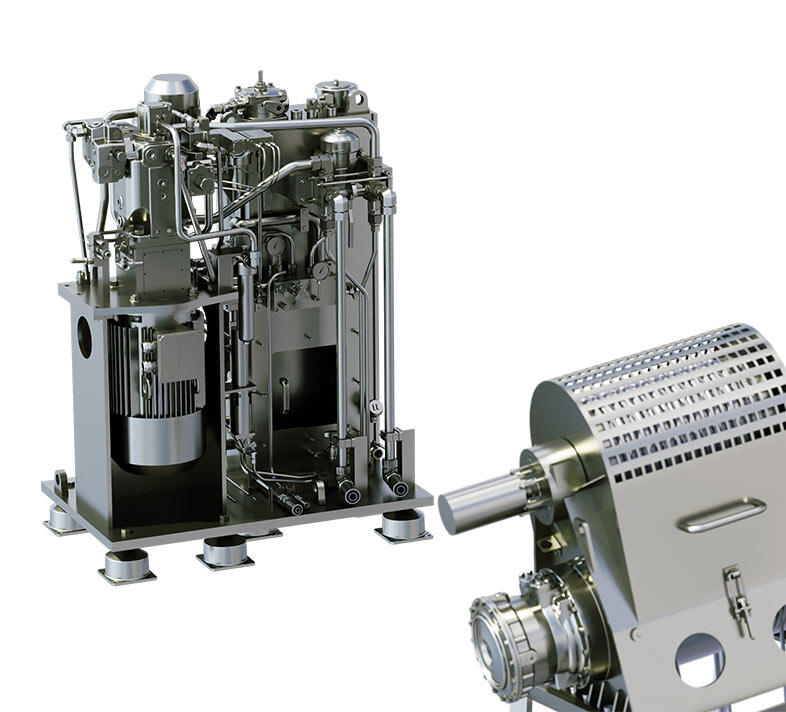
The company’s website groups its work under solution areas such as land, naval, air, unmanned, energy, test and space systems. Under land systems it lists items including:
- telescopic mast systems for sensor positioning;
- servo drives for land platforms;
- armed pedestals and gimbals;
- tank turret and barrel guidance systems;
- automatic ammunition transfer mechanisms;
- radar and sensor positioning systems;
- bomb disposal robot arms, described as used in ASELSAN’s Ertuğrul and Kaplan systems;
- motion-control solutions for unmanned ground vehicles.
Industry coverage also links the firm to fire-control actuators for the ALTAY tank, working with ASELSAN. That description comes from secondary reporting, so read it as reported rather than as a contract-by-contract confirmation.
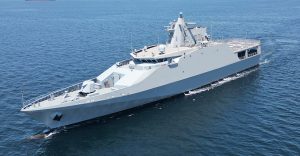
Beyond the ground domain, the company supplies flagship national projects. Its 2025 results summary cites a move from design to production on the pneumatic bomb rack for the KAAN fighter, and completed factory acceptance tests for a helicopter capture and transfer system and JP-5 fuel transfer systems for MİLGEM frigates, with shipboard integration scheduled for 2026. Through TAAC, its 50-50 joint venture with Turkish Aerospace, it also works on landing gear and flight control hardware.
The firm also sells finished products, though in smaller volume. Turkish tech press has covered a counter-drone system, micro UAVs and the PUHU 75 cargo UAV, which is described as carrying 75 kg over roughly 10 km, including without GPS or a data link. These figures come from media interviews, not from a formal datasheet.
Is robotics still part of the plan?
Yes, and the company says so itself. The 2025 results summary mentions a prototype of a six-stage sludge cleaning robot, with system testing planned for 2026, alongside completed Iron Bird test infrastructure for aviation work. Interviews published earlier describe ambitions in micro-class air vehicles, military robotics, autonomous recycling systems and a US presence through a Chicago office, all reported rather than confirmed by a formal announcement.
The same coverage gives a rough picture of the revenue mix. Mercan reportedly described 30 to 40 percent of activity as support technologies for defence, a similar share as the company’s own products, and the remainder as contract manufacturing for firms such as ASELSAN. The company said it had finished 246 projects and was running around 90 at the time of that interview in 2025. Those are executive statements to the press, so they will shift as the order book does.
How big is the business?
The numbers are modest by global standards but moving in one direction. For 2025 Altınay reported consolidated revenue of TRY 3.139 billion, up 36 percent year on year, with gross profit of TRY 993.4 million and net profit of TRY 163.4 million. Its total backlog stood at USD 182 million.
Capacity has grown with it. The company opened a 12,500 square metre production plant in Dilovası, Kocaeli, with a reported USD 25 million investment, attended by the head of Türkiye’s Defence Industries Presidency. The company profile cites more than 300 employees, mostly engineers, and over 40,000 square metres of facilities across sites. Further investment in the Aerospace and Space Organised Industrial Zone in Ankara has been announced.
The company also holds AS9100D and ISO quality certifications, and says it has Turkish and NATO security clearances for classified facilities.
What is the “Global 100” target?
Altınay says its vision is to become one of the world’s top 100 defence companies. Business press reports put the revenue needed to reach that tier at around USD 500 million a year, well above current revenue, with executives speaking of a roughly ten-year horizon. That makes it an ambition rather than a forecast.
The UK entity is one of the stated steps. It reflects a pattern visible across Turkish industry. A trade report on the sector notes that Samsun Yurt Savunma bought 80 percent of the British cannon maker AEI Systems, Baykar formed a joint venture with Leonardo in Italy, and Otokar took over Romania’s Automecanica. Altınay’s route is lighter, a new company instead of an acquisition, and fits a supplier rather than a platform builder. For wider context, see how Turkish defence factories abroad are spreading.
Why does a UK address matter to a component supplier?
For a firm that makes subsystems, customers are often integrators, not armies. Being a registered British company can ease conversations with primes and procurement offices there, though it guarantees nothing. Altınay has also worked with partners such as EDGE Group of the UAE and PM Defence of Malaysia, according to business press.
Export rules are part of the pitch. Turkish suppliers frequently argue that parts developed without American-origin content avoid US licensing friction; our explainer on ITAR and Turkish defence exports covers where that claim holds and where it does not. How much of any given Altınay product is free of US components is not something the company has detailed publicly.
What to watch next: the first named UK or European partner, the first export order that cites the new entity, and whether Altınay’s own finished products, rather than its subsystems, carry that foreign business.