Where Are Turkish Weapons Tested? Inside the Ranges and Labs

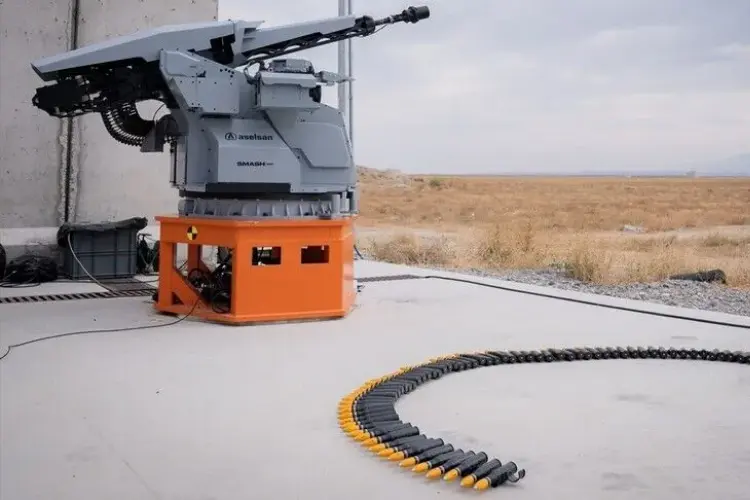
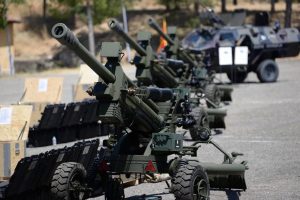
Turkish weapons are proven at a handful of named places. Air-defence and anti-ship missiles are fired at the Sinop Test Center on the Black Sea. Artillery, tank and rocket ammunition goes to the Ministry of National Defence’s Firing Test and Evaluation Centre (ATDM) at Karapınar, Konya — a range ROKETSAN built under a contract with NATO’s own support agency. Air-defence missiles of the HİSAR family are shot over the salt flats near Aksaray. Warheads, rocket motors and insensitive-munition qualification run in TÜBİTAK SAGE‘s laboratories. Submarine weapons are launched at Aksaz without a submarine. Engines run in cells at Eskişehir; satellites are shaken and baked in Ankara.
For a foreign buyer the useful question is not where these places are but what comes out of them: whether the evidence a Turkish supplier hands over was generated against standards the buyer’s own authority recognises. On the munitions side, much of it demonstrably was.
DEFENCETÜRKIYE DATA BOX
Subject: Türkiye’s defence test and evaluation infrastructure
Principal operators: Ministry of National Defence, Presidency of Defence Industries (SSB), TÜBİTAK SAGE, ROKETSAN, ASELSAN, TUSAŞ, TEI
Flagship range: ATDM, Karapınar, Konya — turnkey build by ROKETSAN under a 2011 NSPA contract, opened 24 March 2015
Principal missile range: Sinop Test Center, Black Sea coast
Documented standards base: NATO AOP-39, AOP-4240, AOP-4241, AOP-4382, AOP-4396; STANAG 4488 (TÜBİTAK SAGE published scope)
Reported 2025 activity (ROKETSAN alone): 200+ trials, tests and new-product operations at 20+ locations; c.800 days of testing
SSB target for 2026: 650 test and acceptance activities (press-reported)
Known gap: no publicly documented altitude test facility for turbine engines
The five estates, and what each one proves
Türkiye’s test infrastructure is not one organisation. It is five loosely connected estates, built at different times by different owners, and a buyer reading a Turkish qualification file will meet all of them.
| Estate | Operator | What it actually proves | Documented example |
|---|---|---|---|
| Sinop Test Center Black Sea coast |
Ministry of National Defence / SSB | Guided-missile intercepts against real targets over water; battery-level acceptance of air-defence systems | SİPER 1 battery acceptance firing, January 2026 |
| ATDM Karapınar, Konya |
Ministry of National Defence; built by ROKETSAN | Range, dispersion, accuracy, grouping and velocity of artillery, tank, rocket and missile natures | ROKETSAN reports 4,000+ munitions flight-tested |
| Aksaray range south of Tuz Gölü |
SSB / Ministry of National Defence | Low- and medium-altitude air-defence engagements against jet-powered targets | HİSAR-A and HİSAR-O firing campaigns |
| SAGE laboratories Ankara and associated sites |
TÜBİTAK SAGE | Warhead lethality, explosive characterisation, insensitive-munition compliance, rocket-motor static firing | Published scope against AOP-39 and STANAG 4488 |
| DATA Aksaz Naval Base |
TÜBİTAK SAGE / Turkish Navy | Submarine-launched weapon ejection and capsule separation without hazarding a boat | Capsule ATMACA and encapsulated GEZGİN launches |
| Engine and space cells Eskişehir; Ankara |
TEI; TUSAŞ | Turbine endurance at sea level; satellite survival in thermal vacuum, acoustic and EMC environments | TS1400 test campaign; Space Systems AIT Center |
Table compiled by DefenceTürkiye from operator publications and official announcements cited below. “Documented example” means a test publicly confirmed by the operator, the manufacturer or a defence ministry.
Karapınar: the range NATO helped pay for
The most consequential fact about Turkish test infrastructure is also the least discussed. The Ministry of National Defence’s Firing Test and Evaluation Centre at Karapınar was built as a turnkey project by ROKETSAN under a 2011 contract with the NATO Support and Procurement Agency, took 38 months to complete, and was opened on 24 March 2015. It is not a company proving ground that later acquired official standing; it was commissioned through an alliance procurement body from the start.
ROKETSAN describes a range able to handle artillery ammunition, tank rounds, rockets and missiles, instrumented to measure range, direction, position, dispersion, accuracy, grouping, speed and acceleration. The published instrumentation list is specific: a test range command and control centre with data fusion and archiving, fibre-optic communications, mobile long-range tracking radars, combined radar and optical multi-sensor tracking, high-speed cameras, meteorological systems at ground, low and high altitude, muzzle-velocity radar, laser range and angle finders, a portable conditioning chamber and differential GPS. ROKETSAN says more than 4,000 munitions have been flight-tested there.
Two cautions belong next to that. ROKETSAN’s own 2015 announcement claimed the centre was competitive with ranges in the United States, United Kingdom, Germany, France, Italy, Spain and South Africa — a self-assessment, published by the builder, and not independently audited. And although the centre was explicitly designed to serve “other local and international defence industrial entities”, no completed foreign test campaign at Karapınar has been publicly named in the decade since. The commercial ambition is on record; the customer list is not.
Sinop, and what an acceptance firing means
Sinop is where Turkish air defence gets its grades. The SİPER long-range system completed battery-level acceptance firing there in January 2026, covering all battery elements. The detail worth noticing is that the firing was conducted without the fleet control centre and the search radar in the loop, which tells a reader something specific: the trial was scoped to prove the radar, command-and-control and fire-control chain of the battery itself rather than the wider architecture around it. ASELSAN’s GÜRZ hybrid air-defence system passed its first live-fire test at the same range.
That distinction between a development shot, an acceptance firing and an operational trial is the one most often lost in translation. An acceptance firing is contractual: it discharges a delivery obligation. A first live-fire test is developmental and proves far less. Envanter Medya’s Turkish-language report on ASELSAN’s first GÜRZ firing at Sinop gives the event-level detail behind that particular milestone.
One housekeeping point for anyone reading Turkish coverage: Karapınar and Aksaray are different places, and trade reporting sometimes merges them. The HİSAR air-defence campaigns are shot over the flats south of Tuz Gölü near Aksaray, with civilian access restrictions published for firing windows. ATDM is in Konya province. A test attributed to “the ATDM” in a secondary source may in fact have been an Aksaray firing.
Where NATO standards actually enter the file
The strongest evidence that Turkish test output is legible to a Western procurement authority sits in TÜBİTAK SAGE‘s published service catalogue, which names the standards rather than gesturing at them.
SAGE’s energetic-products infrastructure runs arena tests measuring overpressure, shock-wave velocity, fragment velocity and distribution at ambient, low and high temperatures. Its insensitive-munition work determines compliance against AOP-39, broken into the recognised sub-tests: fast heating to AOP-4240, bullet impact to AOP-4241 Method 2 using a 12.7 mm armour-piercing projectile, sympathetic reaction to AOP-4396 and slow heating to AOP-4382 Method 1. Shock sensitivity is measured to STANAG 4488.
Those are Allied Ordnance Publications and a NATO standardisation agreement. A munitions safety board in a NATO or NATO-aligned country reading a Turkish insensitive-munition file is reading test results generated against the same documents it uses itself. That does not mean the file is automatically accepted — national authorities routinely demand witnessed repeat testing — but it removes the translation problem that sinks many emerging-supplier bids, and it pairs directly with the paperwork question covered in our piece on who certifies Turkish weapons and whether it counts abroad.
The same institute’s rocket-motor infrastructure static-fires solid-fuel motors between 50 mm and 600 mm outer diameter and up to 3 m long, conditioned from −60 °C to +100 °C, measuring internal pressure, axial and side force, surface temperature, vibration, shock, strain and ignition current. There is an underwater rocket-motor static ignition capability, and a target-vehicle facility that converts ordinary vehicles into remotely controlled moving targets steerable from up to 10 km away.
WHY IT MATTERS
Test infrastructure is the part of an arms industry that cannot be improvised, imported in a hurry or demonstrated at an airshow. A country can assemble a missile from bought-in subsystems; it cannot fake a decade of instrumented firings. For a government weighing a Turkish offer against a European or American one, the existence of a NATO-agency-commissioned range and a laboratory catalogue written in AOP and STANAG numbers is a measurable answer to the quiet question behind every emerging-supplier bid: has anyone actually proven this, and to whose satisfaction?
Aksaz: testing a submarine weapon without a submarine
The Submarine Test Infrastructure known by its Turkish acronym DATA was delivered by TÜBİTAK SAGE to the Turkish Navy at Aksaz Naval Base on 22 June 2022. It reproduces a 21-inch submarine launch station equivalent to those on the Gür and Preveze classes and allows munitions to be launched at 60 m depth, heavily instrumented, without putting a boat and its crew into a trial.
This is a sharper piece of engineering economics than it first appears. Submarine weapon trials are among the most expensive and schedule-destroying events in any navy’s calendar, because they consume a scarce platform. The first test launch of the capsule-launched ATMACA was conducted using DATA, and encapsulated GEZGİN mass-equivalent launches have been run there. For a navy evaluating Turkish submarine weapons — a question we examine in detail in does Türkiye build its own submarines? — the relevant point is that the ejection and capsule-separation phase can be re-flown cheaply until it is right.
Engines and satellites: one mature estate, one real gap
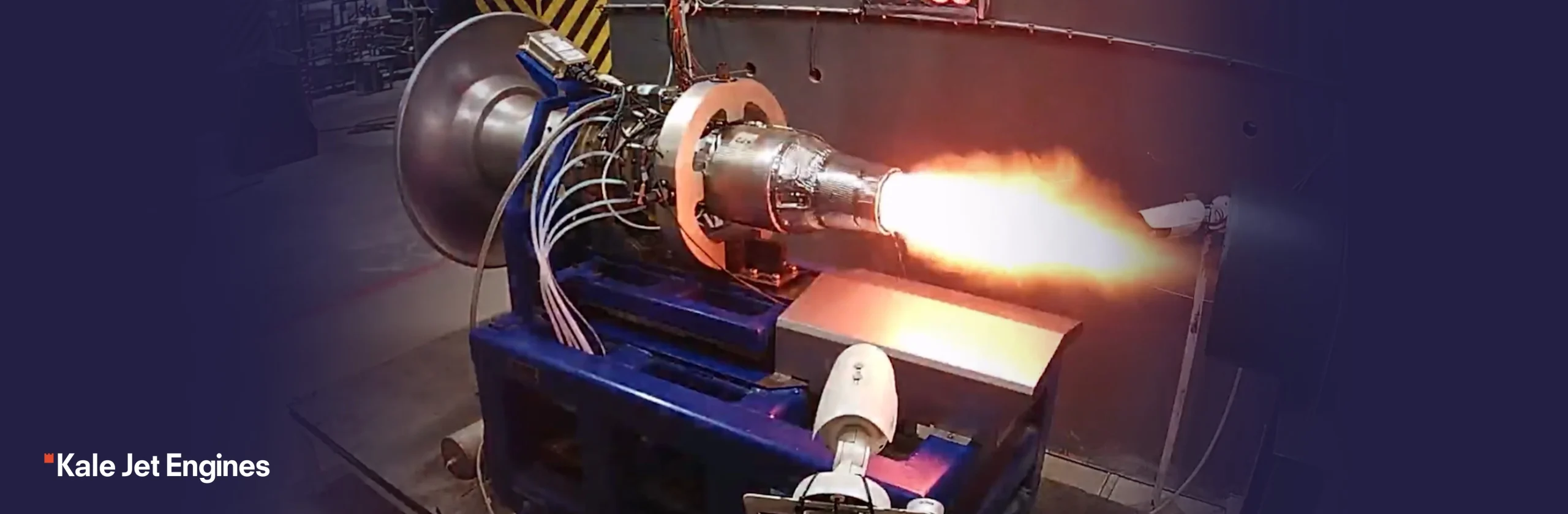
TEI’s Eskişehir site operates a turbofan test bench rated to roughly 100,000 lbf of thrust, large enough for essentially every production commercial engine, alongside turboshaft cells of about 3,400 shp and 2,500 shp. The TS1400 turboshaft core test cell was designed and built domestically in cooperation with the 1st Air Maintenance Factory Directorate, and the TS1400 campaign ran multiple engine test units in parallel to compress certification.
Here is the honest gap. No Turkish altitude test facility — a sealed cell that reproduces the pressure and temperature of high-altitude flight across an engine’s envelope — has been publicly documented. Sea-level thrust testing proves a great deal, but a combat-aircraft engine is qualified on its behaviour at altitude, and that class of facility is rare and expensive worldwide. Envanter Medya’s Turkish-language profile of the Arnold Engineering Development Complex, the American benchmark for this kind of testing, is a useful illustration of what the category involves. The absence is directly relevant to the engine timelines discussed in our KAAN programme page and in who builds Türkiye’s aircraft engines.
Space is the opposite case. TUSAŞ’s Space Systems Assembly, Integration and Test Center in Ankara holds a 3,800 m² ISO-8 cleanroom within roughly 10,000 m² under roof, with a thermal vacuum chamber, a compact antenna test range, an acoustic room and EMC/EMI facilities, sized for satellites up to 5,000 kg and able to work on more than one at a time. That is a complete environmental qualification chain for a spacecraft, and there are not many countries that own one outright.
How much testing actually happens
Volume is harder to pin down than capability, because no Turkish authority publishes a consolidated annual test count. Two numbers are on the record and both need their caveats.
Anadolu Agency reported on 19 January 2026, in an interview with ROKETSAN general manager Murat İkinci, that the company carried out more than 200 trials, tests and new-product operations at over 20 locations across Türkiye during 2025, with testing activity spanning roughly 800 days running simultaneously at different facilities. Those figures appear in the agency’s narration rather than in İkinci’s quoted words, and they describe one company, not the sector.
Separately, SSB president Haluk Görgün set a target of 650 test and acceptance activities for 2026 across programmes including KIZILELMA, MİLGEM-7, the New Type Submarine, the OPV, ÖZGÜR, HÜRKUŞ, GÖKBEY, ATAK, BATU, ATMACA and SOM, speaking at the 5th Global Strategies in the Defence Industry Conference in Antalya on 30–31 January 2026. That is a target announced in a speech, reported by the trade press; no official SSB document stating it has been located. Read it as a statement of intent, not a result — and against the record set out in our analysis of whether Turkish defence programmes run on time.
BUYER VIEW
Ask which range, not whether it was tested. “Successfully tested” in a Turkish press release can mean a developmental shot or a contractual acceptance firing. Ask for the facility, the date, the configuration under test and which elements were excluded from the loop — the SİPER acceptance firing is a good example of a trial with a deliberately limited scope.
Insensitive-munition files travel well. Where a Turkish supplier offers AOP-39 compliance evidence, it was generated against the same publications a NATO safety board applies. Request the sub-test reports by AOP number.
Accreditation status is not public for in-house labs. TÜRKAK, Türkiye’s accreditation body and a member of the European co-operation for Accreditation, accredits independent ballistic and calibration laboratories to ISO/IEC 17025. We could not confirm published ISO/IEC 17025 scopes for the major primes’ internal test laboratories. If accredited results matter to your acceptance regime, make that an explicit contractual requirement.
Budget for witnessed re-testing anyway. No supplier’s home-range evidence removes a buyer’s own acceptance trials. Where Turkish infrastructure helps is in reducing the number of surprises those trials uncover — and in the after-sales chain we cover in spares and MRO.
What comes next
Three things are worth watching, all of them announced rather than speculative. The first is whether ATDM ever books a named foreign customer; opening a NATO-commissioned range to allied users is the obvious commercial step and has been stated as an intention since 2015 without a public result. The second is engine test infrastructure, where the altitude gap is the binding constraint on indigenous combat-aircraft propulsion regardless of how the design work goes. The third is throughput: the Çelik Kubbe contract wave and the broader order book described in our assessment of how much Türkiye’s defence industry can actually build will put demands on acceptance testing that a fixed number of ranges and firing windows has to absorb. Test capacity is a production constraint, and it is rarely counted as one.
FAQ
Where are Turkish missiles tested?
Principally at the Sinop Test Center on the Black Sea coast for guided missiles and air-defence intercepts, at the Ministry of National Defence’s ATDM range at Karapınar in Konya province for rockets and artillery natures, and over the salt flats south of Tuz Gölü near Aksaray for the HİSAR air-defence family. Rocket motors are static-fired and warheads characterised in TÜBİTAK SAGE laboratories.
Who owns Türkiye’s main weapons test range?
ATDM at Karapınar belongs to the Ministry of National Defence. ROKETSAN built it as a turnkey project under a 2011 contract with the NATO Support and Procurement Agency, and it opened on 24 March 2015.
Do Turkish test results meet NATO standards?
In the munitions domain, the published scope says so explicitly: TÜBİTAK SAGE lists insensitive-munition testing against AOP-39 and its sub-publications, and shock sensitivity against STANAG 4488. That makes the evidence legible to allied safety authorities. It does not substitute for a buyer’s own witnessed acceptance testing, which most procurement regimes require regardless of supplier.
Can Türkiye test a jet engine across its full flight envelope?
Not on publicly documented infrastructure. TEI operates ground test cells at Eskişehir, including a bench rated to around 100,000 lbf of thrust, but no Turkish altitude test facility reproducing high-altitude pressure and temperature conditions has been publicly identified. This is a genuine limitation for indigenous combat-aircraft engine development.
How does Türkiye test submarine-launched weapons?
At the DATA Submarine Test Infrastructure at Aksaz Naval Base, delivered by TÜBİTAK SAGE in June 2022. It reproduces a 21-inch launch station of the type fitted to the Gür and Preveze classes and permits launches at 60 m depth without committing a submarine to the trial. The capsule ATMACA was first launched there.
How many tests does Türkiye run in a year?
There is no consolidated official figure. Anadolu Agency reported that ROKETSAN alone conducted more than 200 trials and tests at over 20 locations in 2025, across roughly 800 days of testing activity. SSB president Haluk Görgün set a target of 650 test and acceptance activities across the sector for 2026, announced in a January 2026 conference speech.
Can foreign companies use Turkish test ranges?
ATDM was designed to serve international defence industrial entities, and ROKETSAN said in 2015 that discussions with national and international agencies were under way. No completed foreign test campaign at the facility has been publicly named since.
Sources
- ROKETSAN, “Atış ve Test Değerlendirme Merkezi Açıldı”, 28 March 2015 — roketsan.com.tr
- Defence Turkey, “Firing Test and Evaluation Centre (ATDM) is Operational” — defenceturkey.com
- TÜBİTAK SAGE, Ground Tests Service (published test scope and standards) — sage.tubitak.gov.tr
- Naval News, “Turkish Navy commissions new underwater weapons test-bed”, June 2022 — navalnews.com
- TUSAŞ, Space Systems Assembly, Integration and Test Center — tusas.com
- Defence Industry Europe, “SİPER 1 air defence system completes battery-level acceptance firing at Sinop Test Center” — defence-industry.eu
- Defence Turkey, “General Assessment of the Turkish Defense and Aerospace Industry in 2025 and Targets for 2026” — defenceturkey.com
- Anadolu Agency interview with ROKETSAN general manager Murat İkinci, 19 January 2026