
SIPER Air Defence System: Türkiye’s Long-Range Shield


The SIPER air defence system is the long-range upper layer of Türkiye’s national air and missile defence architecture, developed by TÜBİTAK SAGE as design authority together with ASELSAN and ROKETSAN for the Turkish Air Force. Block-1 batteries are already in Turkish Armed Forces service and have destroyed an aerial target at a range of more than 100 km, while Block-2, designed for interception beyond 150 km, has completed a successful live-fire test. As the top tier of the Çelik Kubbe (Steel Dome) concept, SIPER gives Türkiye a sovereign answer to a capability that had previously been available only through foreign suppliers.
What the SIPER Air Defence System Is and Why It Matters
SIPER, formally the SIPER Uzun Menzilli Bölge Hava ve Füze Savunma Sistemi, translates as the SIPER Long-Range Area Air and Missile Defence System. The designation is precise and worth unpacking. It is an area defence system rather than a point defence system, meaning it is built to protect a defined volume of airspace and the assets underneath it rather than a single installation. It is an air and missile defence system, so its threat set covers both aircraft and the weapons they release. And it is long range, placing it in the category of strategic surface-to-air missile systems that only a small number of countries have ever fielded from their own industrial base.
A national answer to a long-standing capability gap
For decades Türkiye covered the top of its air defence architecture with imported equipment and with allied assets deployed on its territory during periods of tension. The lower tiers were progressively nationalised through the HİSAR family and associated gun and missile systems, but the high-altitude, long-range layer remained the exception. That layer is also the most politically sensitive part of any air defence inventory, because export licences, technology transfer terms and integration permissions for strategic surface-to-air missiles are routinely used as instruments of policy by supplier states. Türkiye has direct experience of those constraints, which is a large part of why the SIPER air defence system was funded as a national programme rather than procured off the shelf.
The strategic argument is straightforward. A domestically designed and produced long-range air defence system removes dependence on foreign suppliers for spares, software updates, missile resupply and integration into the national command network. It also means that the system can be connected to Turkish sensors and Turkish command and control infrastructure without negotiating access to another country’s proprietary interfaces. For a state whose airspace borders several active conflict zones, that independence has operational value as well as political value.
The upper layer of the Steel Dome
Türkiye markets its layered air defence architecture under the Çelik Kubbe, or Steel Dome, concept. The idea is a stack of overlapping systems in which each tier covers the gaps of the tier below it and hands off targets that leak through. At the bottom sit short-range gun and missile systems such as KORKUT and GÜRZ, above them the HİSAR-A low-altitude and HİSAR-O medium-altitude missile systems, and at the top the SIPER air defence system. Because each layer is nationally produced, the architecture can be integrated end to end without the interface compromises that usually accompany a mixed fleet of imported systems.
SIPER is the layer that gives the architecture depth. Short and medium-range systems can only engage a threat once it is already close to the asset being defended, which leaves very little margin for a second shot if the first one misses. A long-range air defence system extends the engagement envelope outward far enough that leakers can be handed down to the tiers below, and far enough that hostile aircraft are forced to release their weapons from stand-off distances or to accept unacceptable risk. That deterrent effect on enemy mission planning is one of the principal reasons long-range systems are procured at all.
Programme History of the SIPER Air Defence System
The 2018 contract
The project contract for the system was signed on 15 January 2018 to meet the Turkish Air Force requirement for high-altitude air defence. From the outset the programme was structured as a three-way national industrial effort rather than a single prime contractor arrangement. TÜBİTAK SAGE took the design lead for the missile, ROKETSAN took responsibility for propulsion and production, and ASELSAN took the radars, fire control and the command and control layer. That division of labour maps neatly onto the established competencies of the three organisations and allowed each of the hardest technical problems to be worked in parallel.
Critical design and integration testing
By April 2022 the programme had completed its critical design phase and moved into system and subsystem integration testing. In a programme of this complexity the transition from critical design review to integration is the point at which the paper architecture has to survive contact with real hardware. Radars have to detect and track at the ranges the specification claims, the fire control chain has to close the loop from detection through engagement decision to missile guidance, and the missile has to fly the profile the designers modelled. Reaching that milestone roughly four years after contract signature was a demanding schedule for a first national long-range air defence effort.
Block-1 in service
SIPER Block-1, also referred to as Ürün-1, subsequently entered service with the Turkish Armed Forces. Entry into service for a long-range air defence system is not a single event so much as a sequence of battery deliveries, each of which is preceded by acceptance testing. That incremental delivery model allows the operator to build up trained crews and doctrine in parallel with production, and it allows lessons from early batteries to feed back into later ones.
The January 2026 battery delivery and the Sinop firing
On 4 January 2026 a new SIPER-1 battery was delivered to the Turkish Armed Forces. Acceptance testing took place at Sinop with joint participation by the Turkish Armed Forces, ASELSAN and ROKETSAN. In the live-fire portion of the test the system engaged a target aircraft at a range of more than 100 km.
The test scenario was constructed to prove more than raw reach. Two aircraft flew close together, one designated as friendly and one as hostile, requiring the system to identify, discriminate and engage the correct target without engaging the other. That is a considerably harder problem than a single-target intercept and it exercises the identification friend or foe chain, the threat evaluation logic and the fire control solution simultaneously. Demonstrating discrimination between closely spaced contacts is directly relevant to the way modern air operations are actually conducted, where formations, decoys and civil traffic routinely share the same volume of airspace.
Commenting on the delivery, Presidency of Defence Industries President Prof. Dr. Haluk Görgün said that SIPER-1’s long-range prevention capability and operational readiness had been confirmed once more in the field.
The Block-2 live-fire test
SIPER Block-2 successfully completed a live-fire test according to TÜBİTAK’s 2025 activity report, which was reported on 31 March 2026. Block-2 is designed for an interception range of more than 150 km, a substantial increase over the demonstrated Block-1 performance. Beyond Block-2, a longer-term range goal of 180 km has been reported for the family, with further SIPER products under the Ürün-3 designation in development.
The 2026 serial-production contracts
Two disclosures in mid-2026 moved SIPER decisively from development funding into large-scale serial production. On 16 June 2026 the Presidency of Defence Industries contracted ASELSAN for air defence technologies worth about €780 million, with deliveries running from 2028 to 2032. On 10 July 2026 ASELSAN disclosed a further contract of €1,470,500,012 to the Public Disclosure Platform (KAP), described as an addition to existing serial-production projects; the disclosure named KORKUT, HİSAR-A, GÖKER, GÖKBERK, HİSAR-O and SIPER among the systems covered.
Neither figure is a SIPER-only value, and the delivery schedule attached to the July contract was not disclosed. What the two disclosures do establish is that the money behind SIPER is now serial-production money committed out to 2032, rather than development money — which is the distinction that matters when judging whether a system can actually be fielded, and eventually exported, in volume.
The block-based development model is significant in itself. Rather than attempting to field the ultimate configuration in one step, the programme delivers a usable capability first and then increases performance in defined increments while the earlier blocks are already generating operational experience. That approach shortens the time to initial capability, spreads technical risk across several development cycles and gives the operator a growth path that does not require replacing the entire ground segment each time the missile improves.
System Architecture and Equipment
The SIPER air defence system is organised on two levels, fleet and battery, with a separate set of support elements. This structure reflects the way long-range air defence is actually employed, where a higher echelon builds and maintains the air picture and allocates targets while subordinate firing units execute engagements.
Fleet-level equipment
At fleet, or filo, level the system fields a Fleet Control Centre and a Search Radar. The search radar provides wide-area surveillance and early detection, feeding the raw material for the air picture. The Fleet Control Centre performs the higher-level battle management function: correlating tracks, evaluating threats, deciding which battery should engage which target and coordinating the actions of subordinate units so that missiles are not wasted on targets already being handled elsewhere.
Battery-level equipment
At battery level the system comprises a Fire Control Centre, a Fire Control Radar, missile launch systems, missile transport and loading systems, the missiles themselves, and a classroom-type training simulator. The division between search radar at fleet level and fire control radar at battery level is a classic and deliberate one. Search radars are optimised for volume coverage at long range, while fire control radars are optimised for precision tracking and for supporting the guidance of missiles in flight. Separating the two functions lets each be tuned for its task and lets a single search asset support multiple firing units.
The inclusion of missile transport and loading systems in the standard battery equipment list is a practical detail that matters more than it might appear. Reload time is one of the principal determinants of how long a long-range air defence battery can sustain an engagement, and dedicated transport and loading equipment shortens the interval between the first salvo and the next. The classroom-type training simulator is equally telling: it indicates that crew training was addressed as part of the delivered system rather than as an afterthought, which is essential when operators must be produced at the same rate as hardware.
Support elements
Support elements comprise a communication station vehicle, a communication relay vehicle and a maintenance and repair vehicle. The presence of a dedicated relay vehicle is directly connected to the system’s distributed architecture. If elements of a battery are to be dispersed over a wide area, the communication links between them have to be maintained across that distance and across terrain that may block line of sight, and a relay vehicle is the standard solution. The maintenance and repair vehicle supports field-level sustainment, keeping the battery operational without returning components to a depot for routine work.
How the SIPER Air Defence System Fights
Distributed architecture and dispersal
The system uses a distributed architecture and supports both near and far deployment of its elements. In practical terms this means the launchers, radars and control centres of a battery need not be co-located. Dispersal is one of the most effective survivability measures available to a ground-based air defence unit, because it denies an attacker the opportunity to disable an entire battery with a single strike and forces multiple weapons to be allocated against the same firing unit. It also opens up siting options that a co-located battery could not use, allowing launchers to be pushed forward or radars to be placed on terrain that improves coverage.
The system also supports multiple engagement and sequential firing. Multiple engagement is the ability to prosecute several targets at once. Sequential firing is the ability to launch missiles one after another against the same target or against a series of targets, which is how a saturation attack is handled and how the probability of kill against a high-value or difficult target is raised.
Engagement modes, identification and diagnostics
Three engagement modes are provided: manual, semi-automatic and automatic. The mode determines how much of the engagement chain the crew executes and how much the system executes on its own. Automatic mode compresses reaction time to the minimum, which is what a saturation raid or a short-warning cruise missile attack demands. Manual mode keeps a human in direct control of every step, which is what a congested or politically sensitive airspace demands. Semi-automatic sits between the two. Being able to shift along that spectrum according to the tactical situation and the rules of engagement in force is a basic requirement for any modern long-range air defence system.
The system also provides identification friend or foe, threat evaluation and automatic diagnostics management. The IFF function is what makes the Sinop test scenario meaningful, since discriminating a hostile aircraft from a friendly one flying in close proximity is impossible without a reliable identification chain. Threat evaluation ranks detected targets by the danger they represent so that limited missiles are committed against the most dangerous contacts first. Automatic diagnostics management continuously monitors the health of the system’s own subsystems, which shortens fault isolation time and supports the high readiness rates a strategic air defence asset is expected to sustain.
Network integration
The SIPER air defence system integrates with the Radar Network Management System (RADNET) and with the Air Force Information System (HvBS), and it supports the Link-16 and JREAP-C tactical data links. This combination is important. RADNET and HvBS connect the system into Türkiye’s national air picture and air command infrastructure, so a SIPER battery is not fighting on its own sensors alone but on a picture assembled from the entire national radar network. Link-16 and JREAP-C are NATO-standard tactical data links, which means the system can exchange track and command data with allied assets and can be integrated into coalition air defence arrangements.
Supporting both national and NATO-standard interfaces is a deliberate design choice with real operational consequences. It allows a nationally developed system to participate in integrated air defence alongside allied aircraft and sensors without requiring the release of foreign proprietary interface specifications, and it means the system can be employed in either a purely national or a coalition context without modification.
Engagement capacity
At battery level the system tracks 100 targets simultaneously, engages 10 targets at once and guides 20 missiles in parallel. These three figures describe capacity at successive stages of the engagement chain and should be read together. Tracking 100 targets defines the size of the air picture a single battery can hold. Engaging 10 at once defines how many separate fire control solutions it can maintain. Guiding 20 missiles in parallel defines how many rounds can be in flight under battery control at any moment, and the ratio of 20 missiles to 10 targets is consistent with a shoot-shoot doctrine in which two missiles are committed against each target to raise the probability of kill.
For a saturation attack, the guidance channel count is usually the binding constraint rather than the number of launchers or the missile inventory. A battery that can hold 20 rounds in flight simultaneously can absorb a considerably larger raid than one limited to a handful of guidance channels.
Threat set
The declared threat set covers fighter aircraft, cruise missiles, air-to-ground munitions and unmanned aerial vehicles. Each of these presents a different problem. Fighter aircraft are fast and manoeuvrable but comparatively large radar targets. Cruise missiles are small, fly low and follow terrain, which compresses detection range and reaction time. Air-to-ground munitions are smaller still and are released at stand-off distances, requiring the system to engage the weapon rather than the launch platform. Unmanned aerial vehicles span an enormous range of sizes and signatures, from large armed platforms down to small, slow, low-signature airframes that are difficult to separate from clutter.
A system that credibly addresses all four has to combine long detection range against conventional targets with the low-altitude and small-target performance needed against cruise missiles and drones. The inclusion of unmanned systems in the declared threat set reflects the reality of contemporary air warfare, where drones and loitering munitions have become a primary means of attack against air defence assets themselves.
Blocks, Configurations and Growth Path
Block-1
Block-1, or Ürün-1, is the in-service configuration. Its performance has been demonstrated in a live-fire acceptance test against a target aircraft at more than 100 km under conditions that also required correct identification and discrimination between two closely spaced contacts. Deliveries of Block-1 batteries continue, with the January 2026 delivery being one instalment in a series.
Block-2
Block-2 is designed for an interception range of more than 150 km and has successfully completed a live-fire test. The increase from a demonstrated 100 km-plus to a designed 150 km-plus is not simply a matter of a bigger motor. Longer engagement ranges require the sensor chain to detect and track targets far enough out to support the shot, the guidance architecture to sustain control over a much longer flight, and the missile itself to retain enough energy at the end of that flight to manoeuvre against a target that is trying to evade.
Ürün-3 and the 180 km goal
A longer-term range goal of 180 km has been reported for the family, with further SIPER products under the Ürün-3 designation in development. Consistent with the block model, these are best understood as successive increments on a common ground segment rather than as separate systems, which is how a mature long-range air defence programme normally evolves once the underlying architecture has proven itself.
Key Characteristics
| Characteristic | Detail |
|---|---|
| Full designation | SIPER Uzun Menzilli Bölge Hava ve Füze Savunma Sistemi (SIPER Long-Range Area Air and Missile Defence System) |
| Class | Long-range area air and missile defence system |
| Design lead | TÜBİTAK SAGE |
| Main industrial partners | ASELSAN (radars, fire control, command and control), ROKETSAN (propulsion and production) |
| Customer and first operator | Turkish Air Force |
| Project contract signature | 15 January 2018 |
| Critical design phase completed | April 2022 |
| Configurations | Block-1 (Ürün-1, in service), Block-2 (live-fire tested), Ürün-3 (in development) |
| Demonstrated engagement range, Block-1 | More than 100 km against a target aircraft |
| Design interception range, Block-2 | More than 150 km |
| Reported longer-term family range goal | 180 km |
| Simultaneous target tracking, per battery | 100 targets |
| Simultaneous engagements, per battery | 10 targets |
| Missiles guided in parallel, per battery | 20 |
| Engagement modes | Manual, semi-automatic, automatic |
| Fleet-level equipment | Fleet Control Centre, Search Radar |
| Battery-level equipment | Fire Control Centre, Fire Control Radar, missile launch systems, missile transport and loading systems, missiles, classroom-type training simulator |
| Support elements | Communication station vehicle, communication relay vehicle, maintenance and repair vehicle |
| Networks and data links | RADNET, HvBS, Link-16, JREAP-C |
| Other functions | IFF, threat evaluation, automatic diagnostics management, multiple engagement, sequential firing |
| Declared threat set | Fighter aircraft, cruise missiles, air-to-ground munitions, unmanned aerial vehicles |
| Architectural role | Upper layer of the Çelik Kubbe (Steel Dome) layered air defence concept |
International Comparison
Long-range surface-to-air missile systems form a small and strategically significant category. The reference points for the SIPER air defence system are the US Patriot in its PAC-3 configuration, the Russian S-400, the Franco-Italian SAMP/T, the Israeli David’s Sling and the Chinese HQ-9.
Patriot PAC-3 and SAMP/T
Patriot is the Western benchmark and the system against which most long-range air defence programmes are implicitly measured, with an operational record accumulated across several conflicts and a large multinational user base. SAMP/T is the European alternative, built around the Aster family of missiles and notable for having been developed as a joint European programme rather than as a national one. Both are mature systems with extensive support infrastructure behind them, and both come with the supplier-state constraints that a national programme is intended to avoid.
Against these, the significance of SIPER is less about individual performance figures than about ownership. A Patriot or SAMP/T battery is procured with the export licence, sustainment arrangements and integration terms of the supplying states attached. A SIPER battery is not.
S-400
The comparison with the S-400 is a particular one for Türkiye, because Türkiye also operates the Russian system. That acquisition demonstrated precisely the political dimension of long-range air defence procurement, and it is difficult to separate the impetus behind the national programme from that experience. A nationally produced system is not subject to a third country’s decisions about resupply, upgrades or integration, and it does not create dependencies that complicate relationships elsewhere.
David’s Sling and HQ-9
David’s Sling is instructive as a comparison because Israel, like Türkiye, built a layered national architecture from the ground up in response to a specific and persistent threat environment, and did so by developing several complementary systems that hand targets between tiers. The Çelik Kubbe concept follows a comparable logic. HQ-9 represents the Chinese route into the same capability category, developed nationally and subsequently exported, and it illustrates that a national long-range air defence system can become an export product once it has an operational record behind it.
Industrial Base Behind the SIPER Air Defence System
The programme rests on three organisations whose roles are complementary rather than overlapping.
TÜBİTAK SAGE
TÜBİTAK SAGE holds the design lead and is responsible for the missile design. As Türkiye’s principal defence research institute for munitions and missiles, SAGE brings the aerodynamic, guidance and warhead design competencies on which the interceptor depends. Assigning design authority to a research institute rather than to a production company is a model that keeps the fundamental design work close to the national research base while leaving series production to industry.
ROKETSAN
ROKETSAN is responsible for propulsion and production. Rocket motor design and manufacture is the single most demanding element of a long-range interceptor, because the range figures that define the system depend directly on propulsion performance. ROKETSAN’s established position in solid rocket motors and missile production makes it the natural home for that work and for the volume manufacturing that follows.
ASELSAN
ASELSAN provides the radars, fire control and command and control layer, which is to say everything that finds the target and decides what to do about it. In a modern long-range air defence system this is at least as demanding as the missile. The search radar, the fire control radar, the Fleet Control Centre, the Fire Control Centre and the integration with RADNET, HvBS, Link-16 and JREAP-C all sit within ASELSAN’s scope. The company’s broader portfolio across the lower tiers of the Steel Dome also means that the interfaces between SIPER and the systems beneath it are being designed by an organisation that owns both sides of them.
Operators, Exports and Outlook
Current operator
The Turkish Air Force is the customer and the first operator, with Block-1 batteries in Turkish Armed Forces service and deliveries continuing. Because acceptance of each battery involves a live-fire test, every delivery generates fresh performance data and a fresh demonstration of readiness, which is a more rigorous acceptance standard than paper handover.
Export prospects
No export customer has been announced. The general pattern in this category, however, is that long-range air defence systems become exportable once they have a domestic operational record and a demonstrated production rate, and there is a substantial international market among states that want strategic air defence without the political conditions attached to the established suppliers. Türkiye’s wider defence export performance across drones, armoured vehicles and naval platforms indicates the commercial machinery to pursue such sales exists. Whether SIPER follows that route will depend on production capacity, on national priorities for filling the Turkish Air Force requirement first, and on the export control decisions of the Turkish government.
Outlook
The near-term trajectory of the SIPER air defence system is defined by three parallel activities: continued Block-1 battery deliveries, the maturation of Block-2 toward its 150 km-plus interception range following its successful live-fire test, and development work on Ürün-3 against a reported 180 km family goal. Each of these builds on the same architecture, which means the ground segment and the crews trained on it carry forward as the missile improves.
The broader significance is architectural. With the long-range air defence layer nationalised, every tier of the Steel Dome from short-range guns to strategic surface-to-air missiles is now under national control, designed by organisations that can be directed to make the tiers work together. That is a position very few countries occupy, and it changes the terms on which Türkiye approaches both its own air defence planning and its participation in allied arrangements.
Frequently Asked Questions
What is the range of the SIPER air defence system?
Block-1 has demonstrated an engagement at more than 100 km in a live-fire acceptance test against a target aircraft at Sinop. Block-2 is designed for an interception range of more than 150 km and has successfully completed a live-fire test according to TÜBİTAK’s 2025 activity report. A longer-term goal of 180 km has been reported for the family, with further products under the Ürün-3 designation in development. The demonstrated and designed figures should be kept distinct: 100 km-plus is a proven result, while 150 km-plus and 180 km are design targets at different stages of maturity.
Who builds SIPER and which organisation leads the design?
The programme is a three-way national effort. TÜBİTAK SAGE holds the design lead and is responsible for the missile design, ROKETSAN handles propulsion and production, and ASELSAN supplies the radars, fire control and command and control elements. The project contract was signed on 15 January 2018 to meet the Turkish Air Force requirement for high-altitude air defence, and the Turkish Air Force is the customer and first operator.
How many targets can a SIPER battery handle at once?
At battery level the system tracks 100 targets simultaneously, engages 10 targets at once and guides 20 missiles in parallel. It supports multiple engagement and sequential firing, and it operates in manual, semi-automatic or automatic engagement modes with identification friend or foe, threat evaluation and automatic diagnostics management. The declared threat set covers fighter aircraft, cruise missiles, air-to-ground munitions and unmanned aerial vehicles.
How does SIPER fit into the Steel Dome concept?
SIPER is the upper layer of the Çelik Kubbe (Steel Dome) layered air defence architecture, sitting above HİSAR-A, HİSAR-O, KORKUT and GÜRZ. Threats that survive the long-range layer are handed down to the medium and short-range tiers beneath it, while the long-range layer forces hostile aircraft to operate from stand-off distances. Integration with RADNET, HvBS, Link-16 and JREAP-C allows a SIPER battery to draw on the national air picture and to exchange data with allied assets.


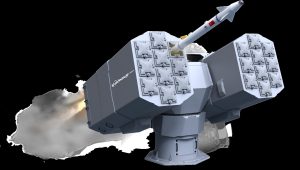

[…] runs from short-range systems through to the sensor and command-and-control elements of the SİPER long-range air and missile defence system, and includes the launcher and fire-control work around the SUNGUR very-short-range missile system. […]
[…] want the platform-level detail can go deeper on the individual layers: the long-range tier in our SİPER programme page, the bottom tier in our analysis of SUNGUR, and the soft-kill tier in our breakdown of KORAL II. […]