Who Certifies Turkish Weapons, and Does It Count Abroad?

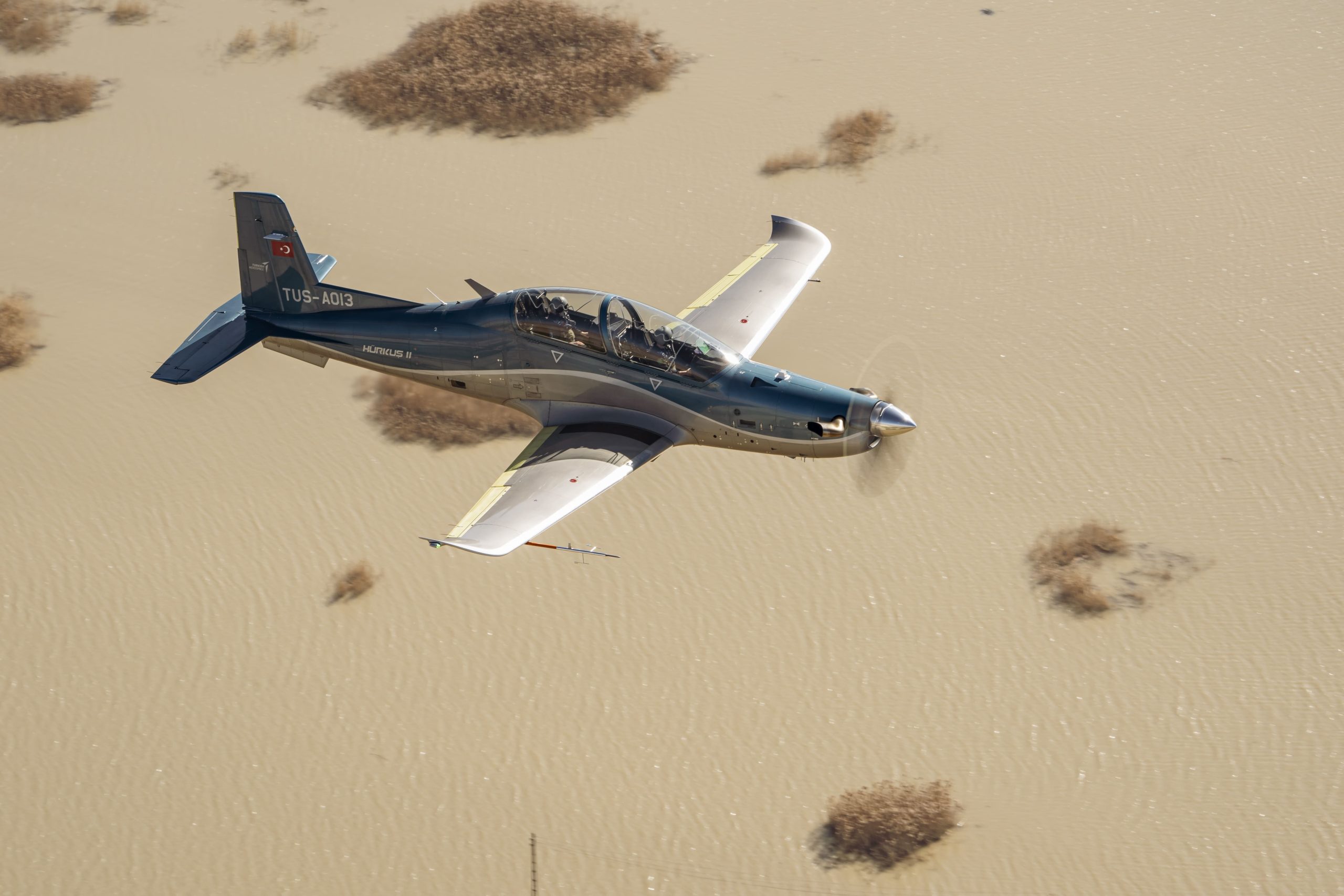
Four different bodies certify Turkish defence products, and only some of what they issue means anything to a foreign buyer. Military aircraft are signed off by a certification board drawn from the Presidency of Defence Industries (SSB) and the force that will fly them — a capability Türkiye completed end to end for the first time in September 2026, with the HÜRKUŞ-II trainer. Civil-registered aircraft go to SHGM, the civil aviation authority. Warships are classed by Türk Loydu or a foreign classification society. Armoured vehicles and munitions are not type-certified at all; they are tested against NATO standards. Each of those answers crosses a border differently.
That distinction matters more than it sounds, because certification is where a lot of export campaigns quietly lose time and money. A buyer evaluating a Turkish platform is not only asking whether it works. It is asking who said so, against which rule set, and whether the national authority back home will accept that work or insist on repeating it.
DEFENCETÜRKIYE DATA BOX
Subject: Certification, classification and qualification of Turkish defence products
Military aircraft: Joint certification board of SSB and the operating force command; SSB’s Quality, Test and Certification Department runs the technical side
Civil-registered aircraft: Directorate General of Civil Aviation (SHGM), under the Ministry of Transport and Infrastructure
Naval vessels: Classification societies — Türk Loydu, an IACS member since 2023, alongside foreign societies on some programmes
Land systems and munitions: No type certificate; tested against NATO STANAGs and customer-specified requirements
Quality assurance, all categories: NATO Allied Quality Assurance Publications under STANAG 4107
First national military type certificate: HÜRKUŞ-II, issued 9 September 2026
First Turkish-designed rotorcraft type certificate: T625 GÖKBEY, SHGM, mid-March 2026
Recognition abroad: No mutual-recognition arrangement for Turkish military type certificates has been publicly announced; buyers run their own processes
Military aircraft: the certificate Türkiye only just learned to issue
On 9 September 2026 a certification board made up of SSB and Turkish Air Force Command personnel signed the military type certificate for the HÜRKUŞ-II basic trainer, with a formal ceremony in Ankara two days later. It was the first time a Turkish air platform had been taken through military type certification end to end inside Türkiye, using national methodology and national personnel rather than leaning on a foreign certifying authority.
The published scope of the exercise is the useful part, because it shows what the capability actually consists of. According to SSB’s account, reported by The Defense Post and Hürriyet Daily News, the board worked across twelve certification disciplines — among them structures, flight performance, propulsion and fuel, avionics, electromagnetic environmental effects, software, system safety, human factors and continued airworthiness. It verified 1,790 certification requirements, technically reviewed 950 evidence documents and completed 153 certification tests. Turkish reporting adds that SSB’s Quality, Test and Certification Department supplied seven of the experts and that TR Uçuşa Elverişlilik, a specialist airworthiness firm acting on SSB’s behalf in the certification panels, supplied sixteen more. We covered the milestone itself when it happened, in our report on the HÜRKUŞ-II military type certificate.
Two things follow from this that are easy to miss. The first is that Türkiye does not operate a single standalone military airworthiness authority of the kind several European states have built. The certifying function sits with SSB, exercised jointly with the force command that will operate the aircraft, and supported by contracted specialists. The second is that one certificate is a first, not a track record. The methodology, the panel structure and the digital evidence pipeline now exist and can be reused on KAAN, HÜRJET, ATAK-2 and GÖKBEY’s military variants. None of that has happened yet.
Civil certification is the route that actually travels
The contrast with the T625 GÖKBEY is instructive. SHGM, Türkiye’s civil aviation authority, issued the helicopter a rotorcraft-category type certificate in mid-March 2026 — the first ever granted to a Turkish-designed aircraft. Before that, as set out in our T625 GÖKBEY programme page, the aircraft could only be handed to Turkish state institutions under military or state airworthiness arrangements. The certificate did two things at once: it allowed commercial sale and operation inside Türkiye, and it created a certification basis that another national authority can validate rather than assess from first principles.
That second point is the commercially significant one. Civil aviation runs a mature validation system. An authority that trusts the originating authority’s work can validate a foreign type certificate on a reduced technical review instead of re-certifying the design. Military aviation has no equivalent global mechanism. Türkiye is also not a participant in the European Defence Agency’s Military Airworthiness Authorities forum, which develops the European Military Airworthiness Requirements that EU states — plus Norway, Switzerland and Australia — use to recognise one another’s work. No arrangement extending that recognition to Turkish military type certificates has been publicly announced.
Readers who want the Turkish-language account of how the helicopter’s paperwork was assembled will find Envanter Medya’s detailed report on the GÖKBEY type certificate useful; it goes further into the test campaign than we do here.
Warships are certified by a different industry entirely
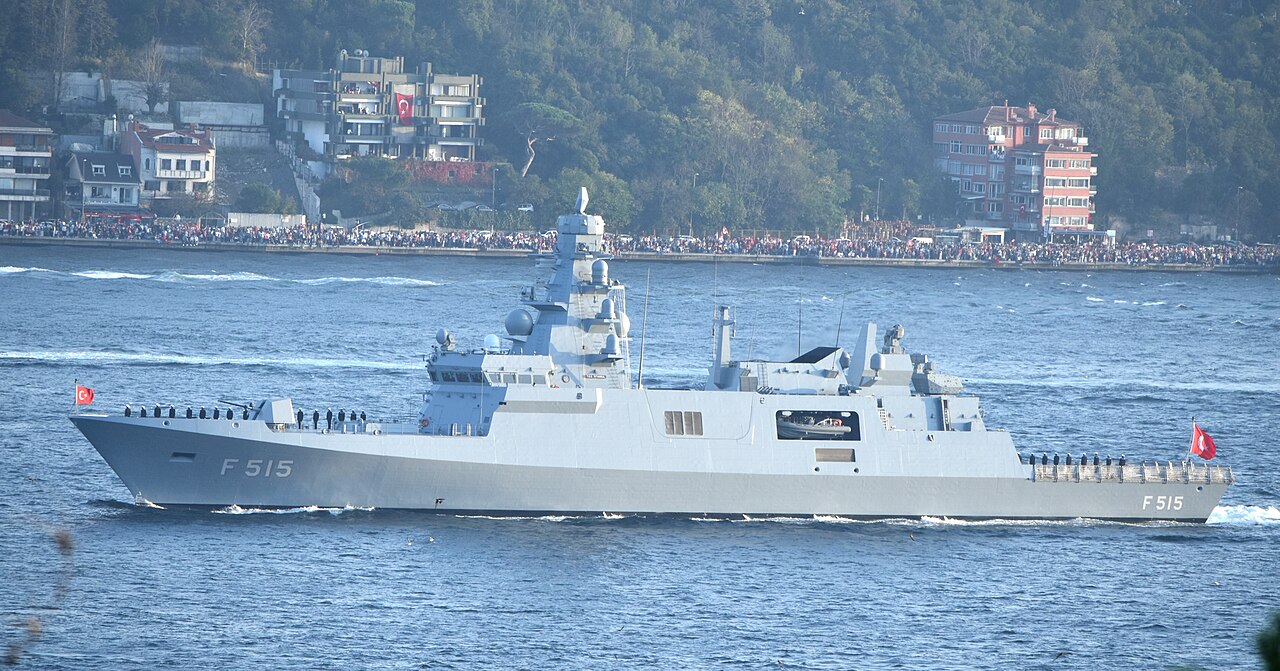
Naval shipbuilding answers the question in a way that has nothing to do with defence ministries. Warships are classed by classification societies, the same commercial bodies that class merchant ships, working to published naval ship rules. Türk Loydu, established in Istanbul in 1960 and given foundation status in 1966, classed its first military vessel in 1993. It joined the Naval Ship Classification Association in 2004, participated in the MİLGEM programme from 2005, signed the classification contract for the landing helicopter dock TCG Anadolu in 2015, held the NSCA presidency in 2019 and became the twelfth member of the International Association of Classification Societies in 2023, according to its own published history.
IACS membership is the part a foreign navy recognises immediately. It places the society inside the same technical peer structure as Lloyd’s Register, DNV, Bureau Veritas and the rest, and it is why a Turkish-built hull classed to published naval rules does not present the buyer with an unfamiliar document. Turkish yards also class ships with foreign societies where a customer prefers it. The industrial side of this — which yard builds what, and what a foreign buyer is actually contracting for — is set out in our guide to who builds Türkiye’s warships.
The practical result is that Türkiye’s naval exports carry the least certification risk of any category in the catalogue, and its aircraft exports carry the most.
| What is certified | Who issues it | Based on | Does it travel? | Worked example |
|---|---|---|---|---|
| Military aircraft | Joint SSB / force command certification board | National military certification basis, built per programme | Weakly. No publicly announced mutual recognition; buyer re-certifies | HÜRKUŞ-II, 9 September 2026 |
| Civil-registered aircraft | SHGM, the civil aviation authority | Civil airworthiness codes | Yes, through the established validation route between civil authorities | T625 GÖKBEY, March 2026 |
| Naval vessels | Classification societies, including Türk Loydu | Published naval ship rules | Yes. IACS membership puts the society in a recognised peer structure | TCG Anadolu, classification contract 2015 |
| Armoured vehicles, munitions | No certifying authority; test houses and the customer | NATO STANAGs and customer trial specifications | Yes, if the test house is accredited and the buyer accepts the witness regime | STANAG 4569 protection levels quoted across the Turkish catalogue |
| Quality assurance, all categories | National quality assurance authorities, delegated between allies | AQAP 2110 and related publications | Yes, within NATO, under STANAG 4107 | Supplier assurance accepted across allied procurement |
Compiled by DefenceTürkiye from SSB’s published account of the HÜRKUŞ-II certification, SHGM’s GÖKBEY decision, Türk Loydu’s corporate history and IACS, and the NATO standardisation framework.
WHY IT MATTERS
Türkiye spent two decades acquiring the ability to design and build weapons. The ability to certify them itself is newer, and it is the part that determines how cheaply another country can field them. A buyer that has to repeat a certification campaign is buying an aircraft plus a programme; a buyer that can validate existing work is buying an aircraft. That gap is measured in years and in nine-figure sums, and it is currently the single largest piece of non-recurring cost hiding inside Türkiye’s combat aircraft export ambitions.
Land systems and munitions: standards, not certificates
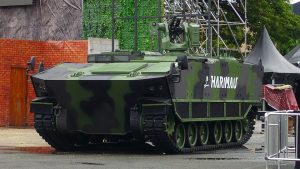
There is no type certificate for an armoured vehicle. What exists instead is a set of NATO standardisation agreements against which a design is tested, and a customer trial programme that decides whether the result is acceptable. STANAG 4569, which sets protection levels for occupants of logistic and light armoured vehicles, is the one that appears constantly in Turkish marketing material — BMC’s VURAN at level 3, the FNSS-designed Kaplan MT with a level 4 hull and level 5 add-on armour, and so on down the catalogue.
A STANAG level is only as good as the test behind it, which is why the accreditation of the test house matters more than the number. Turkish industry has built that layer too: Nurol Teknoloji, among others, operates ballistic test laboratories working to NATO standards. For a foreign buyer the practical question is not whether a vehicle is “STANAG certified” — nobody certifies to STANAG in the aviation sense — but whether the firing trials were witnessed, by whom, and whether the buyer’s own authority will accept that witness record or send its own team.
Munitions follow the same logic, with the added complication of national safety and suitability-for-service rules, which almost every buyer applies itself and almost no buyer waives.
The layer that does cross borders: AQAP and STANAG 4107
Underneath all four regimes sits a quality system that is genuinely portable within NATO. The Allied Quality Assurance Publications — AQAP 2110 for design, development and production being the best known — add configuration management, risk management, product dependability and government quality assurance on top of ISO 9001. STANAG 4107 is the agreement under which allies accept one another’s government quality assurance, so one nation’s authority can carry out that assurance on a supplier on behalf of another.
For Türkiye this is a quiet structural advantage that non-NATO exporters do not have. A NATO buyer purchasing from a Turkish supplier can request that Türkiye’s national quality assurance authority perform the checks on its behalf, under a framework it already uses at home. It explains part of why Turkish suppliers have been able to enter allied supply chains faster than their certification record alone would suggest, a pattern visible in our survey of which NATO members operate Turkish defence systems.
It is worth being precise about what this does and does not do. Quality assurance confirms that a product was built to its defined configuration under a controlled process. It says nothing about whether the design is airworthy, seaworthy or safe to fire. Those remain separate questions with separate answers.
What a buyer actually pays for: the Spanish worked example
Spain’s advanced jet trainer programme is the clearest live illustration of how a Turkish aircraft gets into a European air force, and of what certification costs when it does not transfer. Spain’s Council of Ministers authorised the ITS-C contract on 28 October 2025 with a ceiling of €3.12bn for up to 45 HÜRJET-based trainers, and the contract was signed on 30 December 2025 with a joint venture of Airbus Defence and Space España and Turkish Aerospace for 30 aircraft plus the training system.
Read the structure and the certification question answers itself. Airbus’s own announcement describes a first phase in which 30 aircraft are delivered in initial configuration and certified in Spain across 2028 and 2029, with the Spanish conversion to the final standard following from 2031. Turkish Aerospace supplies the airframe; a European prime takes the certification, adaptation and integration work, and the revenue attached to it. We set out the full programme structure in our analysis of where HÜRJET fits in the advanced jet trainer market.
That is not a criticism of the deal — it is how Türkiye won a European order against incumbent trainers. But it shows the mechanism plainly. In the absence of recognised military airworthiness equivalence, the certification work gets done in the buyer’s country, by the buyer’s industry, at the buyer’s price. A programme that could transfer a certification basis instead transfers an airframe.
BUYER VIEW
Open-source editorial analysis, not procurement advice. Questions worth putting to a Turkish supplier before signature:
- Does the platform hold a type certificate, and who issued it — SSB and a force command, or SHGM?
- Will the certification basis, compliance evidence and test data be delivered with the aircraft, and under what licence? Evidence you cannot use is evidence you will regenerate.
- Which party carries the cost and schedule risk of certification in your country, and is it inside the contract price or outside it?
- For vehicles and munitions: were protection and safety trials witnessed, by which accredited body, and will your authority accept that record?
- For ships: which classification society, and is the class notation the one your navy already uses?
- Who recertifies after a mid-life modification, and does that capability transfer with a local production agreement?
The limitations, stated plainly
Three of them are worth naming, because they are the ones a serious evaluation will find.
One certificate is not a system. The HÜRKUŞ-II file proves Türkiye can run a military type certification campaign on a 3.3-tonne turboprop trainer. It does not yet prove the same for a supersonic jet trainer, a fifth-generation fighter or a heavy attack helicopter, all of which are substantially harder and none of which has been certified to that standard.
There is no recognition pathway. Civil certificates have a validation route. Military ones, for Türkiye, do not — no mutual recognition arrangement has been publicly announced, and Türkiye sits outside the European framework that handles this for EU members and several associated states. Until that changes, every military aircraft export carries a duplicated certification bill.
Unmanned systems remain the unresolved category. Türkiye’s most-exported air platforms are its drones, and no military type certificate of the HÜRKUŞ-II kind has been publicly announced for any of them. They are delivered under state and military airworthiness arrangements, and each buyer applies its own acceptance regime. That is the international norm for armed UAVs rather than a Turkish shortfall — military UAV airworthiness is unsettled almost everywhere — but it means the certification question for a drone buyer is answered by negotiation, not by a document.
Set against that, the direction is consistent. The same pattern of building the institution after building the product runs through the whole industry, and we traced it in our assessment of how independent Turkish defence production really is. Certification is simply the latest layer to be filled in.
What comes next
Three things are worth watching. The first is whether the HÜRKUŞ-II methodology is applied to a second and third platform, and how quickly — that is what converts a milestone into an authority. The second is whether Türkiye pursues any formal recognition arrangement with a European or allied military airworthiness authority; nothing has been announced, and an announcement would materially change the economics of aircraft exports. The third is the GÖKBEY powered by the indigenous TEI TS1400 turboshaft, which will need its own certification work and which Turkish Aerospace has stated as the programme’s next objective.
For buyers negotiating now, the practical takeaway is narrower. Certification cost is real, it is unevenly distributed across the Turkish catalogue, and it is negotiable — which means it belongs in the commercial discussion rather than in the technical annex. The structural side of how those negotiations run is covered in our explainers on how countries buy Turkish weapons and on what Turkish defence offsets actually deliver.
FAQ
Who certifies Turkish military aircraft?
A certification board formed by the Presidency of Defence Industries (SSB) and the force command that will operate the aircraft. SSB’s Quality, Test and Certification Department runs the technical work, supported by contracted airworthiness specialists. Türkiye does not operate a separate standalone military airworthiness authority of the kind several European states have established.
What was Türkiye’s first national military type certificate?
The HÜRKUŞ-II basic trainer, certified on 9 September 2026 and presented at a ceremony in Ankara on 11 September. SSB’s published account describes twelve certification disciplines, 1,790 requirements verified, 950 evidence documents reviewed and 153 certification tests. Envanter Medya’s Turkish-language account of the HÜRKUŞ-II certification covers the programme chronology in more detail.
Is a Turkish military type certificate recognised in NATO or the EU?
Not automatically. Military airworthiness has no global mutual-recognition system comparable to civil aviation’s, and no arrangement recognising Turkish military type certificates has been publicly announced. Türkiye is not a participant in the European Defence Agency’s military airworthiness framework. In practice the buyer’s own authority runs its own process, as Spain is doing for HÜRJET.
Who classifies Turkish warships?
Türk Loydu, founded in Istanbul in 1960 and the twelfth member of the International Association of Classification Societies since 2023, classes naval vessels to published naval ship rules. It classed its first military ship in 1993, took part in the MİLGEM programme from 2005 and signed the classification contract for TCG Anadolu in 2015. Foreign societies are used on some programmes where a customer prefers it.
Are Turkish armoured vehicles certified to NATO standards?
They are tested against them rather than certified to them. STANAG 4569 defines protection levels for light armoured vehicles, and Turkish manufacturers quote those levels across the catalogue. There is no certifying authority in the aviation sense; what matters to a buyer is which accredited test house ran the trials and whether its witness record is acceptable at home.
Do Turkish drones have type certificates?
No military type certificate of the HÜRKUŞ-II kind has been publicly announced for any Turkish armed UAV. They are supplied under state and military airworthiness arrangements, with each customer applying its own acceptance process. This reflects the unsettled international position on military UAV airworthiness rather than a specifically Turkish gap.
Does certification add cost to a Turkish defence export?
For aircraft, usually yes, because the work is repeated in the buyer’s country. The Spanish HÜRJET contract puts certification in Spain inside the first delivery phase, handled by Airbus Defence and Space España. For ships and for land systems the duplication is far smaller, because classification society work and accredited ballistic testing are already recognised internationally.
Sources
- The Defense Post, “Turkey Grants First Indigenous Military Certificate to Hürkuş-II Trainer Aircraft”, 16 September 2026
- Hürriyet Daily News, “Türkiye awards first military type certificate to domestically developed aircraft”
- Türk Loydu, corporate history and Rules for the Classification of Naval Ships
- International Association of Classification Societies, announcement of Türk Loydu membership, 2023
- Airbus, “Airbus to lead Spain’s new combat training system”, press release, December 2025
- European Defence Agency, Military Airworthiness Authorities (MAWA) Forum and European Military Airworthiness Requirements
- NATO STANAG 4107, Mutual Acceptance of Government Quality Assurance and Usage of the AQAPs; AQAP 2110
- NATO STANAG 4569 / AEP-55, protection levels for occupants of logistic and light armoured vehicles
- DefenceTürkiye reporting on the HÜRKUŞ-II military type certificate and the T625 GÖKBEY programme