Turkish Defence and Aerospace Exports Hit $634 Million in September

Türkiye’s defence and aerospace exports reached $634 million in September 2026, up 10.7 percent from the same month last year, according to figures released by the Presidency of Defence Industries (SSB) on October 4. The result pushes the sector’s cumulative sales for the first nine months of 2026 to $6.926 billion, a 15.6 percent increase over the same period in 2025.
On a trailing twelve-month basis — a measure less distorted by month-to-month swings in contract deliveries and invoicing — Turkish defence and aerospace exports now stand at $10.941 billion, up roughly 30 percent year on year. SSB chairman Haluk Görgün tied the figures to the agency’s export-first posture, saying: “We are continuing our export-focused efforts with determination, continuing to increase our defence industry’s effectiveness in international markets.”
Building on a Record 2025
The September numbers extend a run that saw Türkiye cross $10 billion in annual defence and aerospace exports for the first time in 2025, with goods sales of roughly $9.87 billion and services exports of $184 million making up the total. December alone brought in more than $2.5 billion, the strongest single month SSB has recorded, as several large contracts closed out the year.
That seasonal pattern matters for reading the 2026 numbers. Turkish defence exports tend to be lumpy — a handful of multi-hundred-million-dollar contracts can swing a monthly total sharply — so a single $634 million month says less than the nine-month trend line. Still, a 15.6 percent rise in cumulative sales through September, against a 2025 base that was itself up sharply, points to demand that has outlasted the initial wave of interest driven by Bayraktar TB2 combat footage several years ago and has shifted toward larger-ticket, longer-cycle programmes: fighter jets, frigates, armoured vehicles and air defence systems sold with maintenance and localisation packages attached.
Where the Growth Is Coming From
SSB’s monthly release does not break the figures down by company or product line, but the deals signed or advanced since the summer illustrate the mix driving the trend. Türkiye and Azerbaijan signed defence agreements worth more than $500 million at the ADEX exhibition in Baku in late September, spanning Turkish Aerospace trainer aircraft, Baykar loitering munitions and electronic warfare pods, and an ASELSAN radar framework agreement. Within that package, Roketsan’s BARBAROS coastal defence system won its first export order, and ASELSAN agreed to build a precision-munitions plant in Azerbaijan’s Nakhchivan exclave — the kind of localisation commitment that increasingly accompanies Turkish export contracts rather than a simple hardware sale.
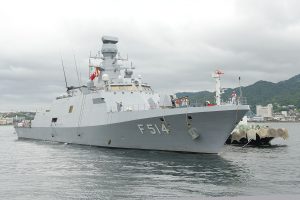
Further afield, the Mecca Defence Pact between Türkiye, Saudi Arabia and Pakistan has continued to generate industrial follow-through, including Saudi naval crews completing AKINCI drone training at Baykar facilities in Türkiye. Separately, Indonesia’s commercial contract for 48 KAAN fighter jets and two İstif-class frigates, concluded earlier this year, remains the largest single order in the backlog and will show up in export figures gradually as production and delivery milestones are reached rather than all at once.
Why the Figures Matter Beyond Türkiye
For an international audience, the monthly export print is one of the few hard, comparable data points SSB publishes on an industry that otherwise discloses relatively little at the contract level — a practice Turkish officials and company executives often attribute to customer confidentiality requirements rather than an unwillingness to disclose. The trend they show is consistent with how Turkish firms have positioned themselves commercially: faster delivery timelines than Western primes, a track record of combat use that buyers treat as a selling point, and a growing willingness to offer technology transfer and local production, as seen in Azerbaijan, Pakistan and now potentially Indonesia.
That combination has let Türkiye compete for contracts against established Western exporters and, in markets such as Central Asia, the Gulf and parts of Africa, against Chinese and Russian suppliers on price and political terms rather than purely on capability. Whether 2026 ultimately exceeds 2025’s $10 billion full-year mark will depend heavily on how much business SSB and Turkish firms close in the fourth quarter, historically the strongest period of the year — and on whether large pending orders, including Indonesia’s KAAN contract and further Gulf state procurement under the Mecca pact, begin converting from signed agreements into recognised export revenue.
Sources: Presidency of Defence Industries (SSB) export data as reported October 4, 2026; Haluk Görgün statement via Turkish business press.