HÜRKUŞ-II Earns Türkiye’s First Domestic Military Type Certificate

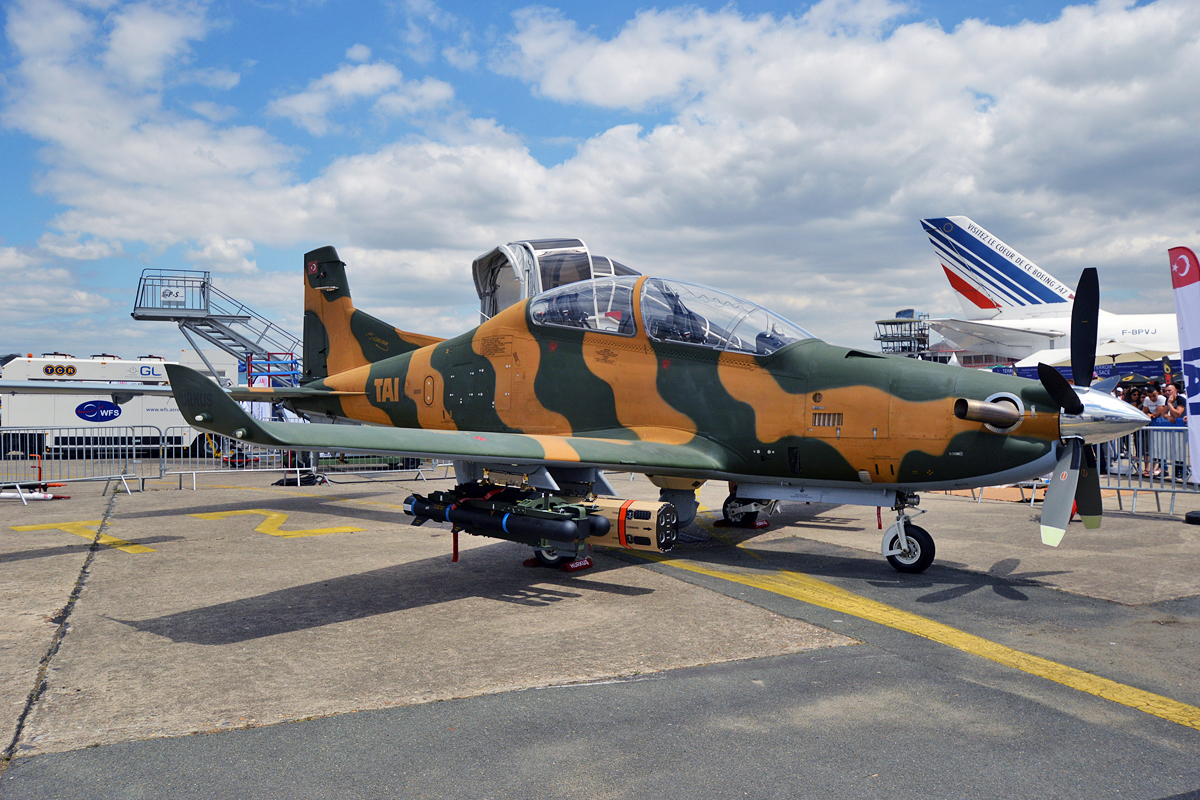
Türkiye issued its first fully domestic military type certificate on September 9, when a joint certification board of the Presidency of Defence Industries (SSB) and the Turkish Air Force Command signed off on the HÜRKUŞ-II basic trainer. The certificate was formally presented at a ceremony in Ankara on September 11. It is the first time a Turkish air platform has completed a military type certification process end to end using national institutions, national methodology and national personnel, rather than leaning on a foreign certifying authority.
For an aircraft that most people outside Türkiye have never heard of, that is a bigger deal than it sounds. Type certification is the paperwork that proves an aircraft design meets a defined safety and performance standard before it can be built and flown operationally at scale. Civil aircraft get theirs from bodies like EASA or the FAA. Military aircraft need an equivalent process run by a national defence airworthiness authority — and until this month, Türkiye did not have a track record of running that process itself, from first principles, for one of its own designs.
What HÜRKUŞ-II actually is
HÜRKUŞ-II is Turkish Aerospace’s (TUSAŞ) reworked version of the HÜRKUŞ-B military trainer, itself part of a family that also includes the civil-certified HÜRKUŞ-A and the armed HÜRKUŞ-C light attack variant flown by Nigeria, Chad and Niger. The II model is not a cosmetic update: TUSAŞ cut roughly 450-500 kg of structural weight through greater composite use, redesigned the nose, spinner, air intake, nose gear, canopy, winglets and tail, and swapped in indigenous cooling, hydraulic, radio and IFF systems. Maximum take-off weight came down from 3,750 kg to 3,300 kg.
The aircraft first flew on December 30, 2024 from Akıncı Air Base, a 20-minute sortie that reached 6,500 feet and 140 knots, as The Aviationist reported at the time. TUSAŞ holds a contract for 55 HÜRKUŞ-II aircraft for the Turkish Air Force, with the first 15 destined for the 122nd Basic Flight Training Squadron at the 3rd Main Jet Base in Konya. The type certificate now issued clears the way for those aircraft to move from flight test status into the training syllabus.
What the certification process actually involved
The scale of the exercise explains why SSB is treating it as a milestone rather than a formality. The certification board worked through 1,790 individual requirements, reviewed 950 pieces of technical evidence, and ran 283 panel meetings and workshops. TUSAŞ’s production and sub-contractor base underwent 225 separate inspections. On the test side, the programme completed 153 certification tests — 38 in the laboratory, 71 on the ground and 44 in flight — spanning twelve disciplines: avionics, electronic hardware, electrical systems, electromagnetic environmental effects, propulsion and fuel, human factors, cabin safety, system safety, continued airworthiness, aircraft systems, flight performance and software.
The certification board itself was a mixed SSB-Air Force team: seven SSB experts from its Quality, Test and Certification Division worked alongside sixteen specialists from TR Airworthiness (TRUE), a certification body set up specifically to build this kind of national capacity, while the Air Force side supplied five board members plus twelve certification specialists from the Ministry of National Defence. TUSAŞ, as the design and production organisation, put forty airworthiness engineers and ten design/production-approval specialists into the process.
SSB President Haluk Görgün framed the achievement in institutional rather than purely technical terms: “We are not merely developing aircraft; we are building the technical authority, methodology and certification culture our people will use to verify platform reliability.” He described September 9 as both a technical and strategic threshold, intended to leave Türkiye with “lasting competency and strong institutional memory” for the aircraft programmes that follow, according to a detailed account of the certification process published by SavunmaSanayiST.
Why a trainer’s paperwork matters beyond Türkiye
HÜRKUŞ-II is not, on its own, an export headline. Its significance is that it is the proving ground for a certification pipeline Türkiye will need for far higher-profile programmes: the KAAN fifth-generation fighter, the HÜRJET jet trainer and light attack aircraft, and the ANKA-3 flying-wing UCAV all sit behind it in the queue, and all will eventually need the same kind of military airworthiness sign-off before they can enter full-rate production or be cleared for export sale under Türkiye’s own authority. That is distinct from TUSAŞ’s earlier win with the T625 GÖKBEY, which secured Türkiye’s first domestically-issued rotorcraft type certificate on the civil side; HÜRKUŞ-II is the first equivalent achievement specifically on the military certification track.
Owning that process matters commercially as well as institutionally. A foreign customer buying a Turkish-designed military aircraft wants assurance that the airframe has been through a credible, internationally-consistent qualification regime. Historically, some of that assurance has had to be imported, whether through partner-nation certification arrangements or reliance on legacy Western-built subsystems with their own paper trail. A domestic authority that can run the full process — and that other states can, in time, come to recognise — reduces that dependency and shortens the path for future Turkish designs looking for buyers. Nigeria, Chad and Niger already operate the armed HÜRKUŞ-C; a credible national certification regime behind the newer HÜRKUŞ-II variant strengthens the case for follow-on trainer sales to those and other air forces evaluating Turkish types.
It also lands at a moment when Türkiye is trying to present its defence-industrial base as mature rather than merely prolific. The country’s exports have been driven overwhelmingly by drones, missiles and armoured vehicles; a functioning indigenous certification authority is the less visible infrastructure that lets manned aircraft programmes catch up to that reputation. SSB has said the competency built on HÜRKUŞ-II will carry forward into the certification of KAAN and HÜRJET, aircraft on which Türkiye’s fighter and export ambitions more directly ride.
What comes next
With the type certificate issued, TUSAŞ can proceed to deliver the first HÜRKUŞ-II airframes to the Turkish Air Force’s Konya training wing under the 55-aircraft contract. Neither SSB nor TUSAŞ has published a certification timeline for HÜRJET or KAAN, but officials have consistently pointed to HÜRKUŞ-II as the template. Whether that translates into a materially faster certification process for the fighter — which faces its own separate technical hurdles around the indigenous TF35000 engine still years away — remains to be seen.
Update, September 17: SSB President Haluk Görgün and Turkish Air Force Commander Gen. Rafet Dalkıran flew the HÜRKUŞ-II themselves on September 16, alongside a separate HÜRJET test sortie, in what SSB framed as the final validation step before handover. “We will deliver our first HÜRKUŞ-II aircraft to our Air Force Command very soon,” Görgün said, calling it the first time Türkiye has delivered a domestically produced aircraft to its own armed forces. Dalkıran, asked whether the acceptance process was complete, replied simply: “Excellent. Done.” During the same test flight, a HÜRJET P2 aircraft used ASELSAN\’s domestically developed MURAD AESA radar to lock onto a second HÜRJET, P1, from range — a first for a Turkish-built radar and jet combination, according to anews. No firm delivery date has been set beyond “very soon.”