Türkiye Delivers First Two HÜRKUŞ-II Trainers to Air Force

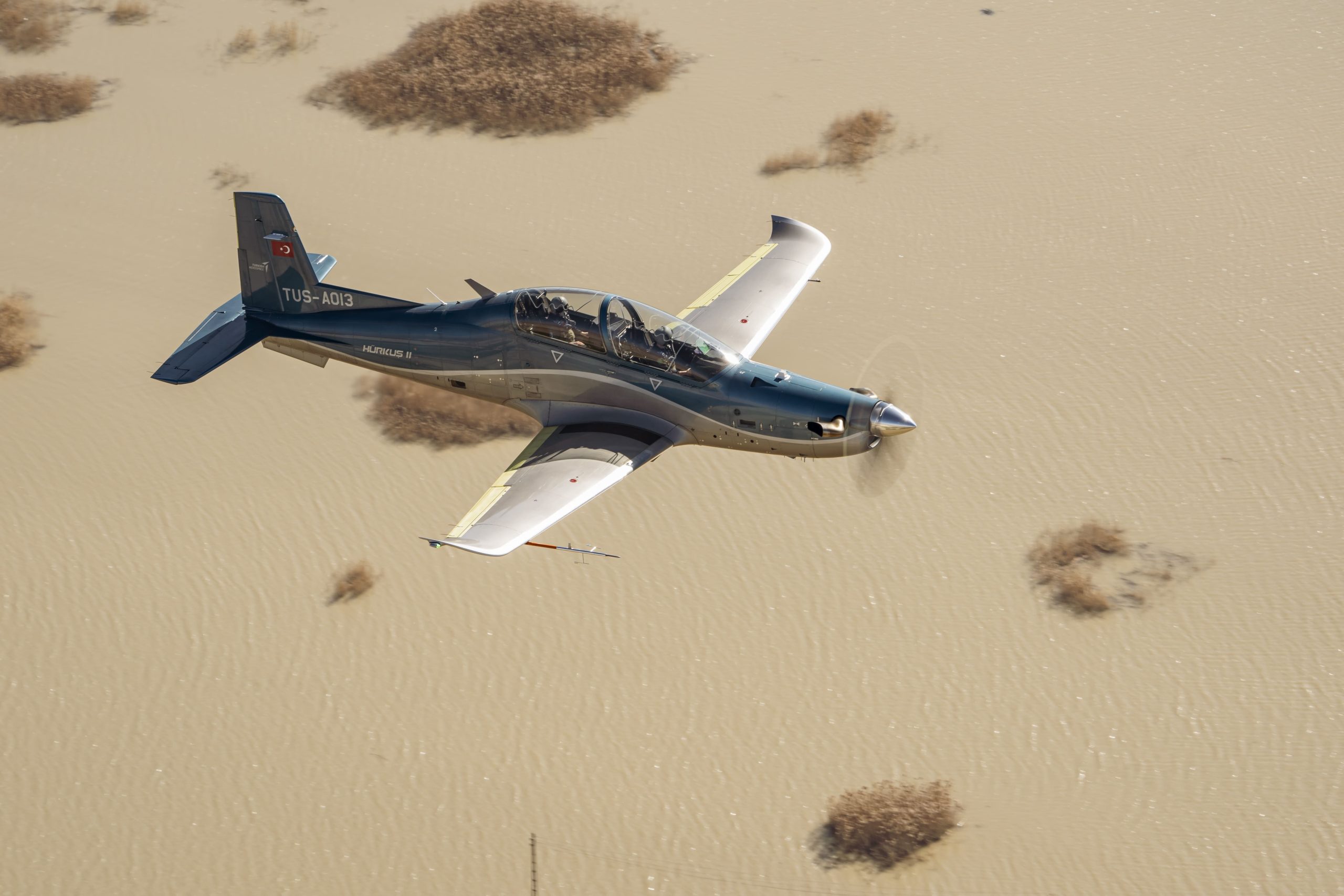
Türkiye has handed over its first HÜRKUŞ-II basic trainer aircraft to the Turkish Air Force, the Ministry of National Defence announced ahead of the event, moving the indigenous trainer from certified design to operational hardware just over two weeks after it cleared the country’s first fully domestic military type certification.
Ministry spokesman Rear Admiral Zeki Aktürk had confirmed the date in a briefing, saying the acceptance activity for “our new-generation basic training aircraft HÜRKUŞ-II” would take place at Turkish Aerospace’s (TUSAŞ) Kahramankazan facility near Ankara, with the Air Force Commander attending in person.
Ceremony Confirms Two Aircraft, an Expanded Order
The acceptance and delivery ceremony was held as scheduled at TUSAŞ’s Kahramankazan facility, with Air Force Commander General Rafet Dalkıran, SSB President Haluk Görgün and TUSAŞ General Manager Mehmet Demiroğlu in attendance. Two HÜRKUŞ-II aircraft were formally handed over to the Turkish Air Force, the first airframes of the type to enter squadron service.
Görgün used the ceremony to disclose that the programme has been enlarged well beyond its original scope. The initial HÜRKUŞ-II order covered 15 aircraft; SSB has since expanded it to 55, with the full fleet targeted for delivery by the end of 2028. Ten more aircraft are due to reach the Air Force by the end of 2026, taking the in-service total to 12 by year-end. Görgün described the moment as Türkiye “entrusting its first manned aircraft to its own pilots,” underscoring the programme’s role as the entry point for a training pipeline that continues into the jet-powered HÜRJET.
SSB has not published a squadron-by-squadron delivery schedule for the remaining airframes. Based on the original contract structure, the first 15 aircraft are earmarked for the 122nd Basic Flight Training Squadron at the 3rd Main Jet Base in Konya, where they are due to replace the Korea Aerospace Industries KT-1.
From Certificate to Cockpit
The acceptance event follows directly from HÜRKUŞ-II’s type certification on September 9, when a joint SSB–Air Force board signed off on the aircraft after 153 tests and a review of 1,790 technical requirements — the first time a Turkish-designed air platform has completed that process entirely through national institutions rather than a foreign certifying authority. That certificate was the paperwork; the Kahramankazan ceremony is the physical handover that starts moving airframes into flight training.
What the Aircraft Is
HÜRKUŞ-II is TUSAŞ’s reworked version of the HÜRKUŞ-B trainer, part of a family that also includes the civil-certified HÜRKUŞ-A and the armed HÜRKUŞ-C light-attack variant already flown by Nigeria, Chad and Niger. The II-model revisions cut roughly 450-500 kg of structural weight through wider use of composites and a redesigned nose, air intake, canopy and tail, bringing maximum take-off weight down to 3,300 kg. It is powered by a Pratt & Whitney Canada PT6A-68T turboprop rated at 1,600 horsepower, giving it a top speed of around 288 knots and a service ceiling above 11,900 metres. The aircraft first flew in December 2024 from Akıncı Air Base.
TUSAŞ has built the programme around a training pipeline that continues into the jet-powered HÜRJET, giving the Turkish Air Force — and any export customer — a single domestic supplier covering basic, advanced and light-combat training on related airframes. That bundled pitch is central to TUSAŞ’s export case: the company is targeting air forces in Africa, Central Asia and Southeast Asia that need an affordable, low-hour-cost basic trainer and would rather not juggle separate foreign suppliers for each stage of pilot training.
Why It Matters Beyond Türkiye
A basic trainer is not a headline platform like KAAN or a Bayraktar drone, but it is the aircraft every future Turkish and, potentially, export-customer fighter pilot will fly first. Replacing an imported type with a domestic one removes a foreign-sourced item from a NATO air force’s flight line and gives Turkish Aerospace a second export-ready trainer to sell alongside HÜRJET, at a moment when TUSAŞ is already courting Spain and other buyers for the advanced-jet end of the pipeline. The jump from a 15-aircraft order to 55 also signals that the Turkish Air Force itself has become a larger anchor customer than first disclosed, which strengthens the unit-cost case TUSAŞ will make to prospective export buyers.
Sources
- Anka Haber: Rear Admiral Aktürk confirms September 28 HÜRKUŞ-II acceptance date
- The Defense Post: “Turkey Grants First Indigenous Military Certificate to Hürkuş-II Trainer Aircraft”
- NET HABER: HÜRKUŞ-II delivery ceremony held, 55 aircraft targeted by 2028
- Hibya Haber Ajansı: First two HÜRKUŞ aircraft delivered to Air Force inventory