
T625 GÖKBEY: The First Turkish-Designed Aircraft to Win a Rotorcraft Type Certificate

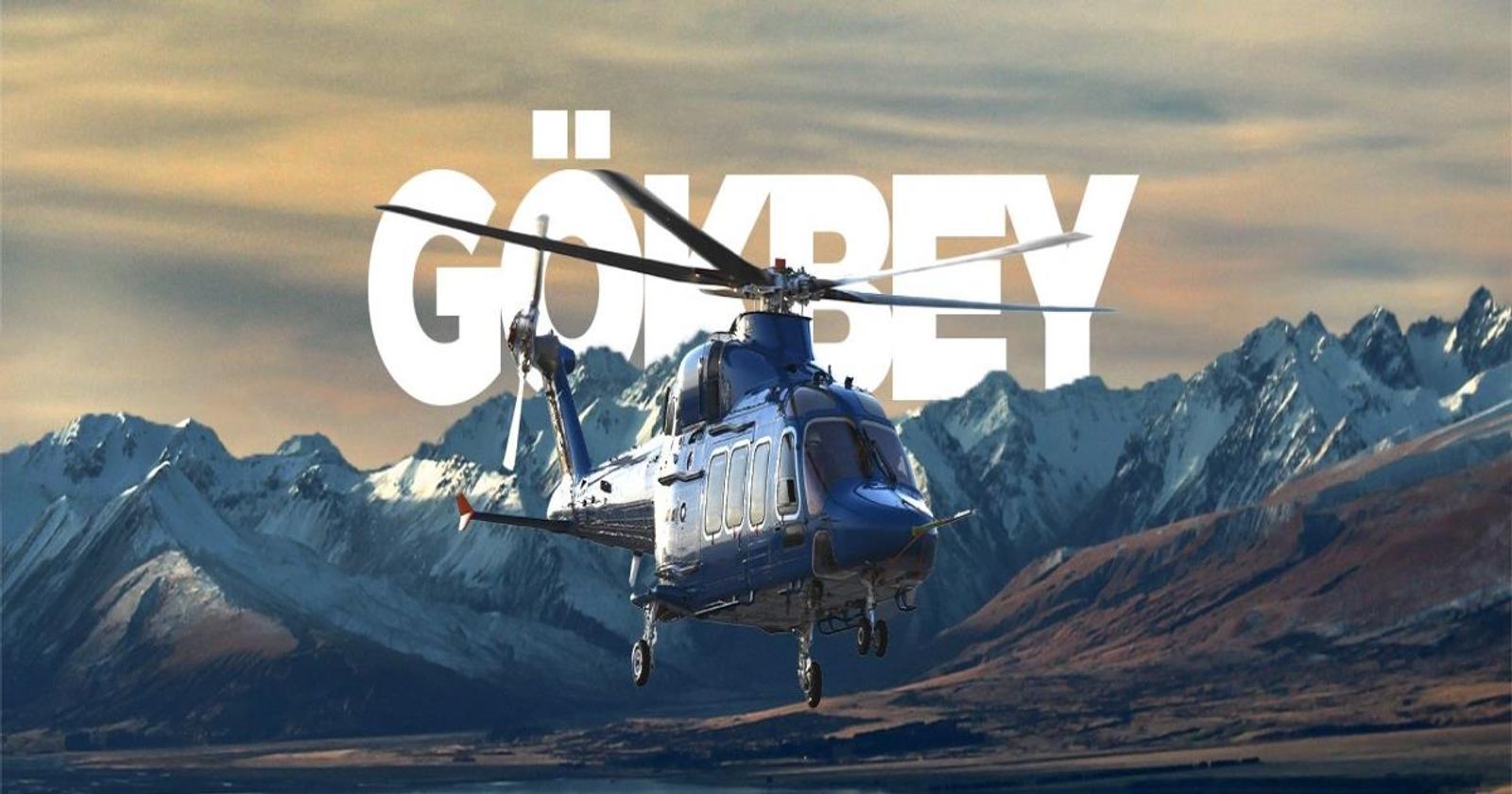
The T625 GÖKBEY, the general purpose helicopter developed by Turkish Aerospace, received a civil type certificate from Türkiye’s Directorate General of Civil Aviation (SHGM) in mid-March 2026. It is the first rotorcraft-category type certificate ever issued to a Turkish-designed aircraft, and it opened the way to serial production and to the first civil deliveries of the six-tonne-class twin. The certificate covers the aircraft in its LHTEC CTS800-4AT engine configuration; certifying the version powered by the indigenous TEI TS1400 turboshaft remains the programme’s declared next objective. Roughly sixteen years after the Indigenous Helicopter Programme was launched, the T625 GÖKBEY has moved from a state-funded development effort into low-rate production for Turkish state operators, with an order book that has grown from an initial batch of around two dozen aircraft to more than eighty.
What the T625 GÖKBEY type certificate changes
The March 2026 SHGM decision
The type certificate was issued by SHGM, the civil aviation authority operating under the Ministry of Transport and Infrastructure, and covers design, engine and propeller airworthiness for the civil configuration of the aircraft. Turkish outlets do not agree on the exact date: Defensehere places the certificate on 17 March 2026, while SavunmaTR and DefenceTurk report 18 March 2026. A separate certificate handover ceremony was also reported, which is the most plausible explanation for the two dates in circulation. The safest statement is that the certificate was granted in mid-March 2026 and formally handed over at a ceremony in Ankara.
Prof. Dr. Kemal Yüksek, Director General of SHGM, described the outcome as Türkiye’s “first rotorcraft category Type certification and the country’s inaugural end-to-end digital certification project.” The second half of that statement is the less obvious but arguably more consequential one: it refers to the certification file itself having been compiled, submitted and assessed digitally, a working method that a national authority has to build once before it can be reused on every subsequent programme.
From state airworthiness to the civil market
Before March 2026 the T625 GÖKBEY could only be handed over to Turkish state institutions under military or state airworthiness arrangements. The type certificate changes the aircraft’s regulatory status in two ways. It permits commercial sale and operation inside Türkiye, and it creates the certification basis that other national authorities can validate rather than having to assess the design from first principles.
The technical clearances attached to the aircraft are the ones civil operators look for. Turkish Aerospace states that the helicopter is certified to instrument flight rules and to Category A, cleared for single-pilot IFR and VFR operation, approved for night flying and for flight in known icing conditions with a full ice protection system. Category A is the significant one commercially: it means the aircraft is cleared to continue flight or land safely following the failure of one engine, and it is the standard demanded by offshore, emergency medical and public transport operators. Without it, the civil missions Turkish Aerospace advertises for the type would remain theoretical.
One boundary should be drawn clearly. Turkish Aerospace and the Presidency of Defence Industries (SSB) have described European Union Aviation Safety Agency certification as an objective, and DefenceTurk’s programme page lists certification activity with both EASA and SHGM. No EASA type certificate had been reported as of August 2026. European civil market access therefore remains an aspiration rather than an achieved milestone.
Programme history: the indigenous helicopter that took sixteen years
Origins and the 2013 development contract
The programme traces to a Defence Industry Executive Committee decision of 15 June 2010 that launched the Özgün Helikopter Programı, the Indigenous Helicopter Programme. Turkish Aerospace began preliminary design studies for a multirole helicopter the same year, building on the industrial base created by the T129 ATAK attack helicopter, which entered serial production in 2014. Budget and timeline approval followed on 3 January 2013, and the development contract between the Undersecretariat for Defence Industries, since restructured as the SSB, and Turkish Aerospace was signed on 26 June 2013. That contract framed the requirement as a six-tonne-class multirole helicopter for land operations.
Engines for the flight test fleet were secured on 10 December 2015, when a contract with LHTEC covered ten CTS800 turboshafts, eight to power the four prototypes and two held in reserve, according to Defence Turkey Magazine.
Four prototypes
The flight test fleet consisted of four aircraft. P0, registered TC-HLP, was the initial flight test platform and made the maiden flight at 06:00 in Ankara on 6 September 2018. P1 (TC-HLI), the first fully systems-integrated airframe, flew on 30 June 2019 for 45 minutes. P2 (TC-HLV) was configured for the Gendarmerie and first flew on 28 June 2021. P3 (TC-HLH), fitted with the CTS800-4AT engines that power current production aircraft, flew in May 2022. The registrations and dates come from Defence Turkey Magazine; the four-prototype structure is independently confirmed by Aeronaut.media. The name GÖKBEY was given by President Recep Tayyip Erdoğan on 12 December 2018, three months after the first flight.
Environmental testing and Arctic trials
The most extensively documented element of the flight test campaign is the winter programme conducted at Kiruna in Sweden, inside the Arctic Circle, in temperatures down to minus 30 degrees Celsius. Turkish Aerospace reports a month-long campaign covering more than 600 individual test points across 60 sorties totalling 60 flight hours. The campaign validated the environmental control, propulsion, rotor and hydraulic systems; take-off, landing and flight limits; limit speeds and approach angles in cold weather; safe flight in simulated failure scenarios; and controllability at 176 knots. Defence Turkey described the campaign as part of the ongoing civil and military certification process, and the manufacturer’s summary was that the helicopter “has proven its readiness for flight even in the extreme cold conditions of the Arctic Circle.”
Production approval and serial manufacture
Production Organisation Approval was granted in April 2025 following inspections conducted between 2021 and 2024, according to DefenceTurk. That approval, rather than the type certificate itself, is what allows the company to build certified airframes at rate; the type certificate then makes those airframes saleable in the civil sphere. Speaking at the March 2026 certificate ceremony, Prof. Dr. Haluk Görgün, President of Defence Industries, said the company had “orders for 75 helicopters and has begun production.” Final assembly and delivery ceremonies take place at the Kahramankazan facilities north of Ankara.
HAVELSAN’s “Göksim” full-flight simulator is reported to have been completed on 10 June 2026, entering its delivery phase. That date rests on a single secondary source and should be treated as unconfirmed.
Design of the T625 GÖKBEY general purpose helicopter
Rotor system, structure and landing gear
The T625 GÖKBEY is a conventional twin-engine layout with a five-blade main rotor of 13.20 metres diameter and a four-blade tail rotor, both described by airforce-technology as engineered for improved aerodynamic performance. Overall length with rotors turning is 15.87 metres. Maximum take-off weight is 6,050 kg.
The most distinctive airframe feature is retractable landing gear, uncommon in this weight class and one that Turkish Aerospace markets deliberately: it reduces drag in cruise and, the company argues, suits operations from uneven terrain. The manufacturer also lists ease of maintenance and hot-and-high performance among the design priorities set at the outset of the programme.
Cabin, capacity and cargo
Official Turkish Aerospace material specifies a crew of two pilots and 12 passengers, giving 14 people on board, alongside a 1.1 cubic metre cargo bay. Published figures for occupancy vary because they measure different things: Aeronaut.media and reporting connected to the Ministry of Health refer to up to 14 personnel including the two-person crew, Defensehere quoted a “2+10” configuration at the certification ceremony, and English-language reference material describes 12 passengers including crew. The manufacturer’s own reading of two crew plus 12 passengers is the authoritative one, with the practical seat count varying by role fit.
Standard fuel capacity is 1,020 kg, with an auxiliary tank adding a further 280 kg. An empty weight of approximately five tonnes circulates in secondary reference sources but does not appear in Turkish Aerospace material, and is best treated as unverified.
Powerplant: CTS800-4AT now, TEI TS1400 next
The current engines
Production T625 GÖKBEY aircraft are powered by two LHTEC CTS800-4AT turboshafts, each rated at 1,024 kW, or 1,373 shp, for take-off, managed by a redundant two-channel FADEC digital control system. LHTEC is the Light Helicopter Turbine Engine Company, the Honeywell and Rolls-Royce joint venture whose engine family also powers the T129 ATAK. Some reference sources list the engine as the CTS800-4A; the manufacturer’s brochure and product page both specify the -4AT variant.
Why the TEI TS1400 is the pivotal component
The imported powerplant has always been the programme’s structural weakness. Because the CTS800 is an Anglo-American product, every export sale requires United States and United Kingdom export licences. Türkiye encountered the consequences directly with the T129 ATAK, whose sale to Pakistan collapsed over US refusal to license the same LHTEC engine family. Aeronaut.media makes the connection explicitly, noting that the indigenous TS1400 would allow the GÖKBEY to avoid the US political constraints that previously blocked ATAK exports. In practical terms, the national engine is what converts the aircraft from a helicopter Türkiye builds into a helicopter Türkiye can sell. The same licence exposure runs through every Turkish aviation programme, which is why the question of who actually builds Türkiye’s aircraft engines decides more export outcomes than any airframe specification.
The TS1400 is developed by TEI, TUSAŞ Engine Industries, at Eskişehir, under a Turboshaft Engine Development Project launched on 7 March 2017 under SSB oversight. The first engine was delivered on 5 December 2020 and publicly introduced on 11 December 2020. Published specifications give a rated power of 1,400 shp, maximum power of 1,500 shp (1,100 kW), a 30-second one-engine-inoperative rating of 1,740 shp (1,300 kW) and a 120-second emergency rating of 1,660 shp (1,240 kW). Army Recognition reports the ratings differently, describing 1,400 shp at take-off and 1,660 shp for 30-second one-engine-out cases, so the emergency figures should be attributed rather than stated flatly. The engine is 1,105 mm long and 404 mm in diameter with a dry weight of 180 kg, giving a power-to-weight ratio of 8.54 shp/kg. It uses a two-stage centrifugal compressor, annular combustor and two-stage turbine, with an overall pressure ratio of 12:1 and a turbine inlet temperature of 1,400 degrees Celsius, running on Jet A1 with a dry-sump oil system, an output shaft speed of 23,000 rpm and a 20,000 ft ceiling.
The comparison that matters is with the engine being replaced. At 1,400 to 1,500 shp the TS1400 is meaningfully more powerful than the 1,373 shp CTS800-4AT, so the switch is a capability increase rather than pure import substitution. Görgün put the industrial effect in percentage terms on 30 April 2026: “Our localisation rate on GÖKBEY is above 70 per cent; with the integration of the national engine we will raise it above 80 per cent.”
First flight and a certification schedule that has slipped
The GÖKBEY made the first flight of a Turkish helicopter powered by a Turkish-designed engine in April 2023. The precise date is inconsistent across sources: Turkish Aerospace states 19 April 2023, while Daily Sabah reports the flight as having taken place on Saturday 22 April 2023. İsmail Demir, then head of the SSB, called the flight “An important milestone in the Turkish defense industry.” In December 2023 TEI moved the TS1400 into the serial production phase, with chief executive Mahmut F. Akşit noting that mass-produced engines normally take two to three years to deliver given raw material supply and processing, but that TEI aimed to unveil the first mass-produced examples within 15 to 16 months.
As of 2026, technical qualification and the serial production configuration were finalised and Design Organisation Approval and Production Organisation Certification were complete, leaving type certification as the final outstanding stage. Military use does not require civil certification, so the constraint applies to civil sales rather than to deliveries to the armed forces. Akşit stated around the World Defense Show in February 2026 that the TS1400, using fully regulation-compliant components, would run on the T625 GÖKBEY during 2026. Mehmet Demiroğlu, General Manager of Turkish Aerospace, said in March 2026 that “The next step will be certifying GÖKBEY with our domestic TS1400 engine.”
That target deserves scepticism, because the schedule has moved repeatedly. Crewed flight authorisation was targeted for the end of 2023, type certification for the end of 2025, and the stage remains open in 2026; English-language reference material now describes integration as scheduled for 2027, and TURDEF reports TS1400-powered deliveries as planned for 2027 to 2028. It should also be noted that a single report describing the April 2026 Land Forces delivery aircraft as TS1400-powered conflicts with every other account, all of which place current deliveries on the CTS800.
Avionics, cockpit and flight control
ASELSAN supplies the avionics suite and the glass cockpit. The layout is built around two 8 by 20 inch integrated touchscreen mission displays and two 8 by 10 inch touchscreen data entry and command units. Reported equipment includes an inertial navigation system, thermal imaging and airborne radio systems. A figure of 34 integrated avionics systems circulates in secondary reference sources and is single-sourced.
Flight control is handled by a four-axis, dual-redundant automatic flight control system. Turkish Aerospace states that the four-axis autopilot runs software developed in-house, which is a more substantive sovereignty claim than it may appear: flight control law software is among the hardest elements of a rotorcraft programme to acquire from abroad without restriction, and it underpins the single-pilot IFR clearance.
T625 GÖKBEY key characteristics
| Parameter | Value |
|---|---|
| Manufacturer | Turkish Aerospace (TUSAŞ), Kahramankazan, Ankara |
| Class | 6-tonne-class twin-engine general purpose helicopter |
| Length, rotors turning | 15.87 m (52 ft) |
| Main rotor diameter | 13.20 m (43 ft), five blades |
| Tail rotor | Four blades |
| Maximum take-off weight | 6,050 kg (13,337 lb) |
| Crew and passengers | 2 pilots plus 12 passengers |
| Cargo bay volume | 1.1 m3 (35 ft3) |
| Standard fuel | 1,020 kg (2,248 lb) |
| Auxiliary fuel | 280 kg (617 lb) |
| Engines (production) | 2 x LHTEC CTS800-4AT, 1,024 kW / 1,373 shp each, dual-channel FADEC |
| Engines (planned) | 2 x TEI TS1400, 1,400 shp rated / 1,500 shp maximum |
| Maximum cruise speed | 297 km/h (160 kt); top speed quoted at 306 km/h (165 kt) |
| Range | 740 km (400+ nm); 948 km (512+ nm) with auxiliary tank |
| Endurance | 3.8+ hours; 5+ hours with auxiliary tank |
| Service ceiling | 20,000 ft (6,096 m) |
| Landing gear | Retractable |
| Certification | SHGM type certificate, March 2026; IFR and Category A; single-pilot IFR/VFR; night; flight into known icing |
Two figures in that table need a note. Turkish Aerospace quotes 297 km/h as maximum cruise speed, while DefenceTurk, Daily Sabah, Coast Guard reporting and English-language reference sources quote 306 km/h; the two almost certainly measure different parameters, maximum cruise against never-exceed or top speed. On service ceiling, the manufacturer’s English product page gives 6,069 m while its brochure gives 6,096 m for the same 20,000 ft figure. Since 6,096 m is the exact metric equivalent of 20,000 ft, the lower number appears to be a transcription error that has propagated into several secondary sources.
Configurations and mission fits
Utility and troop transport
The baseline configuration, with two crew, 12 passengers and the 1.1 cubic metre cargo bay, is the fit delivered to the Gendarmerie General Command and to the Land Forces. Turkish Aerospace lists military operations, transportation, firefighting, cargo, search and rescue, offshore, air ambulance and VIP transport as the approved mission set.
Air ambulance
The medevac fit is the most developed civil variant and the intended first civil delivery. Three aircraft are on order for the Ministry of Health. Reporting by aviation journalist Tolga Özbek and by Anadolu Agency describes a configuration carrying up to six stretchers with a crew of four, comprising two pilots, a physician and a medical technician, fitted with intensive-care equipment. Türkiye’s air ambulance service has operated since 2008; Anadolu Agency describes coverage of 15 regions without gaps, while Özbek reports 13 helicopters across 13 regions including Ankara, İstanbul, İzmir, Van, Diyarbakır, Antalya and Trabzon, each currently carrying two stretchers and operating around the clock. In the first eight months of 2025 the fleet flew roughly 4,000 hours and carried about 2,600 patients, with some 50,000 citizens having used the service since it began.
Against that fleet the GÖKBEY offers greater range, better all-weather performance and more patient capacity. Anadolu Agency reports that night-vision capability may be added after delivery, which would extend operations beyond the current sunrise-to-sunset window. Health Minister Kemal Memişoğlu has said that by “the end of 2026, our domestically and nationally engineered GÖKBEY helicopter ambulances will be in service,” and Doç. Dr. Eray Çınar, Director General of Emergency Health Services, stated that “In 2026 we will strengthen our fleet with 3 civil-certified GÖKBEY helicopter ambulances.” Görgün’s schedule, given in March 2026, was for the first Health Ministry aircraft in July 2026, the second by year-end and the third by mid-2027, at roughly six-month intervals. Both remain statements of plan: as of late August 2026 no source confirms that the July 2026 Health Ministry handover took place.
Coast Guard and search and rescue
Three aircraft are scheduled for the Coast Guard Command in 2026, two in July and one in September, with a decision taken to allocate a further six from later production, according to DefenceTurk citing the Coast Guard’s own activities report. Search and rescue is listed by the manufacturer as a core mission and the Coast Guard order is its practical application, but no dedicated SAR mission kit, hoist, searchlight or radar has been described in published material.
Police, VIP, firefighting and offshore
Three aircraft are allocated to the General Directorate of Security, forming part of the wider Interior Ministry allocation of 42 aircraft cited by Görgün in April 2026; no configuration details have been published. VIP and executive transport and dedicated cargo work appear on the manufacturer’s mission list without published cabin details. Firefighting also appears on the official product page and in the brochure, but no order from the General Directorate of Forestry has been reported and no firefighting mission kit has been described, so it is best understood as a manufacturer-advertised role rather than a contracted configuration. The same caution applies to offshore work: Category A certification and IFR clearance are the technical prerequisites, but no offshore customer has been identified.
Operators, orders and deliveries
Deliveries to date
The Gendarmerie General Command is the launch customer. The first aircraft was handed over on 29 October 2024, at a ceremony attended by President Erdoğan and timed to the 101st anniversary of the Republic. A second followed in December 2024, a third on 14 January 2025 and a fourth later in 2025. By the March 2026 certificate ceremony Görgün confirmed five aircraft delivered to the Gendarmerie. The sixth aircraft overall, and the first for the Land Forces Command, was handed over on 30 April 2026, marking the type’s entry into Army Aviation. General Metin Tokel, Land Forces Commander, said at that ceremony that “Acquiring this modern national air platform gives us significant new capability.” A seventh delivery was planned for June 2026 according to Demiroğlu. One outlet described the six aircraft delivered by April 2026 as spread across the Army, Gendarmerie and Ministry of Health, which conflicts with every other account placing all pre-April deliveries with the Gendarmerie.
An order book that does not reconcile
Order figures for the T625 GÖKBEY have been restated repeatedly and do not add up cleanly across sources. The first batch is commonly reported as 20, or as 20 plus 6 for a total of 26. Aeronaut.media has published a breakdown of 33 aircraft as 15 for the Land Forces, five for the Gendarmerie, four for the Air Force, three for the Coast Guard, three for the Police and three for the Ministry of Health. At IDEF 2025 on 24 July 2025 the SSB and Turkish Aerospace signed a contract for 57 additional aircraft, to be TS1400-powered with deliveries from 2028 and six allocated to the Coast Guard. Görgün cited 75 on order in March 2026. On 30 April 2026 Turkish media reported 83 more helicopters to be put into service, with Görgün specifying 15 further aircraft for the Land Forces and 42 for the Interior Ministry, while airforce-technology arrives at 83 by adding the 57-aircraft production agreement to the earlier 26.
The defensible summary is that the domestic order book has grown from an initial batch of around two dozen aircraft to more than 80, including the 57-unit IDEF 2025 contract to be powered by the national engine. A separate figure of 57 aircraft for the Turkish Naval Forces circulates in English-language reference material; it appears to be a misreading of the same multi-agency IDEF 2025 batch and should not be treated as a naval order. Near-term distribution reported in mid-2025 for roughly 20 aircraft across 2025 and 2026 was seven for the Land Forces, four for the Air Force, three for the Gendarmerie, three for the Coast Guard, three for the General Directorate of Security and three Ministry of Health air ambulances.
Replacing the Huey
The replacement target in Turkish service is the Bell UH-1H Iroquois and the Agusta-built AB205 in Army Aviation. Aeronaut.media assesses that Turkish Army Aviation operates approximately 120 ageing utility helicopters requiring replacement in the coming years, which defines the domestic addressable market for the type. TURDEF reports that retired Hueys are to be converted into heavy unmanned aerial vehicles for logistics support by TITRA, a single-sourced claim. Within the Turkish fleet the GÖKBEY sits below the T70, the Sikorsky S-70i Black Hawk built under licence by Turkish Aerospace, and above light types, while the larger T925 general purpose helicopter is in development alongside it.
How the T625 GÖKBEY compares internationally
Airbus H160: the dimensional twin
The most instructive comparison is with the Airbus H160, which shares the GÖKBEY’s 6,050 kg maximum take-off weight and its 12-passenger capacity almost exactly. The H160 is powered by two Safran Arrano 1A engines of 955 kW, or 1,280 shp, each, which is less power than the Turkish aircraft carries, and its maximum cruise speed of 255 km/h is below the GÖKBEY’s 297 km/h. The H160 has the longer standard range at 880 km against 740 km, and it is a clean-sheet design with Blue Edge blades and a canted fenestron. The programme timelines are also comparable: the H160 first flew on 13 June 2015, received its EASA type certificate on 1 July 2020 and was first delivered on 10 December 2021, five and a half years from first flight to first delivery. The GÖKBEY took just over six years from its September 2018 maiden flight to the October 2024 first handover.
Leonardo AW139: the incumbent
The AW139 is the hardest competitor and the aircraft that defines the segment. With a 6,400 kg maximum take-off weight, or 7,000 kg in the heavy gross weight variant, up to 15 passengers, two Pratt and Whitney Canada PT6C-67C engines of 1,531 shp each, a 306 km/h maximum cruise speed, 1,061 km range and more than 1,200 airframes built by July 2024 in service since 2003 with operators in over 60 countries, it is larger, more powerful, longer-legged and supported by two decades of field experience. The GÖKBEY is the same shape of aircraft entering a market the AW139 already owns, which means any export case has to be constructed on price, offsets and political relationships rather than on performance.
Bell 412 and Bell 429: the parapublic market
In parapublic fleets the more realistic target is the Bell 412EPX, a 5,398 kg design carrying up to 13 passengers on a single PT6T Twin-Pac coupled turboshaft of 1,250 shp, cruising at 226 km/h with 980 km range and more than 1,300 delivered by 2022. It is a 1980s design without a glass cockpit as standard, and the GÖKBEY is faster, heavier, more modern and Category A certified. The 412EPX unit price quoted at USD 14.5 to 16 million in 2022 and 2023 is a useful yardstick, since no GÖKBEY unit price has been published. At the lower bound sits the Bell 429 GlobalRanger, a 3,402 kg light twin carrying seven passengers, single-pilot IFR capable and in service in 42 countries; where an operator would buy a 429 on cost, the GÖKBEY offers roughly double the capacity.
Where the offshore claim stops
The Airbus H175 marks the upper boundary. At 7,800 kg maximum take-off weight, 12 to 18 passengers, two PT6C-67E engines of 1,775 shp each, 300 km/h cruise and 1,259 km range, it is the super-medium built for North Sea offshore work and in service since December 2014. The GÖKBEY does not compete with it, being 1.75 tonnes lighter and carrying fewer people considerably less far, which usefully defines where the advertised offshore role realistically ends.
The T70 contrast
The most revealing comparison is not a competitor at all but a stablemate. Turkish Aerospace builds the Sikorsky S-70i locally as the T70 under the Turkish Utility Helicopter Programme, with an indigenous mission computer and avionics, domestically produced flight controls and landing gear, and T700-TEI-701D engines built by TEI, with initial production planned at around 109 aircraft. At 9,979 kg maximum take-off weight and two 1,940 shp GE T700 engines, the S-70i is far heavier and more powerful, though its 460 km range with reserves is notably shorter. It is also an American design that Türkiye cannot export freely. The GÖKBEY exists to answer precisely that constraint, which is why the TS1400 carries such weight in the programme.
Turkish Aerospace’s industrial position and export campaigns
Saudi Arabia and Indonesia
The only concrete export-facing agreement to date was signed on 10 February 2026 at the World Defense Show in Riyadh, where Turkish Aerospace and GAMI, Saudi Arabia’s General Authority for Military Industries, signed a Memorandum of Understanding for joint production of the T625 GÖKBEY in various configurations, for Saudi use and potentially for third countries. TURDEF frames it as the programme’s first export agreement, following the pattern of the KAAN fighter with Indonesia and the HÜRJET with Spain. An MoU is not a firm order, and no quantities, timeline or value have been disclosed.
Indonesia remains an expectation rather than a transaction. During President Prabowo Subianto’s official visit to Türkiye on 11 April 2025, three GÖKBEYs performed a salute flypast and Demiroğlu expressed the expectation that Indonesia would sign for the type. No memorandum, letter of intent or contract has been announced. No foreign customer had signed a firm contract as of August 2026.
Production rate and ambition
Turkish Aerospace targets a production rate of four helicopters per month and, according to Army Recognition, holds an aspiration to export approximately 400 units. That figure is a stated ambition attributed to the manufacturer, not a reflection of demand or of any order book. Serial production began after the type certificate, with Görgün describing it in March 2026 as under way against 75 ordered aircraft.
Outlook for the T625 GÖKBEY
The T625 GÖKBEY enters the second half of the decade with its domestic position broadly secured and its export position unresolved. Domestically, the combination of the SHGM type certificate, Production Organisation Approval, an order book above 80 aircraft spread across seven state institutions, and roughly 120 ageing utility helicopters awaiting replacement in Army Aviation gives the programme a demand base that does not depend on foreign sales. The industrial partner base is equally settled, with ASELSAN on avionics, Alp Aviation on landing gear, gearbox, dynamic components and assembly, CESA of Spain on hydraulics, TEI on the engine and HAVELSAN on simulation.
The unresolved element is the one the programme has been chasing since 2017. The certificate granted in March 2026 covers the CTS800-powered aircraft, while the variant Türkiye intends to export is the TS1400-powered one, which still requires its own type certification after a schedule that has already slipped from 2023 to 2025 and now points at 2027. Until that certificate exists, the aircraft that can be sold abroad without an American or British licence is the aircraft that cannot yet be sold at all, and the 57-unit IDEF 2025 batch contracted for deliveries from 2028 depends on the same milestone. That, rather than any performance comparison with the AW139 or the H160, is the variable that will determine whether the first Turkish-designed helicopter to earn a type certificate becomes the first to earn an export order.
Frequently asked questions about the T625 GÖKBEY
What is the T625 GÖKBEY and who builds it?
The T625 GÖKBEY is a six-tonne-class twin-engine general purpose helicopter designed and built by Turkish Aerospace, the state-controlled manufacturer based at Kahramankazan near Ankara. “T625” is the programme designation and “GÖKBEY” is the name given by President Erdoğan on 12 December 2018. It originated in the Indigenous Helicopter Programme launched by a Defence Industry Executive Committee decision on 15 June 2010, with the development contract signed on 26 June 2013 for a six-tonne-class multirole helicopter for land operations. Turkish Aerospace describes it as the first domestically developed and produced multirole helicopter, and its principal partners are ASELSAN for avionics, Alp Aviation for landing gear and dynamic components, CESA of Spain for hydraulics, TEI for the national engine and HAVELSAN for the full-flight simulator.
Which engines power the T625 GÖKBEY?
Production aircraft are powered by two LHTEC CTS800-4AT turboshafts rated at 1,024 kW, or 1,373 shp, each for take-off, with redundant two-channel FADEC control. LHTEC is the Honeywell and Rolls-Royce joint venture whose engine family also powers the T129 ATAK, which means each export sale would require United States and United Kingdom licences. The intended replacement is the TEI TS1400, an indigenous turboshaft rated at 1,400 shp with a maximum of 1,500 shp, which is more powerful than the engine it replaces. The GÖKBEY made the first flight of a Turkish helicopter on a Turkish-designed engine in April 2023, and TEI moved the TS1400 into serial production in December 2023, but type certification of the engine remained the final outstanding stage as of 2026 and integration timelines have slipped repeatedly.
How many T625 GÖKBEY helicopters have been ordered and delivered?
Six aircraft had been delivered by the end of April 2026: five to the Gendarmerie General Command between October 2024 and early 2026, and the sixth to the Land Forces Command on 30 April 2026. A seventh was planned for June 2026 and the first civil aircraft, for the Ministry of Health, was scheduled for July 2026, though no source confirms that handover took place. Order totals vary between sources and do not reconcile cleanly: an initial batch of around 20 to 26 aircraft, a 33-aircraft breakdown across six institutions, a 57-unit contract signed at IDEF 2025 for TS1400-powered aircraft delivering from 2028, 75 stated as on order in March 2026 and 83 cited in April 2026. The defensible reading is an order book that has grown from roughly two dozen aircraft to more than 80.
Has the T625 GÖKBEY been exported?
No. No foreign customer had signed a firm contract as of August 2026. The closest step towards an export is the Memorandum of Understanding signed with Saudi Arabia’s General Authority for Military Industries at the World Defense Show in Riyadh on 10 February 2026, covering joint production of the type in various configurations for Saudi use and potentially for third countries; no quantities, timeline or value have been disclosed, and an MoU is not an order. Indonesia has been discussed as a prospective customer since three aircraft performed a salute flypast during President Prabowo Subianto’s visit in April 2025, but no memorandum, letter of intent or contract has been announced. The export case rests on price, offset and co-production offers, Turkish political relationships, and above all on completing certification of the national TS1400 engine, which would remove the foreign export-licence exposure that ended the T129 ATAK sale to Pakistan.


[…] March 2026 it became the first Turkish-designed aircraft to receive a rotorcraft type certificate, issued by Türkiye’s civil aviation authority. That certificate is what makes police, […]
[…] Aerospace’s rotary-wing sister programme, the T625 GÖKBEY helicopter, has followed a similar arc from certification into fleet deliveries, most recently with its first […]
[…] same mechanism is live on two current programmes. The T625 GÖKBEY received its Turkish type certificate in March 2026 in its CTS800-4AT configuration; the […]