Bangladesh Buys, Sri Lanka Listens, and Turkish Arms Reach Beyond Pakistan

When analysts talk about Turkish arms in South Asia, the conversation usually stops at Islamabad. Pakistan is the long-standing customer, and its corvettes, drones and defence-industrial links are covered in detail elsewhere on this site. The rest of the region is quieter, but it is not empty. Bangladesh has become a real buyer, and Sri Lanka is on the receiving end of sales pitches and ship visits. This article sorts what is documented from what is only talked about.
What Has Bangladesh Actually Bought From Türkiye?
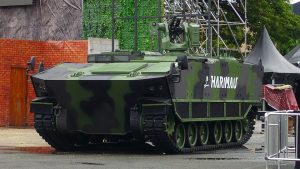
Bangladesh is the clearest case outside Pakistan. Reporting by Prothom Alo, citing SIPRI data, says Dhaka took delivery of around 15 types of Turkish equipment over roughly five years. The list is a mixed bag: armoured personnel carriers, mine-protected vehicles, ground surveillance radar, a portable jammer, armoured ambulances, missile launching systems and an offshore crane. The Bayraktar TB2 appears on the same list, and Janes reported Bangladesh’s plan to procure the drone in 2022. The platform itself is covered in our Bayraktar TB2 programme guide.
The politics moved in step with the purchases. In December 2020 Foreign Minister Mevlüt Çavuşoğlu said during a visit that Türkiye wanted to sell arms to Bangladesh. In June 2021, according to the same reporting, Bangladesh signed a memorandum of understanding with Roketsan. Bangladesh’s navy chief, speaking at a Turkish-South Asian industry event in October 2020, said his service was pleased to work with ASELSAN, Havelsan and Roketsan, and mentioned interest in landing helicopter docks and patrol boats, as reported by Daily Sabah. Interest is not a contract, and no such ship order has been confirmed.
Why Is the TRG-300 Tiger the Bangladesh Story to Watch?
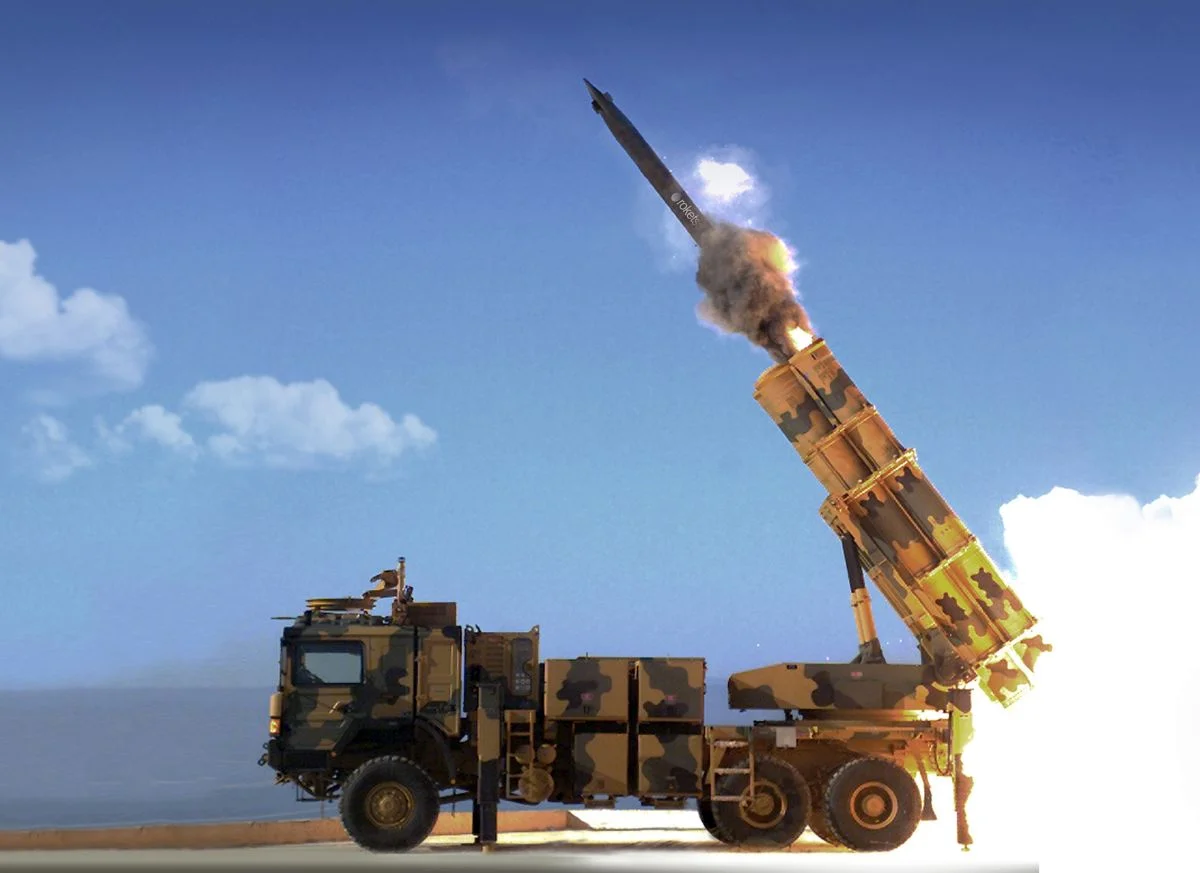
The one Bangladeshi purchase that is both large and well documented is the TRG-300 Tiger, a 300 mm guided rocket system built by Roketsan. Roketsan’s own product page describes the guided missile as a precision-strike weapon for high-priority targets, with GPS and GLONASS-aided inertial guidance and anti-jamming features. The company quotes ranges of 20 to 120 km depending on the variant, and lists 20 to 90 km for the version detailed on the page.
| Item | Detail |
|---|---|
| System | TRG-300 Tiger guided rocket system |
| Manufacturer | Roketsan |
| Calibre | 300 mm |
| Range | 20 to 120 km depending on variant (Roketsan) |
| Guidance | GPS and GLONASS-aided INS with anti-jamming |
| Bangladesh deliveries | 18 launchers in June 2021 after a March 2019 contract, per Wikipedia’s operator table; a second batch followed in October 2021 according to reports |
The Tiger remains the benchmark for what a South Asian order for Turkish rocket artillery looks like. It descends from the Chinese WS-1 design, developed with CPMIEC under a 1997 agreement, according to Wikipedia, so Bangladesh is buying a system with a long service record in other hands too, including Azerbaijan. Wikipedia counts more than 36 launchers in Bangladeshi hands, though that figure should be read as an estimate rather than an official number.
Is a Bigger Package With T129 and HISAR Coming?
Since late 2025, Bangladeshi and regional outlets have reported a much larger package. Defence Security Asia and Asia Times describe an approved deal worth about 600 million US dollars covering six T129 ATAK attack helicopters and HISAR-O+ medium-range surface-to-air missile systems, tied to Dhaka’s Forces Goal 2030 modernisation plan. A Turkish delegation, including people from Turkish Aerospace, was reported in Dhaka in January 2026. These details come from press reports, not from a signed contract announcement by either government, and should be treated that way.
The same coverage lists further talks on Anka drones and Cirit laser-guided missiles, plus a draft Bangladesh-Türkiye defence cooperation framework agreement sent to Ankara for approval. Our guides to the T129 ATAK and the HISAR air defence family cover what those systems do. Analysts quoted in the Asia Times piece argue the buying is driven by cost and maintenance, not alliance politics; China still supplied an estimated 72 percent of Bangladesh’s arms in 2019 to 2023.
Where Does Sri Lanka Fit?
Sri Lanka is a different story: lots of contact, little documented hardware. In April 2021 Defence Minister Hulusi Akar told Sri Lanka’s ambassador that Ankara wanted deeper defence cooperation, and the talks touched on delegation exchanges and that year’s IDEF fair in Istanbul. At the 2020 industry event in Istanbul, Sri Lankan officers said they followed Turkish developments closely and saw Türkiye as an important partner in land systems.
The warship visit is more recent. TCG Büyükada called at Sri Lanka in June 2025, and in January 2026 the Turkish ambassador, Semih Lütfü Turgut, said Türkiye had proposed drones for maritime surveillance. He added that nothing had been finalised, according to the Daily Mirror. That is a sales pitch, not an order. For an island nation with a large exclusive economic zone, maritime patrol is the logical entry point, but no Sri Lankan contract for Turkish systems has been verified for this article.
Who Is Watching, and Why Does It Matter in Dhaka and Delhi?
Indian media have read the Bangladeshi purchases with alarm, some suggesting a threat to the Siliguri Corridor. The Asia Times author dismisses that, noting six attack helicopters are small next to India’s roughly 148, and that Bangladesh’s posture is defensive. Whether one accepts that argument or not, the sourcing matters: the loudest claims about Turkish-Bangladeshi military ties come from commentary, while the documented items are mostly vehicles, radars and one rocket system.
The cautious reading is procurement diversification, which is also the Asia Times author’s view. Dhaka buys from China first, then from Russia, Türkiye and others when price, delivery time or support terms fit. Turkish suppliers pitch quick delivery and systems already used by other armies, and Ankara has courted the region openly since the 2020 Defense Port Turkey-South Asia event that brought Turkish firms together with military officials from Bangladesh, Sri Lanka, Pakistan and Afghanistan. That pitch is laid out in why countries buy Turkish drones, and it applies to Dhaka as much as to anyone.
What About BORA and the Wider Missile Pitch?
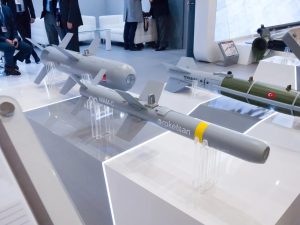
No credible source I could find links BORA to Bangladesh or Sri Lanka. The short-range ballistic missile is a Roketsan product that sits above the TRG-300 in reach and cost, and we explain it in our BORA missile explainer. If a South Asian customer for the Tiger ever wanted to step up to ballistic missiles, BORA would be the natural catalogue neighbour. That is an observation about the product line, not a reported negotiation.
How Does This Compare With the Pakistan Model?
Pakistan buys ships, co-develops hardware and shares industrial work, as laid out in our look at Türkiye-Pakistan defence cooperation. Bangladesh and Sri Lanka are still at the catalogue stage. Their purchases are mostly platforms bought off the shelf, financed project by project, with no co-production announced. The route by which such deals usually get done is described in how countries buy Turkish weapons.
The next confirmed step to watch is whether Dhaka and Ankara actually sign the framework agreement, and whether the helicopter and air defence package is announced by a government rather than by the press. Sri Lanka is the one to track for a first maritime-surveillance drone order.
One more caveat for readers tracking the numbers: delivery counts for the Tiger differ between sources, and press figures for the 600 million dollar package have not been matched by an official breakdown. Where this article gives a figure, it names who reported it.