
How a Samsun Pistol Maker Became a Supplier of Aircraft Guns and Anti-Drone Cannons

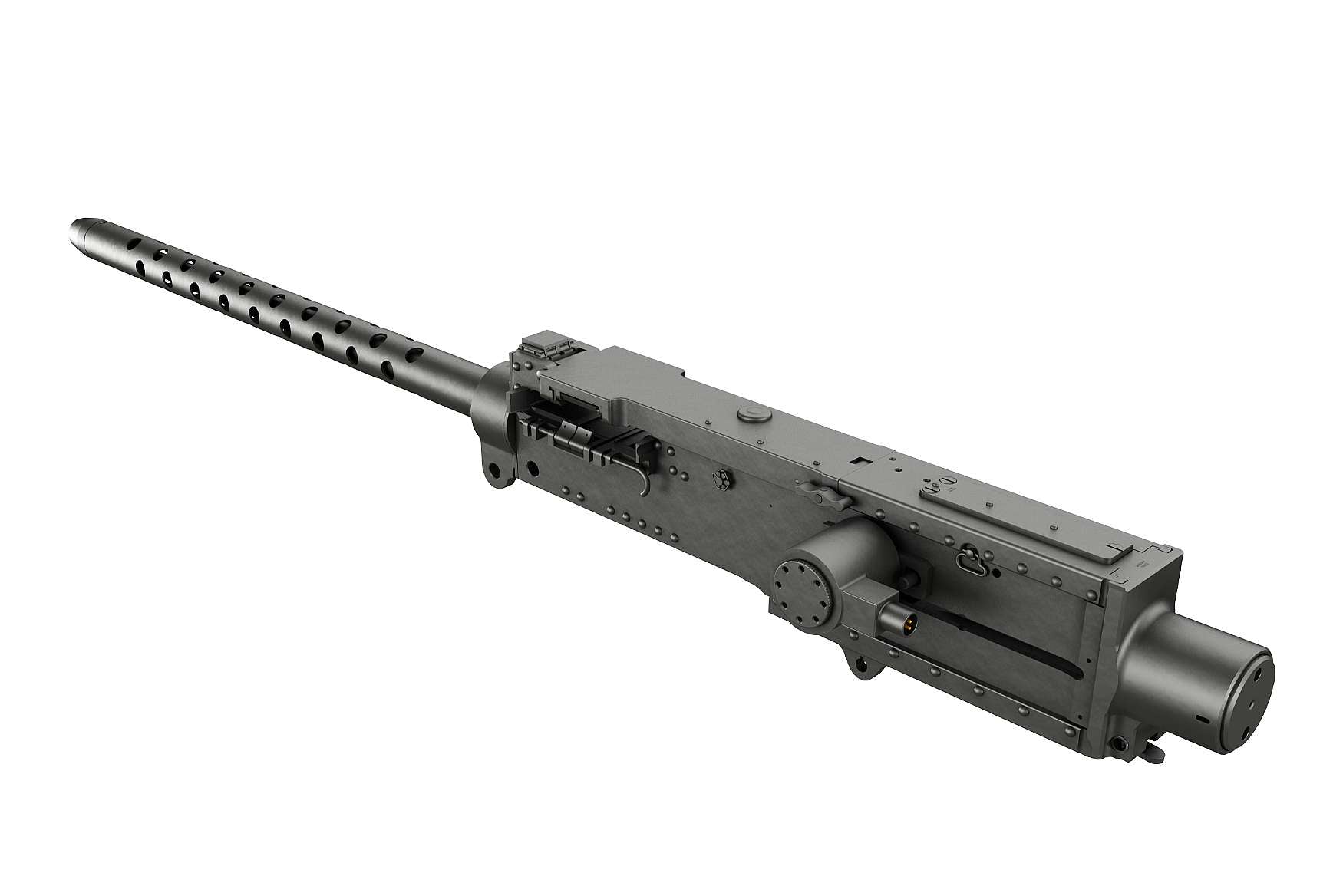
Most people who know the name CANiK know it from a pistol. The TP9 and its successors built the brand’s reputation on gun-range counters and police armouries, far from any defence exhibition hall. In September 2026, the same company stood in Kielce, Poland, presenting a .50-calibre machine gun for helicopters, a 30 mm cannon for anti-drone work and remote weapon stations. The distance between those two product lists is the story of how a Samsun handgun maker turned itself into a systems house.
Who Is Behind CANiK?
CANiK is the brand name of Samsun Yurt Savunma, usually shortened to SYS. According to the company’s own account and reference sources, SYS was founded in 1998 by the Aral family, which took over production facilities, permits and licences linked to the former Samsun Silah Sanayi in the Black Sea city of Samsun. The family still runs the group; CEO Cahit Utku Aral fronted the company’s presentation at MSPO 2026.
The early years were spent on engineering rather than selling. Reference sources describe roughly a decade of development work, with the first own-design products appearing under the CANiK name around 2005. The brand then reached the American market in 2009 through a distribution partnership with Century Arms, which is where many shooters first met the TP9 family.
| Item | Detail |
|---|---|
| Parent company | Samsun Yurt Savunma (SYS Group) |
| Founded | 1998 (own CANiK-brand products from about 2005) |
| Main production | Samsun, Türkiye (SYS also cites facilities in the USA and the United Kingdom) |
| Group companies | CANiK, AEI Systems (UK), UNIROBOTICS |
| Product families | Pistols, suppressors and accessories; .50-cal machine guns; 30 mm cannons; weapon mounts; remote weapon systems |
| Management | Aral family; CEO Cahit Utku Aral |
| Export reach | The company’s defence page claims 70+ countries; other reference sources cite more than 60 |
How Did a Pistol Brand Win Military Credibility?
The pistol line did the groundwork. The striker-fired TP9 series, followed by the newer METE family, gave CANiK a high-volume production base and a customer list that includes law enforcement and military users, according to the company and reference sources. Volume matters in small arms. It pays for tooling, machining know-how and quality systems that a boutique heavy-weapons maker would struggle to fund.
That base explains why the next step was not another pistol. Türkiye’s other well-known small-arms exporter, Sarsılmaz, has pushed hard into shotguns and rifles. CANiK chose a different path, moving up the calibre ladder into crew-served weapons where fewer suppliers compete and where NATO-standard qualification carries real weight.
What Does the Heavy-Weapon Line Look Like?
CANiK’s defence catalogue is built around the 12.7×99 mm NATO round. Three machine guns anchor it, as listed on the company’s defence page:
- M2 QCB, a quick-change-barrel version at 450 to 650 rounds per minute and about 38.5 kg.
- M2F, a fixed-barrel variant at 750 to 950 rounds per minute and about 31.5 kg.
- M3, a quick-change-barrel design at 1,100 to 1,200 rounds per minute and about 33.4 kg.
Around them sit single and dual mounts for trucks and vessels, a Naval Flex 50 mount for patrol boats and fast craft, and a suppressor for the .50 BMG round. The company states that its systems have completed all 23 tests in a NATO test programme and that production is free of US ITAR controls. The second claim matters commercially. Buyers who fear a US export veto on spare parts or re-exports look for exactly that, a point covered in more depth in our explainer on ITAR and Turkish defence exports.
Why Build a .50-Cal Gun Just for Aircraft?
The M3 Falcon is the clearest sign of the strategy. Rather than adapting a ground gun to a door mount, CANiK designed an open-bolt, short-recoil, air-cooled 12.7×99 mm weapon specifically for aerial platforms. The product page lists a rate of fire of 1,100 rounds per minute (plus or minus 100), a muzzle velocity of 880 m/s, a weight of 36.5 kg and a Stellite-lined barrel rated for at least 15,000 rounds. Intended carriers are utility helicopters, special operations aviation and light attack aircraft, through door mounts, gun pods and external hardpoints. Press coverage around MSPO quoted a figure of 1,200 rounds per minute, so treat the exact rate as depending on configuration.
The open-bolt layout is the interesting engineering choice. It leaves the chamber empty between bursts, which reduces the risk of a round cooking off in a hot barrel. For a gun hanging off a helicopter, with the gunner sitting a metre away, that is a selling point rather than a footnote. The Falcon Flex 50 mount, which the company offers in several hardpoint options, completes the package. We covered the launch itself in our report on the M3 Falcon at MSPO 2026.
What Changed With the 30 mm Cannons?
Machine guns are one thing. A medium-calibre cannon is a different league, and CANiK got there partly by acquisition. According to SYS statements, the group bought the British company AEI Systems, which produces the VENOM LR, a low-recoil 30×113 mm revolver-type cannon derived from the ADEN gun family. Reference sources describe it as gas-operated and electrically primed, with a rate of fire up to 1,200 rounds per minute and a recoil force of about 7 kN, far below the standard VENOM. That low recoil is the whole point, because it lets a 30 mm gun sit on a light vehicle or fast patrol craft that could not take a conventional cannon.
The manufacturer says the gun is aimed at low-altitude, short-range air defence against helicopters, drones and loitering munitions, and that it works with proximity-fused and programmable ammunition. A reference source reports the Bangladesh Navy as a confirmed operator after a deal signed at IDEF 2025; the contract value could not be verified and is not given here.
The cannon is produced in both the UK and Türkiye. That dual footprint is deliberate. Poland, the UK and other NATO buyers prefer suppliers with local production or at least local support, and the group’s UK arm gives it that argument.
Where Do UNIROBOTICS and the Remote Weapon Stations Fit?
A gun without a mount, sight and fire-control system is a part, not a product. UNIROBOTICS, another SYS company, fills that gap with stabilised remote-controlled weapon stations. At MSPO 2026 CANiK showed the TRAKON Lite and TRAKON 30 stations alongside the cannon. The AEI Systems and UNIROBOTICS pairing had already appeared at a UK close-combat symposium, where the VENOM LR on a TRAKON 30 station was reported as the first live firing of a 30 mm system at that event.
At DSEI 2023 in London, AEI Systems, UNIROBOTICS and Nurol Makina signed a partnership agreement, and a Nurol EJDER YALÇIN 4×4 fitted with the cannon and a UNIROBOTICS turret was test-fired in the UK. Türkiye’s larger primes are moving the same direction, with ASELSAN’s naval remote systems such as SMASH 300 showing that gun, stabilisation and fire control are now sold as one package.
What Is the Strategy Behind the Ecosystem Pitch?
Aral’s MSPO message was that CANiK wants to sell mission-ready solutions combining weapon, weapon system, optics, fire control and platform integration, not single items. In other words, the company wants to be the integrator.
It also pairs defence work with the civilian line. The MSPO stand reportedly included the PRIME RADIAN micro-compact pistol, developed with the US firm Radian, next to the cannon and gun stations. That mix is typical of a private firm that uses consumer-market revenue to fund harder-edged defence development.
Timing helps. Company management told the Turkish press in October 2024, around AUSA in Washington, Future Forces in Prague and COP International in São Paulo, that its 2025 export target had already been reached in the final quarter of 2024; that figure is unaudited and comes from the company. Poland’s large defence spending and European rearmament funding, which press reports tie to the EU’s SAFE mechanism, are the obvious targets for the 2026 push. How that translates into signed European contracts remains to be seen, and none had been announced at the time of writing.
What Are the Limits?
CANiK is not an ASELSAN or a Roketsan. It is a private mid-sized group, and its heavy-weapon catalogue is young compared with long-established makers of .50-cal guns and 30 mm cannons. Public data on the VENOM LR and the M3 Falcon remains thin, with few confirmed customers. Claims about ITAR-free supply, NATO testing and country counts come from the company or secondary sources and should be read as such.
Still, the trajectory is clear. Türkiye’s defence exports are driven partly by headline platforms such as drones and warships, and partly by quieter weapon and component suppliers that ride along on every platform, a pattern visible in the country’s air defence export record. CANiK is betting that the gun on the helicopter door, the cannon on the patrol boat and the turret on the armoured car can all come from one Samsun-based group.


