The Ada-Class Corvette Went From Turkish Navy Hull to Three Export Navies

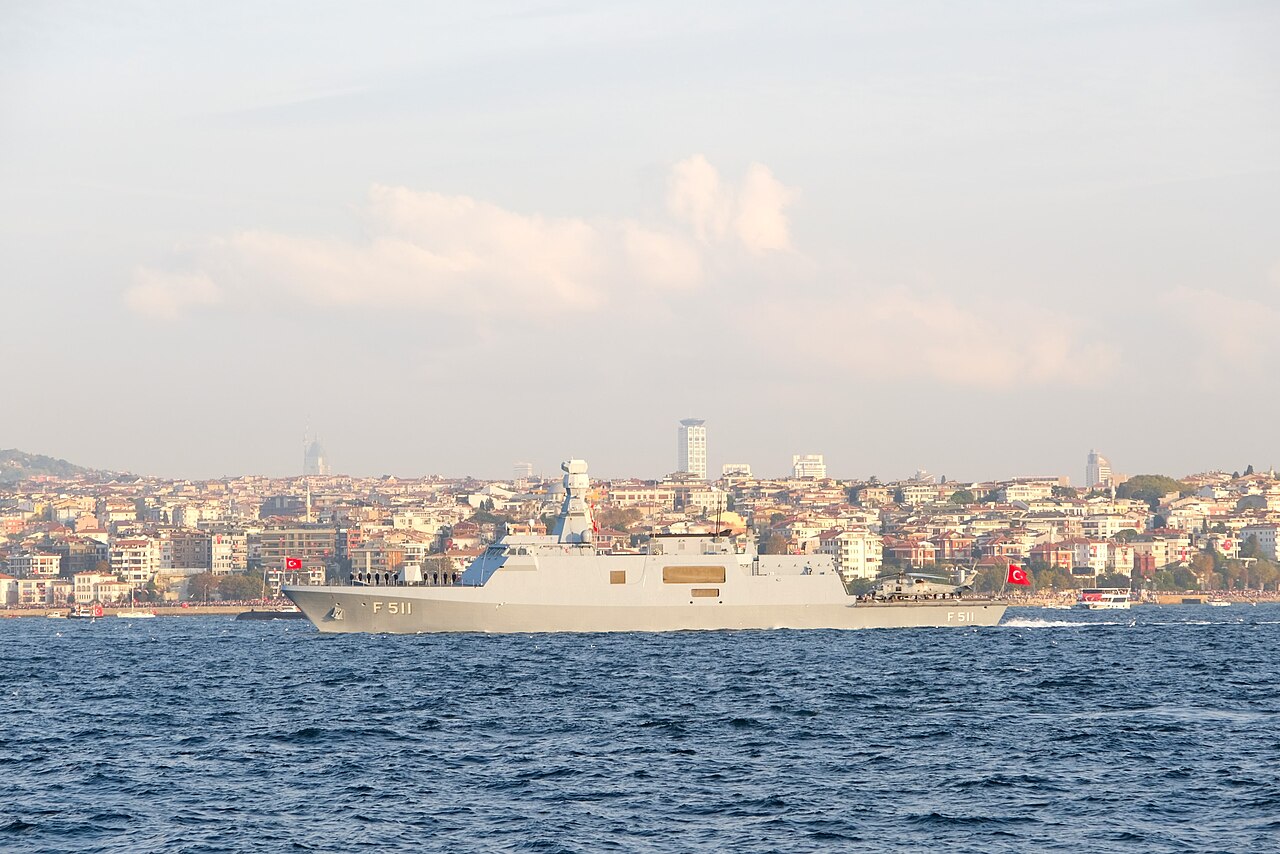
For most of its first decade, the Ada-class corvette was a Turkish Navy project that few outside the shipbuilding trade watched closely. Four hulls, one yard, a domestic design. Then a Pakistani order, a Ukrainian order and a Malaysian order arrived within six years of each other, and the same basic hull started appearing in three other navies’ fleet plans.
This is how a ship built to hunt submarines near Turkish coasts became the first Turkish warship design to find foreign buyers on a regular basis.
What Is the Ada-Class Corvette?
The Ada class is the first operational product of MİLGEM, the national ship programme that taught Turkish yards to design and build their own surface combatants. It is an anti-submarine corvette, and the Turkish Navy named its four ships after islands in the Sea of Marmara. The bigger frigates that followed are covered in our MİLGEM I-class frigate guide.
| Item | Detail (as reported) |
|---|---|
| Role | Anti-submarine and patrol corvette |
| Builder | Istanbul Naval Shipyard |
| Length | About 99.6 m |
| Beam | About 14.4 m |
| Displacement | Around 2,400 tonnes (published figures vary by source) |
| Top speed | About 30 knots, CODAG propulsion |
| Range | About 3,500 nautical miles at 15 knots |
| Main gun | 76 mm |
| Missiles | Eight anti-ship missiles (Harpoon or ATMACA) and a RAM close-in launcher |
| Torpedoes | Two twin 324 mm launchers |
| Aviation | Hangar and deck for a naval helicopter |
| Turkish Navy ships | TCG Heybeliada, Büyükada, Burgazada, Kınalıada |
Published weights and some armament details differ between sources, partly because the Turkish, Pakistani and Ukrainian ships all carry different fits. The figures above are the commonly cited ones for the Turkish baseline.
How Long Did the Turkish Navy Take to Get Four Ships?
Construction of the lead ship began in 2005. TCG Heybeliada was launched in 2008 and commissioned in 2011, a long road for a first of class. TCG Büyükada followed in 2013. Then came a gap. TCG Burgazada entered service in 2018 and TCG Kınalıada in 2019, according to the commonly published dates.
That pace matters for the export story. The early ships were a learning exercise, and the later two were built with a more mature supply chain. When foreign navies looked at the design, they were looking at a ship that Turkey had already finished, tested and fielded four times over.
A good share of the onboard equipment is Turkish, including parts of the sensor and combat system suite associated with ASELSAN and other domestic firms, while the 76 mm gun and the RAM launcher are foreign-sourced. That mix is one reason export customers sometimes ask for a different weapons fit.
Why Did Pakistan Order a Bigger Version?
Pakistan was the first customer. According to published accounts, ASFAT signed the contract in July 2018 for four ships under a package reported at about $1.5 billion that also covered technology transfer. Two hulls were to be built in Istanbul and two at Karachi Shipyard and Engineering Works. For a profile of the contractor, see our ASFAT company page.
The Pakistani Babur class is not a straight copy of the Turkish ships. It is longer, reportedly around 108.8 metres, and heavier, with displacement figures in the region of 2,900 to 3,000 tonnes. It carries a vertical launch system for air defence missiles, which the Turkish Ada ships do not have.
PNS Babur was commissioned in Istanbul in September 2023. PNS Khaibar followed in December 2025, according to published reports, with the Karachi-built ships expected after that. Our detailed look at the fleet is in the Pakistan Navy Turkish warships article.
What Happened to Ukraine’s Two Ships?
Ukraine signed in 2020 and 2021 for two Ada-class corvettes, a contract reported at around $256 million. The first ship, Hetman Ivan Mazepa, was launched in Istanbul in October 2022. Ukrainian officials showed sea trials in 2024. The second, Hetman Ivan Vyhovskyi, was launched in August 2024.
The original plan was to hand over the first ship in 2024. The war changed the timeline, and Ukrainian media reports have since pointed to delivery of the second ship in the first quarter of 2027. Treat these dates as reported, not confirmed by a handover ceremony. The ships were described as future flagships of the Ukrainian Navy, with a Western-sourced weapons fit that differs from the Turkish ships. The wider relationship is in our piece on Turkish drones, corvettes and engines in Ukraine.
Where Does Malaysia Fit In?
Malaysia is the newest customer and, according to Naval News, Türkiye’s first corvette export to the Asia-Pacific. In June 2024 the two governments signed the paperwork for three ships under the Littoral Mission Ship Batch 2 programme, with STM as prime contractor. The ships are known as the Tunku class.
The first, Tunku Laksamana Abdul Jalil, was launched in Istanbul on 24 May 2026. Two more were scheduled to follow later in 2026, with delivery of all three planned by the end of 2027, according to trade reports.
Malaysia’s ships are described as ADA-derived rather than Ada-class copies. Published specifications call for a 76 mm gun, a 30 mm secondary gun, ATMACA anti-ship missiles in two quadruple launchers and surface-to-air missiles. The design is being rearranged around the customer’s requirement rather than sold off a catalogue.
What Is Actually on the Ship?
The sensor and weapons list explains much of the buyer interest. According to published descriptions, the Turkish ships carry a Thales SMART-S Mk2 three-dimensional radar, a Yakamoz hull sonar, an electronic support system of ASELSAN origin and a combat management system developed in Türkiye. The 76 mm Oto Melara gun is retractable, which helps the ship’s radar signature. Eight anti-ship missiles sit in launchers amidships, and the helicopter hangar is sized for an S-70B Seahawk class helicopter.
Endurance figures are modest by frigate standards. Published numbers speak of about ten days autonomous and around three weeks with logistic support. For a corvette tasked with coastal anti-submarine patrol, escort and presence missions, that is adequate, and it is the same logic that makes the hull attractive to navies with a regional, not an ocean-going, mission.
How Different Is the Pakistani Fit?
The Babur class swaps in a different set of systems. Published descriptions of the class mention a 12-cell vertical launch system for Albatros NG missiles, a HAVELSAN combat management system, an ALPER low-probability-of-intercept radar and the YAKAMOS sonar made by Meteksan. The Pakistan Navy held a separate induction ceremony for PNS Khaibar in Karachi in April 2026, according to Naval News, months after the ship was handed over in Istanbul.
The point is not that Pakistan bought a faster ship. It bought a bigger weapons magazine and a stronger air defence layer on a familiar hull, and it received the know-how to build part of the fleet at home. That combination is the core of what Turkish contractors are now offering elsewhere.
Why Does the Same Hull Keep Selling?
Three reasons come out of the contracts themselves.
First, it is a proven hull with a Turkish production record behind it. A navy buying a corvette wants evidence that the ship works, and four Turkish ships in service is better evidence than a drawing.
Second, the design is flexible. Pakistan wanted more air defence and size, so the ship grew. Ukraine wanted a flagship with a specific mix of sensors and weapons. Malaysia wanted a littoral ship with Turkish missiles. Each request changes a different part of the same architecture.
Third, Turkish packages often include local build work. Pakistan builds two of its four ships at home. That is not unusual in the naval export market, but it is a selling point against yards that want all work done at their own site. How the Turkish design compares with a French rival is covered in Where Gowind and MİLGEM Meet.
Seen together, the three export programmes show a pattern. Each customer asked for a different weapons fit, a different degree of local work and a different delivery arrangement, yet all three started from the same Turkish-built reference ship. Pakistan wanted a larger ship with local assembly, Ukraine wanted a flagship delivered by a yard that had already built the hull, and Malaysia wanted a government-to-government deal with a single prime contractor. Few Turkish naval designs have had to satisfy three such different procurement models, and none has done so as quickly.
What Comes After the Ada Class?
The Turkish Navy has moved on to the larger İstif-class frigates, so the Ada design family is now mostly an export story. Three foreign orders put the lineage in more hands than any other Turkish warship design. The next milestones are handover dates in Pakistan, Ukraine and Malaysia rather than new contracts.