BORA Is the Ballistic Missile That Sits Between Turkish Rockets and TAYFUN

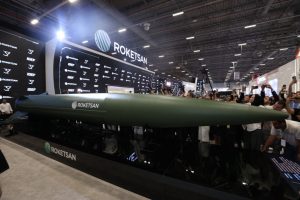
When Roketsan rolled BORA out at the IDEF exhibition in Istanbul in May 2017, it looked like a modest step. The missile was not meant to threaten distant capitals. It was meant to give the Turkish Armed Forces something they had lacked: a precise, road-mobile weapon that could strike command posts, depots and air-defence sites well behind the front line, without waiting for an aircraft to get there.
Almost a decade later, BORA sits in an interesting spot. Below it are multiple-launch rocket systems with shorter reach. Above it is TAYFUN, the longer-range ballistic missile Roketsan revealed in October 2022. BORA, and its export twin KHAN, cover the stretch in between.
What is the BORA missile?
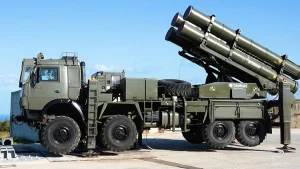
BORA is a solid-propellant, short-range tactical ballistic missile developed and built by ROKETSAN. It is carried on a wheeled 8×8 launcher, which lets crews fire and relocate quickly instead of sitting at a fixed site. Anadolu Agency’s analysis describes it as a high-precision conventional weapon for the depth of the battlefield rather than a strategic one.
The programme grew out of Turkish-Chinese cooperation. Open sources, including Anadolu Agency, describe BORA as derived from China’s B-611 missile, with Turkish work concentrated on guidance, accuracy and integration. Roketsan presents BORA as a national product, and the details of the cooperation are not publicly itemised.
| Item | Reported detail |
|---|---|
| Manufacturer | ROKETSAN (Türkiye) |
| Type | Short-range tactical ballistic missile, solid propellant |
| Reported range | Roughly 80 to 280 km (domestic variant) |
| Warhead | High-explosive or fragmentation; reported between about 450 and 470 kg |
| Guidance | Inertial navigation with satellite aiding (GPS/GLONASS), reported |
| Launcher | 8×8 wheeled transporter-erector-launcher |
| Export variant | KHAN |
| Unveiled | IDEF 2017; first reported test May 2017 from Sinop |
Published figures vary by source. Warhead weight is quoted between roughly 450 and 470 kg, and accuracy estimates range from around 10 metres CEP in newer descriptions to 50 metres in early 2017 reporting. Roketsan has not released a single definitive datasheet in the sources reviewed, so these numbers should be read as reported values.
How did BORA get from test range to service?
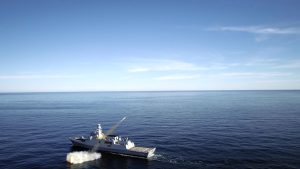
The first widely reported test took place on 11 May 2017, with the missile fired from Sinop on the Black Sea coast. Then-Defence Minister Fikri Işık called it a sign that Türkiye could now build its own missile, according to CSIS Missile Threat. Public unveiling at IDEF followed the same month.
The timing mattered. Türkiye had spent years trying to buy long-range fires and air-defence systems from allies and others, and ran into political limits each time. A domestic ballistic missile answered that frustration directly. It also tied into a wider push to build solid rocket motor capacity at home, the part of the supply chain that decides whether a missile line can grow.
BORA is generally reported to have entered Turkish service from 2017. Official quantities have not been published. Anadolu Agency also links the missile to its first combat use in late May 2019, during Operation Claw against PKK targets in northern Iraq. Turkish authorities have been sparing with details, so the number of missiles fired and the effects are not documented in open sources.
How is BORA meant to be used?
Because it burns solid propellant, BORA does not need the long fuelling routine that liquid-fuelled missiles of earlier generations required. The Anadolu Agency analysis points to that as a survivability gain: a shorter launch cycle and a mobile launcher mean a unit can fire and leave before it is located. Roketsan’s own descriptions stress “shoot-and-scoot” tactics and the destruction of high-priority targets under heavy fire, as relayed in Turkish press summaries of the company’s material.
The guidance package follows the same logic. An inertial navigation unit corrected by satellite signals gives the missile a steady track to a fixed coordinate, and the reported accuracy of tens of metres or better means one missile can be worth a significant effort against a hardened or high-value point. It is not a moving-target weapon. Anadolu Agency’s author suggested that terminal homing or a revised warhead could be future upgrades, though officials have not detailed any such programme.
For the army, the practical value is in tempo. A target identified by a drone or a radar can be engaged within minutes by a battery already positioned, instead of being passed up to an air component with competing demands. That is also why BORA’s story is tied to Türkiye’s armed drones and sensors as much as to the missile itself.
Why does the 280 km class matter?
Range bands are not just a numbers game. Each one answers a different tactical question. Tube artillery and short-range rockets deal with what is directly ahead. A missile reaching around 280 km can hit assets that a commander would otherwise need aircraft to attack, and it can do it in minutes, in poor weather, and without risking a pilot against modern air defences.
That is the niche BORA fills. It is quicker to employ than an air tasking cycle, and its 8×8 launcher can move after firing. Türkiye’s range layers, which now span nearly every band from a few kilometres to beyond 500, rely on BORA covering this middle.
It is also worth noting that BORA’s reported maximum range sits just under 300 km, the figure that the Missile Technology Control Regime uses as its range threshold for the most restricted category. Arms Control Association reporting has described BORA as MTCR-compliant on that basis. That is one reason KHAN has been marketable abroad.
Where does TAYFUN take over?
TAYFUN is a different class. It came to public attention in October 2022, when a test from Rize on the Black Sea coast flew 561 km and landed off Sinop, according to Arms Control Association reporting. That is roughly double the reach of BORA. Later reporting tied the missile to series production from 2023 and larger variants shown at defence exhibitions, though Roketsan’s claims for future blocks should be read as claims until demonstrated.
The two missiles are complementary rather than competing. BORA handles targets in the operational depth of a neighbouring theatre. TAYFUN reaches deeper, and its extra range is why it drew attention from neighbours and NATO partners alike. For a breakdown of the family, see our guide to TAYFUN’s range and block variants.
A longer-range follow-on, sometimes called BORA-2, is mentioned in open-source summaries, but no firm specifications or schedule have been confirmed, so it is not covered here beyond that mention.
What is KHAN and who has bought it?
KHAN is the export designation of BORA. Roketsan showed it at IDEX in Abu Dhabi in 2017, and the reported range band matches the domestic missile at 80 to 280 km. Export versions are described as using a Tatra 8×8 truck in place of the Turkish launcher chassis, according to published summaries.
Indonesia is the first publicly known customer. The deal was announced at the Indo Defence exhibition in Jakarta in November 2022, and a Roketsan official described it as a significant weapon with 280 km range and high precision in the depth of the battlefield, as reported by The Defense Post. Contract value has not been disclosed in the sources reviewed.
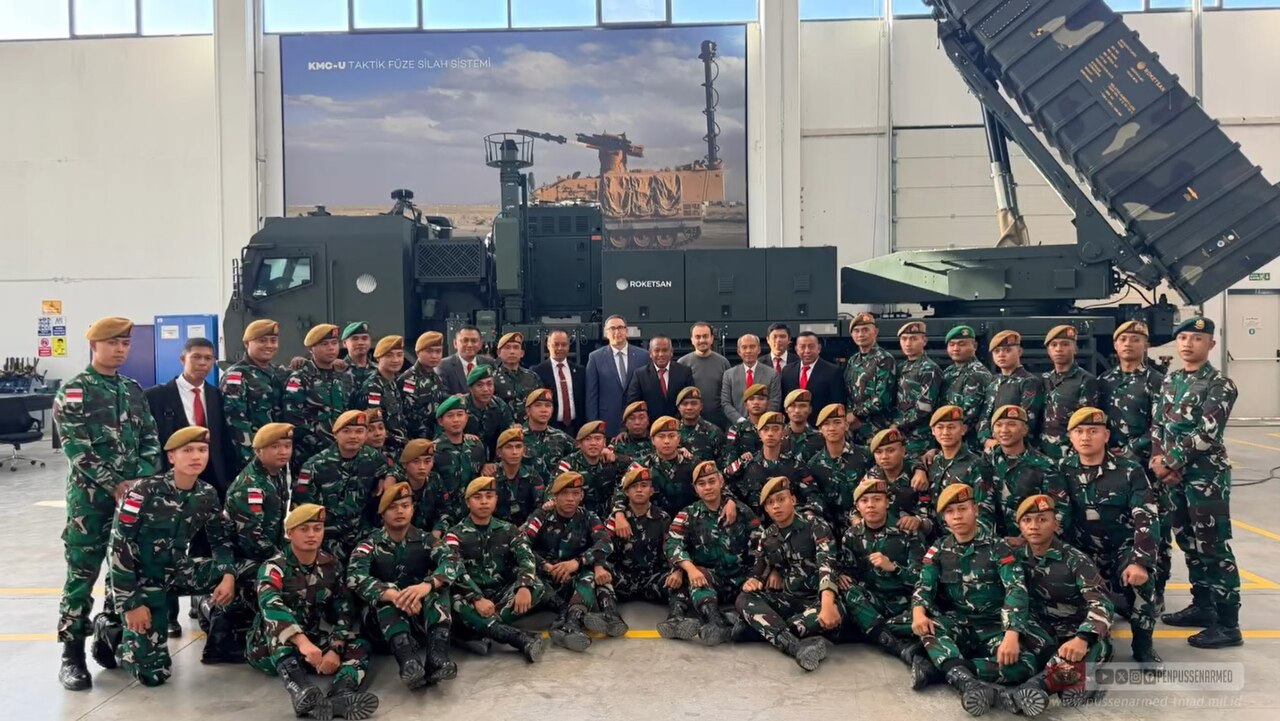
Secondary sources indicate that the first batteries were delivered during 2025 and assigned to a field artillery unit in East Kalimantan. Treat that timeline as reported. The sale fits a broader Turkish defence push across Southeast Asia, where Jakarta has become the most active buyer.
What limits BORA’s role?
BORA is a conventional weapon with a fixed envelope. It cannot replace TAYFUN’s reach, and each missile is single-use, so cost per target matters. Roketsan has not published unit prices. Survivability depends on the launcher’s ability to move and on air defence cover for the units carrying it.
The technology base is domestic in large part. TÜBİTAK SAGE, which designs many of the missiles Türkiye’s industry builds, and Roketsan’s motor and warhead lines supply it. Whether BORA gets a successor, or simply remains the middle layer between rockets and TAYFUN, will depend on how the army weighs range against cost in the next procurement cycle.