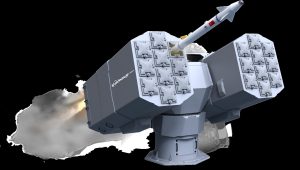
How Far Can the TAYFUN Missile Reach, and Which Blok Does What


The TAYFUN missile started as a 2022 surprise and has since become the most discussed weapon in Türkiye’s long-range strike debate. The confusion around it is mostly about numbers. Depending on the headline, TAYFUN reaches 500, 600, 800 or 1,000 kilometres. Each figure is attached to a different stage of the programme, and mixing them up is how a short-range ballistic missile ends up described as something far bigger.
This guide separates what has been flown, what has been handed to troops, and what is still a claim.
| Item | Detail |
|---|---|
| Developer | ROKETSAN, under Presidency of Defence Industries (SSB) coordination |
| Type | Surface-to-surface ballistic missile family (Blok-1 is a short-range ballistic missile) |
| Propulsion | Solid propellant |
| Guidance | Inertial navigation aided by satellite navigation (GPS and GLONASS reported) |
| Launcher | Wheeled transporter-erector-launcher (VOLAT truck reported; a DERMAN 8×8 carrier reported in a 2025 firing) |
| First flight | 20 October 2022, from the Rize coast |
| Blok-1 size (reported) | About 6.5 m long, 610 mm diameter, 2,300 kg |
| Blok-4 size (reported) | About 10 m long, 938 mm diameter, 7.2 tonnes |
| Operator | Türkiye (no export customer reported) |
Where Did the TAYFUN Missile Come From?
TAYFUN builds on the experience ROKETSAN gained with the BORA, a shorter-range solid-fuel ballistic missile. The programme stayed quiet until 20 October 2022, when a missile was fired from the Rize-Artvin coastal area and flew over the Black Sea to a target off Sinop. The flight was widely reported as covering about 561 kilometres in roughly seven and a half minutes.
That single number explains the “past 500 kilometres” shorthand. It was a demonstrated distance, not a stated maximum, and officials did not publish the missile’s true limit. Further launches followed on 23 May 2023 and 3 February 2025 from the same stretch of coast, again against sea targets, and the state-run press described hits within a few metres of the aim point. Those accuracy figures come from official and media accounts rather than independent measurement.
Serial production was announced at the end of May 2023, unusually early for a first-generation ballistic missile.
How Far Does Each TAYFUN Blok Reach?
ROKETSAN has not published an official range table. The numbers below are the ones that appear consistently in Turkish and international reporting, and they should be read as reported, not confirmed.
- Blok-1. The original missile. The 561 km test is the best-documented data point, and open sources commonly cite a range of roughly 500 to 800 km.
- Blok-2. Reported in May 2026 as having entered the Turkish Armed Forces inventory, with coverage around the EFES 2026 exercise citing a range above 600 km.
- Blok-3. Little reliable public detail exists, so this article does not assign it figures.
- Blok-4. Shown at the IDEF fair in July 2025. The range is undisclosed. Early reporting mentioned about 800 km, while open-source estimates and unofficial statements point to around 1,000 km and, in some accounts, more.
The honest reading is that Blok-1 and Blok-2 sit in the 500 to 800 km class, and Blok-4 is meant to push beyond that, without any verified figure yet.
What Is the TAYFUN Blok-4, and Is It Really Hypersonic?
Blok-4 is a different airframe from the earlier missiles. At about 10 metres and 7.2 tonnes, it is far larger than the roughly 6.5 metre, 2.3 tonne Blok-1. ROKETSAN presented it at IDEF 2025 as Türkiye’s first hypersonic ballistic missile, with a speed in the Mach 5 class and, as reported, a pre-fragmented high-explosive warhead aimed at air defence sites, command posts and hangars.
The word “hypersonic” needs care. Nearly every ballistic missile re-enters the atmosphere above Mach 5, so speed alone does not set a ballistic design apart. What defines the newer class is usually manoeuvrability late in flight, and ROKETSAN has not released details of how Blok-4 would steer against interceptors. Reported accuracy is 5 to 10 metres, using inertial guidance backed by satellite navigation.
On status, ROKETSAN General Manager Murat İkinci said in September 2026 that Blok-4 would “soon” enter the inventory, without giving a date, according to Turkish press. Serial production follows testing, and the company has not described the test programme in public. Our earlier report on the TAYFUN Blok-4 and GEZGİN production outlook covers that statement in more detail. At IDEF, the company also reportedly described the missile as not intended for export.
What Has Actually Entered Service?
The Blok-2 is the clearest case. Land Forces took delivery of a further batch, which we covered in the TAYFUN Blok-2 delivery report. Reporting on an October 2025 acceptance firing with the DERMAN 8×8 carrier also suggests the launcher side of the system is moving from prototype to fleet use.
Some press summaries of Blok-2 conflict with each other, including weights that belong to the larger Blok-4. Treat weight and length claims for each variant with caution until ROKETSAN publishes data sheets.
How Is TAYFUN Different From a Cruise Missile?
A ballistic missile climbs, then falls on its target at high speed. That makes it hard to intercept, but it also follows a predictable arc. Cruise missiles fly low and slower, and can route around defences. Türkiye is building both. KARA ATMACA is ROKETSAN’s land-attack cruise missile, and the GEZGİN programme is a longer-range cruise concept. TAYFUN fills the faster, shorter-notice role.
For planners, the two complement each other. A ballistic salvo can hit fixed, high-value targets quickly. Cruise missiles handle saturation and routing around air defence belts.
Why Does TAYFUN Matter for Türkiye’s Defence Industry?
Long-range precision strike was for decades a capability Türkiye bought or borrowed. TAYFUN is part of the shift described in our piece on Türkiye’s defence production independence: domestic design, domestic production, domestic launch vehicles. ROKETSAN’s broader portfolio is outlined in the ROKETSAN company profile.
TAYFUN also sits outside the layered air shield that the Steel Dome programme is building. That shield is defensive. TAYFUN is the other half of the deterrence equation, a missile whose value rests on the range a potential adversary assumes it has.
That may be why official numbers are scarce. Publishing a maximum range gives a planner a line on a map. Leaving it open keeps the line blurry. For readers, the practical rule is simple: trust flight-tested figures first, inventory announcements second, and unofficial estimates last.