
Russia Signals It Could Approve Türkiye’s S-400 Transfer

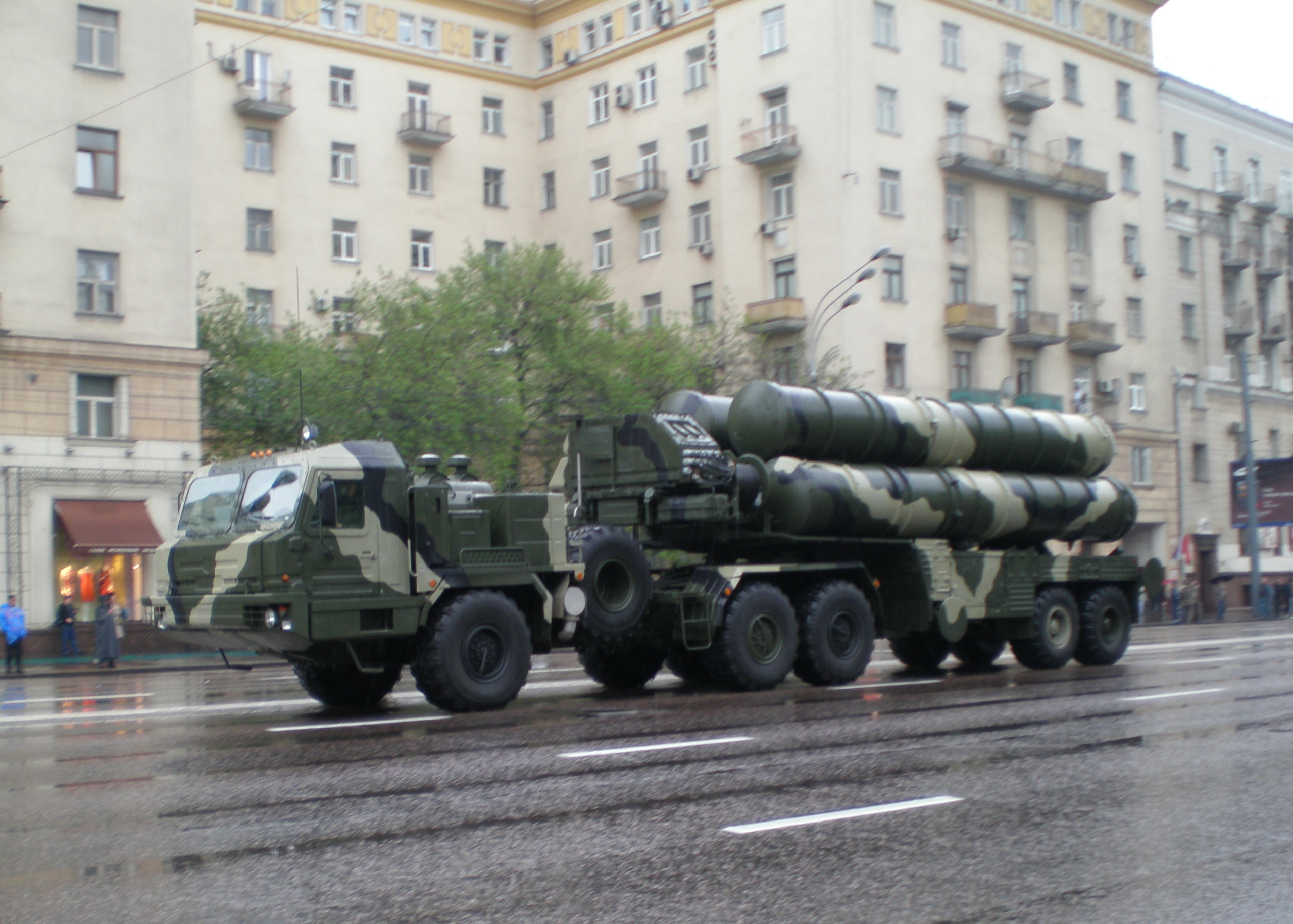
Russia has, for the first time, laid out in public the conditions under which it would let Türkiye move its Russian-made S-400 air defence systems to another country — a step that could finally clear the main obstacle blocking Türkiye’s return to the F-35 programme.
Speaking to reporters in New York on the sidelines of the UN General Assembly’s high-level week, Russian Foreign Minister Sergey Lavrov said Moscow could approve a transfer if the recipient state is “responsible” and maintains friendly relations with Russia. “There is such a possibility when a country where these S-400 systems will be moved to is responsible and maintains friendly relations with Russia,” Lavrov said, adding that Moscow “will be ready to transfer the S-400s to such a country when there is a request.” He said no such request had been submitted so far, according to a TASS report of the remarks.
The conditions Moscow is attaching
Lavrov’s remarks were not an open-ended green light. He tied any approval to guarantees that the systems would not end up in Ukraine, and said the original 2017 purchase contract requires Turkish compliance with an end-user certificate that bars re-export without Russian consent. Asked whether the United Arab Emirates — repeatedly named in press reporting this year as the likely destination — would be an acceptable recipient, Lavrov said Russia would examine any concrete proposal rather than commenting on a specific country in advance.
That combination of conditions — a “friendly” recipient, an anti-diversion guarantee, and a formal request that has apparently not yet been filed — leaves the process where it has effectively sat for most of 2026: discussed, reported, but not executed.
How Türkiye got here
Türkiye signed a $2.5 billion contract for the S-400 Triumf system in 2017 after failed negotiations over a US Patriot purchase, and began receiving deliveries at Mürted (formerly Akıncı) air base outside Ankara in July 2019. Ankara took possession of two battery sets and roughly 120 missiles. Washington responded by removing Türkiye from the F-35 programme later that year, leaving six aircraft Türkiye had already paid for in US custody, and followed up in December 2020 with sanctions under the Countering America’s Adversaries Through Sanctions Act (CAATSA). Türkiye has never fired or fully integrated the S-400 into NATO air defence architecture, and Ankara has instead built its own layered system, Çelik Kubbe (Steel Dome), around indigenous ASELSAN and Roketsan systems.
The dispute resurfaced as a live diplomatic issue this year. At the NATO summit in Ankara on July 7–8, 2026, President Donald Trump told reporters he would consider allowing Türkiye back into the F-35 programme, calling it “a decision we’re going to make.” Movement since then has been slow: the US State Department told Congress on July 22 that Türkiye had not yet met the conditions required for an F-35 sale, and reporting from Chatham House and other outlets this summer described a possible Turkish resale of the S-400 to the UAE — with Russia said to view such a deal “positively” — that stalled before any government confirmed it.
Why it matters beyond the S-400 itself
For Türkiye’s defence planners, the S-400 has become less a capability question than a bargaining chip. The system sits largely in storage rather than in NATO’s integrated air picture, while the Turkish Air Force’s ageing F-16 fleet and the slow rollout of the indigenous KAAN fifth-generation fighter make F-35 access relevant again as a fallback or complement, not a substitute for the national programme. KAAN’s own timeline is not contingent on the F-35 dispute — Turkish Aerospace is delivering to a Turkish Air Force order for 20 aircraft on GE F110 engines while developing the indigenous TF35000 — but a resolution would remove a long-running irritant in the broader US-Türkiye defence relationship, one that has also shadowed export licensing and technology-sharing discussions across other programmes.
A UAE transfer, if it eventually happened, would also change the regional air-defence picture: Gulf states have watched Iranian ballistic missile and drone activity closely, and absorbing an existing S-400 inventory would give the UAE a long-range interceptor layer without the fresh CAATSA exposure a new Russian purchase would trigger. None of that is confirmed. Lavrov’s own framing on September 26 was that Moscow has “not received” a request and was not “considering options right now” for any specific country.
What to watch next
Three things would mark real movement: a formal Turkish request to Moscow for third-country transfer approval, a Russian end-user waiver, and public confirmation from Washington that CAATSA-related restrictions no longer apply to a specific transaction. Until then, Türkiye’s six paid-for F-35s remain in US custody, the S-400 batteries remain at Mürted, and Ankara’s own air defence export push continues on a separate, indigenous track regardless of how the F-35 question is resolved. Ankara’s government has not issued a public response to Lavrov’s September 26 remarks.


