ASELSAN Targets 50% Export Share by 2030, With Japan in Its Sights

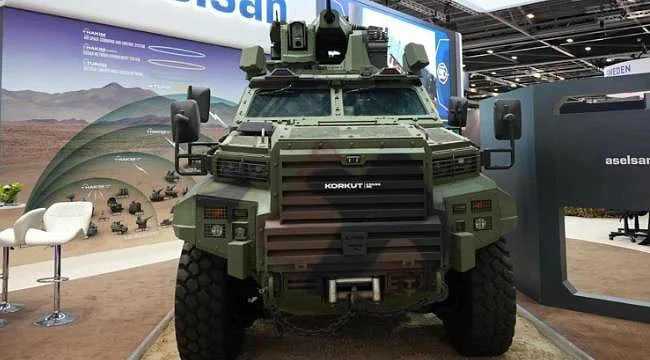
ASELSAN wants exports to make up half of its revenue by 2030, and the company’s next target market is Japan. Chief executive Ahmet Akyol told Nikkei in an interview published October 6 that Tokyo is already in discussions with the Turkish state-controlled defence electronics group over cost-effective air defence systems to counter suicide drones, and over systems to protect ships from underwater drone attacks, according to a summary of the interview carried by Türkiye Today.
No contract has been signed. Akyol’s comments describe talks already under way with the Japanese government, not a deal — a distinction worth keeping clear given how often early-stage defence diplomacy gets reported as more settled than it is. “This is not the time to wait,” Akyol said of the pace of those discussions. “It is the time to do something as soon as possible.”
From 10% to 25%, with 50% as the target
Akyol’s numbers describe a company that has been reshaping itself around export sales for several years. Exports accounted for about 10% of ASELSAN’s total revenue three years ago; that share has since risen to roughly 25%, and the company’s stated goal is to push it to 50% by 2030. Underpinning that shift is a defence business that Akyol said generated $4.46 billion in revenue in 2025, up 26% year-on-year — growth he attributed largely to the same export expansion.
The domestic side of ASELSAN’s order book has not slowed in parallel. Akyol’s interview was conducted in the same stretch of October in which ASELSAN disclosed close to €4 billion (about $4.48 billion) in new air defence contracts: a €2.46 billion domestic hybrid air defence contract with SSB and a separate €488.5 million export deal with a customer the company has not named. That pairing — a large home-market order alongside an undisclosed export sale — is a pattern Turkish defence contract disclosures follow often enough that it has become a recognisable feature of how ASELSAN and its peers report deals to markets.
Why Japan, and why air and underwater drones
Akyol framed the opening with Japan in explicitly political terms. “Politically, there is alignment between Turkey and Japan,” he said, pointing to a September 22 summit at which Japanese Prime Minister Sanae Takaichi raised defence-equipment cooperation with President Recep Tayyip Erdoğan. Erdoğan, for his part, has pushed defence-industrial cooperation as a recurring theme of his outreach to Asian capitals.
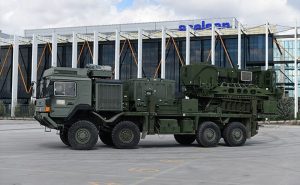
The specific systems under discussion track closely with where ASELSAN has concentrated its recent product development: layered counter-drone systems such as İHTAR and the hit-to-kill interceptor GÖKALP, built against the kind of cheap, massed drone and loitering-munition threats that have become the baseline air defence problem since the war in Ukraine, and naval self-protection systems addressing uncrewed surface and underwater threats, an area where ASELSAN’s SMASH 300 remote-controlled naval gun and underwater-domain sensors sit alongside its better-known air defence line. Akyol’s pitch to a Japanese audience was framed around cost and combat pedigree rather than any single product name: “faster delivery, cost-effectiveness, high performance, and systems proven in different contexts.”
A market where credentials matter as much as price
Japan is not a natural fit for the Gulf- and Africa-heavy client list ASELSAN has built up over the past decade, and that is precisely why the overture matters. Tokyo buys selectively, favours established alliance partners, and has historically sourced most of its equipment domestically or from the United States. A Turkish company breaking into that market — even at the discussion stage — would be a different kind of validation than another Gulf air defence order, closer in signal value to the comparisons Turkish officials now routinely draw with South Korea, another mid-sized exporter that built a global defence business partly by winning business from wealthy, technically demanding allied buyers rather than price-sensitive ones.
Akyol was also careful to frame ASELSAN’s positioning on the China question, telling Nikkei that “our business and company policy is fully compliant with NATO” when asked about the company’s stance — a line clearly aimed at reassuring a Japanese government that vets suppliers partly on their alignment with Washington and Tokyo’s own security partners. ASELSAN’s own history gives that framing some weight: the company was founded in 1975 largely in response to the US arms embargo that followed Türkiye’s 1974 intervention in Cyprus, and now markets itself internationally as a NATO-interoperable alternative rather than a hedge against Western suppliers.
Whether the Japan talks produce an actual order is an open question SSB and ASELSAN have not put a timeline on. But the 50%-by-2030 target gives outside observers a clear benchmark to measure against, and a market as selective as Japan’s is a harder test of that ambition than the export contracts ASELSAN has been signing across the Gulf, Africa and South Asia.