Can Türkiye Replace Russia in the Global Arms Market?

No — not as a whole, and not soon. Russia still delivered close to four times Türkiye’s volume of major arms over 2021–25, and three-quarters of what it does sell goes to India, China and Belarus, three customers Turkish industry cannot serve for political or licensing reasons. But that is the wrong question for most buyers. In the categories Türkiye actually builds — armed drones, armoured vehicles, artillery, corvettes, coastal-defence missiles — substitution is already happening, and in sub-Saharan Africa Türkiye has pulled to within one percentage point of Russia as a supplier.
This piece separates the two. Where the Turkish industry has genuinely taken business a Russian exporter used to hold, and where the gap is structural and will stay that way for years.
DEFENCETÜRKIYE DATA BOX — RUSSIA AND TÜRKİYE AS ARMS SUPPLIERS
Global rank, 2021–25 (SIPRI): Russia 3rd, Türkiye 11th
Share of global arms exports, 2021–25: Russia 6.8 per cent, Türkiye 1.8 per cent
Change from 2016–20: Russia −64 per cent, Türkiye +122 per cent
Top three customers: Russia — India 48 per cent, China 13 per cent, Belarus 13 per cent. Türkiye — Pakistan 16 per cent, UAE 12 per cent, Ukraine 8.4 per cent
Sub-Saharan Africa supplier shares, 2021–25: China 22 per cent, Russia 12 per cent, Türkiye 11 per cent
Self-reported 2025 earnings: Russia “over $15 billion” (Putin, 30 January 2026); Türkiye $10.05 billion of realised defence and aerospace exports
Overlap in top customers: none
The gap, measured properly
The only measure that tracks what was actually delivered rather than what was announced is SIPRI’s trend-indicator volume, and its March 2026 fact sheet covering 2021–25 is the current edition. Russia’s share of global major-arms transfers fell from 21 per cent in 2016–20 to 6.8 per cent in 2021–25, a drop of 64 per cent. It was the only supplier in the global top ten whose exports declined. Türkiye’s share rose from 0.9 per cent to 1.8 per cent, a rise of 122 per cent, and it finished eleventh.
Doubling a small number does not close a large one. On delivered volume Russia remained roughly 3.8 times the size of Türkiye at the end of the period, even after the worst five years in the modern history of Russian arms exports.
Russia’s remaining business sits in three countries Türkiye cannot sell to
Concentration is what makes the replacement question answerable. In 2021–25 Russia supplied major arms to 30 states and one non-state armed group, but 74 per cent of its export volume went to just three of them: India at 48 per cent, China at 13 per cent and Belarus at 13 per cent.
Each of those is closed to Turkish industry, and for different reasons. India has been Türkiye’s most politically difficult market since Ankara’s alignment with Pakistan on Kashmir, and Pakistan is simultaneously Türkiye’s single largest customer at 16 per cent of its export volume. China buys engines, aircraft and air-defence systems that Türkiye does not export, and Turkish systems carry US and European subsystems whose re-export to China would not be licensed. Belarus takes 100 per cent of its imports from Russia and sits under EU and US sanctions that make a Turkish sale legally impossible while Turkish platforms depend on Western components.
SIPRI also attributes the bulk of Russia’s decline to three specific losses — Algeria, China and Egypt. Algeria’s total arms imports fell 78 per cent and Russia still holds 39 per cent of what remains. Egypt moved to France at 39 per cent and Germany at 30 per cent. None of that business went to Türkiye.
Where the substitution has actually happened
The honest answer is: in Africa, in the Caucasus, in Ukraine, and partially in Central Asia. Three of those four are markets built on Soviet-era equipment, which matters more than it sounds.
Sub-Saharan Africa is the clearest case. SIPRI records China as the largest supplier to the subregion at 22 per cent of imports, Russia second at 12 per cent and Türkiye third at 11 per cent. That is a single percentage point between a supplier that has been selling into Africa since the Soviet period and one that made its first armed-drone export in 2018. Our own survey of how Turkish arms sales in Africa begin with training and credit covers the mechanism; the SIPRI table confirms the result.
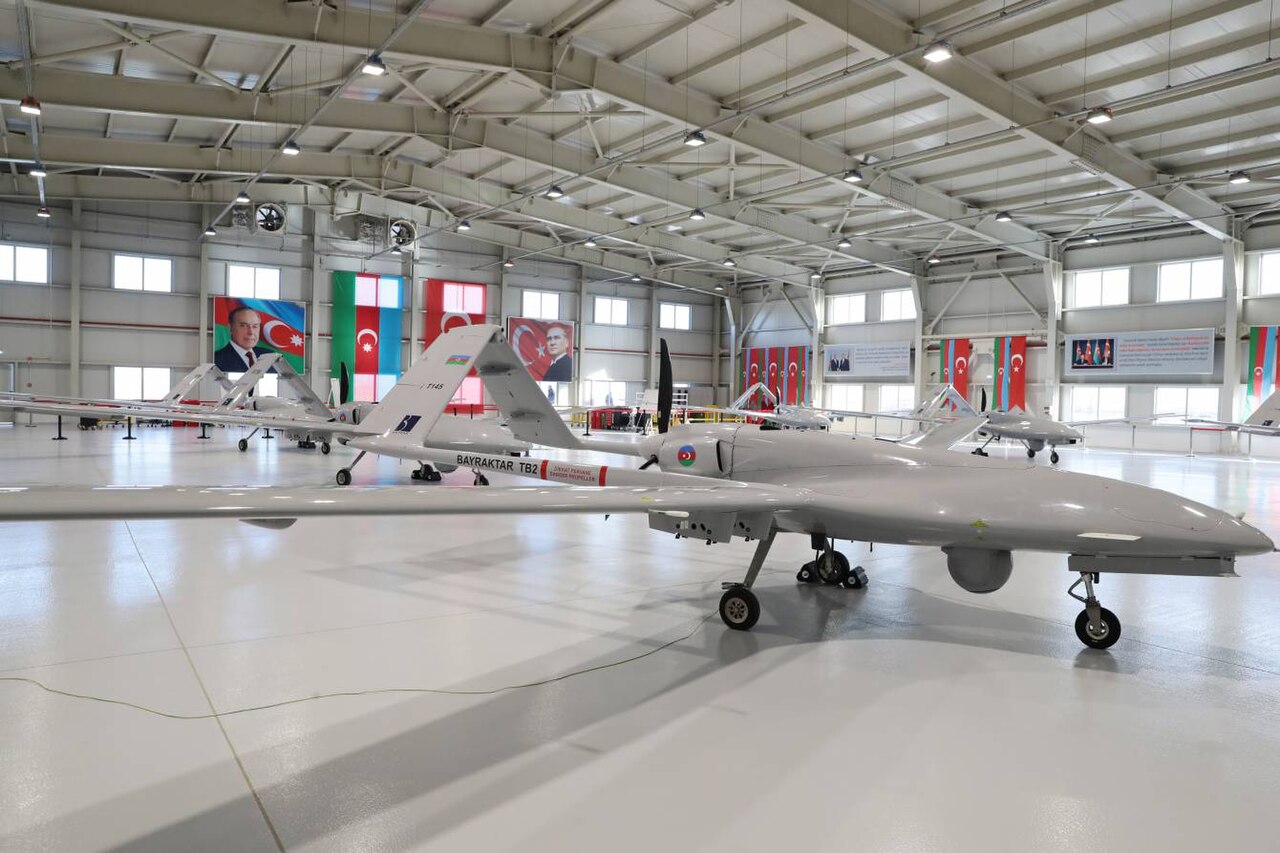
Azerbaijan is the deepest. A military equipped largely with Russian aircraft, armour and air defence a decade ago now hosts Turkish co-production: the AZROKSAN rocket venture with Roketsan, a planned ASELSAN precision-munitions plant in Nakhchivan, and a roughly $500 million package signed at ADEX 2026. The detail that captures the business model best is smaller. At that same show, MKE and Azerbaijan’s MIRAS unveiled the BMP-1T TURAN, a Soviet infantry fighting vehicle rebuilt with a Turkish 30 mm turret. Türkiye is not only replacing Russian equipment in Baku; it is being paid to keep the Russian equipment running.
Ukraine is the loudest and the least repeatable. Ukraine absorbs 8.4 per cent of Turkish export volume, which puts it third among Türkiye’s customers, and the relationship now runs through drones, two Ada-class corvettes and a factory outside Kyiv. It is also a wartime case with no pricing or availability lessons for a peacetime buyer. Our account of what Türkiye and Ukraine have actually delivered to each other sets out where it has stalled.
Central Asia is entry, not displacement. Turkmenistan, Kyrgyzstan and Kazakhstan all fly Turkish drones and Kazakhstan agreed licensed ANKA assembly in 2022, but Russia still supplies 83 per cent of Kazakhstan’s major-arms imports. A drone line is a foothold, not a share shift. The documented position country by country is in our review of which Central Asian states actually fly Turkish drones.
One widely cited example is not a Turkish win at all. When the Philippines cancelled its 16-aircraft Mi-17 order in 2022 under US sanctions pressure, the replacement came from the United States, not Türkiye. The largest publicised Russian cancellation of the period went to Washington.
A category-by-category substitution map
Russia’s export catalogue and Türkiye’s barely overlap. This is the single most useful table for a government currently flying Russian equipment and wondering what it can and cannot buy from Ankara instead.
| Category | Typical Russian export | Turkish equivalent offered for export | Substitution status |
|---|---|---|---|
| Armed and reconnaissance UAVs | Orion-E, Forpost | Bayraktar TB2, AKINCI, ANKA, AKSUNGUR | Substituted. Türkiye exported first and at scale |
| Wheeled and tracked armoured vehicles | BTR-82A, BMP-3, Tigr | Otokar COBRA II and ARMA, FNSS PARS, Nurol Ejder Yalçın, BMC Kirpi | Substituted in the 4×4 and 6×6 classes |
| Rocket artillery and guided rockets | BM-21, Smerch, Tornado | Roketsan TRG and TRLG families, T-122/T-300 | Substituted |
| Corvettes and patrol vessels | Project 22160, Gepard-class | Ada-class, İstif-class, Dearsan and Ares patrol craft | Substituted |
| Coastal-defence missiles | Bal, Bastion-P | Roketsan ATMACA, BARBAROS | Substituted, first export 2026 |
| Short and medium-range air defence | Pantsir-S1, Tor-M2, Buk | ASELSAN KORKUT and GÜRZ, HİSAR-A/O | Partial. Growing export record, shorter service history |
| Attack and utility helicopters | Mi-17, Mi-35, Ka-52 | T129 ATAK, T625 GÖKBEY | Partial. US engine licensing governs every T129 sale |
| Main battle tanks | T-90S/SM | ALTAY | Not yet. Serial deliveries to Türkiye’s own army first |
| Combat aircraft | Su-30, Su-35, MiG-29 | None in service. KAAN in development; HÜRJET is a trainer with light-attack capability | No substitute |
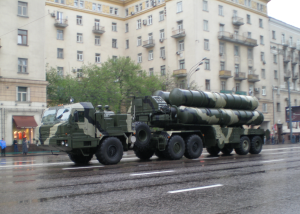
| Long-range air and missile defence | S-300, S-400 | SİPER, no export contract announced | No substitute at S-400 range class |
| Submarines | Kilo-class, Amur-class | Reis-class built under German licence; MİLDEN in design | No substitute. Licence prevents re-export |
| Strategic and nuclear-capable systems | Iskander-E and related | None offered | No substitute |
The drone row is the one that decided the decade. Türkiye exported an armed UAV in 2018; Russia signed its first export contract for a Russian-designed drone, the Orion-E, only in December 2024, and its two most widespread unmanned types are of foreign design. Envanter Medya has published a programme-by-programme comparison of how the two countries’ unmanned aircraft industries developed, which explains the engineering and timeline reasons behind a gap this piece treats purely as a market outcome.
Read down the right-hand column and the pattern is plain. Türkiye substitutes well below the fighter-and-submarine line and not at all above it. That is also where Russia’s remaining money is: India’s 48 per cent is built on combat aircraft, submarines and heavy air defence, not on armoured cars.
WHY IT MATTERS
For a government holding Russian-origin equipment and facing sanctions exposure, the practical question is not whether Türkiye can replace Russia globally. It is whether Türkiye can cover the specific capability that needs replacing — and in roughly half the catalogue it can, with delivery times measured in months rather than the multi-year queues now typical of Western suppliers.
For competitors, the significant fact is that Türkiye is not taking Russia’s traditional customers. It is winning in markets Russia had neglected or priced out of, and selling categories Russia never built an export franchise in. That is a different competitive threat from the one most analysis describes.
The numbers each government publishes do not agree with the numbers SIPRI measures
Anyone comparing the two exporters will meet four incompatible figures, and the difference between them is measurement, not dishonesty.
President Vladimir Putin told Russia’s Commission for Military-Technical Cooperation on 30 January 2026 that Russia earned over $15 billion from arms exports in 2025, supplying more than 30 countries. Rosoboronexport’s director general Aleksandr Mikheev said on 7 September 2026 that the company had signed more than $13 billion of export contracts in the first half of the year, and on 9 October 2026 put the standing order portfolio above $65 billion across more than 800 active contracts with foreign customers. The Jamestown Foundation, reviewing those statements, pointed out that the half-year contract claim is presented as equal to all of 2025’s exports, which does not reconcile with Putin’s own figure, and that Russia has stopped reporting to the relevant UN registers, which removes the usual means of checking.
Türkiye’s figures are differently constructed but similarly mixed. Realised defence and aerospace exports were $10.05 billion in 2025 and $6.92 billion in the first nine months of 2026, up 15.6 per cent year on year, on a rolling twelve-month basis of about $10.94 billion. New contract intake reached $15 billion by mid-October 2026 against a $20 billion year-end expectation.
Set side by side, Russia’s self-reported 2025 earnings are roughly 1.5 times Türkiye’s, while SIPRI’s delivered-volume measure puts Russia at about 3.8 times Türkiye. Both cannot be describing the same thing, and they are not: one counts money a government says it received, the other counts the military capability that physically changed hands. We set out why no authoritative value-based global ranking exists in our analysis of what Türkiye’s arms-exporter ranking actually measures.
Who actually took Russia’s share
Türkiye captured a fraction of it. Between the two periods, Italy’s exports rose 157 per cent, Israel’s 56 per cent, South Korea’s 24 per cent and France’s 21 per cent, while Poland went from almost nothing to one per cent of world exports on the back of Ukrainian demand. Taken together, the 27 EU member states exported four times Russia’s volume in 2021–25.
The honest framing is that Russia’s collapse was absorbed mainly by European suppliers and China, with Türkiye picking up specific segments in specific regions. Türkiye’s closest peer in this story is South Korea, which grew less in percentage terms but exports a larger absolute volume and is far more concentrated — 58 per cent of Korean export volume went to Poland alone, against 16 per cent for Türkiye’s largest customer. The comparison is worked through in our side-by-side of the two fastest-growing exporters.
The constraint nobody can engineer away quickly
Three limits hold Türkiye below Russia’s remaining market, and all three are documented rather than speculative.
Western content governs the customer list. Turkish platforms carry American and European subsystems — the General Electric F404 in HÜRJET, marine diesels from MTU and GE in the warship lines, Western-origin components across the UAV fleet. That makes Turkish export licensing dependent on third-country consent, and it rules out exactly the sanctioned states that still buy Russian. Our assessment of how independent Turkish defence production really is maps where that dependency sits and what has actually been blocked.
The top of the catalogue is missing. Türkiye has no combat aircraft in service of its own design; KAAN’s position among fifth-generation programmes is a development case, not an export product. It does not build an exportable submarine: the Reis-class is a German licence design and the licence governs re-export. And SİPER, its long-range air-defence system, has no announced export contract.
Türkiye is itself a Russian customer. Ankara bought the S-400 in 2017, has not integrated it into NATO architecture, and has spent years dealing with the CAATSA consequences. Signals from Moscow in 2026 that it could approve a transfer of those S-400s to a third country are a reminder that the relationship is not simply competitive. A supplier that still operates the system it is bidding against carries an argument it would rather not have.
BUYER VIEW
What transfers cleanly: UAVs, armoured vehicles, rocket artillery, patrol vessels, electro-optics and electronic warfare. These are the categories where Turkish industry has signed contracts, delivered and supported in service.
What does not: fighters, submarines, long-range SAMs and anything requiring a nuclear-capable delivery system. Planning a fleet transition around a Turkish answer in those categories means planning around dates that have not been announced.
Licensing: check component origin before signing. A Turkish contract does not remove US or EU export-control exposure where Western subsystems are fitted, and that exposure is highest on aircraft, helicopters and naval propulsion.
Legacy fleets: Turkish firms will quote on modernising Soviet-origin equipment rather than requiring replacement. The BMP-1T TURAN in Azerbaijan is the template, and it is usually the cheaper route for an army with serviceable hulls.
Price and financing: Türkiye has no equivalent of the barter and state-credit terms Russia used through the 2010s, though Türk Eximbank lending and a government-to-government sales model announced for 2026 are intended to close part of that gap. Published terms are not available.
What comes next
Three things will decide whether the 2021–25 picture holds. The first is the next SIPRI fact sheet in March 2027, covering 2022–26, which will show whether Türkiye’s growth rate survives contact with a larger base — and whether it passes Spain, which sat one place above it at 2.3 per cent.
The second is whether any Turkish system crosses the fighter-and-submarine line as an export product. A KAAN export contract or a SİPER sale would change the substitution map more than any number of armoured-vehicle deals.
The third is whether Russia’s order book converts. If Rosoboronexport’s claimed $65 billion portfolio turns into deliveries, SIPRI’s volume figures will recover and the gap will widen again. If it does not — and the Jamestown review suggests fulfilment has been uneven — the 6.8 per cent share is a floor rather than a trough.
FAQ
Is Türkiye replacing Russia as an arms supplier?
Partially and selectively. Türkiye has taken share in sub-Saharan Africa, the Caucasus and parts of Central Asia and in categories such as armed drones, armoured vehicles and rocket artillery. It has not touched Russia’s core business, which is concentrated in India, China and Belarus and is built on combat aircraft, submarines and long-range air defence.
How much bigger are Russian arms exports than Turkish ones?
On SIPRI’s delivered-volume measure for 2021–25, Russia accounted for 6.8 per cent of global major-arms transfers and Türkiye 1.8 per cent, making Russia roughly 3.8 times larger. On self-reported national earnings for 2025, Russia claimed over $15 billion against Türkiye’s $10.05 billion — a far narrower ratio, because the two figures measure different things.
Which countries have switched from Russian to Turkish weapons?
Azerbaijan is the clearest multi-category case, with Turkish drones, rockets, coastal-defence missiles and armour modernisation replacing or upgrading Soviet-origin equipment. Ukraine, Kyrgyzstan and Turkmenistan have added Turkish drones to Soviet-era inventories. Kazakhstan has agreed licensed ANKA assembly but still takes 83 per cent of its imports from Russia.
Why can Türkiye not sell to Russia’s biggest customers?
India’s relationship with Ankara is constrained by Türkiye’s alignment with Pakistan, which is Türkiye’s largest arms customer. China and Belarus are closed by sanctions and by the Western components inside Turkish systems, which require third-country export consent.
Does Türkiye still buy weapons from Russia?
Yes. Türkiye purchased the S-400 long-range air-defence system in 2017 and still holds it, which triggered US CAATSA sanctions and its removal from the F-35 programme. Russia’s foreign ministry signalled in 2026 that it could approve a transfer of the system to a third party.
Which supplier gained most from Russia’s decline?
European suppliers collectively. Italy grew 157 per cent, Israel 56 per cent, South Korea 24 per cent and France 21 per cent between 2016–20 and 2021–25, and the 27 EU states together exported four times Russia’s volume. Türkiye’s gain was real but smaller in absolute terms.
Can Türkiye supply spare parts for Russian equipment?
Not as an authorised supply chain, but Turkish firms do sell modernisation packages that replace Russian-origin subsystems on Soviet-era platforms. The MKE and MIRAS BMP-1T TURAN, which fits a Turkish 30 mm turret to an existing Soviet hull, is the published example.
Sources
- SIPRI, Trends in International Arms Transfers, 2025, fact sheet published March 2026 — tables 1 and 2, and the regional sections on Africa and sub-Saharan Africa (PDF)
- SIPRI, Arms Transfers Database: sources and methods — on what the trend-indicator value does and does not represent
- Jamestown Foundation, Rosoboronexport’s International Arms Sales Status Uncertain, 8 September 2026 — for President Putin’s stated 2025 export earnings, Rosoboronexport’s contract claims and the caveats on fulfilment and verification
- Defense Mirror, Rosoboronexport reports $65bn order portfolio across 800 active contracts, 10 October 2026 — reporting Aleksandr Mikheev’s 9 October statement
- Envanter Medya, a programme-level comparison of Turkish and Russian unmanned aircraft development — for the engineering and timeline side of the drone gap this piece treats as a market question