Turkish Arms Sales in Africa Start in the Classroom

Ask a Turkish defence executive how the company won an African customer and the answer rarely starts with the aircraft. It starts with a group of pilots or soldiers flown to Türkiye, a support contract that runs for years, and a payment arrangement the buyer can live with. The hardware is the visible part of Turkish defence exports to Africa. Training and financing are what hold a deal together.
This piece looks at how those two elements work in the documented cases, where the record is thin, and what the newer talk of local production actually amounts to so far.
What does an African buyer get with a Turkish drone?
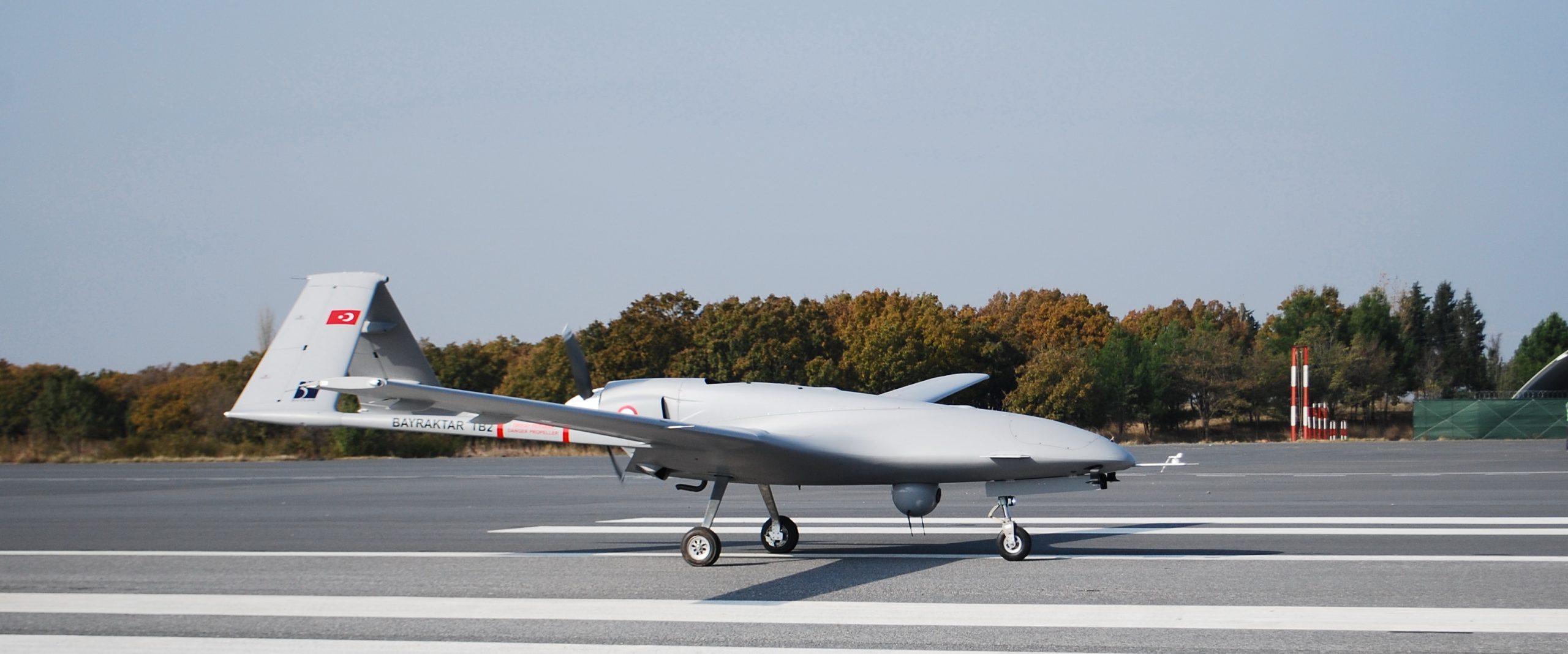
A package, not an airframe. The Bayraktar TB2 is sold as a system: aircraft, ground control station, munitions, spares, and instruction for the crews who will fly and maintain it. Published TB2 contracts show how contract values swing widely once those line items are added or dropped, which is why headline figures from the continent should be read with caution.
The African customer list is long. Open-source operator tables include Morocco, Ethiopia, Somalia, Djibouti, Burkina Faso, Rwanda, Togo, Tunisia, Niger, Nigeria, Mali and Kenya for the TB2. Some numbers are firm. Niger had six aircraft delivered by May 2022, according to Defence Türk, and Morocco was reported to have ordered 19. Others, such as Nigeria’s reported 43 aircraft on order, come from media reports rather than a published contract.
Baykar’s larger AKINCI has a shorter African record. Mali is reported to have received two in November 2024, and Somalia and Morocco also appear on operator lists. One Malian aircraft was reportedly lost in a training exercise in January 2025, and the second was reportedly shot down by Algerian forces that April after an airspace incursion. Those losses show that delivery is only the start of the work.
Where does the training actually happen?
Mostly in Türkiye, and in one case in Somalia itself.
When Kenya’s first TB2s were photographed in a hangar in 2024, reports tied them to a course for Kenyan operators at Baykar’s flight training centre in Keşan. Tunisia, the first ANKA export customer, had 52 air force pilots and maintainers trained in Türkiye, according to Turkish press reports we covered in our ANKA operators review. Neither government has published the contract.
Somalia is the far end of the scale. Camp TURKSOM, opened in Mogadishu in 2017, is Türkiye’s largest overseas military training base, and plans called for more than 10,000 Somali soldiers to pass through it. Turkish officials have said that by the early 2020s more than a third of the Somali National Army had been trained by Turkish forces, a claim that is hard to verify independently. In February 2024 the two governments approved a defence and economic cooperation deal under which, according to the Associated Press, Türkiye would provide training and equipment to the Somali Navy. Somali authorities said the agreement runs for ten years.
The logic is practical. A buyer that trains on Turkish ground stations, Turkish munitions and Turkish maintenance manuals is unlikely to switch suppliers when the fleet needs more aircraft. Doctrine, spare parts and personal contacts follow the same path, which is why Ankara treats training as a strategic asset and not a line on the invoice.
Who pays for it?
This is the least transparent part of the business. Türkiye has no equivalent of the US Foreign Military Sales system and no standing grant-aid budget for arms. Companies sell on their own account, often against letters of credit or advance payments, and state support arrives through a few channels.
The main published one is Türk Eximbank, the state export credit agency. Its buyer’s credit can cover up to 85 per cent of a contract’s value for maturities of 24 months or more, but only for goods of Turkish origin. That condition matters for drones built around foreign engines or sensors. We set out the mechanics in our guide to how countries buy and pay for Turkish weapons.
The ANKA sale to Tunisia is the clearest African illustration. Turkish outlets reported that the purchase was financed by a Türk Eximbank loan, with the price put at $80 million for three aircraft and three ground stations. Neither government has confirmed those figures, and English-language reports give different quantities.
Ankara has also promised more. The Presidency of Defence Industries (SSB) committed in its 2024 to 2028 strategy to create state-to-state credit facilities for customer countries with limited budgets, and said a government-to-government sales model would start in 2026. No terms have been published, and no named project has been announced that we can point to. For many African buyers, that is exactly the gap that matters.
Which African cases show the pattern most clearly?
| Country | Turkish element | Training or support | Status |
|---|---|---|---|
| Tunisia | ANKA-S drones | 52 personnel trained in Türkiye (reported) | Loan financing reported, not confirmed |
| Kenya | TB2 drones | Operator course at Keşan (reported) | Aircraft photographed in country, 2024 |
| Somalia | TURKSOM base, navy support, drones | Army and navy training under bilateral agreements | Ten-year naval deal approved February 2024 |
| Nigeria | TB2, Songar, COBRA vehicles | Joint manufacturing agreed, training not detailed | Defence cooperation agreement signed January 2026 |
| Mali | TB2 and AKINCI | Not published | Losses reported in 2025 |
| Egypt | MKE TOLGA and ammunition lines | Joint production through a Turkish subsidiary | $350 million package announced February 2026 |
Sources: Defence Türk, Associated Press, Wikipedia operator tables, company and government statements, and earlier DefenceTürkiye reporting. Quantities and terms marked reported have not been confirmed by both governments.
Is production moving to Africa?
The talk is moving faster than the factories. In August 2026 Nigeria and Türkiye said they wanted to shift from buying to building, with a Nigerian assembly and maintenance arrangement for DASAL drones at its centre. Our report on the Nigeria and Türkiye manufacturing agreement notes that neither company has published a delivery schedule, and that large indicative quantities may be framework ceilings and not firm orders.
MKE has taken the most concrete step. It registered Zafer in Egypt as a wholly owned subsidiary to run joint production with Egyptian state factories, following a $350 million package agreed in February 2026. As we reported in the piece on MKE’s Zafer company, the plants remain Egyptian, and the new entity is a contracting vehicle.
Baykar is reported to be planning roughly $250 million of investment on the continent, but the scope is undefined. The earlier report on Baykar’s African plans makes the same point: the concrete output depends on the facility and the country, not on the number. The track record of memoranda turning into plants is mixed, as our review of Turkish defence offsets shows, with some taking years to appear.
What are the risks for buyers and for Türkiye?
The combat record cuts both ways. Turkish drones performed well against opponents without serious air defences, and Ethiopian use in the Tigray war is part of why the TB2 became a sought-after system. It is also part of the reputational problem. A January 2022 strike on a displaced persons camp at Dedebit killed nearly 60 civilians, and the munition involved was a MAM-L, which is reported to be used with the TB2. Researchers and rights groups have since linked Turkish and Chinese drones to civilian casualties in several African states.
Competition is real. Chinese systems such as the Wing Loong compete on price and on light end-use conditions, and Chinese lenders have long served buyers that cannot meet a commercial borrowing test. Turkish credit finances only Turkish content, and sovereign-guarantee loans are closed to governments that cannot borrow on commercial terms.
Then there is the supply chain. A Turkish drone is not automatically free of third-party controls. Canada cancelled export permits for sensors in 2021 after concluding they had been used in Libya, Syria and Nagorno-Karabakh, and buyers should ask which components sit outside Turkish control before signing.
What should be watched next?
Three things will show whether training and credit are building a durable industrial relationship or only a supply line. The first is whether the Nigerian assembly arrangement produces a dated delivery schedule. The second is whether SSB publishes the terms of its promised state-to-state credit, since a named project would be the first real evidence that Ankara can finance budget-constrained buyers. The third is what Baykar’s African investment turns out to be: a maintenance centre, an assembly line, or a full factory. Until those answers arrive, the firm evidence is narrower: Türkiye sells well in Africa because it trains the customer, and it is still working out how to finance the purchase on a large scale.