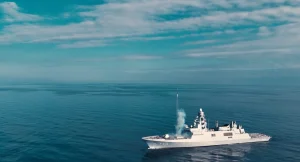
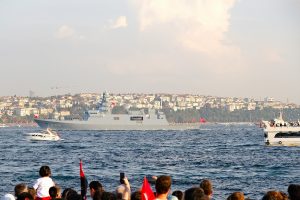
TCG Anadolu Leads Türkiye’s NATO Neptune Strike Group

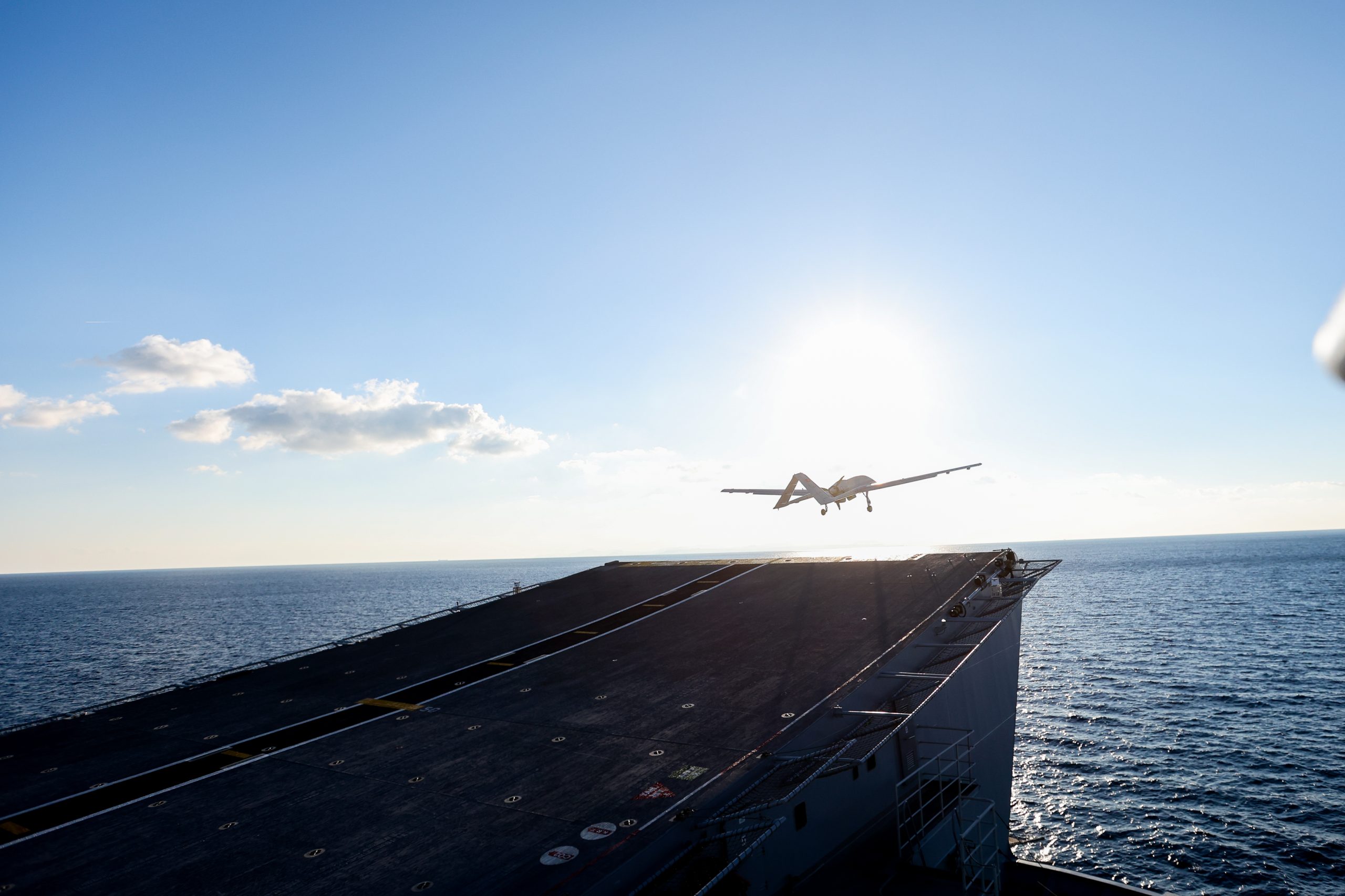
Türkiye is fielding one of only three full maritime strike groups in NATO’s Neptune Strike 26-4, the Alliance’s largest enhanced Vigilance Activity of 2026, putting the drone carrier TCG Anadolu and its embarked Bayraktar TB-3 unmanned combat aircraft alongside carrier groups built around Britain’s HMS Prince of Wales and Italy’s ITS Cavour. The exercise, running October 16 to November 5 across the Mediterranean, the High North and the North Atlantic, is drawing forces from 17 NATO members, with more than 20 warships and roughly 40 aircraft taking part.
Three strike groups, one of them Turkish-led
NATO organised Neptune Strike 26-4 around three independent, fixed-wing-capable maritime strike groups, each led by a different ally. The British-led group centres on the carrier HMS Prince of Wales with its F-35B Lightning II air wing, escorted by the Type 45 destroyer HMS Dauntless and the Royal Norwegian Navy frigate HNoMS Fridtjof Nansen, operating in the North Atlantic and the High North. The Italian-led group is built around the carrier ITS Cavour, carrying Italian F-35Bs and AV-8B Harrier IIs, with the destroyer ITS Andrea Doria and an escorting frigate in the Mediterranean, supported by a French Air and Space Force A330 multi-role tanker for air-to-air refuelling.
The third group is Turkish, built around the amphibious assault ship TCG Anadolu (L-400), which carries no fixed-wing jets but instead embarks Bayraktar TB-3 unmanned combat aerial vehicles and a Turkish Marine landing force. Social media posts from the exercise, corroborated by open-source tracking, identify the frigate TCG Gaziantep (F-490) and the submarine TCG Gür (S-357) as part of the same task group. The Turkish group operated in the Mediterranean, including off the Albanian coast near Vlorë, putting Türkiye in the same bracket as two of its largest NATO allies as a nation capable of generating an independent carrier-equivalent strike group — a recognition that rests on TCG Anadolu’s role as the world’s first dedicated drone carrier rather than on fixed-wing naval aviation, which Türkiye does not operate.
What happened off Albania
On October 19, TCG Anadolu took part in exercise activity from Pasha Liman Naval Base in Vlorë, Albania, where the Turkish Navy hosted a distinguished-visitors day. Türkiye’s ambassador to Tirana, Barış Ceyhun Erciyes, attended alongside Albanian officials and received a briefing aboard the ship on the exercise. Open-source reporting citing Dunav Intel described Bayraktar TB-3s operating from the ship in Vlorë Bay during this phase, correcting earlier identification of the aircraft as the smaller TB2. Neither NATO nor the Turkish Ministry of National Defence has published a detailed account of what tasks the embarked TB-3s or the Marine landing force actually performed during the Albania stop, and this report does not claim more than what the visitors’ day and the accompanying photo record confirm: that the ship, its air wing and its escorts were present and operating as part of the exercise.
NATO’s framing
Neptune Strike is coordinated by Naval Striking and Support Forces NATO (STRIKFORNATO), based in Portugal and commanded by the US Navy’s Sixth Fleet commander. Rear Admiral Eduardo Guitian Crespo, STRIKFORNATO’s deputy chief of staff for operations, said the drill’s purpose was to ensure “that when the Alliance calls, our forces are ready to act together.” Admiral George Wikoff, commander of Allied Joint Force Command Naples, framed the exercise in deterrence terms, saying NATO’s “purpose is to preserve peace — and we have the capability, cohesion and resolve to defend it.” The Aviationist, which has tracked all four Neptune Strike iterations in 2026, noted that no US carrier strike group is participating in this round, a gap it linked to carrier availability pressures from the US-Iran war, and that three European-led strike groups running simultaneously without American carrier support is itself a notable data point for the Alliance’s naval posture this year.
Why a drone carrier counts as a strike group
TCG Anadolu’s inclusion as a peer to two fixed-wing carrier groups underlines how far Türkiye’s navy has leaned into unmanned aviation as a substitute for the F-35Bs it was removed from buying after Türkiye’s purchase of the Russian S-400 air defence system. The ship, originally designed around the F-35B before that option closed off, has instead been adapted to operate Bayraktar TB-3, a folding-wing UCAV built specifically for short-deck operations, and the smaller Bayraktar KALKAN. The TB-3 has already been demonstrated firing MAM-L precision munitions from the ship during NATO’s Steadfast Dart 2026 exercise in the Baltic in February, and launching sonobuoys during the Seawolf exercise in September. Neptune Strike 26-4 is the furthest the platform has operated from home waters as part of a declared NATO maritime strike group rather than a bilateral or national drill.
For a company whose drones are increasingly sold on the strength of combat use rather than specification sheets, having TCG Anadolu formally bracketed alongside two of NATO’s premier fixed-wing carriers — rather than treated as a lesser auxiliary — is a validation that goes beyond any single export contract. Italy has already ordered Baykar-derived combat drones of its own, and Baykar’s footprint now extends into Italian production through its joint venture with Leonardo, so the sight of a Turkish drone carrier operating inside a NATO strike package built around allied aircraft carriers is as much a marketing moment as a military one.
Sources: The Aviationist; USNI News; Anadolu Agency photo reporting from Pasha Liman Naval Base, Vlorë, Albania (October 19, 2026).