Is Türkiye in the EU’s SAFE Defence Fund? What the Rules Say


No. Türkiye is not a participant in SAFE, the European Union’s €150 billion defence loan instrument, and Turkish companies cannot act as prime contractors in a SAFE-funded procurement. The barrier is not the much-quoted “65 per cent European content” rule. It is Article 16(3) of Council Regulation (EU) 2025/1106, which requires contractors and defined subcontractors to be established in, and managed from, the EU, an EEA EFTA state or Ukraine — and not to be controlled from anywhere else. Türkiye applied to be associated in July 2025, and the request is reported never to have reached member states. But the regulation leaves three narrower doors open, and Turkish industry has already walked through two of them.
European coverage reports SAFE as a binary: Türkiye is in or Türkiye is out. Procurement officers and Turkish exporters need something more exact — which article bites, on whom, at what contract share, and what a Turkish supplier can lawfully be inside a European programme financed with EU-borrowed money.
DEFENCETÜRKIYE DATA BOX
| Instrument | Security Action for Europe (SAFE) |
| Legal base | Council Regulation (EU) 2025/1106, adopted 27 May 2025 |
| Size | EUR 150,000,000,000 in loans to member states (Article 6) |
| Member-state deadline | Requests due 30 November 2025 (Article 7(1)); 19 states submitted plans |
| Content rule | Non-EU/EEA-EFTA/Ukraine components capped at 35% of estimated component cost (Article 16(10)) |
| Türkiye’s status | Not a participant; no EU Security and Defence Partnership; no Article 17 agreement |
| Türkiye’s application | Submitted July 2025; reported still “under evaluation” at the deadline and never forwarded to member states |
| Third countries admitted | Canada (agreement signed 14 February 2026, concluded 15 June 2026) — the only one so far |
| Status checked | 20 October 2026 |
What SAFE actually is, and what it is not
SAFE is not a grant programme and it does not buy anything. Under Article 5 it is a lending facility: the Commission borrows on capital markets and on-lends to member states, which then run procurements under rules the regulation sets. A company never receives SAFE money. A government does, and the strings travel with the government’s contract.
Article 1 splits eligible purchases into two categories, and the split matters for Turkish industry. Category one is ammunition and missiles, artillery including deep precision strike, ground combat capabilities, small drones of NATO class 1 and related counter-drone systems, critical infrastructure protection, cyber and military mobility. Category two covers air and missile defence, maritime surface and underwater capabilities, drones other than small drones — NATO class 2 and 3 — and related anti-drone systems, strategic enablers including C4ISTAR and space, artificial intelligence and electronic warfare.
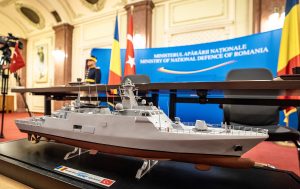
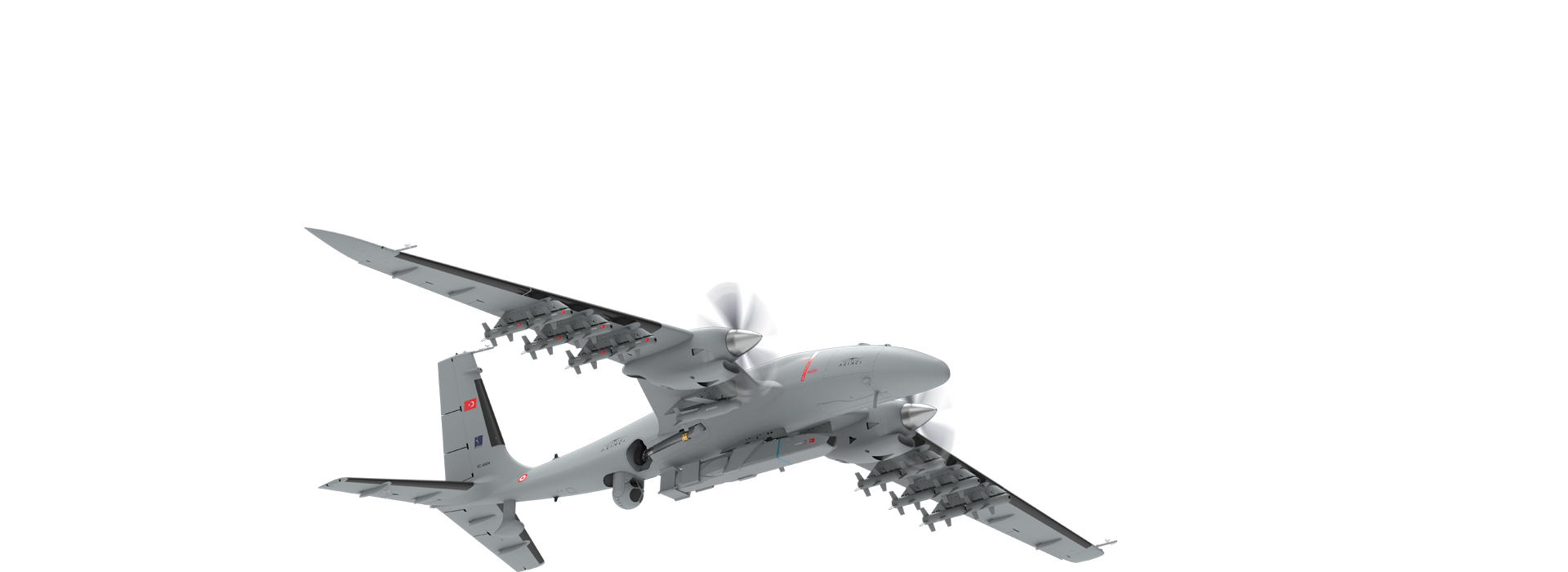
Read that second list against Türkiye’s export catalogue. The Bayraktar TB2 and AKINCI are class 3 aircraft by weight. SİPER and HİSAR are air and missile defence. ASELSAN’s business is electronic warfare and C4ISTAR. MİLGEM is maritime surface. Much of Türkiye’s strongest export portfolio sits in category two — and category two is the only category to which Article 16(11) applies. That paragraph requires the contractor to be able to decide on the definition, adaptation and evolution of the design “without restrictions imposed by third countries”, including the legal authority to substitute or remove restricted components. The regulation’s strictest clause lands precisely where Turkish industry is strongest.
The Commission notified allocations in September 2025, published draft implementing decisions for 18 member states through early 2026, and approved a second wave on 26 January 2026 covering Estonia, Greece, Italy, Latvia, Lithuania, Poland, Slovakia and Finland — around €74 billion once those loan agreements were signed. First disbursements, at 15 per cent of each allocation, began with Cyprus on 18 June 2026.
How Türkiye’s application ran out of road
Türkiye submitted its request to be associated in July 2025. Article 7(1) set 30 November 2025 as the deadline for member-state loan requests, and that date became the practical cut-off for the first round. In an analysis published on 3 December 2025, the Ankara-based Beyond the Horizon ISSG reported that a Commission spokesperson said on 29 November that Türkiye would not meet the deadline because the Commission was still examining its request, and that the application was never forwarded to member states for approval. Beyond the Horizon’s reading is that the Commission avoided a decision it expected to lose, with objections anticipated from Greece, Cyprus and France.
Nobody vetoed Türkiye, in other words. The file simply never reached the table where a veto would have been cast. That distinction matters for anyone forecasting the second round: there is no formal rejection to overturn, and equally no record of support to build on.
The Greek position has been stated openly: Athens has linked any Turkish participation to the Turkish parliament’s 1995 casus belli resolution on Greek territorial waters, and Nicosia has argued that states occupying territory belonging to an EU member should not benefit from EU defence financing. A policy paper written by Dimitris Tsarouhas for the Greek think-tank ELIAMEP on 9 October 2025 sets out that case in full and is the most complete public statement of the reasoning, though it is advocacy from one side of the dispute.
Ankara’s own line has moved. In December 2025 Defence Minister Yaşar Güler said Türkiye did not attach much importance to whether it was included; by mid-2026, ahead of the NATO summit Türkiye hosted in Ankara on 7–8 July, President Erdoğan was again urging European governments to bring Türkiye into EU defence initiatives.
The rule that locks Turkish firms out is not the 65 per cent rule
Almost every English-language account of SAFE and Türkiye reaches for the content rule. It is the wrong clause.
Article 16(3) is the one that does the work: contractors and subcontractors involved in a common procurement “shall be established and have their executive management structures in the Union, in an EEA EFTA State or in Ukraine”, and shall not be subject to control by a third country or third-country entity outside that circle. A company headquartered in Ankara or Istanbul fails that test on the first clause, before anyone counts a single component. No amount of European content fixes it.
Article 16(8) adds a physical test alongside the corporate one. The infrastructure, facilities, assets and resources used for the procurement must be located in the territory of a member state, an EEA EFTA state or Ukraine, with a narrow exception where no alternative exists and the use does not contravene EU security interests. Production has to happen inside the line, not only ownership.
Why the 35 per cent is not a Turkish allowance
Article 16(10) caps components originating outside the EU, EEA EFTA states and Ukraine at 35 per cent of the estimated cost of the components of the end product. It then adds a sentence that is routinely dropped from summaries: “no component shall be sourced from a third country that contravenes the security and defence interests of the Union and its Member States.”
Two consequences follow, and both cut against a Turkish supplier. First, the 35 per cent is a single shared pool for every non-eligible origin — American, British, South Korean, Israeli and Turkish content all compete for the same headroom in the same bill of materials. A European prime with an established US subsystem has usually spent that budget before a Turkish offer is considered. Second, the exclusion sentence is a judgement call with no published list behind it, which means a prime contractor carries the risk of a later finding. Procurement lawyers price that risk, and they price it conservatively.
Three doors the regulation leaves open
Articles 16(4), 16(5) and 16(12) are where a Turkish supplier’s real options live. None of them makes Türkiye a SAFE participant. Each describes a position a Turkish-origin business can occupy inside a SAFE-funded contract.
Door one is the definition of “subcontractor”. Article 16(12) defines a “subcontractor involved in the common procurement” as a legal entity that provides critical inputs with unique attributes essential to the functioning of the product, and is allocated at least 15 per cent of the value of the contract, and needs access to classified information to perform it. All three conditions, read together. A supplier that falls below 15 per cent of contract value, or that supplies a component needing no classified access, is not a “subcontractor involved in the common procurement” at all — so the establishment and control test in Article 16(3) does not reach it. On the face of the text, a Turkish sensor, radio or optic sold into a European platform at a modest share of contract value sits outside the prohibition and inside the 35 per cent pool. The Commission has not published interpretive guidance on this point, so treat it as a reading of the regulation rather than a settled ruling — but it is the reading on which several existing Turkish supply positions in Europe appear to rest.
Door two is the derogation in Article 16(4), and it is a trap as much as an opening. A non-EU subcontractor allocated between 15 and 35 per cent of contract value remains eligible if either a direct contractual relationship with the contractor existed before the regulation entered into force at the end of May 2025, or the contractor commits to studying, within two years, whether that input can be replaced by a “restriction-free” alternative from the EU, EEA EFTA states or Ukraine. Read the second limb plainly: the clause that admits a Turkish supplier at this tier simultaneously obliges the European prime to examine designing it out. Incumbency is rewarded; new entrants arrive with a replacement study attached.
Door three is incorporation. Article 16(5) allows a legal entity established in the Union but controlled by a third country to participate, provided it has been screened under the EU foreign investment screening regulation (EU) 2019/452 with any necessary mitigation, or provides guarantees verified by the member state where it is established. Article 16(6) specifies what those guarantees must show: that third-country control does not restrain the entity’s ability to fulfil the order, and that access by the third country to classified information is prevented, with security clearances issued by a member state. This is the only door that leads to prime contractor status, and it is the one Turkish industry has invested in most heavily.
| Route | Legal basis | Test it must pass | Documented example | Practical ceiling |
|---|---|---|---|---|
| Prime contractor | Art. 16(3) | Established and managed in EU/EEA-EFTA/Ukraine; not third-country controlled | None — no Turkish-domiciled firm qualifies | Closed |
| Supplier below the definition | Art. 16(12), read with 16(10) | Under 15% of contract value, or no classified access required; inside the 35% component pool | ASELSAN ARSUS 100 sensor mast on Polish-built AMZ Kutno Kleszcz vehicles | Component tier only; shares the 35% with all non-EU content |
| Subcontractor, 15–35% | Art. 16(4)(a) or (b) | Pre-existing contract before end-May 2025, or prime commits to a two-year replacement feasibility study | No SAFE-funded case published to date | Conditional, and route (b) is an invitation to design the supplier out |
| EU entity under Turkish control | Art. 16(5) and 16(6), with 16(8) | FDI screening under Reg. 2019/452 or member-state verified guarantees; facilities located inside the circle | Otokar–Automecanica (Romania); Baykar–Piaggio Aerospace and LBA Systems (Italy) | Open to prime status, but eligibility is case by case and untested in public |
Compiled by DefenceTürkiye from Council Regulation (EU) 2025/1106. Examples are documented industrial positions, not confirmed SAFE-financed contracts; no Turkish-linked entity has been publicly confirmed as a supplier under a SAFE-funded award.
What Turkish companies have actually done about it
The response has been to move production inside the border rather than lobby for the border to move.
Romania. Otokar signed an agreement on 29 April 2026 to acquire 96.77 per cent of Automecanica S.A. for about €85 million and completed the purchase in June 2026 after Romanian approvals. The Mediaş plant performs the full production process rather than final assembly. Romania’s order covers 1,059 COBRA II vehicles: the first 278 built in Türkiye, the remaining 781 in Romania over five years. Otokar has described the Romanian-built COBRA II as the first Turkish armoured vehicle manufactured in the European Union, and deliveries of Romanian-built vehicles began in July 2026. Envanter Medya carries a Turkish-language technical profile of the COBRA II covering its variants, Turkish service use and export record for readers who want the platform detail rather than the corporate structure.
Italy. Baykar completed its acquisition of Piaggio Aerospace’s business complexes at Villanova d’Albenga and Genoa on 30 June 2025, with Italian government Golden Power approval. Separately, Baykar and Leonardo announced a 50/50 joint venture, LBA Systems, at the Paris Air Show on 16 June 2025, headquartered in Italy and covering design, development, production and maintenance of unmanned aerial systems. Baykar has said AKINCI assembly is intended for the Italian sites. Both structures put Turkish-linked manufacturing capability inside an EU member state with a European partner — which is what Article 16(5) and Article 16(8) between them require.
Poland. ASELSAN’s ARSUS 100 sensor mast is fitted to the AMZ Kutno Kleszcz reconnaissance vehicle, built in Poland on a Polish chassis for the Polish army, with ASELSAN holding a permanent local office and more than twenty Polish suppliers. That is the component tier in its clearest form, and we examine the wider pattern in our analysis of what Warsaw has actually bought from Turkish industry and what it has not.
The ammunition sector followed the same logic to a different structure — an Estonian plant and a trade in production machinery rather than rounds — which we set out in our study of whether Türkiye can supply Europe’s ammunition, with the wider map in where Turkish defence companies own factories abroad. Our company files cover how Otokar built its armoured vehicle export business and the structure and ownership of Baykar.
Canada got an agreement. Türkiye did not get a hearing
Article 17 is the proper route in, and it is worth reading carefully because it is widely misdescribed. Paragraph 1 permits the Union to conclude bilateral or multilateral agreements with two distinct groups: acceding, potential candidate and candidate countries other than Ukraine; and other third countries with which the Union has entered into a Security and Defence Partnership. Those are alternatives, not a sequence.
Türkiye has been an EU candidate country since the Helsinki European Council of December 1999. On the face of Article 17(1), it therefore falls into the first group, and a Security and Defence Partnership is not a legal precondition for it specifically. What is required is a concluded agreement — negotiated by the Union and approved in Council — setting out the four things Article 17(2) demands: conditions for contractor participation, rules on where facilities sit, minimum and maximum component shares, and rules on third-country design restrictions. Article 17(3) adds that any such agreement must balance contributions against benefits and may require a financial contribution to the Union.
The blocker is the agreement, not the category. And the comparison that makes the point is Canada, which is neither a candidate country nor European. Canada concluded a Security and Defence Partnership with the EU on 23 June 2025, signed a SAFE participation agreement on 14 February 2026, and the Council formally concluded it on 15 June 2026, making Canada the first non-European country to participate in SAFE. The EEAS lists twelve concluded Security and Defence Partnerships as of March 2026 — Moldova, Norway, South Korea, Japan, North Macedonia, Albania, the United Kingdom, Canada, India, Iceland, Australia and Ghana. Türkiye, a NATO member since 1952 and an EU candidate since 1999, is not among them.
| Country or group | Named in Art. 16(3)? | EU Security & Defence Partnership | SAFE participation agreement |
|---|---|---|---|
| Ukraine | Yes, by name | Not required for eligibility | Not required |
| EEA EFTA states (Norway, Iceland, Liechtenstein) | Yes, as a group | Norway 28 May 2024; Iceland 18 March 2026 | Not required |
| Canada | No | 23 June 2025 | Signed 14 Feb 2026, concluded 15 June 2026 |
| United Kingdom | No | 19 May 2025 | None concluded; SAFE loans go only to member states |
| Türkiye | No | None | Applied July 2025; reported never forwarded to member states |
Compiled by DefenceTürkiye from Regulation (EU) 2025/1106, the EEAS Security and Defence Partnerships list (March 2026) and Council announcements. Partnership dates are signature or conclusion dates as published by the EEAS.
WHY IT MATTERS
Europe is spending more on defence than at any point since the Cold War, and a growing share of that money now carries origin conditions. Turkish industry sold roughly $10.05 billion in 2025, and Turkish official figures put EU, NATO and United States destinations at about $5.6 billion of it — around 56 per cent. Those sales were made with national money, which SAFE does not restrict. The question for the next decade is what happens as more European procurement migrates from national budgets to instruments with content rules attached. On current rules, a Turkish company’s growth path in Europe runs through European incorporation and the component tier, not through winning prime contracts from Ankara.
Buyer view
BUYER VIEW
- If you are a European prime: a Turkish supplier below the Article 16(12) thresholds is the lowest-risk way to use Turkish technology in a SAFE-funded bid. Above them, you inherit either a grandfathering argument or a replacement study.
- If you are a ministry: national money remains unrestricted. The European states already operating Turkish equipment did so without touching EU instruments, as our survey of which NATO members operate Turkish defence systems records.
- On price and delivery: EU-located production changes the cost base. A Romanian-built COBRA II is not priced like a Turkish-built one, and buyers should ask for the local-content breakdown rather than assume Turkish pricing travels.
- On risk: no Turkish-linked entity has been publicly confirmed as a supplier under a SAFE-financed award. The Article 16(5) route is legally available and commercially untested in public. Ask for the screening decision, not the corporate registration.
- On design authority: for category two products, Article 16(11) requires the contractor to hold the legal power to remove restricted components. Any Turkish subsystem with its own export-licence conditions should be examined against that clause early.
This is open-source editorial analysis of published rules and contracts. It is not legal or procurement advice, and DefenceTürkiye does not advise governments.
The limitations of this reading, stated plainly
Several things in this analysis are inferences from text rather than confirmed practice, and a procurement office should treat them that way.
The Commission has published no interpretive guidance on Article 16(12), so the argument that a sub-15-per-cent supplier falls outside the establishment test is a reading, not a ruling. No public case has tested whether output from an EU-registered, Turkish-controlled plant satisfies SAFE’s conditions; registration is the easy part, and the guarantees and screening in Articles 16(5) and 16(6) are where any real contest would happen. The sentence in Article 16(10) barring components from a third country that contravenes EU security interests has no published list attached. And Türkiye’s application status rests on reporting by Beyond the Horizon citing a Commission spokesperson: there is no official document stating the request was refused, because there appears to have been no decision.
A second instrument runs in parallel. The European Defence Industry Programme imposes its own 35 per cent component cap and design-autonomy test, and we set out how both bear on one sector in our ammunition supply analysis. The dependency question seen from the Turkish side — what Türkiye itself still imports, and from whom — is in our assessment of how independent Turkish defence production really is.
What comes next
Three things are worth watching, and only one of them is political.
The first is the second allocation round. Hungary cut its request from more than €16 billion to €5.4 billion and Italy reduced its own, leaving around €20 billion available for redistribution; reporting indicates the Commission intends a second call before the end of 2026. Nothing in that process changes Türkiye’s status, but it determines how much EU-conditioned money is in circulation.
The second is whether any Article 17 agreement is opened with a candidate country. Canada’s deal is the template, and it took roughly eight months from Security and Defence Partnership to signature. No equivalent process is publicly under way for Türkiye.
The third is the “SAFE-plus” idea. In an analysis published on 2 July 2026, Murat Yeşiltaş and Başar Baysal of the Ankara-based SETA foundation proposed a defined associate status for non-EU NATO allies, built either from existing instruments on the Canada model or outside the treaty framework to avoid unanimity. No EU institution has taken it up, but it is the most developed public account of what Ankara would accept short of membership.
Underneath all of it sits the business SAFE does not touch: our survey of how Poland, Romania and Spain turned Europe into a real market for Turkish arms tracks the national-budget purchases, and Envanter Medya’s Turkish-language study of why Turkish armoured vehicles sell abroad, broken down by manufacturer covers the industrial side of the same question.
FAQ
Is Türkiye part of the EU’s SAFE programme?
No. Türkiye is not a SAFE participant. It applied to be associated in July 2025, but the request was reported as still under Commission evaluation at the 30 November 2025 deadline and was never forwarded to member states. As of 20 October 2026 there is no EU–Türkiye SAFE participation agreement.
Can Turkish defence companies bid for SAFE-funded contracts?
Not as prime contractors. Article 16(3) of Regulation (EU) 2025/1106 requires contractors and defined subcontractors to be established and managed in the EU, an EEA EFTA state or Ukraine, and not controlled from outside that circle. Turkish-domiciled companies fail that test. Turkish-origin components can still appear within the 35 per cent non-eligible content allowance, and an EU-established subsidiary may participate subject to foreign-investment screening or verified guarantees.
What is the 65 per cent rule in SAFE?
It is the inverse of Article 16(10), which caps components originating outside the EU, EEA EFTA states and Ukraine at 35 per cent of the estimated component cost of the end product. The same article bars components from any third country judged to contravene EU security and defence interests. The 35 per cent is shared across all non-eligible origins, not reserved for any one country.
Why is Türkiye excluded from SAFE when Canada is not?
Canada concluded a Security and Defence Partnership with the EU on 23 June 2025 and then a dedicated SAFE participation agreement, signed 14 February 2026 and concluded by the Council on 15 June 2026. Türkiye has neither. Greece has linked Turkish participation to the Turkish parliament’s 1995 casus belli resolution, and Cyprus has argued that states occupying EU member-state territory should not benefit from EU defence financing.
Does Türkiye need a Security and Defence Partnership to join SAFE?
Not according to the text. Article 17(1) permits agreements with acceding, potential candidate and candidate countries as one category, and with countries holding a Security and Defence Partnership as a separate one. Türkiye has been an EU candidate since 1999, so it falls into the first group. What it lacks is a concluded agreement, which requires Council approval.
How are Turkish firms getting around the SAFE rules?
By producing inside the Union. Otokar bought 96.77 per cent of Romania’s Automecanica for about €85 million, completing in June 2026, and builds 781 of Romania’s 1,059 COBRA II vehicles at Mediaş. Baykar completed its purchase of Piaggio Aerospace’s Italian sites on 30 June 2025 and holds a 50/50 joint venture with Leonardo, LBA Systems, based in Italy. Whether such output qualifies under SAFE has not been publicly tested.
How much does Türkiye export to Europe anyway?
Turkish defence and aerospace exports reached about $10.05 billion in 2025 on official figures, and Turkish officials put EU, NATO and United States destinations at roughly $5.6 billion, about 56 per cent of the total. Those are national-budget purchases, which SAFE’s content rules do not restrict.
Sources
- Council Regulation (EU) 2025/1106 of 27 May 2025 establishing the SAFE instrument — EUR-Lex, Official Journal (Articles 1, 6, 7, 16 and 17)
- SAFE — Security Action for Europe, European Commission, DG DEFIS (allocations and disbursements)
- Commission approves second wave of SAFE defence funding for eight Member States, 26 January 2026
- EU Security and Defence Partnerships, European External Action Service (list as of March 2026)
- EU formally concludes SAFE agreement with Canada, Defence Industry Europe, 15 June 2026
- SAFE and the New Map of European Defence Integration, Timuçin İbu, Beyond the Horizon ISSG, 3 December 2025
- Turkey’s Defence Industry and the EU SAFE Regulation, Dimitris Tsarouhas, ELIAMEP, 9 October 2025
- Beyond a Costly Exclusion: A SAFE-plus Arrangement for Türkiye and European Defence, Murat Yeşiltaş and Başar Baysal, SETA, 2 July 2026
- Otokar completes Automecanica acquisition and prepares Romanian production of COBRA II, Defence Industry Europe
- Baykar finalizes acquisition of Piaggio Aerospace, Baykar, 30 June 2025
- Leonardo and Baykar establish joint venture for unmanned technologies, Leonardo, 16 June 2025
- Who Will Use the €20bn Left in Europe’s SAFE Defence Loan Scheme?, EU Today