How Turkish Engineers Are Shrinking the Radar Signature of KAAN and ANKA-3

Stealth is usually discussed as a fighter jet feature. In practice it is a manufacturing problem. A low radar signature comes from the shape of the airframe, the materials on its skin, the geometry of its inlets and canopy, and the discipline of the factory that builds it all to tight tolerances. Stealth technology in Turkey is now being tested on that full chain, and two aircraft carry most of the weight: the KAAN fighter and the ANKA-3 flying wing.
What follows separates what has been shown, what Turkish institutions have said about their own work, and what remains unverified in open sources.
What Does Low Observability Actually Mean?
Low observability, the engineering term behind the word stealth, aims to shrink the distance at which radar, infrared sensors and other detectors can find an aircraft. It does not make an aircraft invisible. Radar cross section depends on frequency, angle and configuration, and no public figure for any Turkish aircraft has been released.
Designers generally work through four levers:
- Shaping. Angled surfaces and aligned edges deflect radar energy away from the emitter instead of back to it. Flying wings remove tail surfaces entirely.
- Internal carriage. Weapons inside bays keep pylons and missile bodies from acting as radar reflectors.
- Materials and coatings. Composite skins and radar absorbent layers reduce reflection and cut weight at the same time.
- Treated openings. Air intakes, ducts, canopies and radomes are major scattering sources and need dedicated electromagnetic design.
How Is KAAN Designed to Reduce Its Radar Signature?
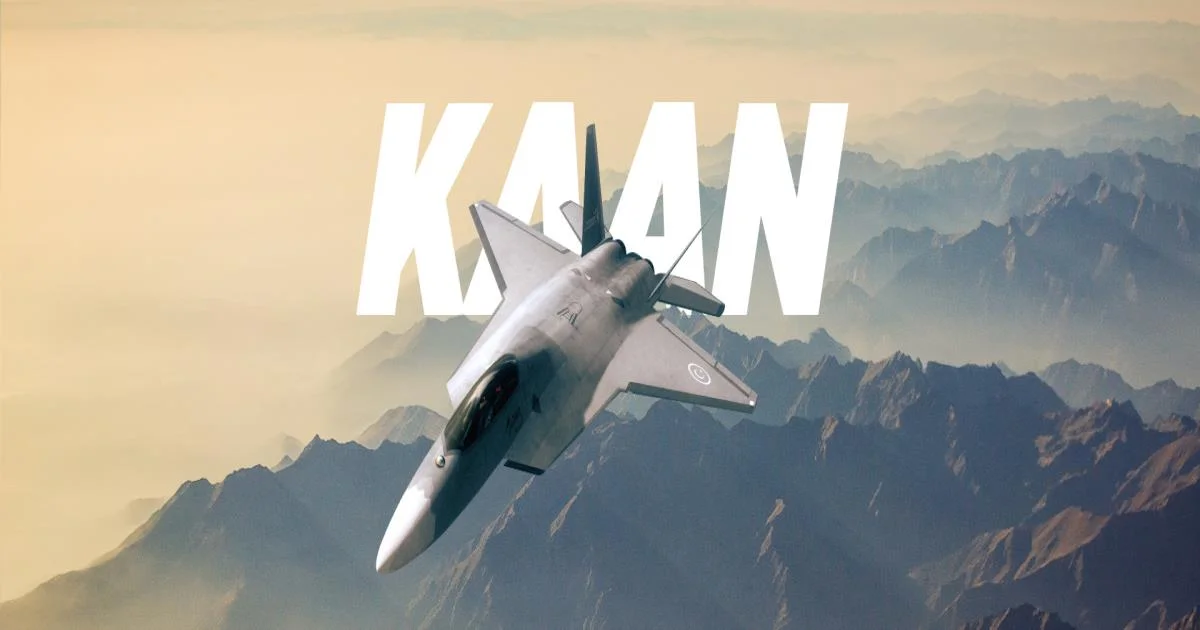
KAAN, built by Turkish Aerospace (TUSAŞ), is a twin-engine, single-seat fighter with a shaped fuselage and internal weapons bays. The prototype first flew on 21 February 2024, and further prototypes were reported to be entering flight tests during 2026. Status and order details are tracked in our KAAN programme guide.
The weapons bays carry a design cost. According to reporting on the programme, the landing gear arrangement was modified to free internal volume so that missiles and bombs can be carried inside without compromising the signature. That is a typical fifth-generation trade-off: every cubic metre inside the airframe is contested by fuel, avionics, gear and weapons.
Public sources also stress a caveat. Analysts note that the effectiveness of the radar absorbent materials and the maturity of the integrated design still have to be validated through testing. Turkish authorities have not published measured signature data, and nobody outside the programme can credibly state how KAAN compares with the F-35 or other fifth-generation types.
Which Turkish Institutions Work on KAAN’s Stealth Components?
The most concrete open information comes from TÜBİTAK MAM, the research institute that has described several projects for KAAN’s low-visibility work:
| Project | Purpose as described by TÜBİTAK MAM |
|---|---|
| RASEM | Electromagnetic modelling and optimisation of radar absorbing multilayer thin film coatings, used especially for canopy design. TÜBİTAK reported delivering the software to TUSAŞ. |
| HAVSET | Low-visibility sets for the air duct, aimed at reducing the radar return from the engine inlet path. |
| FRESEÇ | Electromagnetic design and application of frequency selective surfaces for the radome, intended to further reduce visibility on radar. |
These are design and modelling tools plus component sets, not a finished stealth aircraft. They do show something useful, though: Türkiye is building its own electromagnetic design capability rather than only buying treated parts. The radome work also ties into the country’s radar development, covered in our piece on Turkish AESA radar technology, since a stealthy nose has to let the aircraft’s own radar see out.
Why Do Composites Matter So Much?
Modern combat aircraft rely heavily on carbon fibre reinforced polymers. They are light, they can be moulded into the smooth, continuous surfaces that stealth shaping demands, and they allow radar absorbing layers to be built into the structure. A single-piece composite wing, for instance, avoids the fasteners and panel gaps that scatter radar energy. Reporting on KAAN describes a carbon composite fuselage with titanium used in high-stress areas, though the exact structural breakdown has not been officially published in detail.
Turkish industry has spent more than a decade building the base for this. Two threads stand out.
Domestic Carbon Fibre and Prepreg
DowAksa, a 50/50 venture of Dow and Aksa Akrilik, opened its Global Composites Center in Yalova on 13 May 2016. The facility was supported under the IPEK project launched in 2014 by Türkiye’s defence procurement agency, which aimed to develop domestically produced carbon and glass fibre based prepreg materials. Applications named at the time included TF-X, HÜRKUŞ and ANKA. Whether KAAN’s production airframes use DowAksa material in qualified, flight-critical structures is not something public sources confirm.
Turkish Aerospace’s Composite Plant
Turkish Aerospace has built a large composite production facility at its Kahramankazan campus near Ankara. It was reported at roughly 95,000 square metres and a cost of about 181 million dollars, positioned as the largest single-roof composite facility in Türkiye and among the largest in the world. The company has also produced composite structures for Airbus and, according to reports, for the F-35 programme, which gave its workforce experience with certified aerostructures before it applied the same techniques to its own fighter.
Stealth-grade work is more demanding than commercial composite work. Surface smoothness, gap control, conductive and absorbent layers and repair procedures all have to be controlled across a production run. Whether the Turkish industrial base can do that at fleet scale is the question the next several years will answer.
Is the ANKA-3 a Stealth Drone?
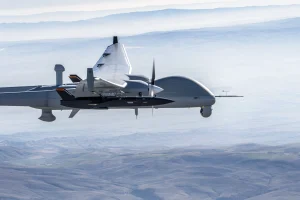
The ANKA-3 is the cleaner example of low-observable design, because the whole aircraft is built around the idea. It is a jet-powered flying wing with no horizontal or vertical tail. It made its maiden flight on 28 December 2023, lasting about one hour and ten minutes, reaching roughly 8,000 feet and 150 knots with a HÜRKUŞ trainer flying as a chase aircraft. The aircraft is described as a reduced-signature design with internal weapons bays. Full background is in our ANKA-3 report.
The test aircraft used a conventional round exhaust nozzle. Analysts noted at the time that this could give way to a low-observable exhaust after initial testing, which is the usual sequence: prove flight behaviour first, refine the signature later. Reported weapons options include the Mk 82 bomb, Small Diameter Bomb and the domestically built SOM-J stand-off missile. Those figures come from Turkish media reporting rather than a published specification sheet.
A tailless wing is harder to control than a conventional layout and relies on sophisticated flight control software. That is part of why the ANKA-3 matters for KAAN as well: it is a lower-risk place to learn.
Where Does Turkish Stealth Stand Next to the Rest of the Programme?
Shaping and materials are only one part of a signature. Heat from the engines and radar emissions from the aircraft itself also give it away. KAAN’s early prototypes fly with General Electric F110 engines, and a domestically developed engine is planned for later; the schedule has slipped, with the indigenous engine now reported for around 2032. The engine ecosystem is explained in our look at who builds Türkiye’s aircraft engines. Engine exhaust treatment is one of the areas where a new domestic powerplant could eventually matter for signature, though no source quantifies this.
The unmanned side is moving in parallel. The Bayraktar KIZILELMA has been reported to fire from an internal bay, and Türkiye now has three distinct airframes, a manned fighter and two unmanned types, exercising different parts of the low-observable toolbox.
What Is Still Unproven?
Several things cannot be stated from open sources:
- The measured radar cross section of KAAN or ANKA-3 at any frequency.
- The composition of the radar absorbing coatings and how much of them is produced in Türkiye.
- Whether production-standard stealth treatment has been applied to the flying prototypes, which are test articles first.
- How maintainable the coatings and surfaces are under operational flying.
Production KAAN aircraft are expected in the second half of this decade according to published reporting. That is the point where a prototype technology demonstration becomes an industrial output, and where claims about stealth can finally be checked against delivered aircraft and their maintenance records.