Which Turkish Weapons Are Actually Combat-Proven? The Record

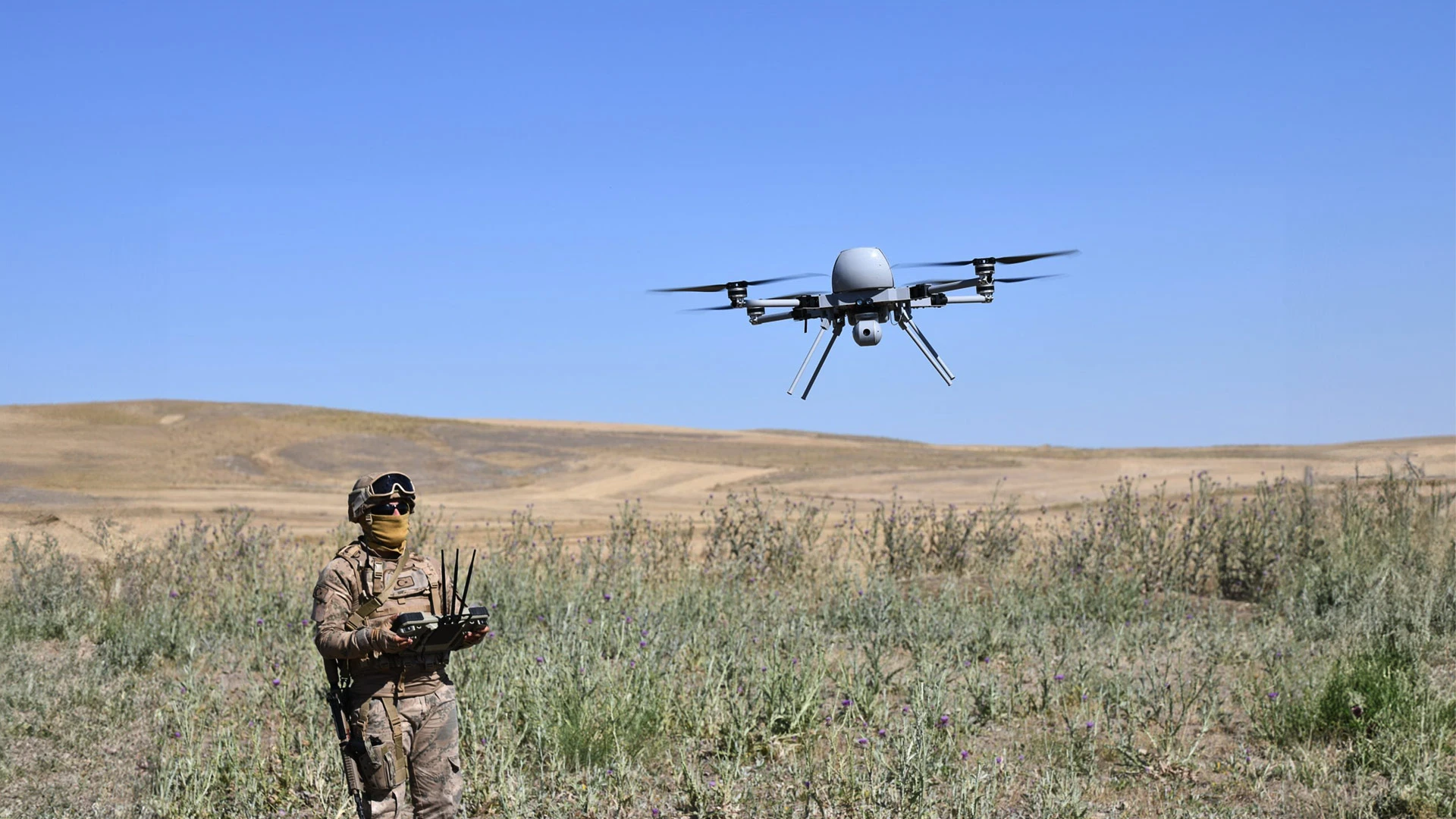
Some Turkish weapons are genuinely combat-proven, and a smaller number are proven in ways an independent body has written down. The Bayraktar TB2, the STM KARGU-2 loitering munition, ASELSAN’s KORKUT air defence gun, the T-155 Fırtına howitzer, the T-122 Sakarya rocket launcher and the KORAL jammer were all named in a United Nations Security Council report describing their combined effect in Libya in 2020. But the systems Türkiye is selling hardest today — KAAN, SİPER, ALTAY, ATMACA, HÜRJET, KIZILELMA — have never been used in combat at all. The reputation and the current catalogue are not the same thing.
That gap matters commercially, because “combat-proven” is the single phrase that distinguishes Turkish offers from most other emerging suppliers. It is also unregulated. No agency certifies the claim, no standard defines it, and a vendor can apply it to a product family on the strength of one variant’s use in one war. For a procurement office trying to weigh a Turkish bid, the useful question is not whether Turkish weapons have seen combat. It is which ones, against whom, and documented by whom.
| Best-documented conflict | Libya, 2019–2020 |
| Strongest independent source | UN Panel of Experts on Libya, S/2021/229, 8 March 2021 |
| Turkish systems named in that report | Bayraktar TB-2, TAI Anka-S (probable), STM Kargu-2, KORKUT, T-155 Fırtına, T-122 Sakarya, KORAL |
| Most contested theatre | Ukraine, 2022 onwards — the only near-peer air defence environment |
| Flagship systems with no combat record | KAAN, HÜRJET, SİPER, ALTAY (serial), ATMACA, TF-2000, KIZILELMA, GÖKBEY |
| Independent effectiveness data | None published; all kill counts are belligerent claims |
| Who certifies “combat-proven” | Nobody. The term has no standard and no auditor |
Libya is the one case written up by an independent body
Most combat claims in the arms trade rest on vendor video or ministry statements. Libya is different, because the UN Security Council’s Panel of Experts investigated the 2020 fighting and published its findings as document S/2021/229 on 8 March 2021. The report is not a review of Turkish industry and has no commercial purpose, which is exactly what makes it valuable.
The Panel described a layered Turkish intervention rather than a drone campaign. Türkiye deployed Gabya-class frigates to provide a medium-range air defence “umbrella” along the western Libyan coast, with MIM-23 Hawk batteries covering the airports at Tripoli and Misratah, supported by KORKUT short-range air defence guns and man-portable systems. That, the Panel wrote, “effectively negated” the local air superiority of the Haftar Affiliated Forces early in 2020.
Only then did the strike complex matter. The report records intelligence, surveillance and reconnaissance “provided by Bayraktar TB-2 and probably TAI Anka S unmanned combat aerial vehicles”, fire support from Fırtına T155 155mm self-propelled guns and T-122 Sakarya multi-launch rocket systems firing extended-range precision munitions, and opposing drones “neutralized by electronic jamming from the Koral electronic warfare system”. Retreating columns, it continues, were “hunted down and remotely engaged by the unmanned combat aerial vehicles or the lethal autonomous weapons systems such as the STM Kargu-2 and other loitering munitions.”
The passage that made headlines worldwide was the Panel’s claim that those munitions “were programmed to attack targets without requiring data connectivity between the operator and the munition: in effect, a true ‘fire, forget and find’ capability.” That sentence is routinely reported as the first use of an autonomous weapon to hunt humans. It deserves care: the Panel did not establish that the KARGU-2 was operating autonomously at the moment of any particular attack, did not attribute specific deaths to it, and Türkiye has disputed the characterisation. What the report does establish is a documented battlefield presence.
On effect, the Panel was unambiguous. The combination was “proving to be a highly effective combination in defeating the United Arab Emirates-delivered Pantsir S-1 surface-to-air missile systems”, and Turkish technology was “a decisive element in the often unseen, and certainly uneven, war of attrition that resulted in the defeat of HAF in western Libya during 2020.”
Read the same report for the limits, not just the headline
The Panel included a judgement that Turkish marketing never quotes. The defeated force, it wrote, was “neither trained nor motivated to defend against the effective use of this new technology and usually retreated in disarray.” The decisive result came against a militia-grade opponent with no air force and a single point-defence system it could not use well.
The same document also records the legal cost. Its transfer table lists a series of Turkish deliveries into Libya — TAI Anka on 19 April 2020, the STM Kargu-2 on 27 May 2020, the Roketsan T-122 Sakarya on 18 July 2020, KORKUT guns in January 2020 — made while a UN arms embargo was in force. The Panel found Türkiye, alongside Jordan and the United Arab Emirates, in non-compliance for failing to inspect suspicious cargoes, and in “repeated non-compliance” for not answering its enquiries about supply chains. The combat record and the arms-control record come from the same pages.
Karabakh: the result was real, the opponent was not modern
The 44-day Nagorno-Karabakh war in late 2020 did more for Turkish drone exports than any other event. The most useful independent account is not Turkish or Azerbaijani but American: the US Army Center for Army Lessons Learned published a catalogue, Lessons from the Nagorno-Karabakh 2020 Conflict (21-655, August 2021).
It describes a deliberate sequence. Azerbaijan opened by attacking Armenian air defences, flying remotely piloted Soviet-era An-2 biplanes at low altitude as decoys to make Armenian batteries reveal themselves. That “allowed the Bayraktar TB2 UASs flying above the biplanes to target the Armenian radars and missile launchers for engagement by loitering munitions and indirect fire.” The catalogue also notes that Turkish advisors shared their experience from Syria and Libya.
Then comes the decisive qualifier: “The Armenian air defense systems consisted mostly of Soviet-era equipment designed for manned aircraft that could not detect and intercept the TB2s at the higher altitude.” Armenia fielded a limited number of more capable Buk and Tor-M2MK systems, but deployed them late and they were themselves vulnerable. Armenian authorities claimed to have shot down a number of TB2s; Azerbaijan did not confirm losses, and no independently verified tally exists for either side’s equipment losses. For Turkish-language context on how Baku rebuilt its force around these systems, Envanter Medya has an eighteen-step survey of Azerbaijan’s defence modernisation, though its figures are its own.
The honest reading is that the TB2 performed as designed against an air defence network a generation behind it, operated by a force that had not rehearsed against drones. That is a real result. It is not evidence about performance against a modern integrated air defence system, and the Azerbaijani case is cited far beyond what it can support.
Syria: Türkiye’s own numbers, and no independent check
Operation Spring Shield in Idlib in February and March 2020 was the first mass use of Turkish armed drones against a state army. The figures circulating since come from the Turkish Ministry of National Defence. Defence Minister Hulusi Akar reported around 1 March 2020 that Turkish forces had destroyed eight helicopters, 103 tanks, 72 howitzers and six air defence systems; a later Anadolu Agency retrospective listed 151 tanks, 47 howitzers, three aircraft, eight helicopters, three drones and eight air defence systems, and the ministry said it had “neutralised” 329 Syrian personnel.
These are claims by one belligerent about another, published during an information contest, and no independent body has audited them. Syria claimed Turkish drone losses in return. A buyer should treat Spring Shield as evidence that Turkish drones and artillery were used at scale against a conventional army, and treat the arithmetic as unverified.
Ukraine is the only test against a peer, and the record changed
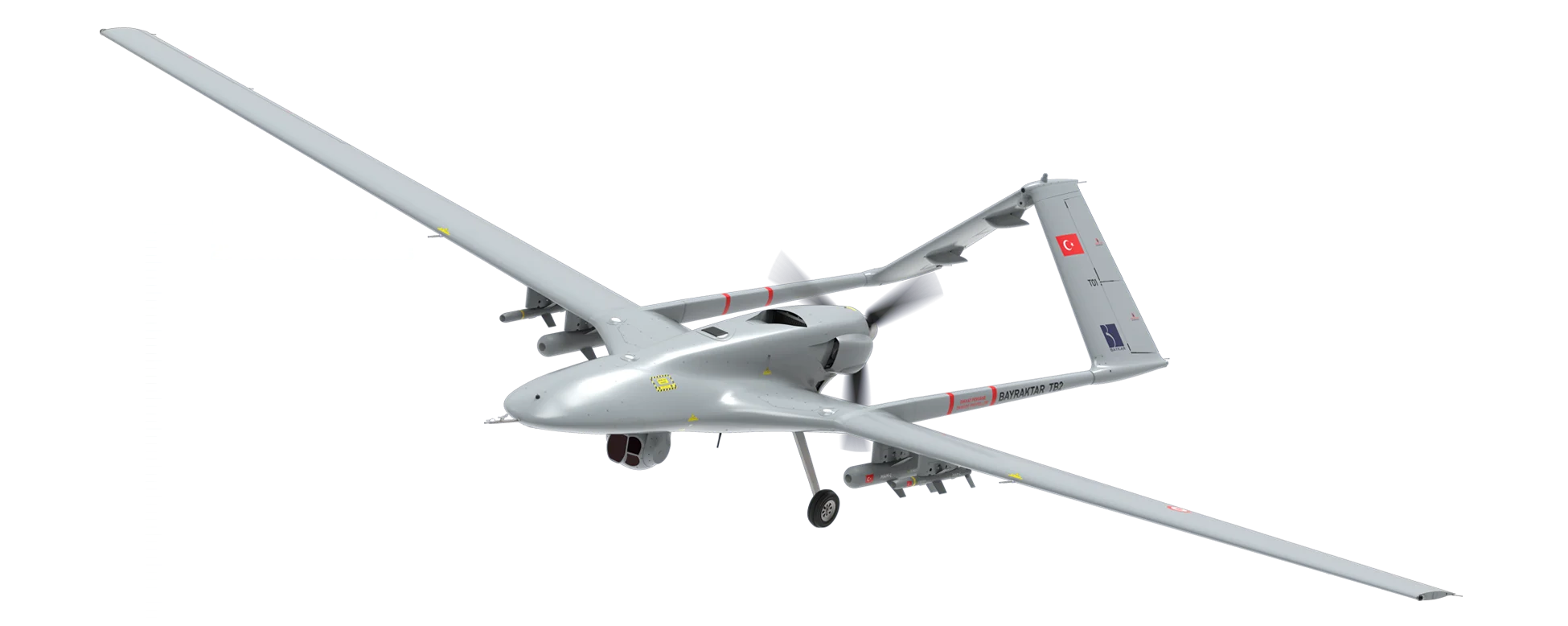
Ukraine is the one case where a Turkish system met a modern, layered, electronically supported air defence operated by a major power. The TB2’s early weeks were striking enough to generate a folk song. Its utility then fell sharply as Russian air defence and electronic warfare consolidated through 2022, and its role shifted towards reconnaissance.
The sharpest framing belongs to Spyridon Plakoudas and Vasileios Sofitis, whose article “Explaining the Bayraktar Paradox” appeared in The RUSI Journal (vol 168, no 6, 2023, pp 42–52). The paradox they identify is precisely the commercial point: the drone’s battlefield performance disappointed in Ukraine in the same period that its export order book grew. Buyers were not purchasing the Ukrainian results. They were purchasing availability, price, delivery speed and the absence of political conditions — the reasons examined in detail in our analysis of why countries actually buy Turkish drones.
For a procurement office the lesson is narrow and important. The TB2 is a medium-altitude, relatively slow, non-stealthy aircraft with a substantial radar signature. Against irregular forces and legacy air defences it has performed well across four continents. Against a peer with functioning integrated air defence it is a reconnaissance asset that must be husbanded. Both statements are true, and the Ukrainian experience is the only place the second was tested.
Somalia: the record includes who answers for it
The most recent sustained combat use is in Somalia, where Turkish drones support operations against al-Shabaab and where Somalia has also received T-129 ATAK attack helicopters, reported by the US-affiliated Africa Defense Forum in February 2026 to have been used against al-Shabaab targets soon after arrival.
Somalia also produced the most serious documented allegation against a Turkish weapon. Amnesty International published an investigation on 7 May 2024 into two strikes on the Jaffey farm in Lower Shabelle on 18 March 2024, which it found killed 23 civilians — 14 children, five women and four men — and injured 17, all from the marginalised Gorgaarte clan. Amnesty’s weapons investigator identified MAM-L glide bombs, dropped from a Bayraktar TB-2. Amnesty said the strikes “must be investigated as a war crime”. Neither the Somali nor the Turkish government had responded by publication.
The procurement-relevant detail is the one about control. Amnesty could not establish whether Turkish or Somali personnel were flying the drone: a Somali government source said Somali intelligence officers fly them, a former Somali minister said Turkish personnel fly them while Somali commanders nominate targets, and a 2022 UN Panel of Experts report on Somalia cited the Turkish government as saying it operates the drones itself. A buyer taking delivery of a system that Türkiye may continue to operate inherits a question about where legal responsibility sits.
The combat record, sorted by what actually backs it
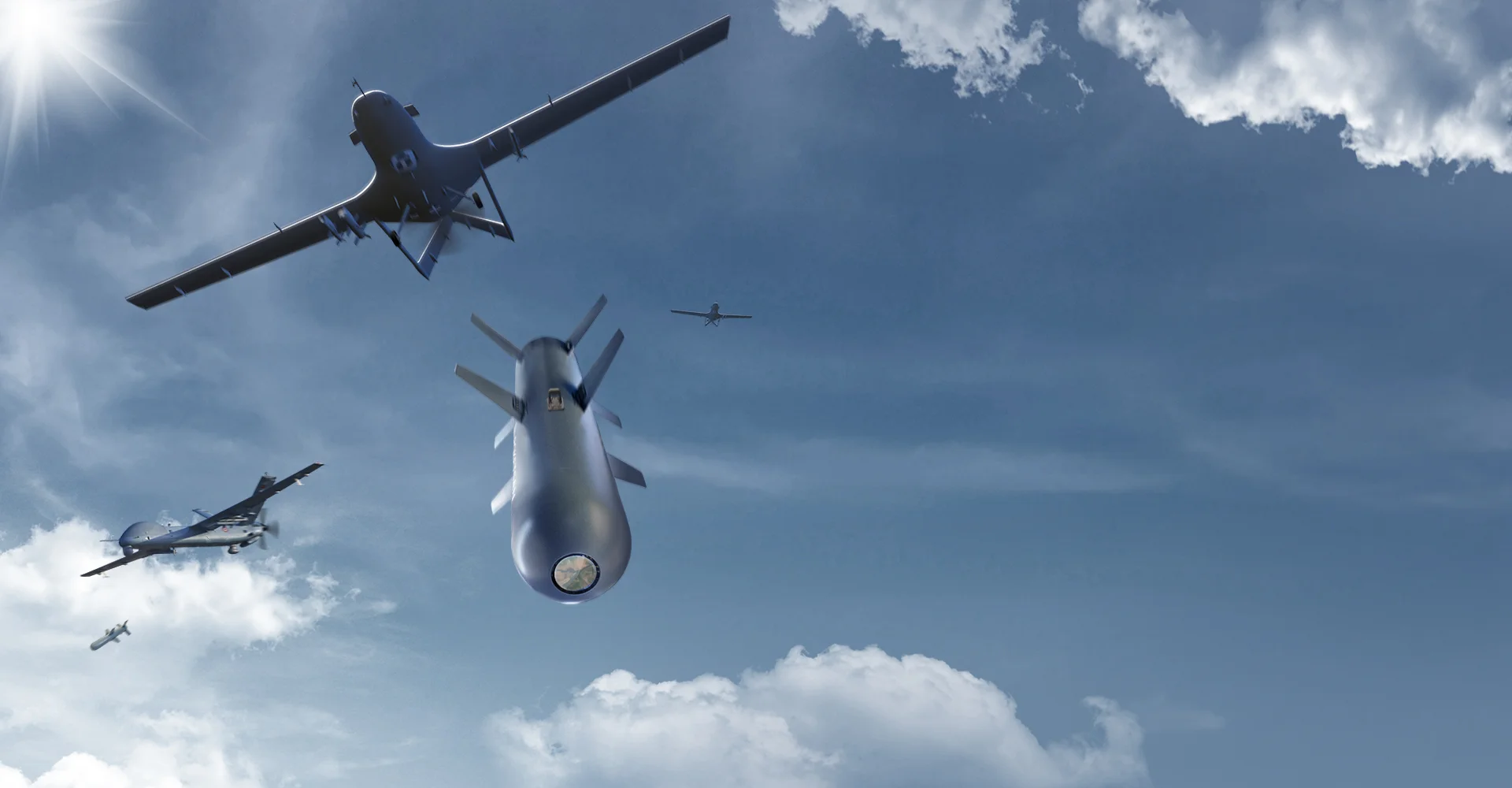
The distinction that matters is not which systems have seen combat, but what kind of evidence supports each claim. These six tiers are DefenceTürkiye’s own grouping of the public record.
The expensive half of the catalogue has never fired a shot in anger
This is the part most coverage skips. Türkiye’s combat reputation was built almost entirely by drones, loitering munitions, artillery and armoured vehicles in the period from 2016 to 2022. The programmes Ankara is now marketing hardest sit outside that record.
SİPER, the long-range air defence system at the top of the Çelik Kubbe architecture, has been delivered to the Turkish Armed Forces and has completed acceptance firings at the Sinop test range against manoeuvring targets. No operational interception has been reported. ALTAY reached its first official serial delivery on 28 October 2025 and deliveries continue; the tank has not been to war, and a Turkish-language timeline of the programme’s powerpack and production decisions from 2007 to 2026 sets out how long it took to get even that far. KAAN is in flight test. HÜRJET, ATMACA, KIZILELMA, GÖKBEY and the TF-2000 destroyer are at various pre-operational or early-service stages.
None of that is a criticism of the engineering. It is a statement about evidence. A buyer evaluating SİPER against a Western long-range system is comparing a qualified-but-unblooded design with systems that have intercept records, and no amount of TB2 history changes that. The halo does not transfer across the catalogue, and a serious evaluation will not let it.
Türkiye is the rare exporter whose products have been described in operation by a UN Security Council panel and a US Army lessons-learned study. That is stronger third-party documentation than most emerging suppliers can offer, and it is a legitimate commercial asset.
But the documented record is concentrated in permissive airspace against under-equipped opponents, the one peer test produced a bounded result, and the flagship programmes now being exported have no combat history whatsoever. Any analysis that treats “combat-proven Turkish industry” as a single property of the whole catalogue is making a category error.
- Ask which variant. Combat history attaches to a configuration, not a product name. The exported standard often differs from the one that saw action.
- Ask who was flying. In several theatres Turkish personnel operated the system. Crew performance and system performance are being sold together.
- Match the threat, not the brochure. If your adversary fields modern integrated air defence, the Libya and Karabakh records tell you very little.
- Treat kill counts as claims. No independent body has audited any belligerent’s figures, Turkish included.
- Price the legal exposure. Documented civilian-harm allegations and contested operational control are real risks for a state buyer, and should be addressed in the contract.
- For unblooded systems, substitute evidence. Acceptance-firing protocols, test-range conditions and target representativeness become the proof, so ask for them in writing.
What comes next
Two things would change this picture. The first is any operational use of the new generation — a SİPER engagement, an ATMACA launch in anger, an ALTAY in combat. None has been reported, and Türkiye’s current operational tempo in Syria, Iraq and Somalia does not call for them.
The second is a peer conflict involving a Turkish customer. The Ukrainian experience reset expectations for the TB2 within months. Should a Turkish air defence or naval system be tested the same way, the resulting evidence would be worth more to the export campaign than a decade of marketing — in whichever direction it pointed. Until then, buyers are working from a record that is unusually well documented in its older half and entirely absent in its newer one. That is a more interesting position than either Turkish promotion or the standard criticism of Turkish bids usually allows.
FAQ
Are Turkish weapons really combat-proven?
Some are. The Bayraktar TB2, KARGU-2 loitering munition, KORKUT air defence gun, T-155 Fırtına howitzer, T-122 Sakarya rocket launcher and KORAL jammer were all named by the UN Panel of Experts on Libya in document S/2021/229. Turkish MRAPs and the T-129 have long operational records. But Türkiye’s newest flagship systems have no combat history at all.
Which Turkish weapon has the strongest combat record?
The Bayraktar TB2, by distance. It has been used in Syria, Libya, Nagorno-Karabakh, Ukraine, Somalia and the Sahel, and is the only Turkish system described in detail by both a UN panel and a US Army study.
Did Turkish drones really win the Nagorno-Karabakh war?
They were central to the opening suppression campaign, but the US Army’s lessons catalogue records that Armenian air defences were “mostly Soviet-era equipment designed for manned aircraft that could not detect and intercept the TB2s at the higher altitude”, and that Azerbaijan used An-2 biplane decoys to expose them. The result was real; the opponent was not a modern air defence network.
Why did the Bayraktar TB2 stop working well in Ukraine?
Russian integrated air defence and electronic warfare consolidated during 2022, and the TB2 is slow, non-stealthy and flies predictable profiles. Its role shifted towards reconnaissance. Researchers writing in The RUSI Journal called it the “Bayraktar paradox”: performance disappointed in Ukraine while exports grew.
Has SİPER ever shot anything down in combat?
No. SİPER has been delivered to the Turkish Armed Forces and has completed acceptance firings against manoeuvring targets at the Sinop test range, but no operational interception has been publicly reported.
Has the ALTAY tank seen combat?
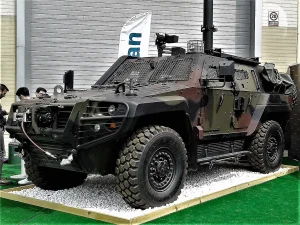
No. Serial production ALTAY deliveries began with the first official handover on 28 October 2025 and the tank has not been used in combat. Türkiye’s armoured combat experience sits with older vehicles and with MRAPs such as the KIRPI.
Have Turkish weapons been linked to civilian casualties?
Yes. Amnesty International’s investigation published on 7 May 2024 found that two strikes on the Jaffey farm in Somalia on 18 March 2024 killed 23 civilians, including 14 children, and identified Roketsan MAM-L munitions dropped from a Bayraktar TB-2. Amnesty said the strikes should be investigated as a war crime. Amnesty could not determine whether Turkish or Somali personnel were operating the drone.
Does a combat record make a weapon a better buy?
Only against a comparable threat. A record built in permissive airspace against irregular forces says a great deal about reliability, sustainment and integration, and very little about survivability against a modern adversary. Buyers should match the record to their own threat picture rather than to the vendor’s.
Sources
- United Nations Security Council, Letter dated 8 March 2021 from the Panel of Experts on Libya established pursuant to resolution 1973 (2011), S/2021/229
- US Army Center for Army Lessons Learned, Lessons from the Nagorno-Karabakh 2020 Conflict, catalogue 21-655, August 2021
- Spyridon Plakoudas and Vasileios Sofitis, “Explaining the Bayraktar Paradox”, The RUSI Journal, vol 168 no 6 (2023), pp 42–52, doi:10.1080/03071847.2023.2285752
- Amnesty International, “Somalia: Death of 23 civilians in military strikes with Turkish drones may amount to war crimes”, 7 May 2024
- Anadolu Agency, “Operation Spring Shield leaves mark on Syria in 2020”
- Africa Defense Forum, “Somalia Gets T-129 Attack Helicopters”, February 2026