AKINCI and TB2 Solve Different Problems for Baykar’s Customers

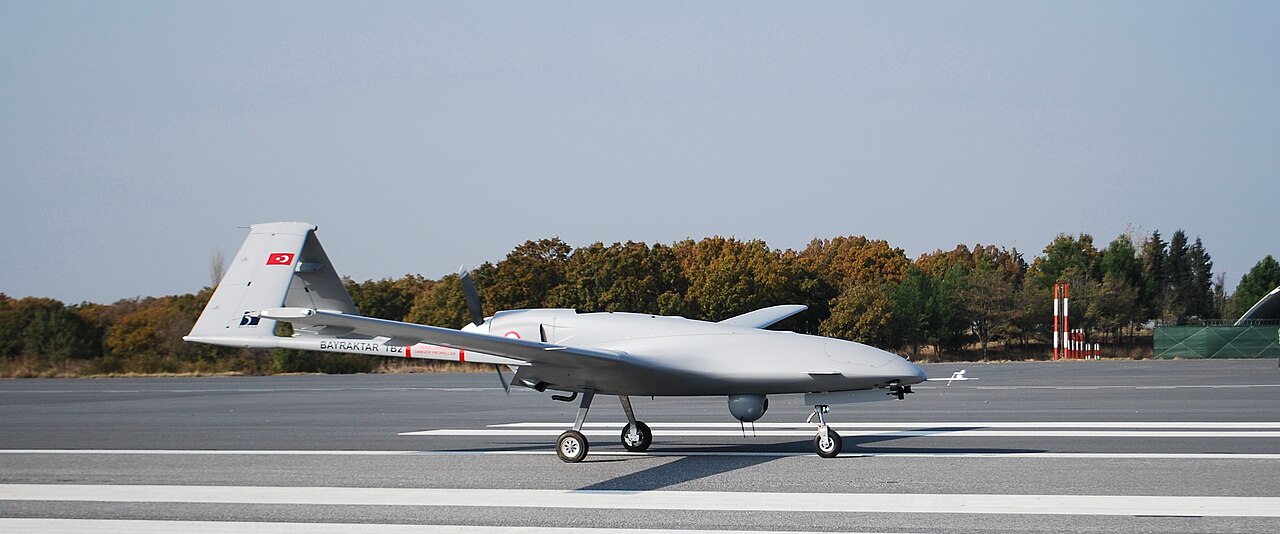
Put a Bayraktar TB2 next to an AKINCI and the temptation is to ask which one is better. It is the wrong question. Baykar built them for different jobs, and buyers who treat them as rivals usually end up with the wrong aircraft or an unused one.
The TB2 is a tactical, line-of-sight drone that is cheap to buy and cheap to lose. The AKINCI is a heavy, high-altitude strike platform with satellite links, a radar and a payload several times larger. Here is where the two actually differ, and where they overlap.
| Feature | Bayraktar TB2 | Bayraktar AKINCI |
|---|---|---|
| Manufacturer | Baykar | Baykar |
| First flight | 2014 (reported) | December 2019 (reported) |
| Length / wingspan | 6.5 m / 12 m | 12.2 m / 20 m |
| Max takeoff weight | about 700 kg | about 6,000 kg |
| Payload | about 150 kg | about 1,500 kg |
| Engine | Single piston engine, about 100 hp | Twin turboprop (450 to 850 hp depending on variant) |
| Endurance | Over 20 hours (reported) | 24+ hours (reported) |
| Service ceiling | about 7,600 m | about 13,700 m (reported) |
| Control link | Line of sight, under about 300 km; TB2S adds satellite | Satellite communications |
| Hardpoints | 4 | 8 (reported) |
Figures come from Baykar materials and open-source compilations and vary by variant and configuration, so treat them as approximate.
What Is the Basic Difference Between AKINCI and TB2?
Size and weight tell most of the story. The TB2 takes off at roughly 700 kg and carries about 150 kg. The AKINCI is about eight times heavier at takeoff and carries around ten times the payload. That gap decides what each can hold under its wings.
The TB2 carries a handful of small, laser-guided munitions such as MAM-C and MAM-L, and it is known for the UMTAS anti-tank missile and Cirit rockets. The AKINCI has more stations and a payload that lets it carry heavier stores, including cruise missiles and larger guided bombs, per Baykar and open reporting. For more on the heavier aircraft see our profile of the Bayraktar AKINCI armed UAV.
Why Does the Control Link Matter So Much?
This is the difference operators feel first. A TB2 flies on a line-of-sight link, which limits it to a few hundred kilometres from its ground station unless a relay or the satellite-equipped TB2S variant is used. In practice it is a theatre-level tool for the area you can see and cover.
The AKINCI is built around satellite communication, so a crew can fly it far beyond the horizon. Combined with a long endurance and a much higher ceiling, it can loiter over a wider area and reach targets the TB2 cannot approach without exposing its link.
Which Sensors and Weapons Set Them Apart?
The AKINCI reportedly carries an ASELSAN MURAD AESA radar along with electro-optical and signals-intelligence options. A radar lets it look for air targets and scan large areas regardless of light and weather, which an electro-optical turret alone cannot do. The TB2 relies mainly on its camera turret and the laser designation for its munitions.
The heavier drone has also been used to fire newer, longer-range weapons. Baykar and Roketsan have publicly shown it engaging a distant target with the İHA-300 missile, covered in Baykar’s AKINCI strikes 250 km away with Roketsan’s new İHA-300 missile, and engaging an aerial target with a SUNGUR missile, as reported in AKINCI UCAV downs aerial target with SUNGUR missile. The TB2 has no comparable reach.
How Do Cost and Fleet Logistics Compare?
The TB2 is the cheaper platform by a wide margin, and that shapes how it is used. Published unit prices are disputed, and contract figures often bundle ground stations, training and munitions, which is explained in How Much Does a Bayraktar TB2 Actually Cost?. Its low cost is part of the point. A force can field many of them, accept losses, and still keep pressure on an opponent.
The AKINCI costs considerably more, needs more ground support and trained crews, and is a platform a smaller air arm must plan around. Losing one hurts. Buyers therefore tend to use it for higher-value targets and for missions where the extra range and payload actually matter.
Who Has Bought Each One?
The TB2 has been the export workhorse. Open-source counts put it in service with more than 30 countries and its production above 800 aircraft, figures that change as deals are announced. Our Bayraktar TB2 programme overview tracks operators and exports.
The AKINCI is a smaller club, but it has grown fast since its 2021 entry into service with the Turkish forces. Reported operators include Azerbaijan, Pakistan and several African and Gulf customers. The exact list is best confirmed against official announcements, because some contracts have been reported before they were formally confirmed.
Which One Fits Which Mission?
A simple rule works for most cases.
- Choose the TB2 for border surveillance, artillery spotting, close support and anti-armour work within a few hundred kilometres, where numbers and low cost count more than reach.
- Choose the AKINCI for deep strike, wide-area patrol, heavier or more varied weapons, and missions needing radar and beyond-line-of-sight control.
- Buy both if the budget allows. Many air arms treat the TB2 as the expendable front line and the AKINCI as the long-range layer above it.
Neither replaces a fighter, and neither survives well against modern air defences without support. That is the same caveat that applies to every medium-altitude drone. What Baykar has done is cover two very different parts of the market, which is why the company behind both, profiled in Baykar: The Company Behind Türkiye’s Combat Drones, sells them as a family rather than as competitors.