
Türkiye to Push Defence-Sector Tech Into Health, Chips and AI

Türkiye’s government has written a plan to push technology developed for its defence industry into civilian sectors into national economic policy, formalising an approach officials have floated for months as export revenue from Turkish arms manufacturers climbs into record territory.
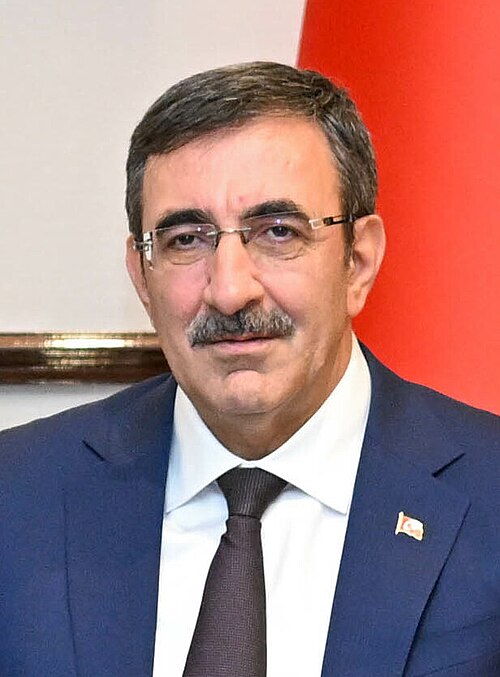
The commitment sits inside the 2027-2029 Medium-Term Programme (MTP), the government’s rolling three-year economic roadmap, which took effect on September 6 after being published in the Official Gazette. Vice President Cevdet Yılmaz, presenting the plan alongside Treasury and Finance Minister Mehmet Şimşek and Central Bank Governor Fatih Karahan, said Ankara wants to “transfer the technologies and capabilities we have acquired in the defense industry to civilian industries.”
From Missiles to Medicine
The MTP names healthcare as the first proving ground. Officials want to expand domestic research, development and production of vaccines, pharmaceuticals, medical devices, diagnostic kits and AI-based health technologies — areas where Turkish hospitals and clinics still rely heavily on imports.
Semiconductors are the second priority named in the document. The government wants domestic fabrication capacity for chips used in national identity cards, biometric passports and other government and industrial applications — a narrow but strategically sensitive slice of the chip market that doesn’t require matching the leading edge of Taiwanese or South Korean foundries to matter for supply security.
Artificial intelligence, energy, agriculture, food and transportation round out the list of sectors the government wants to seed with defence-derived engineering talent and testing infrastructure, built up over two decades of investment in indigenous radar, missile, drone and electronic-warfare programmes.
Why Defence Tech Travels Well
The handoff from military to civilian use is not a new idea — it built much of the post-war US tech sector, from GPS to early computer networking — but Türkiye is now making it an explicit line item of economic policy rather than a side effect. The country’s defence sector has spent two decades building parallel domestic supply chains for components that used to come from NATO allies, largely out of necessity after periodic embargoes and export restrictions on systems bound for sensitive missions. That effort, detailed in an earlier look at how far Türkiye’s defence-production independence actually extends, produced radar-processing chains, composite manufacturing lines, secure communications stacks and AI-assisted targeting software that all have civilian analogues in medical imaging, industrial automation and telecoms.
Ankara is framing the effort against a backdrop of rapid growth in the defence sector itself. Turkish defence and aerospace exports rose almost 50 percent in 2025 to just over $10 billion, and five Turkish firms now sit in the global top 100 defence companies by revenue. Sales were running at an annualised $11.2 billion as of July 2026, a pace that would set a fresh export record if it holds through December — part of the same fiscal picture that led the government to plan a 229 percent increase in defence spending through 2029.
An F-35-Style Model for Future Partnerships
Yılmaz pointed to the F-35 Joint Strike Fighter programme — developed jointly across nine partner nations, including Türkiye until its removal in 2019 over the purchase of the Russian S-400 air defence system — as the kind of multinational development model Ankara wants to replicate with what he called “friendly and brotherly countries.” The remark suggests Turkish officials still see co-development, rather than exports alone, as the more durable path to keeping the defence-industrial base growing once low-hanging export markets in Africa, the Gulf and South and Southeast Asia mature.
For companies whose names come up whenever this technology-transfer plan is discussed — ASELSAN in electronics and radar, Turkish Aerospace in airframes, Roketsan in propulsion and guidance — the near-term change is likely to be modest. Government contracts and export orders remain the core of their business, and healthcare or semiconductor spin-offs would take years to generate meaningful revenue. The bigger significance is for Türkiye’s broader industrial-policy debate, where officials have spent much of 2026 arguing that a defence sector that has roughly tripled in size since 2021 should function as an engine for the rest of the economy rather than a self-contained success story.
Why It Matters Beyond Türkiye
For foreign observers, the plan matters less for its healthcare or chip ambitions — which face long odds against established competitors — than for what it signals about how Türkiye intends to keep its defence-industrial base expanding. A government willing to redirect defence R&D funding and engineering capacity toward adjacent civilian sectors is also a government confident enough in its export pipeline to diversify beyond it, and one likely to keep offering joint-development partnerships, on the model Yılmaz cited, to prospective partners from Central Asia to the Gulf.
Sources: Presidency of the Republic of Türkiye, 2027-2029 Medium-Term Programme (Official Gazette, September 6, 2026); Daily Sabah; Anadolu Agency; TRT World.


