
ASELSAN’s KORAL Electronic Warfare System Modernised

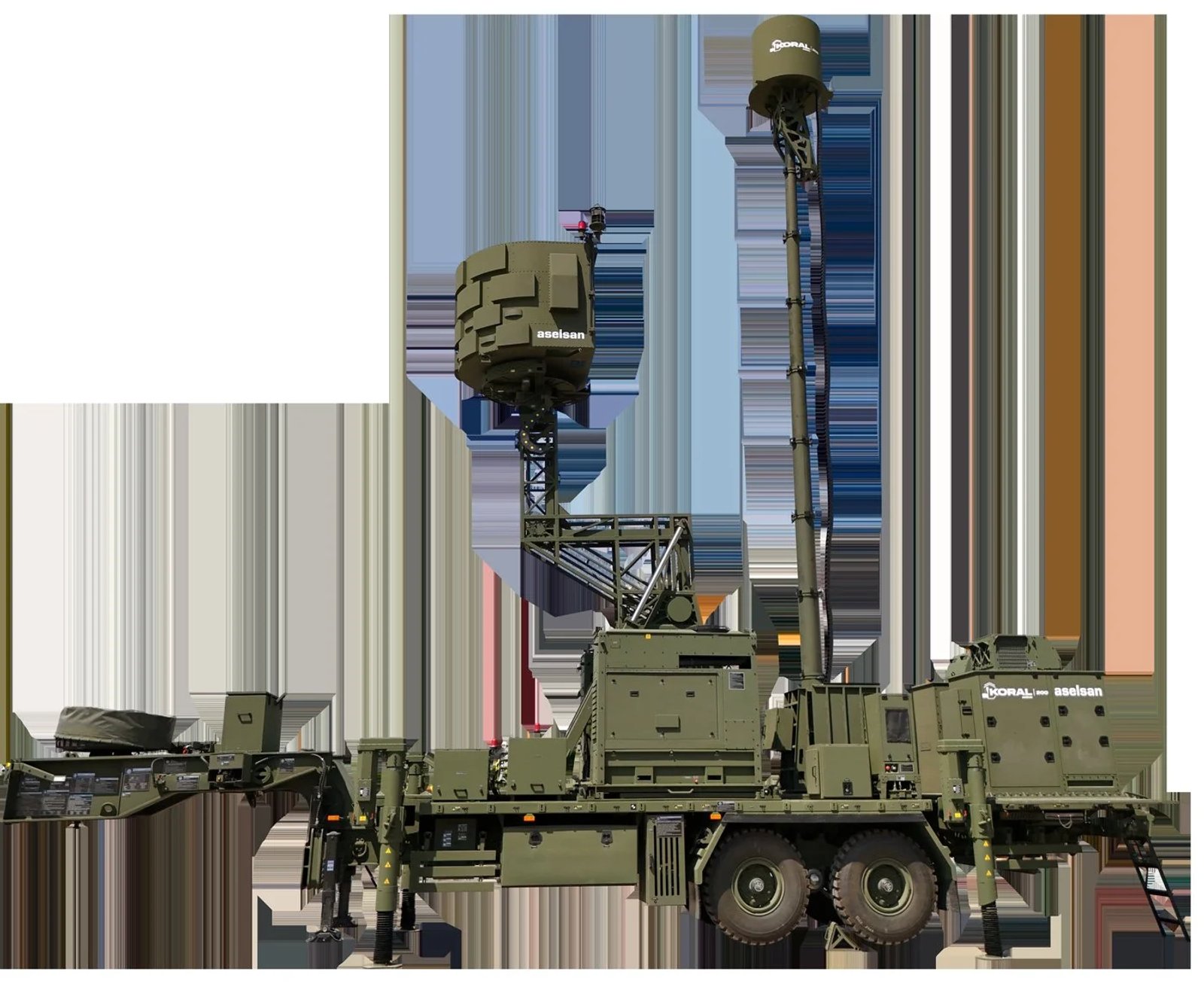
A modernised version of KORAL, the ground-based electronic support and electronic attack system developed by ASELSAN, has been brought into use. The updated system is reported to offer improvements in detecting, classifying and jamming radar and communications emissions.
What KORAL does
KORAL is described as a system operating in the field of radar electronic warfare, combining detection and jamming functions in the microwave band. It is ground-based and can be deployed in fixed or mobile configurations. Open sources describe its range as being in the “100 kilometres and above” class; that figure, however, is not officially confirmed data.
Why electronic warfare became a software matter
In modern electronic warfare, superiority depends less on hardware power than on how current the threat library is. When an adversary’s radar waveforms change, the system must recognise the new emission and apply the appropriate jamming technique. Software-based updates allow that adaptation without hardware changes. The rapid adaptation capability is the aspect of the modernisation being emphasised.
The Turkish electronic warfare ecosystem
KORAL does not operate alone but as part of a wider system family. In tactical communications electronic warfare, the MİLKAR family carries out interception and jamming across HF, VHF and UHF bands. The SANCAK and REDET systems handle communications intelligence and direction finding. Against unmanned aerial vehicles, RF and GNSS jamming solutions such as KANGAL, GERGEDAN and İLGAR are used. Most range and band data on these systems is not officially confirmed.
NATO compatibility and the export dimension
Compatibility with NATO standards and modular architecture are among the features highlighted for Turkish electronic warfare systems. Modularity means the system can be carried on different vehicle platforms and deployed with only the subcomponents required. That feature is regarded as an element attracting interest from countries with long borders and coastlines.
Limits
The performance of electronic warfare systems is, by its nature, not shared publicly. Jamming effectiveness varies with the target radar’s power, its frequency hopping capability and terrain conditions. A jammer that emits also becomes a detectable source itself. Deployment location and emission duration therefore carry critical importance in operational use.
Assessment
KORAL’s modernisation points to Turkey’s capacity to keep its electronic warfare systems current through their product life. Capability in this field is maintained not by a one-off procurement but through continuously updated threat libraries, regular exercise data and intelligence support. The operational significance of the modernisation should be assessed together with that continuity.


