Where Gowind and MİLGEM Meet, and Where They Never Do

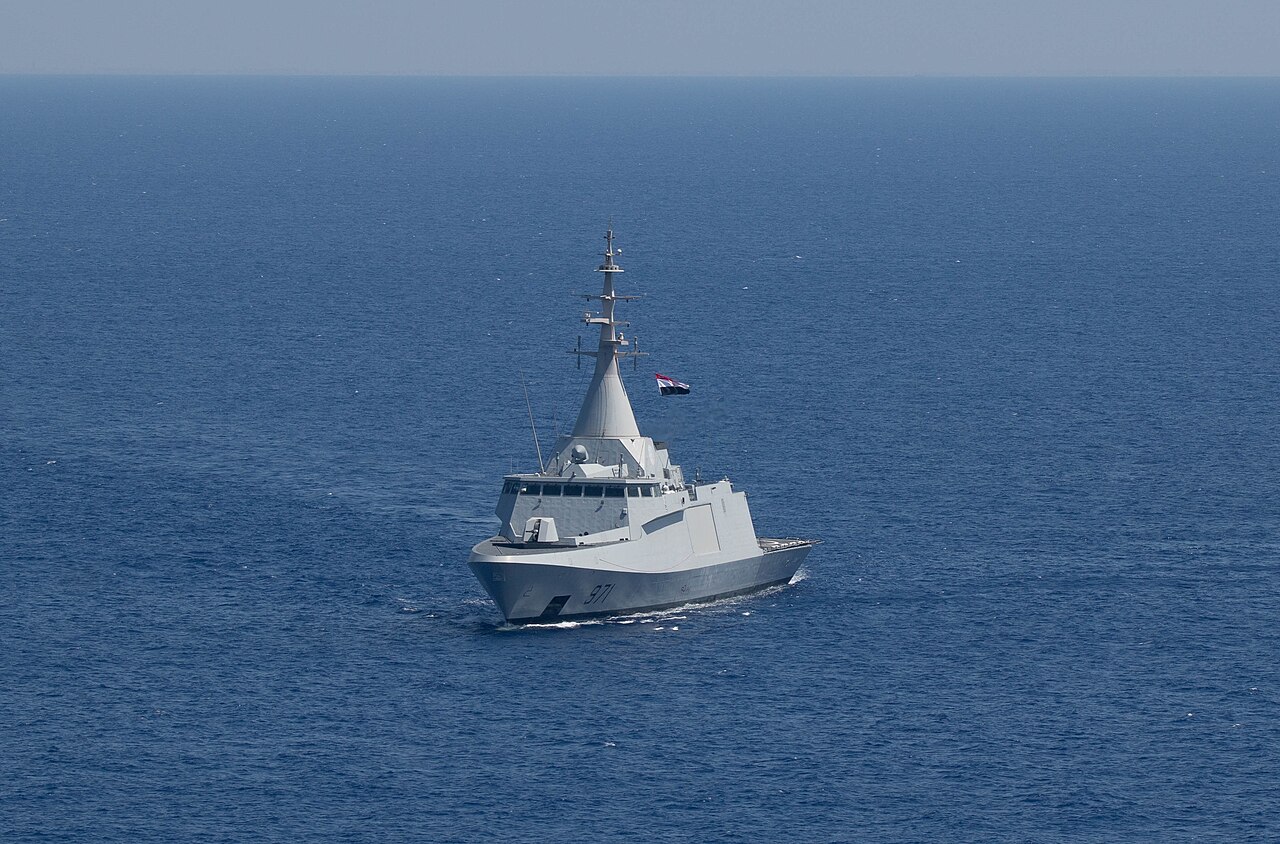
Put a French Gowind corvette and a Turkish MİLGEM hull side by side and they look like rivals. Both are stealth-shaped, both carry a 76 mm gun, both are sold as the affordable alternative to a full-size frigate. Yet in more than a decade of export campaigns the two have rarely met in the same tender. What they compete for is something less tidy: the attention and the budget of the same mid-sized navies.
That distinction matters, because most online comparisons treat MİLGEM versus Gowind as a spec-sheet fight. The better question is what a navy in Kuala Lumpur, Cairo or Islamabad is actually buying when it picks one supplier over the other.
Are MİLGEM and Gowind really the same kind of ship?
Not quite, and the names themselves hide the difference. Gowind is a design and a sales offer from Naval Group, the French state-controlled shipbuilder. It exists in several sizes, from the 1,000-tonne Gowind 1000 to the roughly 2,500-tonne Gowind 2500 and the larger 3,100-tonne frigate version that Malaysia developed locally.
MİLGEM, short for Milli Gemi or “National Ship”, is a national programme. Design authority sits with the Turkish state, and STM acts as prime contractor for engineering, systems integration and programme management. The programme has produced two families so far: the Ada-class corvette and the larger Istif-class frigate, which the MİLGEM I-class guide covers in detail.
So Gowind is a product line that a company sells. MİLGEM is an industrial base that a country exports. The buyer experience differs accordingly.
| Feature | Gowind 2500 (Egypt version) | Ada-class corvette | Istif-class frigate |
|---|---|---|---|
| Developer | Naval Group (France) | Turkish Navy, STM and Turkish yards | Turkish Navy, STM and Turkish yards |
| Length | about 102 m | about 99.6 m | about 113.2 m |
| Displacement | about 2,500 to 2,600 t | about 2,400 t | about 3,100 t |
| Propulsion | Diesel-electric and diesel combined (CODAD) | Gas turbine and diesels (CODAG) | Gas turbine and diesels (CODAG) |
| Main gun | OTO Melara 76 mm | OTO Melara 76 mm | 76 mm |
| Air defence | 16-cell VL MICA | RAM point defence | 16-cell MİDLAS vertical launcher |
| Anti-ship missiles | MM40 Exocet | Harpoon or ATMACA | 16 ATMACA |
Figures are drawn from public reference sources and vary slightly between them. Fit-outs differ from customer to customer, so treat the table as a class comparison and not a contract specification.
Who has actually bought Gowind?
Egypt was the launch customer for the 2,500-tonne version. It signed in 2014 for four ships at about one billion euros, with the first built by Naval Group in Lorient and the rest at Alexandria Shipyard under a technology transfer arrangement. The UAE followed in 2019 with an order for two, both built in France. The second, Al Emarat, was handed over in June 2024.
Romania is the cautionary case. It awarded Naval Group a contract in 2019 for four Gowind corvettes plus the modernisation of two frigates, then cancelled in August 2023 after the French firm had not signed the framework agreement. A dispute over costs with the local Constanta shipyard was at the centre of it.
Malaysia sits in between. Its Littoral Combat Ship programme picked a Gowind-based design in 2011, and the result has been slow. The programme was cut from six ships to five, and a parliamentary committee criticised how the contract was handled. As of early 2026 the lead ship, KD Maharaja Lela, was reported to be in sea trials with a commissioning target of December 2026.
Where has MİLGEM won export business?
The Turkish record is newer but shows a different pattern, with smaller hulls sold first and the bigger frigate following.
Pakistan signed with ASFAT in 2018 for four Ada-derived Babur-class corvettes, two built in Istanbul and two at Karachi Shipyard and Engineering Works. The first, PNS Babur, was commissioned in September 2023. The wider relationship is covered in our piece on Türkiye–Pakistan defence cooperation.
Indonesia signed at IDEF 2025 for two Istif-class frigates, the first export order for the class, with PT PAL and the Turkish TAIS consortium leading the work. Reported values run close to a billion dollars. Ukraine has two Ada-class corvettes on order from Turkish yards, and Malaysia chose STM’s Ada design in 2024 for its Littoral Mission Ship Batch 2, three hulls due to enter service from 2027.
The Malaysian choice is the closest thing to a real head-to-head. The competitors there were not Naval Group but Hyundai’s HDC-2000, Fincantieri’s FCX design, Damen’s Sigma and Dearsan’s C92. Still, the same navy is now running a Gowind-derived frigate programme and a Turkish corvette programme at once, and it can compare delivery records directly.
Why do navies pick one over the other?
Four factors keep coming up in procurement debates.
Price and speed. Turkish yards are building Istif hulls in parallel at several private shipyards, which is how TCG İzmit reached sea trials as the third ship of the class. A buyer looking at that cadence sees a line that is already moving. Malaysia’s LCS, by contrast, saw its contract ceiling grow from RM6 billion to a reported RM11.2 billion for five ships.
Local content and technology transfer. Both suppliers offer it. Egypt built three of its four Gowinds at home, Pakistan builds half its Babur ships in Karachi. The real difference is the depth of the supplier network behind the hull. Turkish officials reportedly put domestic content in the Istif class above 80 percent, with ASELSAN radars and sensors and Roketsan missiles in the fit-out. Gowind ships lean on a French and European stack, including MBDA’s MICA and Exocet.
Export-control risk. This is the factor that grew in 2026. Norway revoked approval for Naval Strike Missiles intended for Malaysia’s Gowind-based LCS, a contract signed in 2018, and Kuala Lumpur reportedly assessed Turkey among the alternative suppliers. A Turkish-built ship with Turkish weapons, such as ATMACA, removes one layer of third-country licensing. That does not make Turkish exports politically neutral, but it changes who holds the veto.
Track record and trust. Naval Group has delivered 2,500-tonne corvettes to two Middle Eastern navies, and Egypt is reported to be negotiating for more. The Turkish class has a smaller number of exported hulls, and some of the orders, including Ukraine’s, have been complicated by events beyond the yard.
Do the two designs overlap at all?
Only at the margins. The Gowind 2500 falls between the Ada corvette and the Istif frigate in size. A navy that wants a 2,500-tonne corvette with a MICA vertical launcher looks at Gowind. A navy that wants a bigger hull with area air defence and an ATMACA strike load is looking at the Istif class, and the larger Gowind 3100 design, developed in Malaysia with Naval Group’s help, is the nearest Gowind equivalent. The Istif class also has a wider sales story: according to recent reports, the US Navy has been weighing the Istanbul-class design as one of three foreign candidates for a new frigate effort, though nothing has been decided.
For the broader supply picture behind these ships, see who builds Türkiye’s warships.
The next data point is delivery. Malaysia’s three LMS Batch 2 corvettes are due to be commissioned in 2027, and the lead LCS is targeted for late 2026. If both land close to schedule, buyers will have a clean same-navy comparison for the first time.