MİDLAS Gives Turkish Warships a Launcher Built at Home

For years the weak spot of Turkish surface combatants was not the missile but the hole it had to leave from. A modern frigate carries its weapons in vertical cells below deck, and the launchers Türkiye had planned to buy came from a supplier that could no longer be counted on. MİDLAS, the national vertical launch system built by Roketsan, is the answer to that gap, and it is now at sea.
What Is MİDLAS?
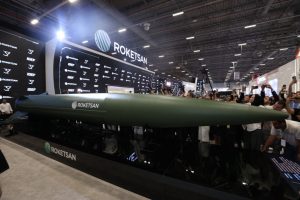
MİDLAS stands for Milli Dikey Atım Lançer Sistemi, the National Vertical Launcher System. According to Roketsan’s own catalogue, it is a below-deck, canister-based launcher that stores guided missiles and fires them on commands received from the ship’s combat management system. The company says it can launch surface-to-air, surface-to-surface, surface-to-land and torpedo-type missiles, and can do so simultaneously from different cells.
That last point is the core of the design. A cell is not tied to one weapon. A single module can hold an air-defence round next to an anti-ship missile, and the mix can be changed to suit a mission.
| Item | Detail |
|---|---|
| Developer and manufacturer | Roketsan |
| Customer | Turkish Naval Forces, procured through SSB |
| Type | Below-deck vertical launch system, canister-based |
| Cells per module | 8, each able to take one canister |
| Tactical version | 15,000 kg, 2 x 3 x 6.7 m (Roketsan catalogue) |
| Strike version | 18,000 kg, 2 x 3 x 8 m (Roketsan catalogue) |
| Single-cell versions | Tactical 2,500 kg; strike 3,500 kg |
| Interface | MIL-STD-1399 Section 300B and NATO STANAG 1008 |
| First fired from a ship | TCG İstanbul (F-515), 12 March 2024 |
Why Did Türkiye Build Its Own Launcher?
The İstif-class frigates were originally meant to use a foreign launcher, the Lockheed Martin Mk 41. Defense News reported in 2021 that U.S. sanctions had interrupted those plans, and that Türkiye would develop its own maritime launching system instead. Naval News later described MİDLAS as the replacement for the cancelled Mk 41 arrangement.
The logic was practical. A sovereign missile is worth little if the launcher it sits in needs a foreign export licence. Owning the launcher also lets Roketsan integrate its own weapons without waiting on a third party’s approval or interface documents.
How Does the Launcher Work?
Each module has eight cells, and every cell takes one canister. The cells are compatible with quad-pack canisters, which in principle lets four smaller missiles share one cell. Janes, reporting on a Roketsan presentation in October 2025, put the quad-pack goal at 32 missiles in the same footprint of about six square metres.
Launch can be hot or cold. In a hot launch the missile motor ignites inside the cell and the exhaust is vented. In a cold launch gas ejects the missile before ignition. Roketsan says the system supports both methods, though the integrations described publicly so far have been hot launches.
Safety gets its own line in the catalogue. The launcher includes active deluge and sprinkler systems meant to protect both the system and the ship. The module is wired to the ship through standard interfaces, and on TCG İstanbul it talks to the national ADVENT combat management system built by HAVELSAN.
Tactical and Strike Lengths
MİDLAS comes in two lengths. The tactical version, 6.7 metres tall, is sized for medium-range air-defence and anti-ship missiles. The strike version, at 8 metres, is meant for longer rounds. Roketsan also lists single-cell variants for flexible installation, and station-based versions for protecting bases, ports or regions.
Janes reported that the tactical version is the one installed on TCG İstanbul and that the strike-length launcher is planned from the sixth İstif-class hull onward. Treat that as a reported plan, not a delivered fact.
What Has Actually Been Fired From It?
The first ground firing took place on 3 December 2022 at the Aksaray test range, using the HİSAR RF missile. Naval News quoted Roketsan’s chief executive as saying the project would make it easier and faster to integrate national missiles.
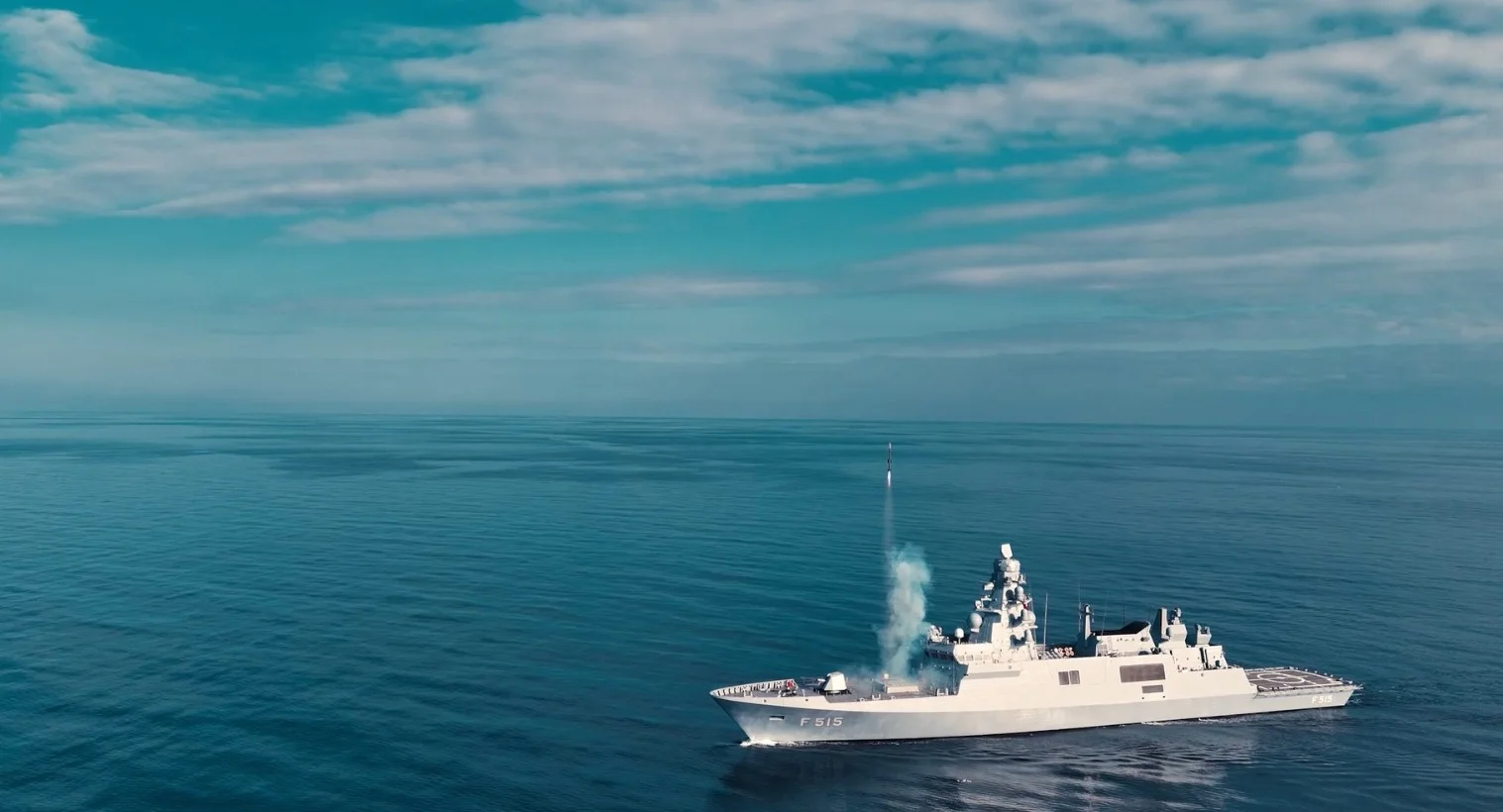
The shipborne milestone came on 12 March 2024. STM, the İstif-class prime contractor, said TCG İstanbul fired a HİSAR-D RF missile for the first time after the launcher completed sea acceptance tests. It was, in STM’s wording, the first time a national air-defence missile had been fired from a naval platform using a national launcher. The same test proved integration of ADVENT with the ship’s radars, sensors and fire-control systems.
Defence Industry Agency head Haluk Görgün attended, along with the Naval Forces commander and the heads of Roketsan, ASELSAN, HAVELSAN and STM. The contract behind it is SSB’s vertical launch system procurement for the fifth to eighth MİLGEM ships, with Roketsan as main contractor.
What Does the Launcher Sit Inside on TCG İstanbul?
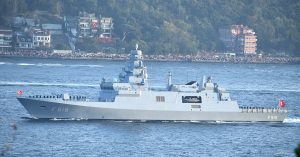
According to STM, TCG İstanbul was delivered to the Naval Forces Command on 19 January 2024, after sea acceptance tests that began in June 2023. The frigate measures 113 metres in length with a beam of 14.4 metres. Its national fit includes Roketsan’s ATMACA and MİDLAS, ASELSAN’s Gökdeniz close-in weapon system and Cenk-S AESA radar, and HAVELSAN’s ADVENT combat management system. STM says 220 companies contributed to the project.
That detail matters for the launcher because a VLS is only as useful as the chain feeding it. The radar finds the target, ADVENT assigns the weapon, and the launcher fires it. The March 2024 test was the first time that national chain was exercised end to end with a live missile, and it is the reason the firing counted as more than a launcher trial.
Programme size is also moving. STM reports that in January 2024 the Defence Industry Executive Committee extended the İ-class line with four more hulls, taking the planned total to eight. Each new hull is another set of MİDLAS modules, which gives Roketsan a production run rather than a one-off.
Which Missiles Will Share the Cells?
The 2024 Roketsan catalogue states that HİSAR RF-D integration is complete, while SİPER 1-D and ATMACA integration were in progress. Naval News, covering Roketsan’s IDEX 2025 display, reported the quad-pack surface-to-air capability and ATMACA anti-ship integration, with an estimated HİSAR-D range of roughly 35 to 40 km, an estimate rather than an official figure.
- HİSAR-D RF is the naval member of the HİSAR air defence missile family, and the first weapon fired from the ship-mounted launcher.
- SİPER is the long-range layer, covered in our guide to the SİPER air and missile defence system.
- ATMACA brings the anti-ship role; see the ATMACA anti-ship missile profile.
Wider integration of longer-range land-attack weapons is often discussed for the strike version, but no firing has been publicly confirmed, so it stays a possibility rather than a capability.
Where Does MİDLAS Go After the İstif Class?
The eight-ship İstif-class frigate programme is the first customer. The tactical launcher is aboard TCG İstanbul, and later hulls follow under the same SSB procurement. The MİLGEM İ-class frigate programme is where the system gets its first real operating hours.
The larger test is the TF-2000 air defence destroyer. A destroyer built around area air defence needs far more cells than a frigate. Open sources have reported a figure of about 96 cells for TF-2000 in a mixed tactical and strike layout, but that number has not been confirmed in the official material reviewed for this article, so it should be read as unconfirmed.
For Roketsan, the launcher also changes the sales pitch. A missile maker that can supply the cells, the canisters and the weapons offers an export customer a complete package, though no export customer for MİDLAS has been confirmed in the sources reviewed.