Which Countries Operate Turkish Armoured Vehicles?

At least 21 countries besides Türkiye field armoured vehicles designed by Turkish manufacturers, and four of them now build those vehicles on their own soil. Romania, Estonia, Hungary, Qatar, Oman, Bahrain, Malaysia, Indonesia, Uzbekistan, Senegal, Ukraine, Georgia, Tunisia, Niger, Chad, Libya, Somalia, Kazakhstan, Bangladesh, Pakistan and Kosovo can all be tied to a contract, an acceptance ceremony or confirmed service use. No Turkish authority publishes that list, and no manufacturer publishes a complete one, so the figure is a floor rather than a count.
This page sorts the operators by what can actually be documented, explains why the real number is higher than any published list, and sets out what the pattern tells a procurement office looking at a Turkish offer.
DEFENCETÜRKIYE DATA BOX
| Sector | Wheeled and tracked armoured vehicles |
| Main exporters | Otokar, FNSS, BMC, Nurol Makina, Katmerciler |
| Documented operators | At least 21 countries besides Türkiye (see table below) |
| Licensed or local production | Romania, Hungary, Malaysia, Indonesia; frameworks with Uzbekistan, Saudi Arabia and Slovakia |
| Largest single contract | Romania, 1,059 Otokar COBRA II, about €857m excluding VAT, 27 November 2024 |
| Largest undisclosed contract | Otokar, $1,472,080,360, customer not named, disclosed 1 October 2026 |
| Official sector export figure | None published. The SSB reports a national defence and aerospace total but no land-systems split |
| Current milestone | First Romanian-built COBRA II vehicles accepted by Romania’s defence ministry, 30 July 2026 |
Why there is no official operator list
Three separate habits keep the list from existing in one place.
The first is that the Turkish state does not break out land systems. The Presidency of Defence Industries publishes a national defence and aerospace export total, not a figure for armoured vehicles, and it does not name customers. The second is that Turkish exporters file contracts with Borsa Istanbul’s Public Disclosure Platform without identifying the buyer. Otokar’s $1.47bn wheeled armoured vehicle contract of 1 October 2026 — among the largest in the company’s history, with deliveries from 2027 and a seven-year term — names no country, no vehicle and no quantity. That is standard practice rather than an exception, and it means the single biggest land-systems deal of 2026 cannot be attributed to an operator at all.
The third habit is the most misleading, because it produces numbers that look official. Manufacturers publish “export network” maps that mix defence and commercial business. Katmerciler’s published list runs to 84 countries and includes Japan, Norway, Sweden, France and Germany — markets for its fire trucks and municipal vehicles, not for its armoured 4×4s. Any count built by adding up such maps will be roughly three times too large. The table below therefore does the opposite: it starts from contracts and official acceptances and works outwards.
The documented operator map
Entries are ordered by how firm the evidence is, not by fleet size.
| Country | Turkish systems | What is documented | Evidence |
|---|---|---|---|
| Romania | Otokar COBRA II | 1,059 vehicles, contract 27 Nov 2024, about €857m excluding VAT; 278 built in Türkiye, 781 in Romania | Contract published |
| Estonia | Otokar ARMA 6×6, Nurol NMS 4×4 | About 230 vehicles for roughly €200m, signed 18 Oct 2023; Nurol declared acceptance complete 31 Jan 2025 | Contract published |
| Hungary | Nurol Ejder Yalçın (Gidrán) | 106 delivered from Türkiye; up to 800 more to be co-produced in Hungary under a contract signed 3 Mar 2026 | Contract published |
| Malaysia | FNSS–DefTech AV8 Gempita, ACV-15, Ejder Yalçın (Panthera) | 257 AV8 in 12 variants under the 2011 agreement, built in Malaysia; 267 ACV-15 ordered 2000 and 2008; 20 Panthera 4×4 | Contract published |
| Indonesia | FNSS–Pindad KAPLAN MT (Harimau), KAPLAN APC | 2015 development agreement, serial production contract signed at IDEF 2019, production shared with PT Pindad | Contract published |
| Qatar | Nurol Ejder Yalçın and NMS, BMC Kirpi and Amazon | 342 Ejder Yalçın ordered plus a 214-vehicle NMS memorandum (Janes, DIMDEX 2018); 50 Kirpi and 35 Amazon (Mar 2018) | Order reported with quantities |
| Oman | FNSS PARS 6×6 and 8×8 | 172 vehicles, deliveries July 2017 to August 2020 | Quantities in published reference data |
| Bahrain | Otokar ARMA 6×6 | 73 vehicles bought in 2010 | Quantities in published reference data |
| Uzbekistan | Nurol Ejder Yalçın | October 2017 UzAuto memorandum for 1,000 vehicles; first 24 reported delivered in 2019 | Framework signed, deliveries partial |
| Senegal | Nurol Ejder Yalçın | 25 vehicles bought for the National Gendarmerie in 2018 | Order reported with quantity |
| Ukraine | BMC Kirpi, Otokar COBRA II | Kirpi deliveries reported from 2022; COBRA II observed in service from May 2023, including a medical variant | In service, terms not published |
| Georgia | Nurol Ejder 6×6 | First export customer for the Ejder family, about 72 vehicles reported delivered by 2009 | In service, terms not published |
| Tunisia | Nurol Ejder Yalçın, BMC Kirpi | First export user of both types; about 71 Ejder Yalçın and a reported few hundred Kirpi | In service, figures unconfirmed |
| Niger | Nurol Ejder Yalçın | Ordered in 2022; the presidency said the head of state inspected the vehicles at Nurol’s plant in March 2022 | In service, terms not published |
| Chad | Nurol Ejder Yalçın | 20 or more, some deployed with the Chadian contingent in Mali | In service, figures unconfirmed |
| Libya | BMC Kirpi | Reported holdings in the dozens | In service, figures unconfirmed |
| Somalia | BMC Kirpi | Around a dozen reported handed to the Gorgor special forces | Reported transfer |
| Kazakhstan | Otokar COBRA | Listed operator of the first-generation COBRA | Listed operator |
| Bangladesh | Otokar COBRA II | Vehicles observed in service | Listed operator |
| Pakistan | BMC Kirpi | Smaller reported quantities | Listed operator |
| Kosovo | BMC vehicles | Listed operator; order figures vary by source | Listed operator |
Other states appear in reference lists and press reporting without a contract or official statement that can be cited here, among them Azerbaijan, Morocco, Nigeria, Rwanda, Ghana, Burkina Faso, Tanzania, Ecuador and the United Arab Emirates. They are left out of the table deliberately. Saudi Arabia and Slovakia are also absent: both have signed production frameworks with FNSS rather than bought vehicles.
Europe is the newest cluster, and the one that changed the market read
Until 2023 the European entries on this list were thin. Three contracts changed that, and all three are worth reading as procurement decisions rather than as sales.
Romania is the largest. On 27 November 2024 it ordered 1,059 Otokar COBRA II vehicles in ten configurations for roughly €857m excluding VAT. Otokar builds 278 in Türkiye and Romania builds 781 over about five years. The industrial arrangement went further than a licence: Otokar completed the purchase of 96.77 per cent of Automecanica S.A. of Mediaș for about €85m in June 2026, giving the Turkish firm a manufacturing base inside the European Union that will outlive the contract. Romania’s defence ministry accepted the first 12 Romanian-built vehicles on 30 July 2026, with 216 Mediaș-built vehicles planned for the year.
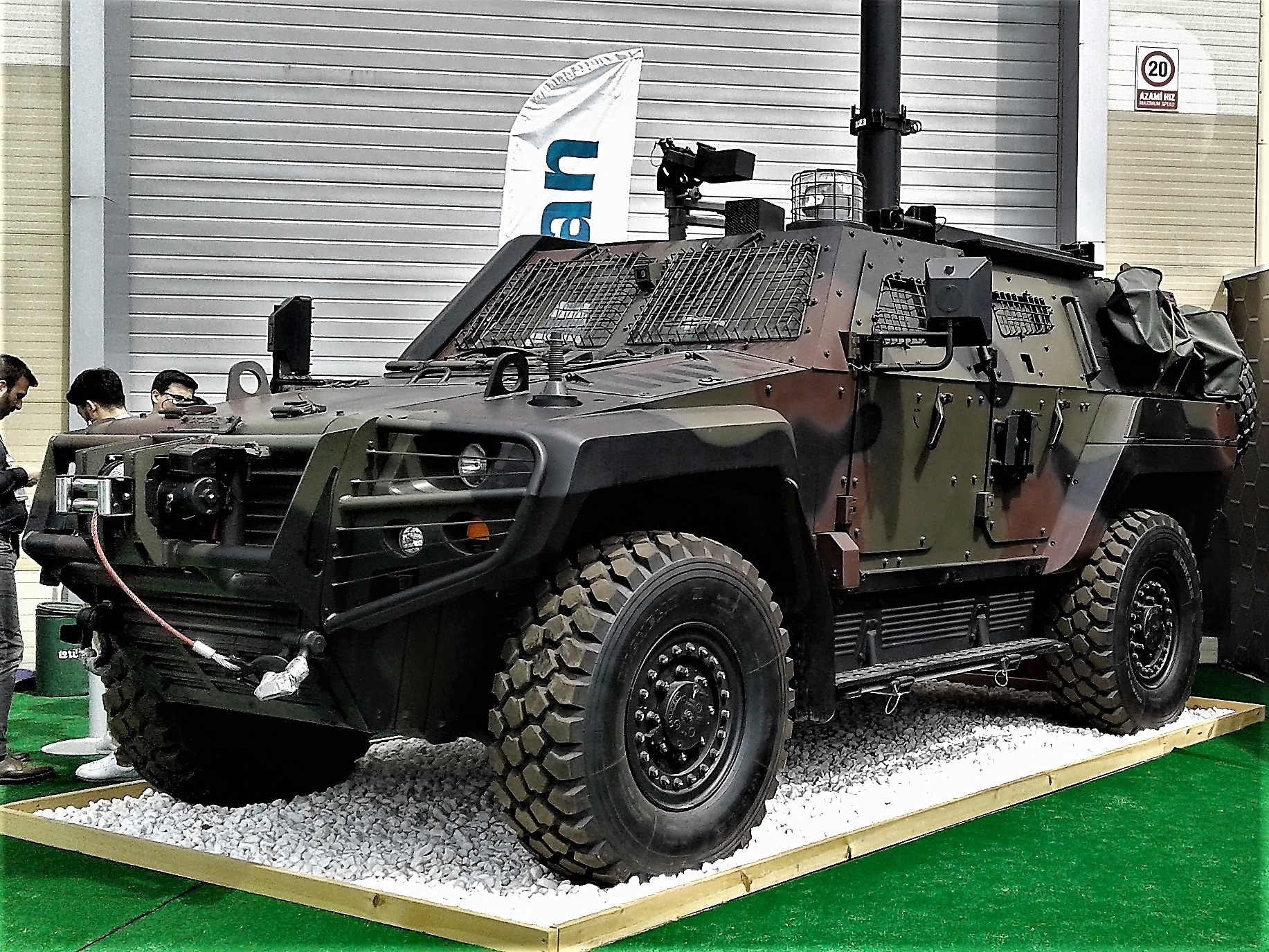
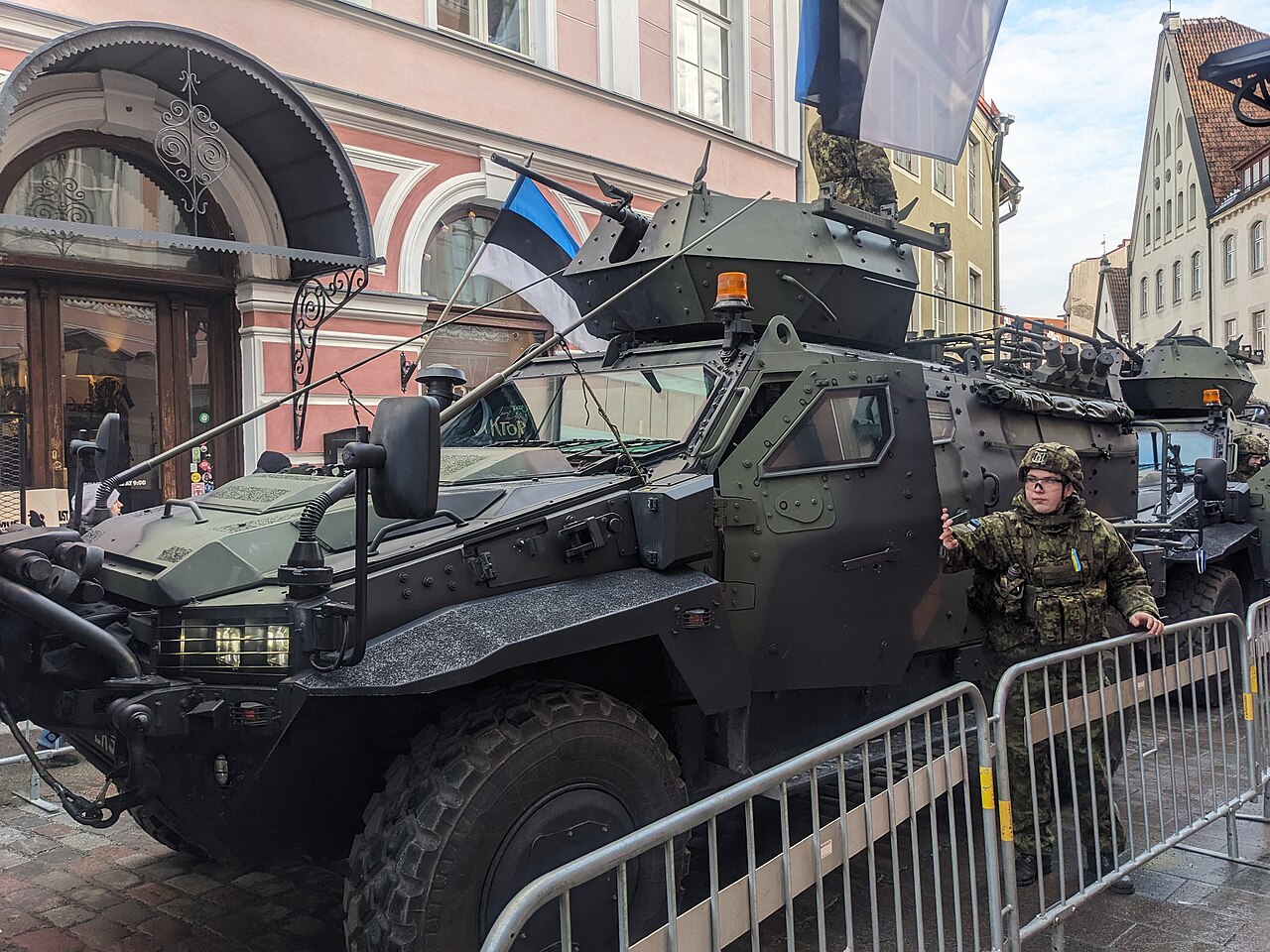
Estonia is the most instructive, because the buyer explained itself in writing. The Estonian Centre for Defence Investments announced contracts worth about €200m on 18 October 2023 for roughly 230 vehicles — 130 Otokar ARMA 6×6 and about 100 Nurol NMS 4×4 — and said it had chosen from nine bidders in six countries on delivery time and price. Nurol announced that acceptance was complete on 31 January 2025, roughly a year from signature. The ten-year framework leaves room for further orders.
Hungary shows how a small fleet can become an industrial programme. Hungary took its first ten Gidrán vehicles — the local designation for the Nurol Ejder Yalçın — in 2021 and reached 106 under a later contract. On 3 March 2026 the defence ministry, the Hungarian Defence Forces and 4iG Space and Defence Technologies signed a contract covering up to 800 more, to be co-produced with the Hungarian vehicle maker Rába at a new plant, together with a life-cycle support agreement for the existing fleet.
One European absence matters as much as the three contracts. Poland, the country most often cited as the European gateway for Turkish defence industry, has bought Turkish drones and Turkish electronics but not Turkish armoured vehicles. The European picture is a sensor-and-drone story in Warsaw and a vehicle story in Bucharest, Tallinn and Budapest, and conflating the two overstates both.
The Gulf bought early, and in Qatar’s case bought the company
Gulf orders predate the European ones by a decade and are harder to verify, because the customers rarely announce them. Bahrain took 73 Otokar ARMA 6×6 in 2010 and has used them operationally. Oman took 172 FNSS PARS vehicles in 6×6 and 8×8 form, with deliveries running from July 2017 to August 2020.
Qatar is the deepest relationship and the least transparent. Janes reported an order for 342 Ejder Yalçın vehicles announced at DIMDEX in March 2018, alongside a memorandum covering 214 NMS vehicles; both types appeared at Qatar’s National Day parade in December 2017. In the same month Qatar ordered 50 BMC Kirpi and 35 Amazon 4×4 vehicles. Delivered quantities have never been published. The relationship runs through ownership as well as procurement: the Qatar Armed Forces Industry Committee holds 49.9 per cent of BMC, which makes Qatar simultaneously a shareholder, a financier and a customer.
Saudi Arabia belongs in a different column. FNSS and SAMI Land signed a framework agreement on 25 July 2025 to manufacture new-generation 8×8 vehicles in the Kingdom, and FNSS has done modernisation work on Saudi M113 fleets, but no new-build Turkish vehicle order has been announced. The company’s own chief executive has described Malaysia and Saudi Arabia as its two largest export markets, each above $1bn in cumulative sales — a company statement, and one that predates the current framework.
Asia proved the licence model two decades before Europe did
The idea that Turkish manufacturers trade production rights for orders is usually presented as a recent European innovation. It is not. The two deepest licence arrangements in the sector are both in Southeast Asia and both are older than the Romanian contract.
Malaysia signed in 2011 for the AV8 Gempita, a family of 257 8×8 vehicles in 12 variants designed with FNSS and produced in Malaysia by DRB-HICOM DefTech. Malaysian orders for the tracked ACV-15 go back further still, to 211 vehicles in 2000 and 56 more in 2008. Malaysia also fields 20 Ejder Yalçın 4×4s under the local name Panthera, deployed with its UNIFIL contingent in Lebanon.
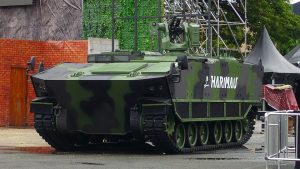
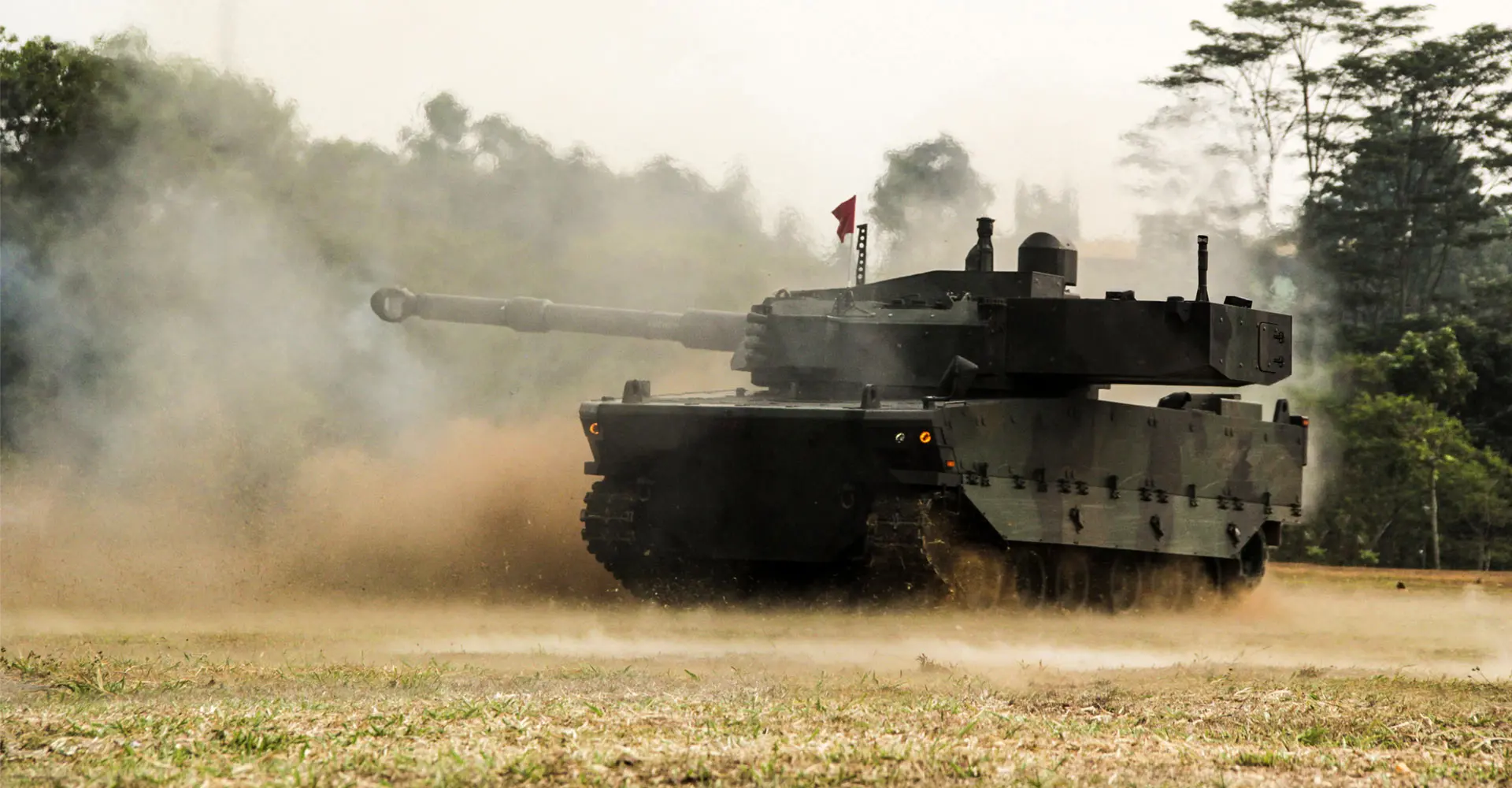
Indonesia went further than a licence. Türkiye and Indonesia agreed in May 2015 to develop a medium tank jointly, with FNSS and the state-owned PT Pindad sharing the work and, reportedly, the intellectual property. The result is the KAPLAN MT, known in Indonesian service as the Harimau; serial production was contracted at IDEF 2019, with output split between the two countries. A tracked personnel carrier derived from the same family is in pre-delivery testing.
Africa and Central Asia: small fleets, high visibility
The African and Central Asian entries involve far fewer vehicles, and quantities are the least reliable part of this page. What they share is a deployment pattern that works as marketing. Chadian Ejder Yalçın vehicles have served with the country’s contingent in Mali; Malaysian Panthera vehicles serve with UNIFIL. Armoured vehicles on a United Nations deployment are inspected, photographed and discussed by officers from dozens of other armies, which is a cheaper demonstration than any trade show.
Uzbekistan is the outlier in scale and the clearest example of a headline number that has not yet converted. Nurol and UzAuto signed a memorandum in October 2017 to build 1,000 Ejder Yalçın vehicles, the first in Türkiye and the rest locally; Uzbek media reported the first 24 delivered in 2019. The gap between 1,000 and 24 is the gap between a framework and a fleet, and it is the single most over-quoted figure in Turkish land-systems export coverage.
Four countries now build Turkish armour rather than buy it
The pattern across the last fifteen years is not that more countries are buying Turkish vehicles. It is that the countries placing the biggest orders are buying production rather than product. Romania, Hungary, Malaysia and Indonesia all manufacture Turkish-designed armour domestically, and in Romania’s case the Turkish manufacturer owns the factory. Uzbekistan, Saudi Arabia and Slovakia have signed frameworks pointing the same way.
That has a consequence worth stating plainly for anyone counting fleets: “operator” and “customer” are drifting apart. Romania will in time field more COBRA II vehicles than Türkiye does, almost all of them built in Romania by a Romanian workforce in a Romanian plant under Turkish ownership. Whether that counts as a Turkish export is a definitional question that no published statistic currently answers.
WHY IT MATTERS
Armoured vehicles are the quietest part of the Turkish defence export story and, after drones, the most widely fielded. The operator list matters because it is the clearest available evidence of what Turkish industry is actually selling abroad: not technological advantage, but availability, price and a willingness to move the production line. The European contracts of 2023 to 2026 matter in particular, because NATO and EU members applying their own procurement law reached the same conclusion three times in three years.
What the operator list does not tell you
Four limits apply to everything above, and a buyer should assume all four.
Quantities are soft outside Europe. The Romanian, Estonian and Hungarian numbers come from ministries and company announcements. The Tunisian, Moroccan, Chadian and Libyan figures come from reference lists that cite one another. Treat them as orders of magnitude.
A named operator is not a fleet. Several entries rest on a handful of vehicles, some of them transferred rather than sold — the reported Somali Kirpi handover is a transfer to a Turkish-trained unit, not a commercial export.
The vehicles are not fully Turkish. These are conventional designs using commercially available drivelines and, in several configurations, imported turrets and weapon systems. The documented reasons buyers give are delivery speed, price and local production, not a technological edge. Anyone evaluating an offer should ask which subsystems carry a third-country export licence before assuming the whole vehicle travels on a Turkish one.
The list is incomplete by design. Undisclosed contracts are the norm, and at least one of 2026’s largest sits on it unattributed.
BUYER VIEW
Open-source editorial analysis, not procurement advice.
- Benchmark on the published deals. Romania and Estonia are the only two contracts with both a quantity and a value in the public record. Everything else is negotiated blind.
- Ask for the delivery evidence, not the reference list. Estonia went from signature to completed acceptance in about a year; Uzbekistan’s 1,000-vehicle framework has produced 24 confirmed deliveries in eight years. Both are Turkish “customers”.
- Decide early which rung you want. The industrial terms differ sharply between a direct sale, an assembly licence and shared design rights, and the Turkish side has agreed to all three.
- Check the subsystems, not the badge. Turrets, remote weapon stations, engines and transmissions may carry foreign export controls even where the hull does not.
- Expect confidentiality to work both ways. If the supplier will not name its other customers to you, it will not name you to them — which is sometimes the point.
What to watch next
Three things will move this list. The first is the identity of the customer behind Otokar’s $1.47bn contract, which should become visible when deliveries begin in 2027 even if it is never announced. The second is whether the Hungarian 800-vehicle programme converts into production at Rába on schedule, since it would make Hungary the second EU state building Turkish armour. The third is whether the FNSS frameworks with SAMI Land in Saudi Arabia and CSG in Slovakia — the latter through a Trenčín-based joint venture agreed at Eurosatory in June 2026 — turn into orders, which would add a Gulf and a second EU production site at once.
FAQ
How many countries operate Turkish armoured vehicles?
At least 21 besides Türkiye can be tied to a contract, an official acceptance or confirmed service use. The true figure is higher, because Turkish exporters routinely file contracts without naming the customer, and because several buyers in the Gulf and Africa do not announce procurement at all.
Which country operates the most Turkish armoured vehicles?
Romania, once its order is complete. Its 1,059 COBRA II vehicles exceed the Turkish Army’s own holding of the type, and 781 of them are being built in Romania.
What is the largest Turkish armoured vehicle export contract?
By published value and named customer, Romania’s 1,059-vehicle COBRA II contract of 27 November 2024, worth about €857m excluding VAT. A larger figure exists — Otokar’s $1,472,080,360 contract disclosed on 1 October 2026 — but the customer has not been named.
Which NATO members operate Turkish armoured vehicles?
Romania, Estonia and Hungary have signed contracts. Türkiye is itself the largest NATO operator. Other NATO members have bought Turkish drones, electronics or naval work rather than armour; Poland is the clearest example.
Do any countries build Turkish armoured vehicles under licence?
Yes. Romania, Hungary, Malaysia and Indonesia all produce Turkish-designed vehicles domestically. Uzbekistan, Saudi Arabia and Slovakia have signed frameworks that would add three more.
Who are the main Turkish armoured vehicle manufacturers?
Otokar, FNSS, BMC, Nurol Makina and Katmerciler account for most of the sector, and they tend not to compete directly: Otokar is the volume exporter, FNSS the tracked and licence specialist, BMC the MRAP and tank prime, Nurol Makina a 4×4 specialist.
Are Turkish armoured vehicles combat proven?
Some are. The BMC Kirpi has been used in Syria, Libya and, since 2022, Ukraine, and COBRA II vehicles have been observed in Ukrainian service since May 2023. Combat use is not the same as a controlled trial, and loss data for Turkish vehicles in Ukraine is not published by either government.
Sources
- Katmerciler, “Export Network” (official company list of 84 markets, defence and commercial combined)
- Defence Industry Europe, “Otokar completes Automecanica acquisition and prepares Romanian production of COBRA II armoured vehicles”
- Janes, “Romania receives first domestically produced Otokar Cobra II 4×4 light armoured vehicles”
- Anadolu Agency, “Turkish defense firm to co-produce 800 armored vehicles in Hungary”, 3 March 2026
- The Defense Post, “Turkey’s Nurol Makina to Produce 800 Gidran Vehicles in Hungary”, 4 March 2026
- Estonian Centre for Defence Investments (RKIK)
- EDR Magazine, “FNSS aims at reinforcing its position in Malaysia, company CEO says”
- Defence Turkey, FNSS interview on the AV8 Gempita, Oman PARS and Saudi programmes
- Nurol Makina (official product and corporate pages)
- Otokar (official corporate newsroom, Romania and Automecanica announcements)
- Turkish-language background: Envanter Medya’s illustrated history of the Ejder Yalçın and Yörük families and its thirty-year account of Otokar, from the Akrep to the COBRA II