GÜRZ Puts a 35mm Gun and Eight Missiles on One Truck


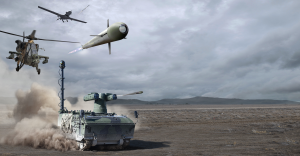
For decades, short-range air defence meant a choice. You bought a gun vehicle to deal with cheap, fast, close-in threats, or you bought a missile launcher to reach farther and higher, and you paired the two in the field with separate crews, separate radars and a radio net in between. ASELSAN’s GÜRZ tries to put both on one truck and let a single fire-control system decide which weapon answers which target.
The system has moved from trade-show mock-up to live firing in about two years. ASELSAN showed it publicly at IDEF 2023 in Istanbul, took it abroad to the World Defense Show in Riyadh in February 2024, and, according to ASELSAN and Turkish reporting, fired a missile from it at an aerial target at the Sinop test centre on 5 September 2026. Service entry with the Turkish Armed Forces is planned for 2027.
What Exactly Is GÜRZ?
ASELSAN describes GÜRZ as a multi-purpose, autonomous short and very-short-range air and missile defence system. The company’s own phrase for it is “All in One”: sensors, a cannon, two classes of missile and a soft-kill jammer integrated under one fire-control and command system. The vehicle is meant to travel with manoeuvre units and to guard high-value assets, rather than sit in a fixed site.
The architecture is a sibling of Türkiye’s other short-range air defence work, but with a different logic. KORKUT is a gun system built around 35mm ammunition. HİSAR and SUNGUR are missile families. GÜRZ treats the gun and the missile as two effectors of one weapon station.
| Item | Detail |
|---|---|
| Developer | ASELSAN |
| Type | Multi-effector short and very-short-range air and missile defence system |
| Platform | 8×8 tactical wheeled vehicle (per ASELSAN’s GÜRZ 150 datasheet) |
| Gun | 35mm air-defence gun, 360-degree turret, linkless automatic feed, air-burst capable ammunition |
| Missiles | 4 very-short-range and 4 short-range missiles |
| Sensors | AESA search radar, fire-control radar, IFF, electro-optical suite |
| Soft kill | Electromagnetic jammer; machine gun for self-defence |
| First public display | IDEF 2023, Istanbul |
| Planned service entry | 2027 (ASELSAN statement, as reported) |
How Do the Gun and the Missiles Divide the Work?
The logic follows from the threat. A slow kamikaze drone at close range is a poor target for a missile worth far more than the drone. A 35mm round with an air-burst fuze is cheaper per shot and is designed for exactly that job. ASELSAN’s materials list its ATOM air-burst and high-explosive incendiary (tracer) ammunition among the effectors, and the datasheet describes linkless automatic feeding so the turret can keep firing against multiple approaches.
Missiles take over where the gun runs out of reach or time: helicopters, fixed-wing aircraft, cruise missiles and fast air-to-ground weapons. ASELSAN’s datasheet lists supersonic cruise missiles and supersonic air-to-ground missiles in the target set, along with Class 1 to 3 unmanned aircraft, loitering munitions and swarm attacks. The company’s WDS 2024 release put the UAV range wider, from micro and mini drones up to Class 5.
The deciding step is software. The datasheet credits an indigenous fire-control algorithm with threat evaluation and weapon assignment, in other words, matching target to weapon without waiting for an operator to choose. That is the claim that separates a hybrid from two weapons bolted to one chassis, and it is also the part outsiders cannot yet check, since no performance data has been published.
The radar and sensor suite
Janes described the 2023 prototype as carrying four AESA radar faces at the vehicle corners, with datalinks on the roof, a fire-control radar and an electro-optical package with day and night cameras and a laser rangefinder. ASELSAN’s later datasheet lists an AESA radar, IFF and an integrated tracking platform without giving the number of faces. A four-faced array gives all-round coverage without a rotating antenna, which matters for pop-up targets arriving from any bearing.
Which missiles?
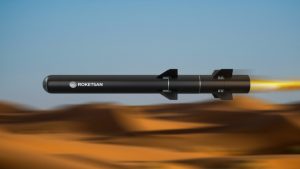
Here the public record is less tidy. The 2023 prototype shown at IDEF carried four-pod containers described by Janes as holding GÖKSUR or HİSAR missiles with imaging infrared seekers, plus pods for very-short-range missiles. The 2024 and 2026 ASELSAN materials simply speak of four very-short-range and four short-range interceptors. For the September 2026 firing, the interceptor named in reporting was GÖKSUR, the same missile ASELSAN fired for the first time against a sea-skimming target from its naval GÖKSUR 100-N launcher in October 2025.
Can It Fire While Moving?
ASELSAN says yes. The system needs no levelling system before firing, and the company lists a fire-on-the-move capability. The same documents mention “hide-fire-displace” tactics, meaning the 8×8 vehicle is expected to shoot and relocate quickly instead of dwelling in one place.
GÜRZ is also meant to work in groups. ASELSAN says three vehicles can form a squadron with one acting as squadron master, linked by radio, and any vehicle or squadron can connect to a higher-echelon command and control system. The datasheet adds nuclear, biological and chemical protection and day, night and bad-weather operation. None of these claims comes with test data yet, so they read as design requirements more than demonstrated performance.
What Did the September 2026 Firing Show?
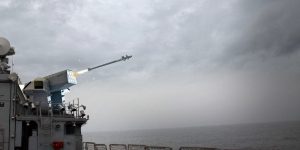
According to ASELSAN and Turkish defence outlets, the 5 September field activity at Sinop, on the Black Sea coast, was the first time a missile was fired from GÜRZ against an aerial target. The activity validated the four-faced AESA search radar, the fire-control radar, the electro-optical sensors and the data link guiding the GÖKSUR. The missile reportedly flew evasive-target-style manoeuvres while holding its planned course, and radar and electro-optical detection and tracking were described as highly successful. ASELSAN announced the result on 7 September.
The company’s general manager, Ahmet Akyol, tied the result to the programme’s move from development into what he called a real product, with inventory entry planned for 2027. ASELSAN had already shown a serial-production-configuration vehicle at SAHA 2026.
What has not been published: engagement range, intercept altitude, the type of target used, reaction time and kill probability. Any comparison with Western equivalents should wait for those numbers. The gun side of the system also has not been publicly shown engaging a target in this test series, based on the reporting available at the time of writing.
Where Does GÜRZ Sit in Steel Dome?
GÜRZ is the mobile, close-in layer of Çelik Kubbe, Türkiye’s layered air defence concept. The wider structure is explained in our guide to how the Steel Dome works. Upper layers use long-range interceptors. Lower down, the HİSAR missile family fills the middle tier and SUNGUR covers the shortest-range missile layer.
The gun in GÜRZ comes from the same engineering thread as KORKUT, the 35mm gun system developed for the cheap-drone problem. Where KORKUT is a pure gun vehicle, GÜRZ adds missiles and a shared fire-control brain. Roketsan is working the same problem from the other side with BURÇ, a mobile launcher built around SUNGUR, which has fired its first missile.
Foreign programmes are heading in similar directions. Germany’s Skyranger pairs a gun with missiles on several vehicles, and other European armies are rebuilding short-range air defence after years of underinvestment. GÜRZ differs by integrating the two effectors in a single turret-and-launcher design on one chassis, rather than relying on a mixed convoy.
Is There an Export Customer?
None has been announced. ASELSAN did take the system to Riyadh in 2024, its first showing abroad, which suggests interest in Gulf and NATO-neighbour markets, but that is inference, not a sales record. Components of the family are already on offer: ASELSAN markets the naval GÖKSUR 100-N, and our overview of Turkish air defence exports shows who has bought Turkish systems so far. For the manufacturer’s wider portfolio, see the ASELSAN company profile.
The next markers to watch are qualification results, the first serial-production contract and the publication of range and engagement data. Until ASELSAN releases them, GÜRZ remains a promising design with one reported live missile firing and a 2027 delivery target.