ASELSAN’s GÖKSUR 100-N Point-Defence Missile Reaches Production

ASELSAN’s GÖKSUR 100-N, the point-defence missile system Türkiye is developing to protect its own warships from sea-skimming anti-ship missiles, has moved from exhibition mock-up to actual production hardware. The company’s own product literature, together with a first live firing already carried out and a run of trade-press sightings of manufactured units through 2026, shows a program that has quietly closed the gap between concept and something a shipyard can actually bolt onto a hull.
No serial-production contract or in-service date has been announced publicly, and ASELSAN has not said which ship class will receive the first sets. What has changed is that the system is no longer just a rendering on a trade-show stand.
What GÖKSUR 100-N Is
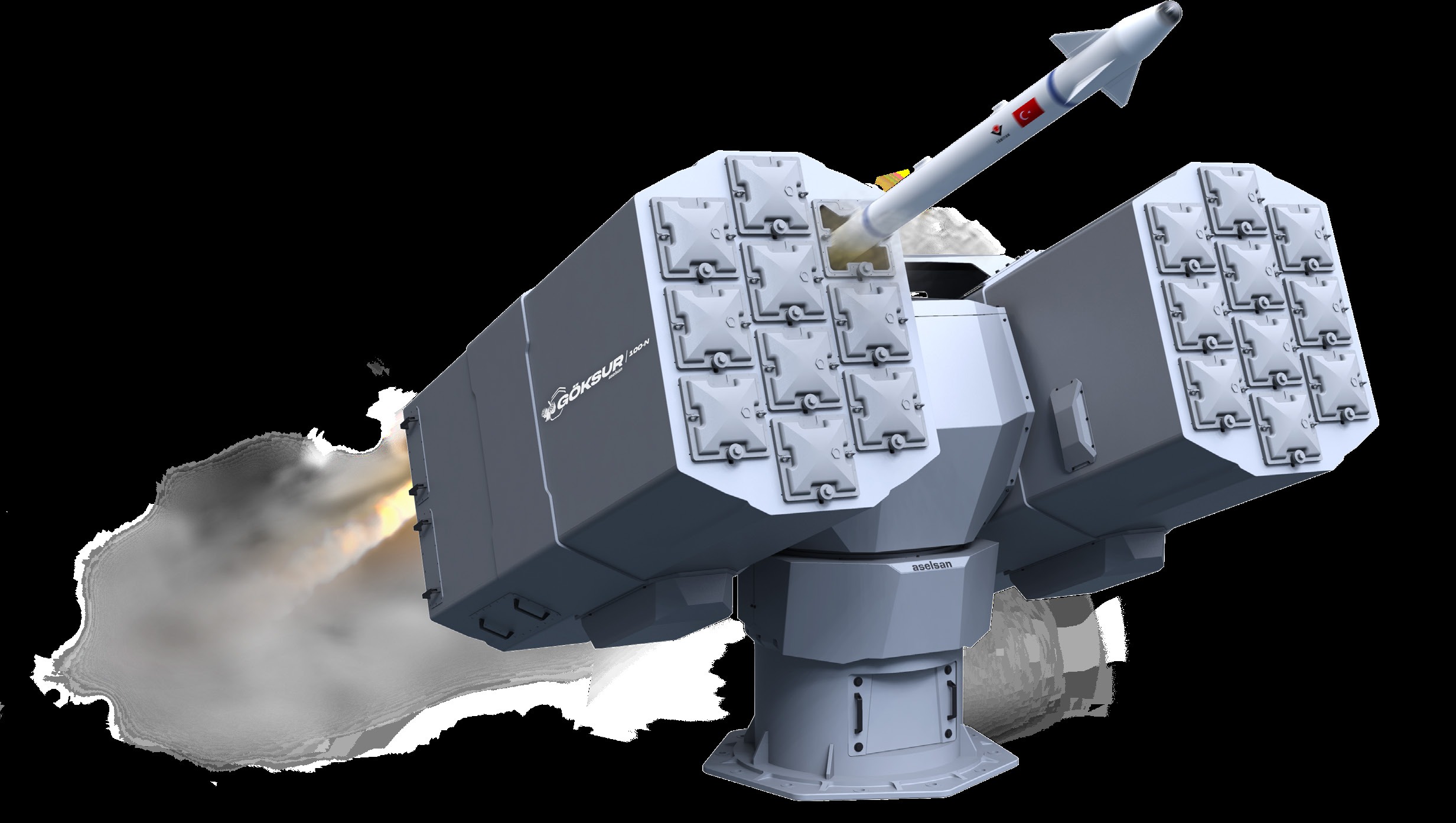
GÖKSUR 100-N is a naval point-defence missile system (PDMS): the last-ditch, close-in layer meant to stop anti-ship and cruise missiles that have already got past a ship’s outer air-defence umbrella. According to ASELSAN’s own technical datasheet, the system offers an effective range of 15 km, an imaging infrared (IIR) seeker on the missile, a bidirectional encrypted datalink for mid-course updates, and a fire-control system the company describes as enhanced with AI features. ASELSAN lists fighters, cruise missiles, helicopters and UAVs as the threat set the system is designed against, with multiple-target engagement and 360-degree coverage.
The missile itself is compact: 160 mm in diameter, 3.3 metres long and 142 kg, with thrust-vector control, folding wings, a fragmentation warhead and a laser proximity sensor for the terminal intercept. ASELSAN pitches the launcher as modular, able to carry a variable number of rounds depending on the host vessel — the configuration first shown publicly at Euronaval 2024 in Paris carried 20 missiles.
Why It Matters: Replacing an Import
The system’s most immediate significance is what it could replace. Türkiye’s Ada-class corvettes currently rely on the American RIM-116 Rolling Airframe Missile for exactly this close-in role, a system Ankara buys rather than builds. A working, combat-capable GÖKSUR would let the Turkish Navy re-arm its own ships with a missile whose production, upgrades and munitions supply are not subject to a foreign government’s export licensing — a point that matters to a navy that has previously run into procurement friction with Western suppliers.
The programme is also being built with an eye on Türkiye’s next-generation surface combatants. ASFAT laid the keel for the lead ship of the TF-2000 air-defence destroyer class, TCG Kocatepe, in January 2025, and the MİLGEM-family frigates and corvettes that make up the rest of the Turkish surface fleet are natural candidates for a self-defence missile built to ASELSAN’s own combat-management-system standards. The company has offered GÖKSUR in both a vertical-launch (VLS) configuration and a standalone (StA) turret that can operate without being wired into a ship’s full combat system, widening the pool of hulls it could eventually arm.
From Paris to the Waterline
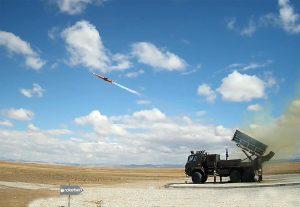
GÖKSUR’s public timeline has moved in fairly deliberate steps. Naval News reported the system’s first live firing in February 2025, a milestone that demonstrated the intercept concept worked before any hardware reached a shipyard. The 20-missile launcher configuration followed at Euronaval 2024. Turkish defence trade press has since reported sightings of what appear to be production-standard launcher units, a step beyond the demonstrators and static models shown at earlier exhibitions — though ASELSAN has not issued its own announcement confirming a production run or naming a customer.
ASELSAN has also said it is marketing GÖKSUR to potential customers in Latin America, though no export agreement has been disclosed. Given that RIM-116 operators worldwide represent a large, mostly Western-aligned installed base, a Turkish alternative with a comparable seeker and range would be entering a market where the incumbent is well established — success would depend on price, integration support and combat pedigree rather than the missile alone.
Part of a Wider Push
GÖKSUR sits alongside Çelik Kubbe, HISAR, SUNGUR and the rest of ASELSAN’s air-defence portfolio as part of Türkiye’s broader effort to cover its own kill chain end to end, from search radar to interceptor, without relying on any single foreign supplier for a critical layer. The company has been racking up test milestones on that portfolio through 2026, including a first live-fire test for its GÜRZ hybrid gun/missile system earlier this month. GÖKSUR extends that same logic to the point-defence layer of a warship, a niche Türkiye’s navy has never previously filled with an indigenous design.
For now, the story is one of a system crossing from prototype to product, not a finished procurement. Whether the Turkish Navy formally orders GÖKSUR for the TF-2000 or MİLGEM-family ships, and on what schedule, is the detail to watch for next.
Sources
- ASELSAN, GÖKSUR 100-N technical datasheet (SST Marketing, June 2025)
- Naval News, “Aselsan aces Göksur missile’s first live firing” (February 2025)
- DefenceTürkiye: ASELSAN company profile