Turkish Gunmakers Sell Far More Abroad Than Most Buyers Realise

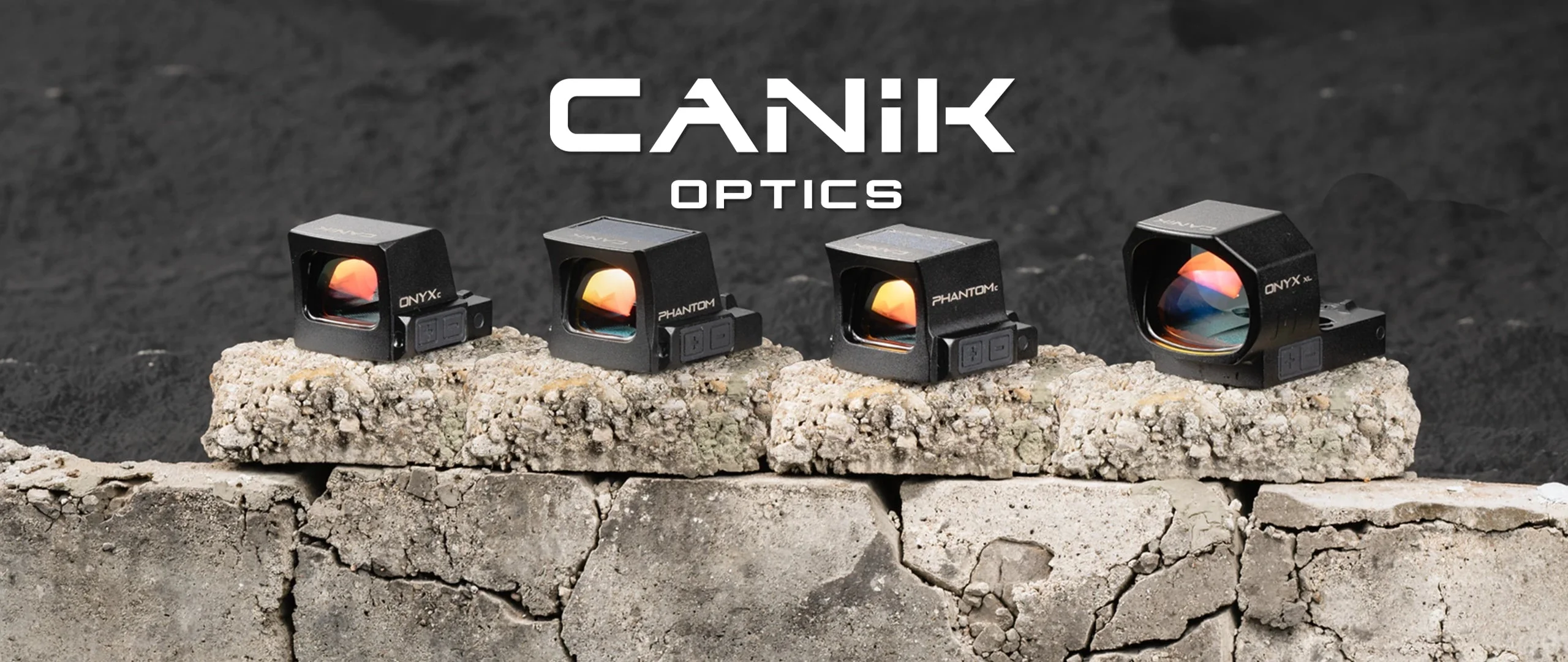
Ask most defence analysts what Türkiye exports and the answer comes back in seconds: drones, armoured vehicles, missiles. Small arms rarely make the list. Yet pistols, shotguns and rifles made in Samsun, Düzce, Ankara and Kırıkkale reach buyers on several continents, and in at least one market they sit on the shelf next to the best-known Western brands.
This is a look at how that happened, who the main players are, and where the numbers are solid and where they are not.
How Big Is the Turkish Firearms Industry?
There is no single audited figure, and anyone quoting one deserves a follow-up question. What exists is a set of partial indicators.
One industry-focused site, citing Turkish Ministry of Trade data, reports that Türkiye exported more than $164 million worth of firearms and parts in 2023, with shotguns leading by volume. The same source says the sector includes more than 300 licensed manufacturers, from family workshops to automated plants. Treat both as reported figures rather than official totals.
The scale is easier to see company by company. Samsun Yurt Savunma (SYS), the maker of the CANiK brand, was reported by Foreign Policy, as relayed by Caliber.az, to have capacity for up to 460,000 pistols a year, a level said to rank behind only Sig Sauer at roughly half the retail price. These are reported claims, but they explain why the sector gets attention.
| Item | Detail |
|---|---|
| Main hubs | Samsun (CANiK), Düzce (Sarsılmaz), Ankara and Kırıkkale (MKE) |
| Leading product groups | Shotguns, semi-automatic pistols, military rifles, heavy machine guns |
| State producer | MKE (Mechanical and Chemical Industry Corporation) |
| Largest pistol exporter | SYS / CANiK (reported) |
| Licensed makers | More than 300 (industry source, reported) |
Which Companies Carry the Industry?
Three names cover most of the defence-relevant side of the business, though the civilian shotgun trade is far more crowded.
CANiK and Samsun Yurt Savunma
SYS is the export engine. In 2021 Daily Sabah reported that the company controlled about 75 percent of Türkiye’s pistol exports and had doubled its U.S. sales during a demand spike driven by fears of tighter American gun control. SYS says it exports around 70 percent of what it makes, directly and indirectly, and operates seven production sites: one in Istanbul, four in Samsun, one in South Florida and one in the United Kingdom.
The company has moved well beyond handguns. Its CANiK M2 QCB, a 12.7×99 mm heavy machine gun, is described by the company as the first of its type fully qualified by the Presidency of Defence Industries (SSB), and it has entered Turkish military and police service. Janes reported that Brazil selected SYS for 200 M2HB QCB machine guns valued at about $3.1 million, although the contract had not been signed at the time of that report. For the wider story, see our piece on how a Samsun pistol maker became a supplier of aircraft guns and anti-drone cannons.
Sarsılmaz
Founded in 1880 and headquartered in Düzce, Sarsılmaz describes itself as the country’s largest small arms manufacturer and says it exports to 78 countries. It supplies pistols to the Turkish National Police and parts of the armed forces, and set up SAR USA in 2018 as its exclusive U.S. importer. Our Sarsılmaz profile covers the company in detail.
MKE
The state-owned arsenal is the oldest of the three and the one tied most closely to the Turkish military. It builds rifles, submachine guns, ammunition and artillery. Its role abroad has grown, and the MKE profile traces its move into overseas plants. Reporting cited by The Firearm Blog also says MKE has sold pistols, MP5-pattern submachine guns and ammunition in the American market through a partnership with Zenith Firearms, with the cumulative figure given as more than $100 million. That number is reported, not independently confirmed.
Why Did the MPT Rifle Change the Picture?
For decades Turkish infantry carried the Heckler and Koch G3, built under licence. The Millî Piyade Tüfeği, or MPT, was meant to end that dependence.
According to the MPT entry on Wikipedia, the project began around 2008 as the Mehmetçik-1 in 5.56 mm. Soldiers testing it preferred the 7.62×51 mm round for range and stopping power, so the design was reworked. The first 200 MPT-76 rifles were delivered in May 2014. In 2015 the state contracted 20,000 rifles from MKE and 15,014 from Kalekalıp, and Sarsılmaz is listed as a third producer. The same source says about 25,000 had been built by December 2018 and that a larger order followed in 2019.
Exports followed. Reported users include Somalia, Albania, Cameroon, Georgia, Kosovo, Montenegro, Peru and Senegal, and Northern Cyprus was reported to have ordered 2,500 rifles. A 6.8×51 mm variant, the MPT-68, appears in the same source with a 4 kg weight and a 406 mm barrel. I could not confirm any Turkish Armed Forces adoption of it, so it is best read as a development.
The MPT mattered less for its performance than for what it proved. A state arsenal and private firms could share one national design, and that design could be offered to third countries without a licence holder in the middle.
Where Do Turkish Small Arms Actually Go?
Two very different markets drive the numbers.
The first is civilian and commercial. Foreign Policy, as cited by Caliber.az, says Türkiye has been the largest firearms exporter to the United States since 2021. Shotguns are the long-standing volume item, and Turkish trade summaries point to the United States, Italy, France, South Africa and Canada as leading destinations. A consultant quoted in the same piece says Turkish shotguns are now common in conflict zones including Afghanistan, Iraq, Myanmar and Syria. That is a comment on availability, not on any official transfer.
The second is institutional: police forces, armies and guard units buying pistols, rifles and machine guns in batches of hundreds or thousands. These deals are smaller in dollars and harder to trace. They mostly move through the government-to-government and credit-backed routes described in how countries buy Turkish weapons.
Does Production Abroad Change the Equation?
It already has. CANiK opened a factory in Florida in December 2022, reportedly after a new pistol model failed U.S. import criteria, and the company has talked about extending that site to heavier weapons. The SYS group also lists a facility in the United Kingdom, tied to medium-calibre cannons.
Local assembly sidesteps import rules, shortens delivery and softens the political risk of selling a Turkish-made product. It also raises a question the industry will keep hearing, namely how components, steel and tooling flow into those plants. Export controls differ by destination, and the ITAR question for Turkish exports shows why buyers ask about it.
Ammunition is the adjacent business. Europe is short of it, and small-calibre production is where Turkish plants are most comparable to Western ones. Our analysis of whether Türkiye can supply Europe’s ammunition looks at the rules that decide that.
There is also an industrial logic behind all this. Small arms are among the few defence products where a mid-sized country can match Western quality without decades of research, because the technology is mature and the edge lies in machining, tooling and cost control. Turkish makers have long had skilled metalworking labour and an established hunting-gun trade, and an industry source credits cheap labour, strong CNC capability and government export support. The same logic explains why new entrants keep appearing, with more than 40 new handgun brands reported over five years.
What Limits Further Growth?
Three constraints stand out.
- Dependence on one buyer market. A change in U.S. import policy, or a political dispute with Washington, would hit the pistol segment hardest.
- Brand perception. Turkish pistols compete on price and features. Winning professional military and police contracts in NATO countries requires a longer record of reliability data.
- Data gaps. Official statistics lump small arms with ammunition and parts, so claims about market share are hard to test.
Even so, the direction is plain. A sector that began as hunting-gun workshops and arsenal production now ships heavy machine guns, builds plants in Florida, and sits alongside drones and missiles in the national export pitch. The next test is whether the heavier weapons repeat what the pistols did.