Türkiye and Indonesia: Why Jakarta Buys Turkish Weapons

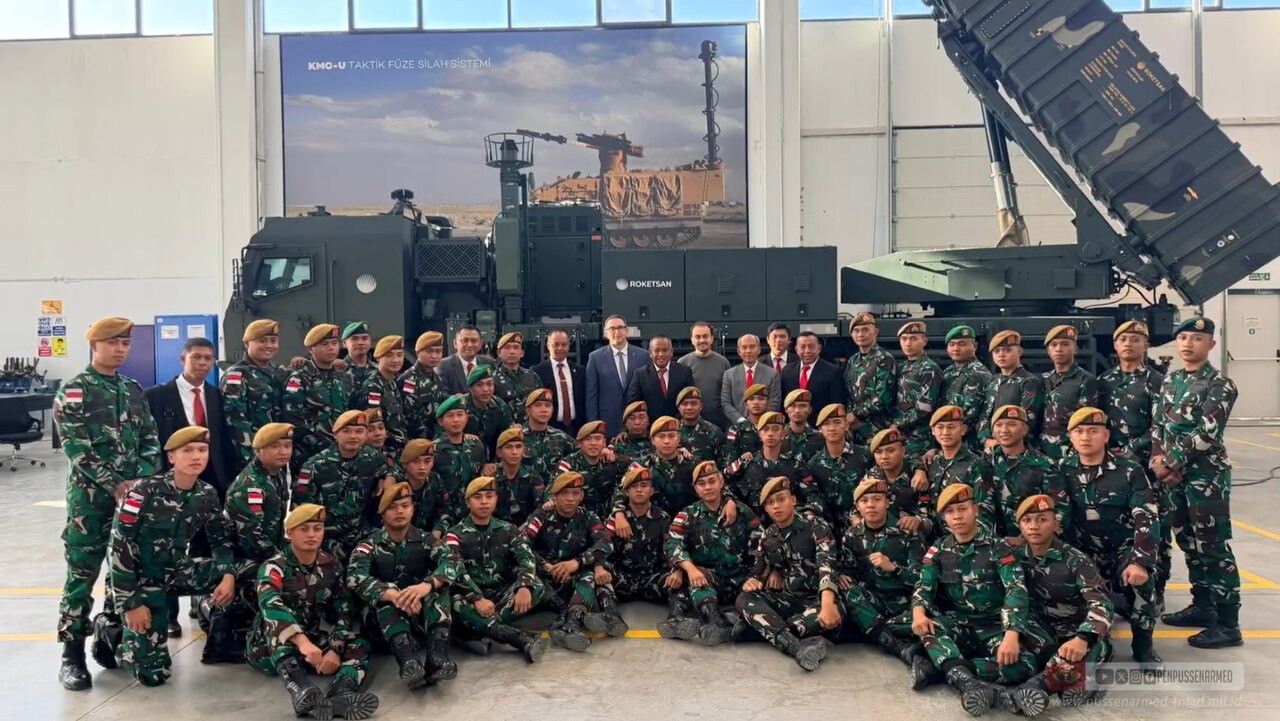
Indonesia buys Turkish weapons because Indonesian law makes it difficult to buy any other way. Article 43 of Law No. 16 of 2012 on the Defence Industry says that foreign defence equipment may only be bought if the seller guarantees there is no potential for embargo or political conditionality, transfers technology, brings Indonesian industry into the work, and delivers countertrade, local content or offset worth at least 85 per cent of the contract. Türkiye agrees to all four. That is the whole explanation, and it is also where the complications start, because signing a Turkish contract in Jakarta is not the same as paying for one.
Since 2023 Indonesia has put its name to more Turkish defence hardware than any other country: 48 KAAN fighters, two İstif-class frigates, 12 KIZILELMA unmanned combat aircraft with options for 48 more, 12 ANKA drones, a jointly developed medium tank and Roketsan’s KHAN missile system. By announced value that makes Indonesia the largest single entry in Türkiye’s export order book. In SIPRI’s delivery data for 2021–25, Türkiye does not appear among Indonesia’s three main suppliers at all. Both things are true, and the gap between them is the most useful thing to understand about this relationship.
DEFENCETÜRKIYE DATA BOX
Customer: Republic of Indonesia (Kementerian Pertahanan / Kemhan, TNI)
Position in Türkiye’s order book: largest single customer by announced contract value
Signed programmes: KAAN (48), İstif-class frigates (2), KIZILELMA (12 + 48 options), ANKA (12), KAPLAN MT / Harimau, KHAN / ITBM missile system
Delivered so far: Harimau medium tanks, first ANKA airframes, KHAN-family launchers and guided rockets
Not yet delivered: KAAN, frigates, KIZILELMA — none has reached cutting steel or a confirmed production slot in public reporting
Indonesia’s main arms suppliers, 2021–25 (SIPRI): Italy 40%, United States 16%, France 14%
Indonesian defence budget 2026: Rp187.1 trillion (roughly $11bn), of which Rp84.48 trillion is the equipment modernisation programme
What Indonesia has actually signed with Türkiye
The list below only contains programmes with a signature behind them. Statements of interest, exhibition memoranda with no named quantity and press speculation are left out, which is why some widely circulated items do not appear.
| Programme | Turkish side | Quantity | Signed | Where it stands |
|---|---|---|---|---|
| KAAN fifth-generation fighter | Turkish Aerospace, with PT Dirgantara Indonesia and PT Republik Aero Dirgantara | 48 | G2G framework 11 June 2025; commercial contract 26 July 2025 at IDEF | Deliveries described as phased over 10 years. Funding allocation not public. Jakarta has conditioned the purchase on an ITAR-free aircraft. |
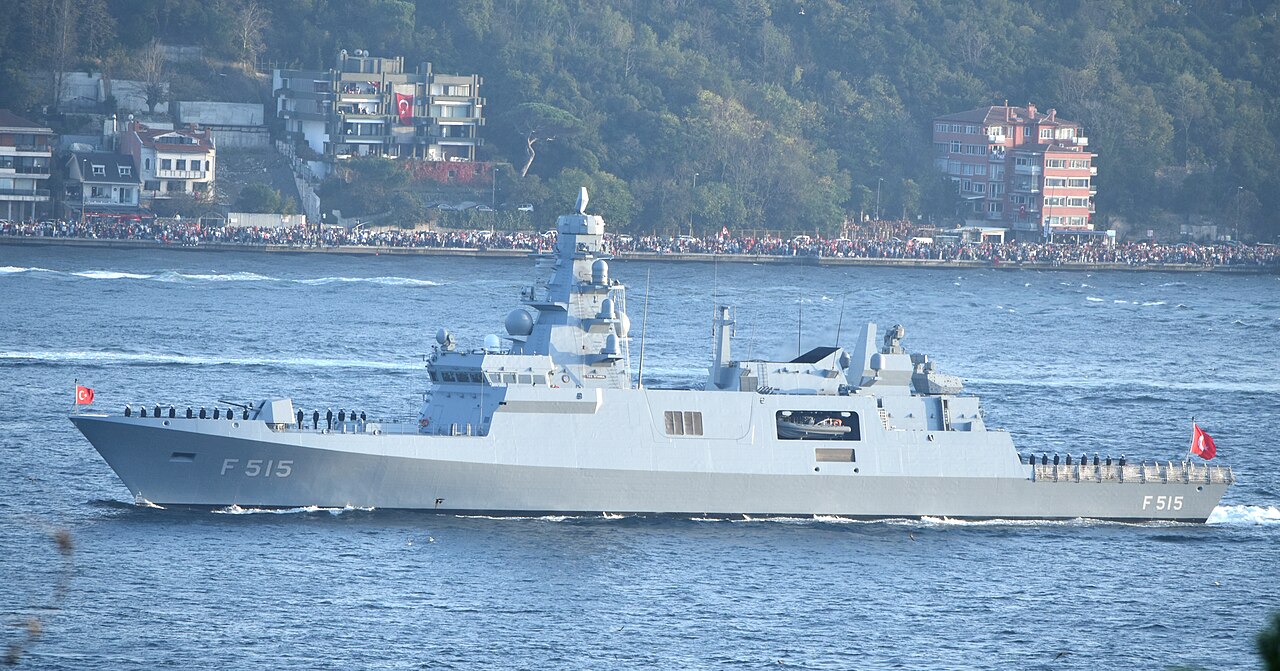
| İstif-class frigate | TAIS shipyard consortium | 2 | 26 July 2025, IDEF | First export of the class. In January 2026 TAIS signed a memorandum with Qatar’s Barzan Holding tied to the two ships, with Indonesia as end user. |
| KIZILELMA unmanned combat aircraft | Baykar, with Republikorp | 12, option for 48 | Confirmed by Baykar 7 May 2026 | First export customer for the type. Package includes local production and a maintenance centre. Deliveries reported from 2028. |
| ANKA medium-altitude drone | Turkish Aerospace, with PT Dirgantara Indonesia | 12 | February 2023, reported at about $300m | Six built in Türkiye, six to be assembled in Indonesia. First airframe arrived at Supadio air base in 2025 after a long delay over contract effectiveness. |
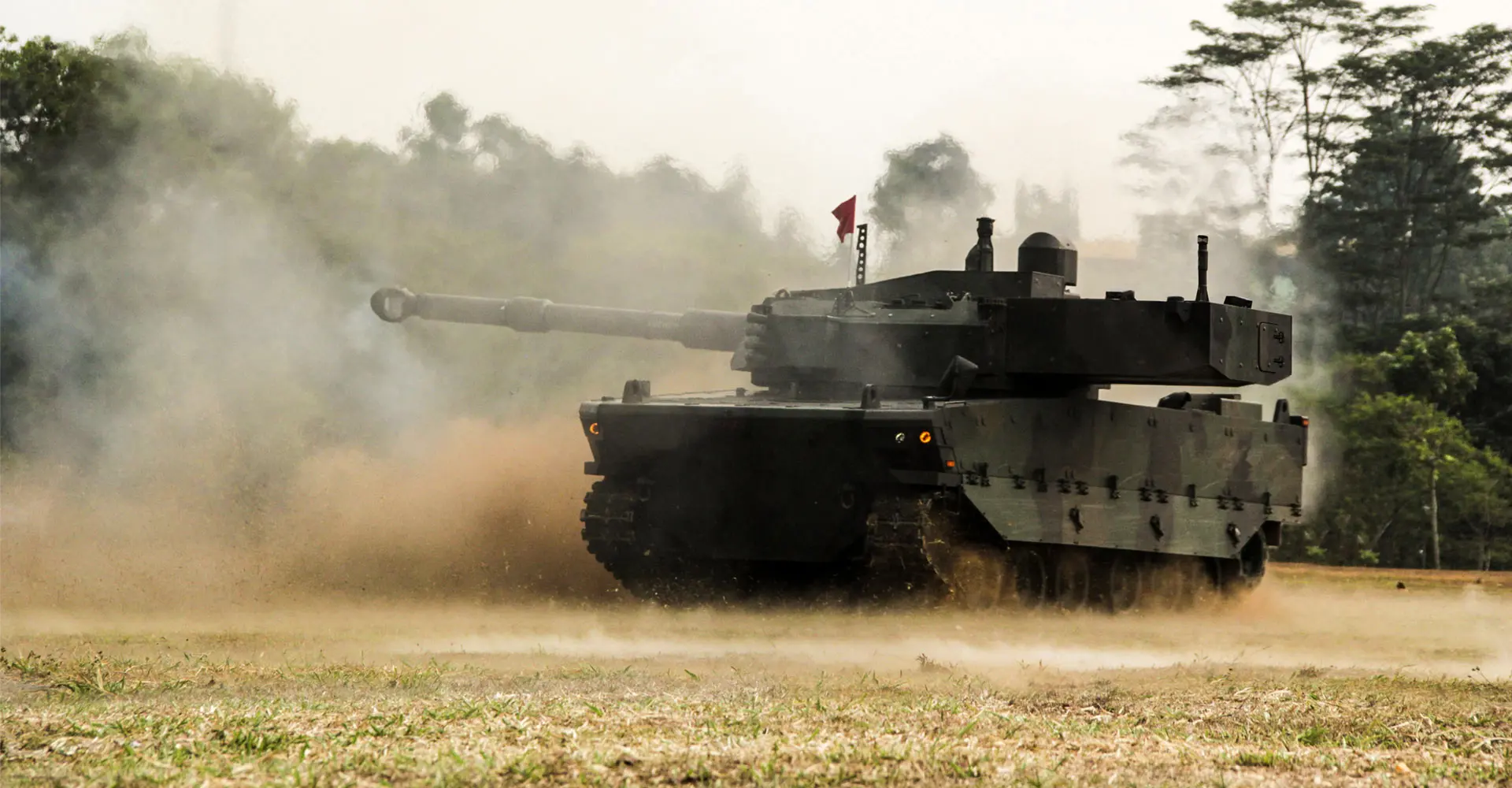
| KAPLAN MT / Harimau medium tank | FNSS, with Pindad | 18 in the first serial batch | Development from 2015; serial production agreement 2019 | In Indonesian Army service. The most mature piece of the relationship and the one most often cited by both governments. |
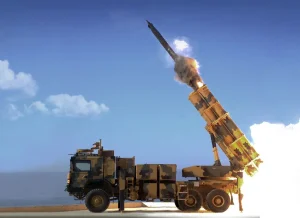
| KHAN / ITBM tactical missile and rocket system | Roketsan | Undisclosed | Not publicly disclosed | Indonesia is the first publicly known customer. Indonesian Army fired TRG-122 guided rockets from an ITBM launcher in East Kalimantan on 20 October 2026. |
Compiled by DefenceTürkiye from company statements, Indonesian Ministry of Defence and armed forces reporting, and trade press. Contract values are as reported; neither government has published a figure for the KAAN, frigate or KIZILELMA contracts.
The law that does the choosing
Most English-language coverage treats Indonesian purchases as a political preference — non-alignment, solidarity, a president who likes Turkish hardware. The statute is more specific than that. Law No. 16 of 2012 on the Defence Industry, published in full by Indonesia’s own Ministry of Defence, lets the user buy foreign equipment only when domestic industry cannot supply it, and then imposes conditions in Article 43(5):
- the equipment cannot yet be made in Indonesia;
- Indonesian defence industry must participate in the work;
- there is an obligation of technology transfer;
- there must be a guarantee that there is no potential for embargo, political conditionality or obstacles to the use of the equipment in defending Indonesian sovereignty and territorial integrity;
- countertrade, local content and/or offset must be worth at least 85 per cent of the contract value;
- of that, local content and/or offset must be at least 35 per cent, rising by 10 per cent every five years.
Read that fourth condition again, because it is the one that quietly disqualifies suppliers. An Indonesian procurement officer is being asked to obtain a written assurance that the selling state will not later restrict how the weapon is used. The United States cannot give it: end-use monitoring and congressional notification are the point of its export system. Several European suppliers cannot give it either, as Indonesia discovered when German parliamentary scrutiny slowed its submarine and tank ambitions in the 2010s. Türkiye can, and says so openly. We have looked at what the record actually shows about restrictions built into Turkish systems; the honest summary is that Ankara’s own controls exist but are lighter and more discretionary than Washington’s, which is precisely the product Jakarta’s law is shopping for.
The 85 per cent rule does the rest of the selection. A supplier who will only sell finished equipment fails it automatically. Every major Turkish programme in Indonesia is structured as a joint build: PT Dirgantara Indonesia assembling ANKA airframes, Pindad manufacturing the Harimau, Republikorp taking on KIZILELMA production and maintenance, PT Dirgantara Indonesia and PT Republik Aero Dirgantara written into the KAAN contract. That is not Turkish generosity. It is the only shape of deal the statute permits, and Turkish firms have become good at drafting to it — the same discipline we traced in what a buyer actually gets from a Turkish offset package and in who ends up owning the technology.
WHY IT MATTERS
Indonesia is the clearest working example of a market that Western primes structurally cannot win and Turkish firms structurally can. The selection is written into statute, not decided case by case, which makes it a repeatable template rather than a one-off political favour.
It also sets the limit of the Turkish model. The same law that opens the door says nothing about how Jakarta pays, and that is where Turkish contracts in Indonesia have consistently stalled.
Why a signature in Jakarta is not the start of work
Indonesia funds most major equipment through foreign loans rather than the cash budget, and the administrative chain between a signed contract and a working production line is long. The Ministry of Defence’s own planning directorate sets it out in its regulation on foreign-loan procurement administration (Directorate-General of Defence Planning Regulation No. 10 of 2015, published on kemhan.go.id). The sequence runs roughly: the financing source is designated; the procurement agency issues a procurement confirmation letter or the sale-and-purchase contract; the Finance Ministry selects the lender and negotiates; the Director-General for Budget Financing and Risk Management signs the loan agreement on behalf of the Finance Minister; a register number is issued; conditions precedent, including proof of the advance payment, are satisfied; and only then is the sale-and-purchase contract activated.
One clause matters more than the rest. The regulation provides that the domestic rupiah counterpart budget must cover an advance payment worth 15 per cent of total contract value, and states that this is one of the conditions both for signing the loan agreement and for activating the contract. In other words, Jakarta must find roughly one-seventh of a programme’s value in cash before the foreign loan behind it becomes usable. On a contract reported in local media at around $10bn, that is about $1.5bn of rupiah budget that has to be located and defended in parliament before the first production slot is confirmed.
This is not a theoretical worry. The 12-aircraft ANKA contract was signed in February 2023 and Indonesian outlets were still reporting two years later that it had not become effective and that PT Dirgantara Indonesia was waiting; the first airframe only appeared at Supadio air base in 2025. When Janes reported the KAAN signature in July 2025, it noted plainly that the contract had been signed without visibility over how Jakarta intended to fund it. Nothing published since has resolved that. The pattern is not unique to Türkiye — it applies to every foreign supplier working under the same rules — but it falls hardest on a seller whose entire Indonesian portfolio is still ahead of it.
The arithmetic Jakarta has to solve
Commission I of the Indonesian parliament approved a 2026 budget of Rp187.1 trillion for the Ministry of Defence and the armed forces in September 2025, up from Rp166.26 trillion. Of that, the equipment, non-equipment and infrastructure modernisation programme takes Rp84.48 trillion, about 45.1 per cent of the ministry’s budget, with a similar sum going to management and support. Converted at 2026 rates, the modernisation line is roughly $5bn a year, and it has to cover every service, every supplier and every existing commitment, not only the Turkish ones.
Budget: DPR Commission I, Sept 2025. KAAN value: Indonesian media.
Spread across the phased ten-year schedule, the KAAN programme is about a fifth of Indonesia’s annual equipment budget, which is demanding but not absurd. Taken together with two frigates, a KIZILELMA line, the remaining ANKA airframes and Indonesia’s non-Turkish commitments — Rafale, the KF-21 partnership, French submarines, Italian ships — it becomes a genuine queue. Anyone assessing Türkiye’s order book should treat the Indonesian entries as contracted but not yet financed, and the honest version of that caution belongs in any discussion of which countries actually buy the most Turkish weapons.
Qatar is quietly part of this relationship
The most interesting development of the past year is not a new Turkish product in Indonesia but a new financier between them. At DIMDEX in Doha in January 2026, the TAIS shipbuilding consortium signed a memorandum with Barzan Holding, Qatar’s defence investment and programme management company, linked to the construction of the two İstif-class frigates, with Indonesia named as the end user and a value reported at around $1bn. Army Recognition, which covered the signing from Doha, described Barzan as contracting on behalf of an international client and noted the structure gives Jakarta access to arranged financing and industrial participation. Neither company has published terms, so the mechanics remain reported rather than confirmed.
Nine months later the same four capitals formalised a wider arrangement. On 21 October 2026 Türkiye, Qatar, Pakistan and Indonesia signed the Badr memorandum in Doha, covering joint research and development, technology transfer and industrial manufacturing. We covered the signing and what the four governments said about it at the time. Read alongside the Barzan agreement, the pattern is reasonably clear: Türkiye supplies the design and the industrial package, Qatar supplies or structures the money, and Indonesia supplies the demand and the local content obligation. For a buyer with a constitutional preference for non-aligned suppliers and a chronic problem converting signatures into disbursements, a Gulf intermediary solves something a Turkish shipyard cannot.
What the delivery data actually shows
SIPRI’s March 2026 fact sheet covering 2021–25 is the corrective to every announcement above. Indonesia was the largest recipient of major arms in South East Asia over those five years, with 1.5 per cent of global imports — 18th in the world, and 4.1 per cent lower than in 2016–20. Its three main suppliers were Italy with 40 per cent, the United States with 16 per cent and France with 14 per cent. Türkiye is not in that group. In the same tables Türkiye ranks 11th among exporters with 1.8 per cent of global transfers, up 122 per cent on the previous five years, and its own three main recipients are Pakistan, the United Arab Emirates and Ukraine.
Both facts are consistent with the contract list. SIPRI counts deliveries of major conventional weapons, not signatures, and almost everything Indonesia has signed with Türkiye is scheduled to arrive after 2026. Italy’s 40 per cent share is the physical reality of Indonesian naval and air procurement in the first half of this decade; Türkiye’s absence is the physical reality of a relationship that is still mostly paperwork. Anyone using the Indonesian deals as evidence that Türkiye has displaced incumbent suppliers in Asia is reading the order book as though it were a delivery schedule.
BUYER VIEW
Delivery: nothing on the big-ticket Turkish programmes has a confirmed production slot in public reporting. Assume the first KAAN airframes are a 2030s proposition and treat earlier dates as aspiration.
Price: no official value exists for the KAAN, frigate or KIZILELMA contracts. The $10bn KAAN figure comes from Indonesian media, not from either government.
Industrial participation: real and legally compulsory. Indonesian firms are named in every contract, and the Harimau shows the model can produce serial vehicles rather than a ceremonial screwdriver line.
Export restrictions: the attraction for Jakarta. Turkish contracts are written to satisfy Article 43’s embargo guarantee, which US and several European offers cannot.
Engine dependency: the live risk on KAAN. Jakarta has said it will take the aircraft only if it is free of ITAR-controlled components, which ties the Indonesian schedule to Türkiye’s indigenous engine work rather than to Turkish Aerospace’s assembly line.
Payment risk: the decisive variable. Indonesia’s record on the KF-21 partnership — arrears of more than a trillion won and a 2024 request to cut its contribution from 1.6 trillion to 600 billion won — is the reason lenders and suppliers price Indonesian defence paper cautiously.
The limitations, stated plainly
Three weaknesses are worth naming because they will determine whether this relationship produces aircraft or press releases.
The engine. KAAN currently flies on a General Electric F110, and Indonesia’s defence minister said in January 2026 that Jakarta will only proceed with an aircraft free of US-origin ITAR-controlled content. That condition cannot be met by Turkish Aerospace alone; it depends on TEI’s indigenous turbofan work maturing on schedule. Until then the Indonesian order is contingent on a programme that has not yet flown an aircraft on a Turkish engine. We set out the wider competitive picture in where KAAN fits among the world’s fifth-generation fighters.
The payment record. Indonesia’s conduct on the Korean KF-21 programme is the single most-cited reason for scepticism. Jakarta committed in 2014 to roughly 20 per cent of development costs in exchange for aircraft and technology transfer, fell more than a trillion won behind, and in 2024 asked Seoul to accept a reduced contribution of 600 billion won in return for a smaller technology package; Seoul refused to extend the payment deadline to 2034. A reduced settlement was subsequently reported in Korean press. Envanter Medya maintains a detailed Turkish-language file on the KF-21 payment dispute and what it means for the programme, which is the best single account of how that negotiation unfolded.
Local production capacity. Writing PT Dirgantara Indonesia or Republikorp into a contract is easier than equipping them. PT Dirgantara’s ANKA work is an offset obligation to build a final assembly and flight line, not an existing capability, and it has moved slowly. The Harimau line at Pindad is the proof that the model can work in Indonesia; it is also, ten years after the programme began, still the only Indonesian example that has finished the journey from agreement to serial output. The pattern is the same one we described in Türkiye’s overseas production facilities, where announced plants consistently outnumber operating ones.
What to watch next
Four things will tell you whether the Indonesian order book is converting. First, any Indonesian budget document or parliamentary record showing a rupiah counterpart allocation against the KAAN or frigate contracts, which is the legal trigger for activation. Second, steel cutting on the first Indonesian İstif hull at a Turkish yard, and whether Barzan appears in that announcement. Third, the remaining ANKA airframes, including the first aircraft actually assembled by PT Dirgantara rather than shipped from Ankara. Fourth, Turkish engine news: a KAAN flight on a domestic turbofan would remove Jakarta’s stated condition, and nothing else will. Our running account of the Turkish side sits in the KIZILELMA programme file and the İstif-class production picture.
For the Turkish industry the Indonesian relationship is already valuable whether or not every aircraft arrives. It gave KIZILELMA a launch export customer, gave the İstif class its first foreign order, gave KAAN the only export commitment it has, and gave FNSS a genuinely co-developed product in the Harimau, whose origins we covered in how a Turkish medium tank became the Indonesian Army’s Harimau. Those are reference customers, and reference customers are what a new supplier sells next. For the wider regional picture, see Turkish defence exports across Southeast Asia.
FAQ
How many Turkish weapons has Indonesia actually bought?
Six programmes carry signatures: 48 KAAN fighters, two İstif-class frigates, 12 KIZILELMA unmanned combat aircraft with options for 48 more, 12 ANKA drones, the jointly developed KAPLAN MT / Harimau medium tank and Roketsan’s KHAN tactical missile and rocket system, which Indonesia operates under the national designation ITBM. Only the Harimau, the KHAN-family launchers and the first ANKA airframes have reached Indonesian units.
Why does Indonesia buy from Türkiye rather than the United States?
Article 43(5) of Indonesia’s 2012 defence industry law requires a guarantee that a foreign purchase carries no potential embargo or political conditionality, plus technology transfer, Indonesian industrial participation and at least 85 per cent countertrade, local content or offset. US export practice is built on end-use monitoring and congressional notification, so that guarantee is effectively unavailable. Turkish suppliers write contracts that satisfy the test.
Has Indonesia paid for the KAAN fighters?
There is no public evidence of a funding allocation. Janes reported at the time of signature in July 2025 that the contract was concluded without visibility over how Jakarta intended to pay, and no Indonesian budget document since has shown a counterpart allocation against it. Under Indonesia’s own foreign-loan procurement rules, a 15 per cent advance from the rupiah counterpart budget is one of the conditions for activating the contract.
When will Indonesia receive its KAAN aircraft?
Deliveries have been described as phased over a ten-year period, which points to the 2030s. Jakarta has also said it will only take an aircraft free of ITAR-controlled US components, which ties its schedule to Türkiye’s indigenous engine programme rather than to the production line alone. No delivery date has been confirmed by either government.
Is Türkiye now a major supplier to Indonesia?
Not yet, in delivery terms. SIPRI’s figures for 2021–25 put Indonesia 18th among global arms importers and name Italy (40 per cent), the United States (16 per cent) and France (14 per cent) as its main suppliers. Türkiye does not appear in that group, because almost all of its Indonesian business is scheduled to deliver later this decade.
What does Qatar have to do with Turkish sales to Indonesia?
Qatar’s Barzan Holding signed a memorandum with the Turkish TAIS consortium in January 2026 tied to the two İstif-class frigates, with Indonesia as end user and a reported value of around $1bn. In October 2026 Türkiye, Qatar, Pakistan and Indonesia signed the broader Badr defence memorandum in Doha. Taken together, Qatari capital and programme management appear to be filling the financing gap in Turkish–Indonesian deals.
Does Indonesia build any Turkish systems locally?
Yes. Pindad manufactures the Harimau, PT Dirgantara Indonesia is contracted to assemble six of the 12 ANKA airframes and is named in the KAAN contract alongside PT Republik Aero Dirgantara, and Republikorp is to take part in KIZILELMA production and run a maintenance centre. Local content is a legal requirement, not an optional extra. Envanter Medya keeps a Turkish-language list of every ANKA export customer and what each ordered, which is the easiest way to see where Indonesia sits among the type’s operators.
Sources
- Republic of Indonesia, Law No. 16 of 2012 on the Defence Industry, Article 43 — full text published by the Indonesian Ministry of Defence
- Indonesian Ministry of Defence, Directorate-General of Defence Planning Regulation No. 10 of 2015 on foreign-loan procurement administration — text published on kemhan.go.id (draft revision)
- SIPRI, Trends in International Arms Transfers, 2025, March 2026 — fact sheet, Tables 1 and 2
- Defense News, Turkey, Indonesia sign multibillion-dollar warplane, frigate deals
- Janes, Indonesia inks contract for 48 Kaan fighter aircraft despite lack of fund allocation
- Naval News, Indonesia inks deal with Türkiye for two I-class frigates
- Shephard Media, Indonesia inks deal for 12 Kizilelma UAVs
- CNBC Indonesia, breakdown of the Rp187.1 trillion 2026 defence budget
- Korea JoongAng Daily, Seoul may accept Jakarta’s reduced contribution to fighter jet project
- Al Jazeera, How Qatar, Türkiye, Pakistan and Indonesia are deepening defence ties