
Do Turkish Weapons Have a Kill Switch? What the Record Says

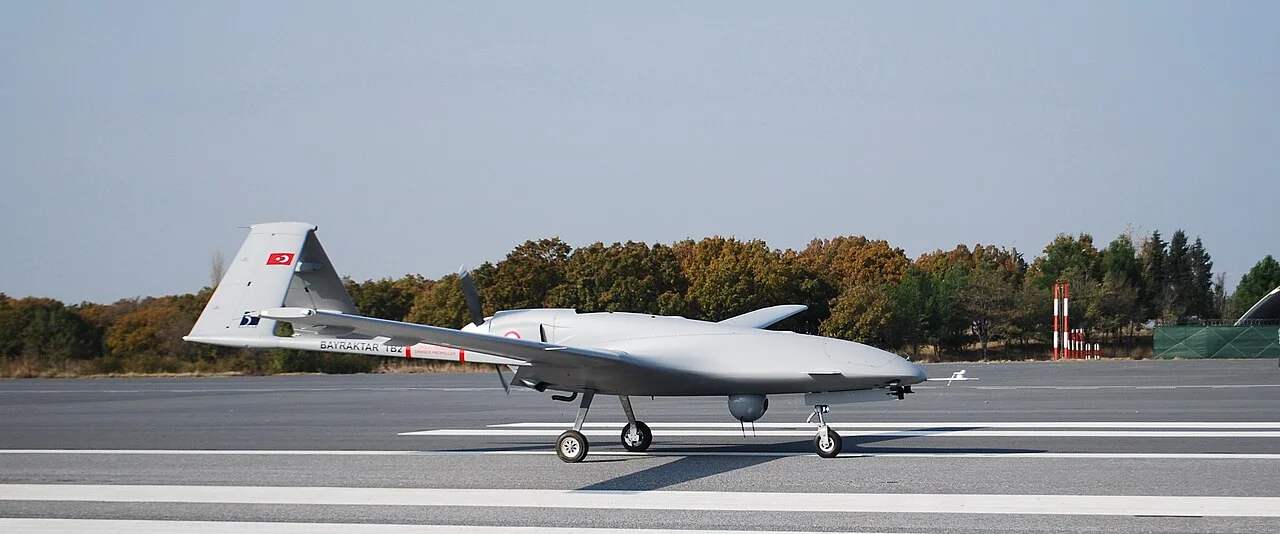
No public evidence shows that Turkish weapons carry a remote kill switch, and no Turkish official has ever confirmed one. What Ankara has put on its own parliamentary record is narrower, and more useful to a buyer. Very sensitive exports can carry GPS tracking, periodic physical inventory checks and unspecified “software measures” — all of them written into the agreement rather than hidden. Export versions are deliberately not identical to the equipment the Turkish Armed Forces operate. And the sanction Türkiye names for a customer who breaks its end-user undertaking is not a switch at all: it is suspending that country’s future export licences, because the spare-parts relationship never ends.
DEFENCETÜRKIYE DATA BOX
| Question | Can Türkiye remotely disable a weapon after delivery? |
| Short answer | No published evidence of a remote disable function. Not confirmed, not denied in those terms. |
| What Ankara confirms | GPS location tracking and “software measures” on very sensitive exports; periodic on-site inventory checks; reduced-capability export variants |
| Named enforcement tool | Suspension of export licences to the offending country, co-decided with the Ministry of Foreign Affairs |
| Primary evidence | TBMM Foreign Affairs Committee transcript, 8th meeting, 10 July 2024 |
| Legal basis | Law No. 5201 (2004) and the 2007 implementing regulation |
| Disclosed to buyers? | Yes, per the committee chair — “not secretly… part of the agreement” |
| Unverified claims | Kill switch in exported Bayraktar drones (inference by outlets from a 2021 TV remark, never substantiated) |
Why a buyer is asking this question now
The question is not really about Türkiye. It arrived in Ankara’s direction because of the F-35.
Through 2025 and 2026, European defence ministries spent an unusual amount of political capital on whether the United States could switch off an allied fighter fleet. The F-35 Joint Program Office answered flatly — “There is no kill switch,” it told reporters in March 2025 — and Germany’s defence minister Boris Pistorius publicly rejected the idea as well. The denial did not end the argument. Analysts simply moved the question one step down the supply chain, to where the real control sits: spare parts, software releases and mission data. A director at the Center for a New American Security put the practical version of it bluntly, telling The Defense Post that without software updates “F-35s could fly, but would be much more likely to be shot down by enemy air defenses.”
That reframing is what makes the question worth asking of every supplier, including the one that markets itself hardest as the alternative. Türkiye sells on the proposition that its equipment comes without a congressional veto and without a third-party licence hanging over it — the argument examined in detail in our assessment of whether Turkish weapons reduce a buyer’s dependence on the United States. A procurement officer who takes that pitch seriously should test it the same way they would test Washington’s: not “is there a switch”, but “what can the seller still do to me in year four”.
What Ankara put on the record in July 2024
There is an answer, and it is unusually direct. It is not in a company brochure. It is in the transcript of the Turkish Grand National Assembly’s Foreign Affairs Committee, eighth meeting of the session, 10 July 2024, chaired by Fuat Oktay. Committee members had raised defence-industry cooperation agreements at the previous sitting, and the Presidency of Defence Industries (SSB) was asked to explain how export decisions are actually taken.
The official who answered was Mustafa Murat Şeker, Deputy President of the SSB. He set out the legal chain first: controlled exports run under Law No. 5201 of 2004 and a 2007 implementing regulation, which give licensing authority to the Ministry of National Defence. Before a licence is issued, the ministry collects positive opinions from the General Staff, the Ministry of Foreign Affairs and the SSB itself. That architecture is covered in full in our guide to who approves a Turkish arms export and who can stop it.
Then the committee chair asked the blunt version. Can a company sell what it likes, to whom it likes? Şeker: “Kesinlikle satamaz” — absolutely not.
What followed is the part nobody in English-language defence coverage has used. Şeker told the committee that some of what he was about to say was sensitive and asked whether it should go into the record. Oktay told him it would, so he should calibrate accordingly. Şeker continued anyway, and three things went onto the record.
One: the export version is not the Turkish version
Taking an electronic warfare system as his example, Şeker said that Türkiye does not hand over what its own forces use: “bir kere Silahlı Kuvvetlerimize verdiğimiz ürünün aynısını vermiyoruz” — we do not give the same product we give our Armed Forces — calling it “temel bir kuralımız”, a basic rule. Depending on the closeness of the relationship with the buyer, the customer receives “bir tık altını”, a notch below, a somewhat reduced capability.
Export-standard downgrading is normal practice among all major suppliers. What is not normal is a serving official stating it as doctrine in a parliamentary record. For a buyer, it converts a suspicion into a negotiating item: the question at the table is no longer whether the configuration differs, but by how much, and whether the delta is written down.
Two: tracking is applied, and it is disclosed
Şeker then described what happens after a very sensitive item ships. A buyer’s written undertaking not to pass the system to a third country, he said, “bizler için yeterli olmayabiliyor” — may not be enough for us. So, in his words, for some products “üzerine GPS koyuyorsunuz ve o ürünün yerini takip ediyorsunuz”: you put GPS on it and track its location, and if the item leaves the declared location you know. Sometimes, he added, there are annual visits to confirm the equipment is still where it should be and still on the inventory. And then the clause that does most of the work: “onun yanında belki yazılımsal bazı tedbirler de alınıyor” — alongside that, perhaps some software measures are also taken.
Oktay immediately clarified the point for the record: this is done with the counterparty’s knowledge, not secretly, and forms part of the agreement. Şeker agreed — “Tabii ki.”
Two things follow. First, Türkiye openly uses post-shipment verification, which is more than most suppliers in its price bracket disclose. Second, “software measures” is left undefined in the only place Türkiye has ever discussed it officially. It could mean licence keys, logging, geofenced configuration files or nothing more than tamper detection. It has never been specified, and it should not be read as a confirmed disable function.

Three: the sanction is licence suspension, not a switch
The most consequential answer came not from the SSB but from the Ministry of National Defence. Major General Hüseyin Duman, Director General of Technical Services, told the committee what happens when evidence emerges that an end-user certificate undertaking has been broken. Türkiye coordinates with the Foreign Ministry, and then applies the instrument it actually has: because mutual dependence continues through the in-service phase for spare parts — “idame işletme safhasında yedek parça ihtiyaçları konusunda karşılıklı bağımlılık devam ettiği için” — it suspends export licences to that country, for as long as the Foreign Ministry says.
That is the honest answer to the headline question. Türkiye’s stated post-delivery leverage is the same leverage Washington is accused of holding over the F-35: the sustainment pipeline. Not a switch. A tap.
WHY IT MATTERS
Every supplier retains leverage over an exported system; the useful question is which kind, and whether it is written down. Türkiye’s version is now partially documented in its own parliamentary record, which is more than can be said for most mid-tier exporters.
For a buyer, that record moves three items from rumour to contract negotiation: the configuration delta between export and domestic variants, the tracking and verification regime applied to sensitive items, and the fact that licence suspension — which chokes spares, not operations on day one — is the declared penalty for breaching end-use terms.
The 2021 remark that started the kill-switch story
The claim that exported Bayraktar drones contain a kill switch traces to a single television appearance. On 17 December 2021, İsmail Demir, then head of the SSB, was asked on a Turkish channel whether countries could one day turn the drones they had bought against Türkiye. His reported answer, carried by the trade outlet UAS Vision: “Turkey knows what it’s doing. Turkey will not take a step that will put itself at risk.”
That is the whole evidentiary base. Demir did not mention a kill switch; the inference was the reporting outlets’. The same remarks are the origin of the related claim that export drones differ from Turkish service aircraft, which the 2024 committee testimony has since confirmed as general policy.
Treat the kill-switch reading for what it is — an interpretation of an evasive answer, repeated for five years without substantiation. A buyer should not plan around it, and should not dismiss the underlying concern either, because the 2024 transcript shows that undefined software measures do exist on some sensitive exports.
Who holds what after the handover
The table below maps the question the way a procurement office would: not system by system, but control layer by control layer, with the public evidence for each and the equivalent lever a Western supplier holds. It is built entirely from the sources listed at the end of this article.
The bottom row is the one buyers most often miss, and it works against Türkiye rather than for it. A Turkish platform can be degraded by a government that is neither the seller nor the buyer — which is what happened when Ottawa suspended export permits for Wescam electro-optical sensors in October 2020 and cancelled them in April 2021. That episode, and the broader question of how much American content survives inside Turkish systems, is handled separately in our analysis of whether Turkish weapons are genuinely ITAR-free.
The restrictions that are already visible
The same 2024 session produced two concrete examples of Türkiye exercising political control over who gets what — before delivery rather than after, but relevant to any buyer judging predictability.
On India, Şeker was explicit: although India is among the world’s largest arms importers, the Foreign Ministry gives no positive opinion for any Turkish export to it, because of Türkiye’s relationship with Pakistan, so the SSB issues no permits. On Ukraine, he said Türkiye authorises the export of defensive items only, and does not permit the export of offensive ones.
Neither is a secret, but both are rarely stated so plainly by an official. They tell a prospective customer something practical: Turkish export policy follows foreign-policy alignment closely, and the alignment can be read in advance. That is arguably more predictable than a system in which a legislature can reverse an approved sale late, though it also means a buyer’s own regional quarrels can disqualify it. The list of what Ankara does and does not disclose about its customers is examined in our piece on why Turkish defence contracts so often say “customer undisclosed”.
The case that cuts the other way
Against all of this sits the most heavily pressured supply relationship Türkiye has had, and it points in the opposite direction.
Through 2022, Baykar continued supplying Ukraine while Ankara was simultaneously managing a relationship with Moscow. Asked whether the company would also sell to Russia, chief executive Haluk Bayraktar told CNN in July 2022, in remarks carried by Al Jazeera: “We have not delivered or supplied them with anything, [and] we will as well never do such a thing because we support Ukraine, support its sovereignty, its resistance for its independence.” Deliveries to Ukraine continued and a production plant followed.
Whatever leverage existed over systems already in Ukrainian hands, it was not used, under about as much pressure as a supplier relationship can carry. One case does not establish a rule — and it is a case where Türkiye’s own policy preference happened to align with the customer’s. But it is the only large-scale natural experiment available, and a buyer is entitled to weigh it. The company’s structure, ownership and export behaviour are set out in our Baykar company profile, and Envanter Medya maintains a Turkish-language comparison of the world’s largest military UAV manufacturers by output, exports and revenue for readers who want the production context.
BUYER VIEW
Open-source editorial analysis, not procurement advice. On the evidence available, five items belong in a contract negotiation with a Turkish supplier:
- Ask for the configuration delta in writing. Ankara has stated as doctrine that export items sit below domestic standard. The gap is negotiable; its existence is not.
- Ask what “software measures” means for your specific item. The term appears in the Turkish parliamentary record undefined. Get it defined, or get written confirmation that none apply.
- Price the spares relationship as the real dependency. It is the lever Türkiye names itself. Local stockholding, a defined initial provisioning package and in-country overhaul rights are the mitigations, as set out in our review of who supports Turkish weapons after the sale.
- Map the foreign content. The subsystem risk is a third government’s decision, not Ankara’s, and it has already materialised once.
- Check the tracking terms. If GPS monitoring or periodic verification applies, it should appear in the agreement — Turkish officials say it does. Read the clause.
What is not published
The limits of this picture should be stated plainly, because the gaps are large.
No Turkish export contract has been published in full, so none of the above can be checked against actual contract language. “Software measures” has never been defined by any official, company or document. Türkiye has not published which product categories are classified as “very sensitive”, how many exports carry GPS tracking, or how often on-site verification is conducted. No instance of Türkiye suspending export licences to a specific country for an end-use violation has been publicly identified, so the sanction described to parliament is documented as policy but not as practice. And no independent technical teardown of an exported Turkish system has been published that would confirm or rule out a disable function. What the supplier side of that software stack looks like is covered in our survey of the Turkish command-and-control software few people ever see, and Envanter Medya has published a Turkish-language overview of the critical defence software developed in Türkiye.
One further caution. A 2024 report by the outlet Nordic Monitor presented the parliamentary testimony described above as evidence that Türkiye “implements GPS tracking and spyware” on exported arms. The underlying committee record is genuine and is cited here directly; the word “spyware” is the outlet’s characterisation and does not appear in it.
What comes next
Three developments would change this answer materially.
The first is any published Turkish export contract or annex that defines post-delivery software rights. Nothing in the public record currently does, and the ownership questions around what a buyer actually acquires are examined in who owns the technology when you buy a Turkish weapon.
The second is a first documented instance of Türkiye actually suspending licences to a customer over end-use. That would convert the 2024 testimony from declared policy into demonstrated practice, and would tell buyers what threshold triggers it.
The third is the opposite case: a buyer publicly confirming unrestricted sustainment and software authority over a Turkish system. Spain’s HÜRJET arrangement and Indonesia’s KAAN participation are the two programmes where European and Southeast Asian procurement transparency rules make such a disclosure plausible within the next two to three years.
FAQ
Do Turkish weapons have a kill switch?
There is no published evidence of a remote disable function in any Turkish-made weapon, and no Turkish official or company has confirmed one. Turkish officials have told parliament that “software measures” are applied to some very sensitive exports without defining what they do. The claim of a kill switch in exported Bayraktar drones is an inference drawn by media outlets from an ambiguous 2021 television remark, not a substantiated finding.
Does Türkiye track exported weapons after delivery?
Yes, for some items. The Deputy President of the SSB told the Turkish parliament’s Foreign Affairs Committee on 10 July 2024 that very sensitive exported products can be fitted with GPS so their location can be monitored, and that annual checks may confirm the equipment remains in the declared place and on the buyer’s inventory. The committee chair stated that these measures are disclosed to the buyer and form part of the agreement.
Can Türkiye cut off support for a weapon it has already sold?
Officially, that is the declared sanction. The Ministry of National Defence told the same committee that if evidence emerges of a breach of an end-user certificate, Türkiye can suspend export licences to that country — a measure that works precisely because the buyer remains dependent on Turkish spare parts during the in-service phase. No specific case of this being applied has been publicly identified.
Is the exported version of a Turkish weapon the same as the Turkish Armed Forces version?
No. The SSB’s deputy president described it as a basic rule that Türkiye does not supply customers with the identical product issued to its own armed forces, and that the capability provided is calibrated to how close the relationship with the buyer is. This is standard practice internationally, but it is unusually explicit in the Turkish record.
Has Türkiye ever stopped supporting a customer’s Turkish systems for political reasons?
No such case has been documented in open sources. The most-tested relationship ran the other way: Baykar continued supplying Ukraine through 2022 and publicly ruled out supplying Russia, despite considerable pressure on Ankara to balance the two.
Can a third country disable a Turkish weapon?
Indirectly, yes, where foreign subsystems are fitted. Canada suspended export permits for Wescam electro-optical sensors used on the Bayraktar TB2 in October 2020 and cancelled them in April 2021, which forced Türkiye to substitute domestic sensors. That is the only documented case of an outside government degrading an exported Turkish system, and it was done through export licensing rather than any technical means.
Is Turkish post-delivery control tighter or looser than American?
On the public record it is looser in process and comparable in substance. Türkiye has no legislative review equivalent to US congressional notification, and its approvals rest with the executive. But the retained lever — spares, support and licences — is the same one critics identify in the F-35 debate. The difference a buyer can actually bank is procedural speed and the absence of a second legislature, not the absence of leverage.
Sources
- Türkiye Büyük Millet Meclisi, Dışişleri Komisyonu Tutanak Dergisi, 8th meeting, 10 July 2024 — testimony of SSB Deputy President Mustafa Murat Şeker and MoND Technical Services Director General Maj. Gen. Hüseyin Duman: tbmm.gov.tr
- Law No. 5201 on the control of war materiel manufacturers, 29 June 2004: mevzuat.gov.tr
- The Defense Post, “Pentagon Dismisses Claims of Remote ‘Kill Switch’ in Exported F-35s”, 20 March 2025: thedefensepost.com
- UAS Vision, report of İsmail Demir’s 17 December 2021 television remarks, 4 January 2022: uasvision.com
- Al Jazeera, “Turkey’s Baykar drone company ‘will never’ supply Russia: CEO”, 19 July 2022: aljazeera.com
- Defense News, “Canadian block on drone parts shows Turkey’s defense industry still not independent”, 13 October 2020: defensenews.com
- Baykar, Bayraktar TB2 product page: baykartech.com


