Türkiye, Qatar, Pakistan, Indonesia Sign Badr Defence MoU


Türkiye has signed a new multilateral defence-industrial framework with Qatar, Pakistan and Indonesia, extending Ankara’s growing network of defence partnerships beyond the trilateral pact it struck with Saudi Arabia and Pakistan in August.
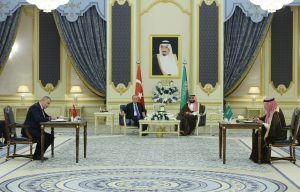
The “Badr” Memorandum of Understanding was signed in Doha on October 21, 2026, according to a statement from Türkiye’s Ministry of National Defence carried by Anadolu Agency and TRT World. Turkish Defence Minister Yaşar Güler signed alongside Qatar’s Deputy Prime Minister and Minister of State for Defence Affairs, Sheikh Saud bin Abdulrahman Al Thani; Pakistan’s Defence Minister Khawaja Muhammad Asif; and Indonesia’s Deputy Defence Minister Yusuf Jauhari. Haluk Görgün, head of Türkiye’s Presidency of Defence Industries (SSB), attended the ceremony.
What the MoU Actually Covers
Per the Turkish ministry’s own description, the Badr MoU sets out to:
- Strengthen defence cooperation and build strategic partnerships among the four signatories
- Combine the countries’ manufacturing capabilities to boost joint military production
- Improve industrial integration so the four defence industries can supply equipment to “allied and friendly countries”
- Expand technical military training and joint research and development
- Deepen multilateral military ties for regional security and stability
That is the full extent of what has been made public. Neither the Turkish ministry’s statement nor the other three governments have disclosed a financial value, named specific programmes to be co-produced, or set a timeline for implementation. This is a framework agreement — a statement of intent to cooperate — not a signed contract for a particular weapons system, and it should be read that way until follow-on agreements name actual platforms, quantities or funding.
Built on an Existing Web of Bilateral Ties
What makes the Badr MoU notable is less its text than the depth of defence-industrial relationships it formalises into a single four-way framework. Türkiye already has substantial, separate programmes running with each of the other three signatories:
Pakistan operates Turkish-designed MILGEM-derived corvettes under the Babur-class programme and has taken delivery of Bayraktar TB2 and Akıncı unmanned combat aircraft, part of a broader relationship covered in Türkiye and Pakistan’s technology-transfer arrangements. The two countries’ militaries train and exercise together regularly, and Pakistan was one of the three original signatories, alongside Türkiye and Saudi Arabia, of the Mecca Joint Defence Agreement signed in Istanbul on August 31, 2026 — the strategic-political and defence committee framework that the Badr MoU appears to echo and extend. Turkish Foreign Minister Hakan Fidan said at the time that Ankara wanted that framework to “grow” beyond three countries, naming Egypt as a candidate for future accession.
Qatar hosts a Turkish military base, buys Turkish armoured vehicles and Bayraktar drones, and has worked with Turkish shipbuilder TAIS on naval projects through Qatar’s Barzan Holdings — a relationship Defense Türkiye has traced from a crisis-driven alliance to a standing industrial partnership. ASELSAN also maintains the BARQ joint venture with Barzan for electronic systems, expanded with new agreements earlier in 2026.
Indonesia is a Turkish Aerospace customer for the KAAN fighter programme — Jakarta signed for 48 aircraft in 2025, the jet’s first export order — and co-developed the KAPLAN MT medium tank, fielded by the Indonesian Army as the Harimau. Jakarta has also been linked to Türkiye’s İstif-class frigate design through a Qatari-financed shipbuilding arrangement.
Why It Matters Beyond Ankara
For an international audience, the significance lies in the shape of the bloc rather than any single deliverable. Türkiye is positioning itself as the industrial and training hub of a four-nation network spanning the Gulf, South Asia and Southeast Asia — three regions where Turkish systems already compete directly with American, European, Russian and Chinese suppliers on price and delivery speed rather than top-end performance. A standing framework for joint production and R&D, if it produces concrete co-production agreements, would let Qatar, Pakistan and Indonesia localise manufacturing of Turkish-origin systems rather than simply importing finished equipment — the same localisation logic that has underpinned Türkiye’s sales pitch to Gulf and Southeast Asian buyers for most of the past decade.
It also continues a pattern visible since the Mecca agreement: Ankara using formal multilateral defence instruments, rather than one-off contracts, to lock in longer-term industrial relationships with repeat customers. Whether the Badr MoU produces anything beyond the text of the agreement will depend on follow-on technical annexes that have not yet been made public.
What to Watch Next
Three things will show whether the Badr MoU has teeth: whether any of the four governments names a specific joint-production programme tied to the framework; whether a financial figure or investment commitment is attached to it; and whether additional countries are invited to join, mirroring Fidan’s stated ambition for the Mecca agreement. None of that has happened yet.
Sources: Turkish Ministry of National Defence statement via TRT World/Anadolu Agency; additional reporting from Turkish Minute.