AKINCI UCAV Downs Aerial Target With SUNGUR Missile

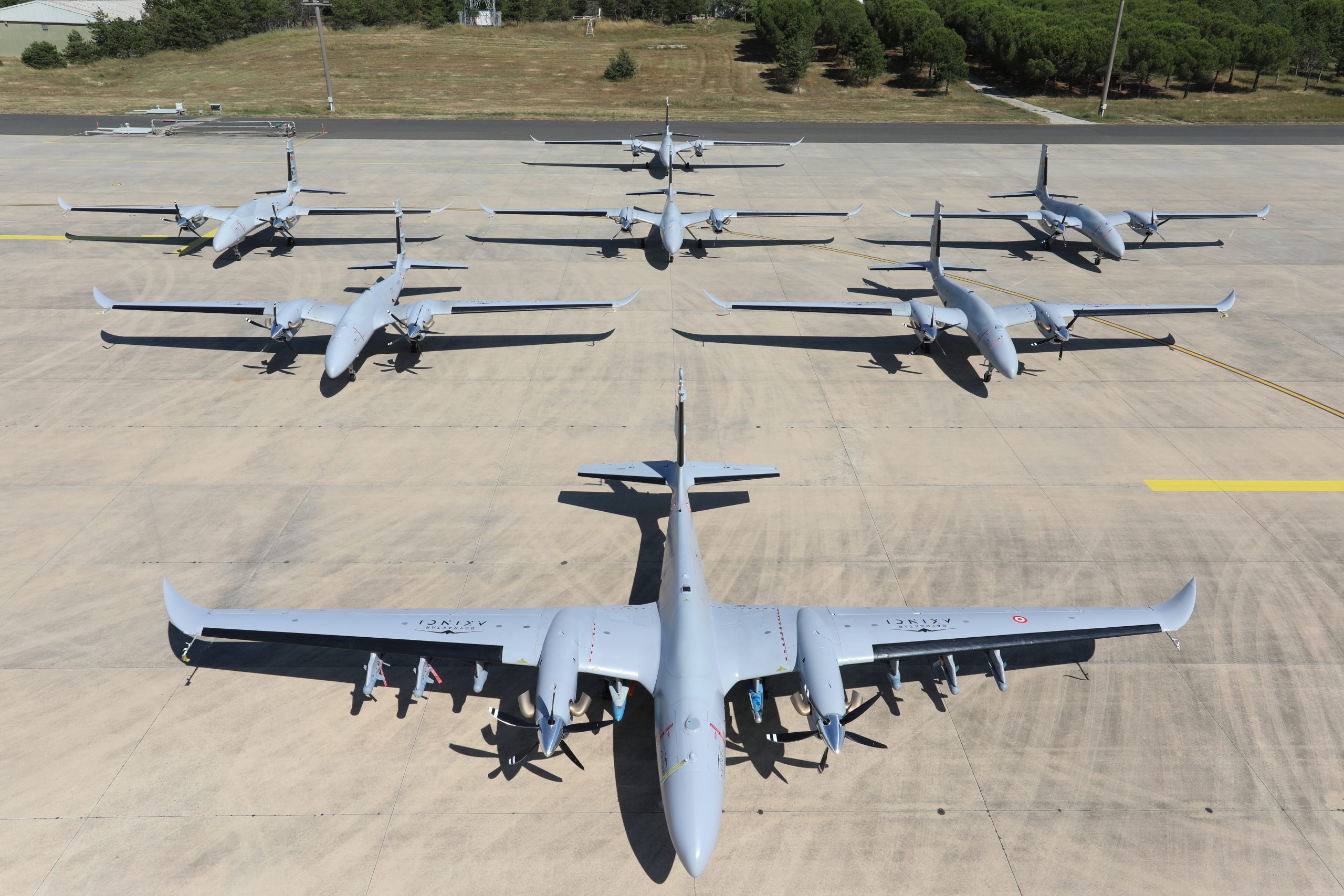
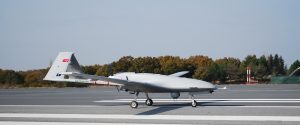
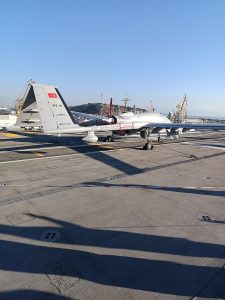
Baykar’s Bayraktar AKINCI unmanned combat aerial vehicle destroyed a high-speed target drone in flight on September 16 using Roketsan’s SUNGUR missile, the companies announced, adding a genuine air-to-air kill capability to Türkiye’s largest combat drone and opening a new front in the platform’s rapidly expanding weapons portfolio.
The test was flown out of Baykar’s Çorlu Flight Training and Test Center in Tekirdağ, with the engagement carried out over the Black Sea off Sinop. According to Baykar’s announcement, the AKINCI “scored a direct hit on a high-speed target UAV” during the firing, then returned to base along its planned route. Neither Baykar nor Roketsan released altitude, range or seeker details for the integration, and no timeline for serial fielding or export availability was given.
A MANPADS Missile Goes Airborne
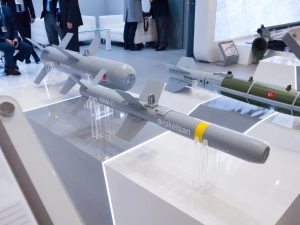
SUNGUR is not a new weapon. Originally developed under the designation PORSAV, it is Türkiye’s first indigenously designed man-portable air defence missile, entering service in July 2022 after a decade of development. It uses an imaging infrared seeker — resolving target shape rather than a single heat signature — with lock-on-before-launch, and Roketsan lists an engagement range of roughly 8 km. The missile forms the bottom, very-short-range tier of Türkiye’s layered Steel Dome (Çelik Kubbe) air defence architecture, sitting beneath SİPER, HİSAR and longer-range interceptors.
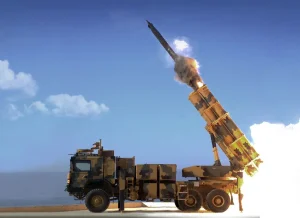
Roketsan has spent the past two years pushing SUNGUR off the shoulder and onto other platforms. It already arms the BMC VURAN 4×4 and the naval LEVENT close-in weapon system, and just two days before the AKINCI test, on September 14, it completed its first firing from the BURÇ mobile air defence vehicle, an FNSS PARS 8×8 fitted with eight SUNGUR rounds, a 20mm cannon and Meteksan’s Retinar AESA radar. Airborne integration onto the Bayraktar TB2 and AKINCI had been listed by Roketsan as “in development” for some time; this test is the first public confirmation that the AKINCI leg of that roadmap has reached a live firing.
Another Weapon on an Already Crowded Wing
The SUNGUR shot adds to an unusually fast-moving weapons integration schedule for the AKINCI in 2026. On September 11, the platform used Roketsan’s new İHA-300 supersonic missile to strike a maritime target more than 250 km away, and it has separately fired the KEMANKEŞ AI-guided mini cruise missile and the EREN high-speed loitering munition. Baykar’s own summary of the SUNGUR test noted that AKINCI has now had more than 20 munitions integrated onto it, spanning stand-off cruise missiles, guided bombs, anti-ship weapons and now a dedicated air-to-air round.
That breadth matters because it changes what the AKINCI is for. A medium-altitude, long-endurance UCAV built primarily to strike ground and maritime targets does not, by default, need to defend itself or engage other aircraft. Giving it an infrared-guided missile capable of intercepting another unmanned aircraft turns AKINCI into a platform that can plausibly hunt smaller drones and loitering munitions in the air, rather than only being hunted by them — a capability that has taken on outsized importance as cheap attritable drones and one-way munitions have become the dominant threat in several ongoing conflicts.
Why It Matters Beyond Türkiye
Counter-drone capability is currently one of the most sought-after niches in the export market, and Baykar is not a marginal player in it. The company recorded $2.2 billion in exports in 2025 and has signed unmanned aircraft agreements with 39 countries, 16 of them for AKINCI specifically. A version of AKINCI that can credibly engage aerial targets — not just strike fixed or moving ground and sea targets — is a different sales pitch to air forces and border-security services already worried about swarming drones and cheap loitering munitions along their frontiers.
It also reinforces a broader pattern in Turkish procurement: rather than developing a new missile for every new role, the SSB ecosystem is qualifying a small number of indigenous munitions — SUNGUR chief among them — across as many launch platforms as possible, from a soldier’s shoulder to a wheeled vehicle to a warship’s close-in defence mount to, now, a UCAV’s wing. That reuse compresses development cost and timeline, and it gives export customers a single missile family that can equip several different systems they may already be buying from Türkiye.
What Is Still Unconfirmed
The September 16 announcement should be read for what it is: a successful test firing, not an operational deployment or an export commitment. Baykar and Roketsan have not disclosed whether the missile or its seeker were modified for airborne carriage and launch, how many SUNGUR rounds AKINCI can carry, what engagement envelope applies when fired from altitude rather than the ground, or when — if at all — the integration will move from test article to a fielded configuration in Turkish Armed Forces or export inventories. Given SUNGUR’s short stated range of roughly 8 km, the AKINCI-launched variant is best understood as a self-defence and close-in counter-drone tool rather than a long-range air-to-air weapon competing with dedicated air intercept missiles.
For now, the test confirms a capability that Roketsan had signalled was coming, and it keeps Baykar’s weapons integration pace running at roughly one new AKINCI munition milestone per week through September. Whether that translates into contracts will depend on customers actually asking for a drone that can, in turn, shoot down someone else’s drone.
Sources: Baykar press release, September 16, 2026; TRT World.