Turkish F-16s Are Getting a Domestic Mission Computer and Radar Under ÖZGÜR

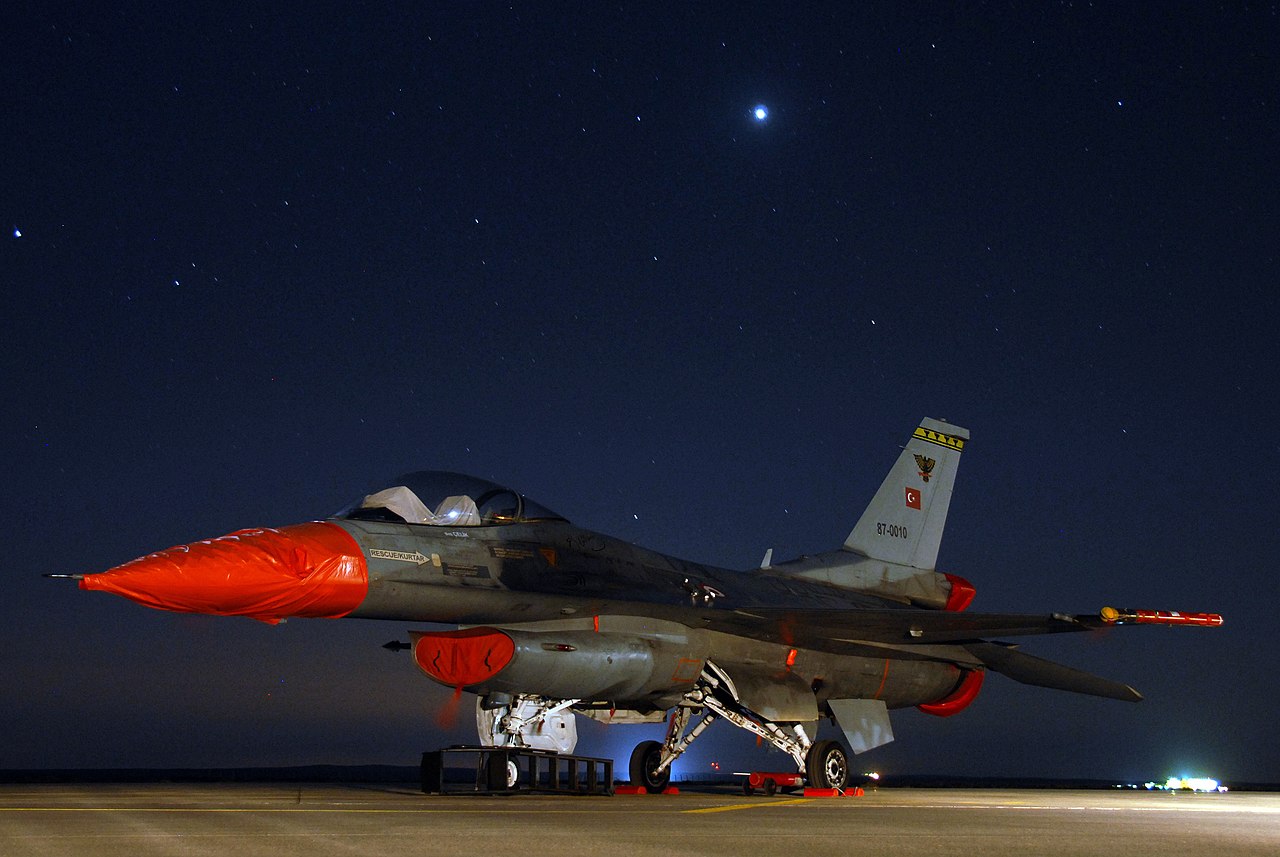
Turkish F-16s have flown for decades on American avionics, American software and American permission. The ÖZGÜR programme, whose name means “free” or “liberty”, is the effort to swap the electronic core of the oldest jets for Turkish-built equipment. The work is led by the Presidency of Defence Industries (SSB), with TUSAŞ handling the aircraft and ASELSAN supplying the avionics and the radar.
The programme is easy to misread. It is not a new fighter and it is not a re-engining job. It is a mission-system replacement on an ageing airframe, and its real significance is who now controls the code that runs the jet.
| Item | Detail |
|---|---|
| Programme | ÖZGÜR (Liberty), F-16 Block 30 avionics modernisation; ÖZGÜR-2 follow-on contracts |
| Lead authority | Presidency of Defence Industries (SSB) |
| Prime contractor | Turkish Aerospace (TUSAŞ) |
| Avionics and radar | ASELSAN |
| User | Turkish Air Force Command |
| Initial scope | 35 F-16 Block 30 aircraft (reported) |
| ÖZGÜR-2 scope | Block 30 inventory, plus Block 40/50 prototype work |
| Radar | MURAD AESA nose radar (MURAD 110-A for the F-16) |
What exactly is being replaced on the F-16?
The ÖZGÜR package centres on a national mission computer running Turkish operational flight program (OFP) software. Around it sits a set of locally developed cockpit and sensor components. Reporting on the programme lists a system interface unit, a colour multifunction display, fuel and hydraulic indicators, an engine display, an inertial navigation system, a new friend-or-foe (IFF) transponder, a secure voice device and radar warning equipment. Some accounts also mention a helmet-mounted cueing system.
Not every item is confirmed in every source, and component designations vary between reports. The consistent core is the mission computer, the colour displays and the IFF, which are also the items named in the SSB’s own activity-report summaries.
The aircraft in question are Block 30 jets, the oldest F-16s in Turkish service. A 2023 fleet breakdown published by GlobalSecurity lists 36 Block 30, 102 Block 40, 71 Block 50 and 29 Block 50+ aircraft. The Block 30s are the ones where Turkey chose a domestic route rather than waiting for a United States package.
How did ÖZGÜR get started?
The programme goes back further than most people assume. Local reporting dates the original SSB, TUSAŞ and ASELSAN contract to 6 March 2012, with a reported value of about $46 million. That early phase produced prototype avionics and test aircraft rather than a production line.
A parallel structural programme ran separately. Reports say a contract signed in 2015 launched fuselage and wing reinforcement work from 2016, aiming to stretch airframe life from 8,000 to 12,000 flight hours. Secondary sources cite roughly 1,200 to 1,500 structural parts replaced per aircraft, a figure that should be read as approximate.
Testing on two Block 30 aircraft was reported complete by May 2023. Serial modernisation of the Block 30 fleet followed, and the SSB’s 2023 activity report confirmed that three upgraded F-16 Block 30s had been delivered to the Air Force Command. Earlier reports had put a first delivery to a fighter squadron as far back as 2020, so the delivery history is told differently depending on the source. The three-aircraft figure is the one tied to an official document.
What did the 2023 ÖZGÜR-2 contracts change?
On 26 July 2023, at the IDEF fair in Istanbul, the SSB and TUSAŞ signed two modernisation contracts, as reported by Anadolu Agency. One covers the Block 30 inventory. The other covers Block 40 and 50 aircraft, starting with prototype work. Both bring in national avionics, indigenous weapon integration and the AESA radar.
The reported delivery windows are 2025 to 2027 for Block 30 aircraft and 2028 to 2030 for Block 40/50. The SSB chief at the time said the modernised jets would be more capable than the Viper standard that Lockheed Martin offers on new Block 70 aircraft. That is a claim, not a test result, and no independent comparison has been published.
The schedule has moved. An earlier target had all Block 30 work finishing by the end of 2025. A June 2026 report in Zona Militar says the Air Force should receive the last Block 30 modernised to ÖZGÜR standard by the end of 2026. That article is secondary and could not be checked against an official statement, so treat the date as reported.
Which weapons does the upgrade open up?
Weapon integration is the quieter half of the package. Reporting on the programme says ÖZGÜR is meant to let the jets carry Turkish-designed smart munitions, both air-to-air and air-to-surface types, alongside the existing American inventory. The practical effect is that a Turkish missile can be cleared for the aircraft by Turkish engineers, against Turkish software, without a foreign queue.
That is also why the radar and the mission computer were bundled. A new seeker-guided weapon needs the radar to hand off targets and the computer to manage release, and both have to speak the same data language. Public sources do not list which specific missiles have completed F-16 integration under ÖZGÜR, so none are named here.
Where does the MURAD radar come in?
The radar is the piece that moves ÖZGÜR from a cockpit refresh to a combat upgrade. ASELSAN’s MURAD is an active electronically scanned array (AESA) that uses gallium nitride transmit/receive modules and can run air-to-air and air-to-ground modes at once. Reports on the F-16 version cite more than 1,000 modules, with one account giving 1,152, and say it was designed to fit the existing nose without airframe changes.
The radar is reported to have made its first flight on an F-16 testbed in February 2024. ASELSAN lists F-16 ÖZGÜR, Bayraktar Akıncı and Bayraktar Kızılelma among the platforms on which it has demonstrated the radar. An Akıncı flight test followed on 1 March 2025, and an F-16 air-to-air engagement test is reported for 5 November 2025.
The radar family is spreading. A larger version is planned for the KAAN fighter, and the same technology base shows up in our coverage of HÜRJET’s first MURAD radar lock test and the longer story of how Türkiye built its own AESA radars. For the wider supplier picture, see who builds Türkiye’s radars.
Why does Turkey want control of the software on its own F-16s?
A fighter’s mission computer decides which sensors talk to which weapons. When that software belongs to someone else, adding a new missile or radar needs that someone’s approval and engineering time. National OFP software is the stated point of the ÖZGÜR package, and the same logic runs through the larger F-16 talks.
The Polish Centre for Eastern Studies (OSW) wrote in April 2026 that Turkey continues to discuss buying 40 new F-16 Block 70 aircraft, a deal reported at around $7 billion, and that access to source codes for integrating domestic missiles and the indigenous radar is a key sticking point. Turkey has also declined US modernisation packages for its older jets, according to the same analysis.
Put simply, ÖZGÜR gives Ankara a bargaining position and a fallback. If the Block 70 talks drag on, Turkey still has a pipeline that integrates its own weapons on the jets it already owns.
What does it mean for the rest of the fleet and for KAAN?
The OSW analysis puts the F-16 fleet at roughly 230 to 240 aircraft, with about 150 considered operational. It also notes a reported $10.7 billion deal from October 2025 for 20 new Eurofighter Typhoons, with deliveries planned for 2030 to 2033, and Turkish interest in used Typhoons from Qatar and Oman. That is a bridge strategy, and ÖZGÜR is part of it. The modernised F-16s have to remain credible while the next generation arrives.
The link to the KAAN fighter programme is practical as well as political. Avionics, mission-computer experience and a radar tested on a flying F-16 are the same building blocks a new fighter needs. KAAN is built by Turkish Aerospace (TUSAŞ), the same prime contractor that runs the F-16 work. No source quantifies how much the F-16 experience feeds the newer jet, but the overlap in contractors and equipment is plain.
The corporate backbone is ASELSAN, whose role across radar, electronic warfare and avionics is outlined in the ASELSAN company profile.
What is still unproven?
Several points remain open. Public data on how many ÖZGÜR jets are in service today is thin, and delivery figures differ by source. Some reports describe the MURAD radar as comparable to the AN/APG-83 class, but no independent measurement has been released. The Block 40/50 programme is further behind, with deliveries pencilled in for 2028 to 2030.
What can be said with confidence is narrower. The programme exists, it has produced delivered aircraft, a national radar has flown on the jet, and its schedule now runs into late 2026. Whether it becomes the template for the larger Block 40/50 fleet will depend on how those last Block 30 deliveries go.