The Ankara Software House Behind Turkish Warship Datalinks

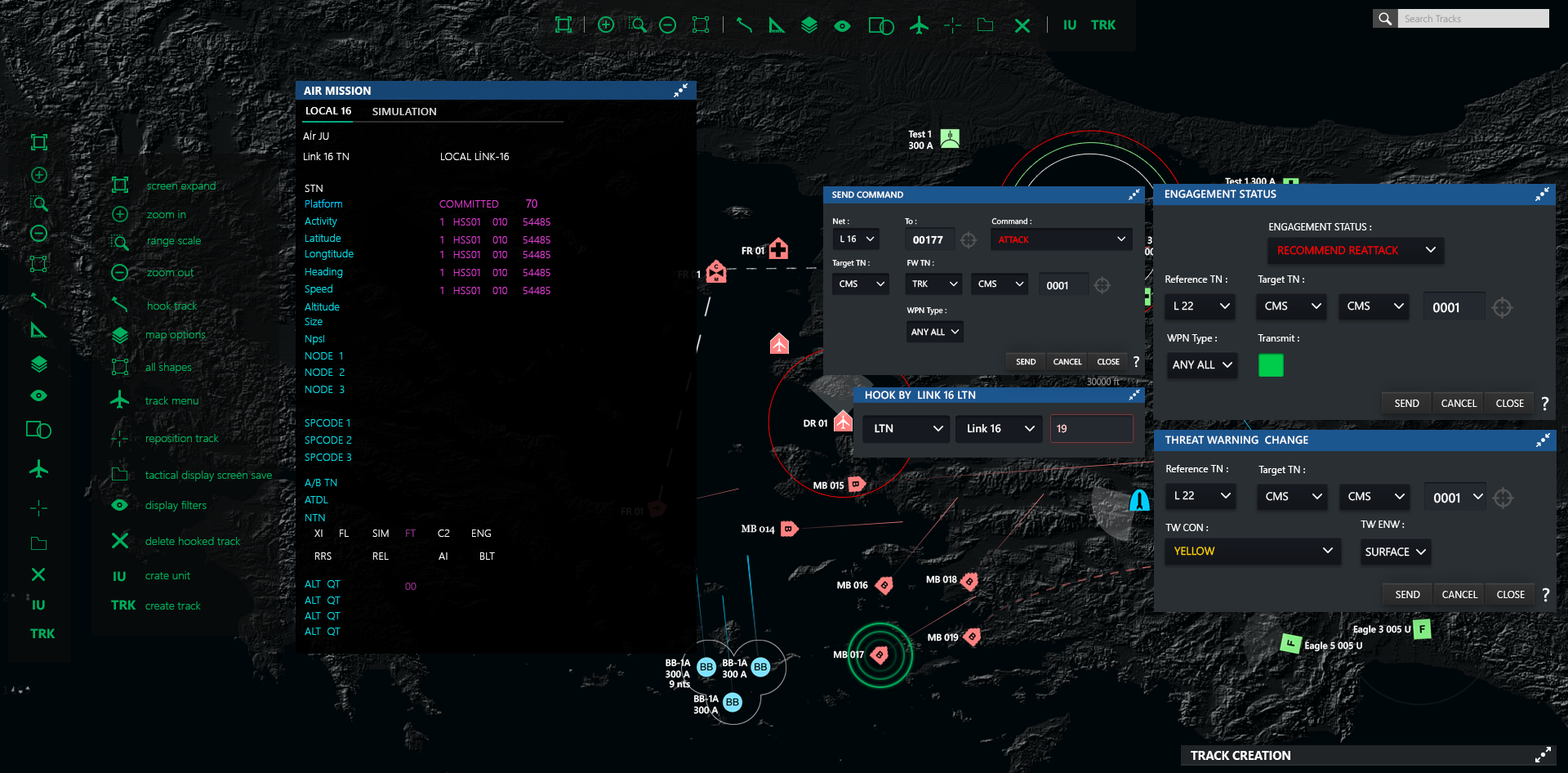
Most of what a tactical data link does is invisible. A frigate sees a contact, an aircraft sees the same contact, and a command post sees both on one screen. Behind that shared picture sits a lot of software, and in Türkiye a good share of it comes from a private company based at the METU Technopolis campus in Ankara: MilSOFT.
The company rarely makes headlines the way a drone or a missile maker does. Its work lives inside ships, aircraft and command centres, which is exactly why it is worth a closer look.
What Is MilSOFT and Who Owns It?
MilSOFT Software Technologies describes itself as a 100 percent Turkish, privately held company founded in 1998. It focuses on system integration and software development for defence and public-sector customers. According to its own materials, it works from an R&D centre at METU Technopolis in Ankara and from the TÜBİTAK Technological Free Zone in Istanbul, and employs more than 200 people.
| Field | Detail |
|---|---|
| Company | MilSOFT Software Technologies |
| Founded | 1998 |
| Headquarters | METU Technopolis, Çankaya, Ankara |
| Other site | TÜBİTAK Technological Free Zone, Istanbul |
| Ownership | Private, 100 percent Turkish-owned |
| Employees | 200+ (company figure) |
| Main activities | Tactical data links, C4I, ISR and image intelligence, simulation, electronic warfare support, cybersecurity |
| Key products | Link-M, Mil-DLP, Mil-DDS, NIXS, Mil-CMS, WACCS, Mil-I2S, TDLSim, Mil-GUARD |
| Quality credentials | CMMI Level 5 since 2005 (company claim: first in Europe) |
| Website | milsoft.com.tr |
Why Does a Tactical Data Link Need Its Own Software House?
A data link is a standard, not a single box. NATO’s Link-11, Link-16 and Link-22 each define how platforms format and exchange track data, and a ship or aircraft needs a processor and application software that speaks the standard correctly. Get a message format wrong and a partner’s display simply does not show your contact.
That is the niche MilSOFT built. Its product list includes Link-M, a tactical data link system, and Mil-DLP, a data link processor, along with Mil-DDS middleware for distributing data between systems. For a broader look at how Türkiye’s own networks fit together, see our explainer on the four data links used by Turkish tactical networks.
What Has MilSOFT Actually Delivered to the Turkish Navy?
The naval record is the longest. Defence Turkey reported that MilSOFT signed a contract with the Undersecretariat for Defence Industries (SSM) on 29 August 2006 to build a Link-16 / Link-11 multi-link capability and the associated console software for naval platforms and coordination centres. The goal was to let surface ships share tactical information with other ships, aircraft and shore units, and to pass data between link standards.
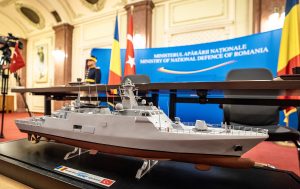
The company says it later extended the work to Link-22 and to submarines. Per its 25th anniversary coverage, it has equipped eight frigates of the Turkish Naval Forces, plus the first three MİLGEM ships, with Link-11 and Link-16 systems developed in-house. The MİLGEM I-class frigate programme is a useful reference point for what those ships are, and link software is one of the parts that rarely appears in the usual hull-and-weapons description. Reporting on its project mix also mentions landing ship tanks and submarines, which ties in with the broader story of Türkiye’s submarine builders.
Does the Link-16 Work Go Beyond Ships?
Yes. In December 2012, Defence Turkey reported, a subcontract was signed between Turkish Aerospace and MilSOFT for development of a Link-16 Tactical Data Link Processor, software and hardware, for the Erciyes C-130 avionics modernisation effort. The same report describes MilSOFT’s responsibility as covering development, tests and verification.
The company also lists helicopter mission computers and embedded avionics among its past work, and its customer list reportedly includes Sikorsky, Rockwell Collins, Thales, Lürssen, HDW and Alenia Aeronautica. Those are the company’s own statements and the details of each job are not public. For another airborne example where domestic mission software matters, see the Özgür F-16 Block 30 modernisation.
What Is TDLSim and Why Did NATO Care?
Real links are hard to test. Flying an aircraft or sailing a ship just to check a message is expensive, so MilSOFT sells TDLSim, a simulator that virtualises the elements of a Link-16 network and supports Link-11, Link-22, JREAP and SIMPLE among other standards.
Anadolu Agency reported in July 2024 that TDLSim took part in CWIX 2024, NATO’s large interoperability exercise, held at the Joint Force Training Centre in Bydgoszcz, Poland, in June. The agency said the software completed 146 tests and received compatibility reports across several functions. Users named in the same report include the Turkish Land Forces, the Turkish Air Force, ASELSAN, TÜBİTAK SAGE, the Azerbaijan Air Force and the Pakistan Armed Forces.
How Much of the Business Is Exports?
Defence Turkey, citing company figures, said MilSOFT had signed roughly 231 million US dollars in contracts since its founding, with about 123 million dollars under execution at the time of reporting. The same piece put foreign sales at 60.2 percent of revenue and export earnings at 8.8 million dollars, and noted work in Italy, Germany and Pakistan. These are company-supplied numbers from a single trade report, so treat them as indicative, not audited.
The Pakistan work stands out. The company’s anniversary materials say it integrated systems across more than 50 platforms within nine months, including command centre capability across several command levels. It has also built image-intelligence ground stations for Heron unmanned aircraft and, according to the same materials, integrated data from Heron, ANKA and Bayraktar systems for the Turkish Air Force.
Where Does MilSOFT Sit Next to HAVELSAN and ASELSAN?
Türkiye’s defence software field has larger names. HAVELSAN is a state-linked systems and software house, and ASELSAN builds the radios, radars and sensors that sit on the same platforms. MilSOFT is smaller and private, and tends to work as a specialist supplier or subcontractor inside programmes led by others. That position explains why its name appears in contract notices for specific modules, not in headline platform orders.
What Is the Company Aiming At Next?
At its 25th anniversary event in December 2023, the company said its priorities for the following five years were cloud computing, autonomous systems and integrated logistics support, with growth led by exports. It cited a first contract to convert a 6×6 vehicle to autonomous operation, participation in a NATO software factory effort, and cybersecurity work for NATO integration. Details of those contracts have not been published, and progress on them is not independently confirmed.
What is on record is a firm that has spent two decades making Turkish platforms talk to allied ones. As more Turkish equipment is offered to NATO partners, that kind of unglamorous compatibility work tends to decide whether a sale is even possible.